Water is the foundation of life on Earth, and the hydrologic cycle is the continuous system that moves, recycles, and transforms water throughout our planet’s atmosphere, surface, and subsurface environments. This intricate process touches nearly every aspect of environmental science and is critical for maintaining the ecosystems upon which we depend.
In this article, we will delve deep into the workings of the hydrologic cycle, why it’s essential, and how its various components influence our planet’s water distribution and quality.
What is the Hydrologic Cycle?
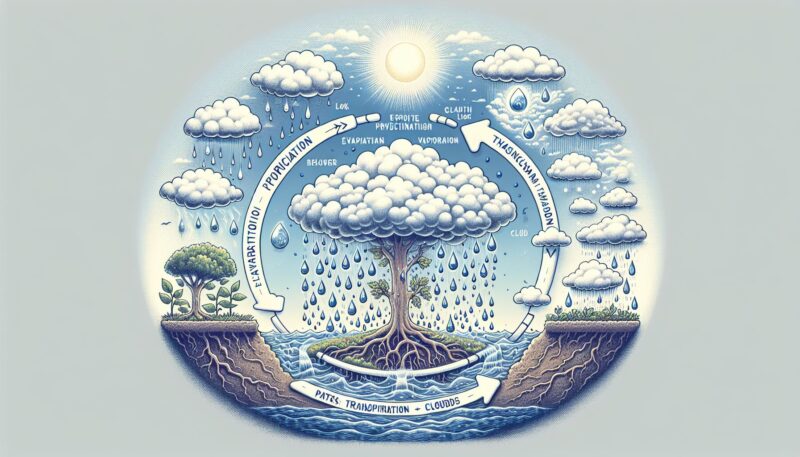
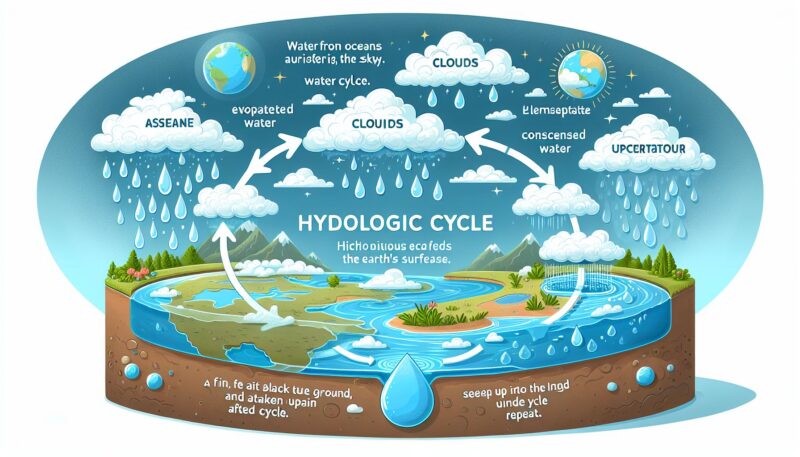
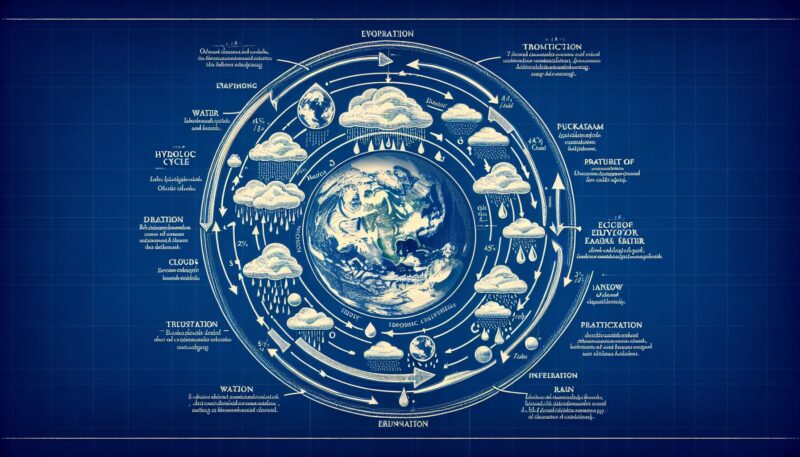
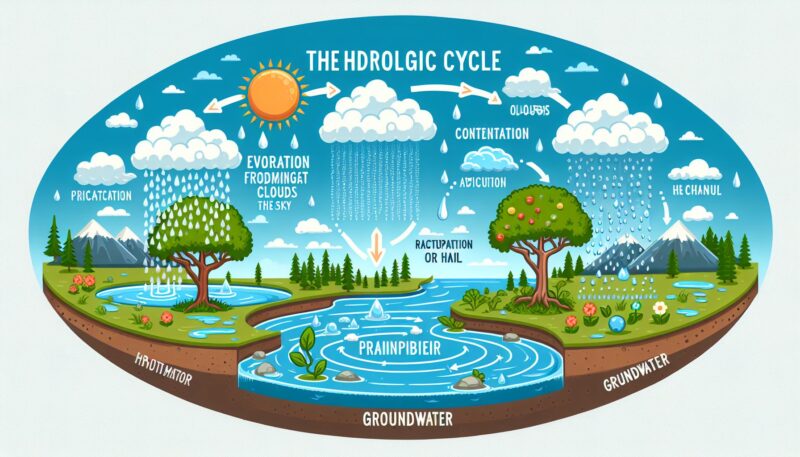
The hydrologic cycle, also known as the water cycle, describes the continuous movement of water within the Earth and its atmosphere. It is a natural process that recycles the Earth’s water supply through several stages: evaporation, transpiration, condensation, precipitation, infiltration, percolation, runoff, and streamflow. This cycle plays a significant role in shaping the Earth’s climate patterns and the distribution of freshwater resources.
Evaporation and Transpiration
The hydrologic cycle begins with evaporation. This is the process by which water changes from a liquid state into a gaseous state, known as water vapor. It occurs when the sun’s heat energy causes water from oceans, lakes, rivers, and the soil to transform into its gaseous form and ascend into the atmosphere.
Similarly, transpiration is the release of water vapor from plants and vegetation. As plants absorb water from the soil, some of this water is used for photosynthesis, while the rest evaporates from the plant’s surface through tiny openings called stomata. The combination of evaporation and transpiration is known as evapotranspiration.
Condensation and Cloud Formation
As water vapor rises, it cools and eventually condenses into tiny water droplets or ice crystals, forming clouds in the atmosphere—a process known as condensation. These water droplets clump together around particles of dust, smoke, or salt in the air.
Precipitation
When these water droplets become heavy enough, they fall back to the Earth as precipitation. Precipitation comes in several forms, depending on temperature conditions, including rain, snow, sleet, and hail.
Infiltration, Percolation, and Runoff
Upon reaching the Earth’s surface, water from precipitation can take one of several paths. Infiltration is the process by which water soaks into the soil. From there, it can move deeply through porous rock in a process called percolation, to replenish groundwater supplies contained in aquifers. If the ground is saturated, or if the precipitation rate exceeds the ground’s absorption capacity, the excess water will flow over the surface as runoff. Runoff is essential for filling streams, rivers, lakes, and reservoirs.
Streamflow, Baseflow, and Groundwater
The movement of water on the Earth’s surface to larger bodies of water is known as streamflow. Groundwater contributes to this flow through a process called baseflow, which is the sustained flow of a stream in the absence of direct runoff. This helps maintain river levels during dry periods.
Groundwater stored in aquifers is another critical component of the cycle. Aquifers, permeable rocks that can contain or transmit groundwater, are an important source of fresh water for both human use and ecological support.
Recharge and Discharge
Recharge is the process whereby groundwater levels are replenished. This occurs through precipitation or other surface water that percolates downward through the soil and rock. Conversely, discharge is the flow of groundwater into streams, rivers, and oceans, completing the cycle.
Importance of the Hydrologic Cycle
The hydrologic cycle is essential for sustaining life. It builds and maintains fresh water supplies and balances the Earth’s ecosystems. It is crucial for weather and climate patterns. Rainfall produced by the cycle is vital for agricultural productivity and reshapes the landscape through erosion and sediment transport.
By distributing heat across the globe through the process of evaporation and precipitation, the hydrologic cycle is a key factor in controlling the planet’s temperature.
The Hydrologic Cycle and Water Quality
The movement of water throughout the cycle can also affect water quality. As water moves, it can pick up pollutants, nutrients, and sediments that will influence the environment it encounters. Factors such as turbidity, pH, salinity, and hardness can change as a result of the cycle’s processes.
Contaminants like heavy metals, nutrients, pathogens, and microplastics can be transported by runoff into water bodies, affecting organisms and ecosystems as well as human health and water use.
Protecting the Hydrologic Cycle
Human activities can significantly impact the hydrologic cycle. Deforestation, urbanization, and pollution impair the natural processes and flow of water. Therefore, protecting and managing the various components of this cycle is crucial.
Water Conservation and Management Practices
Effective water conservation practices, such as rainwater harvesting, the reuse of greywater, and the reduction of water footprints, are vital.
Moreover, responsible water treatment measures, such as reverse osmosis, filtration, disinfection, and sedimentation, ensure that water returns to the environment in a clean and safe condition.
Water Distribution Systems
Properly designed water distribution systems, including modern pipe networks, water towers, pumping stations, and leak detection technologies, are paramount in managing the human demand on water resources responsibly.
Water-Related Challenges
Issues like water scarcity, water stress, drought, floods, water conflict, and water diplomacy are all inextricably linked to the health and function of the hydrologic cycle. Understanding and managing the cycle can mitigate the impacts of these challenges.
Conclusion
The hydrologic cycle is a complex but balanced system integral to life on Earth. Its continuous operation provides the necessary mechanisms for transferring and recycling the planet’s finite water resources. By understanding and protecting the components of this crucial cycle, we can ensure its sustained function and the health of our globally connected ecosystems.
Sources
- United States Geological Survey (USGS). The Water Cycle. https://www.usgs.gov/special-topics/water-science-school/science/water-cycle
- National Oceanic and Atmospheric Administration (NOAA). The Water Cycle. https://www.noaa.gov/education/resource-collections/freshwater/water-cycle
- Environmental Protection Agency (EPA). How We Use Water. https://www.epa.gov/watersense/how-we-use-water