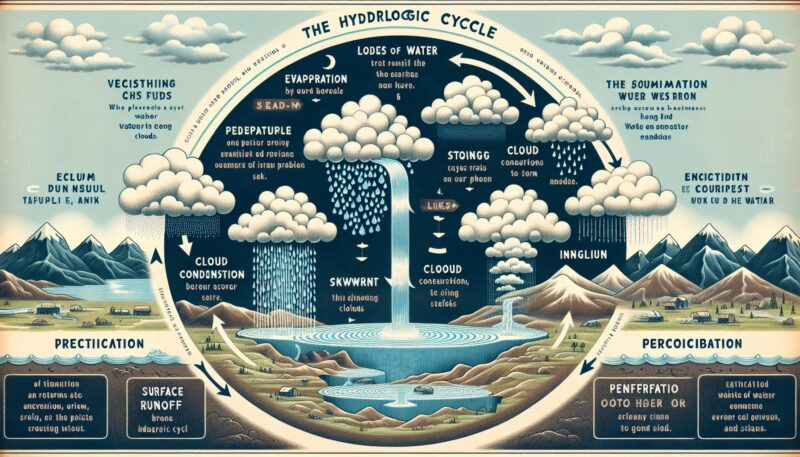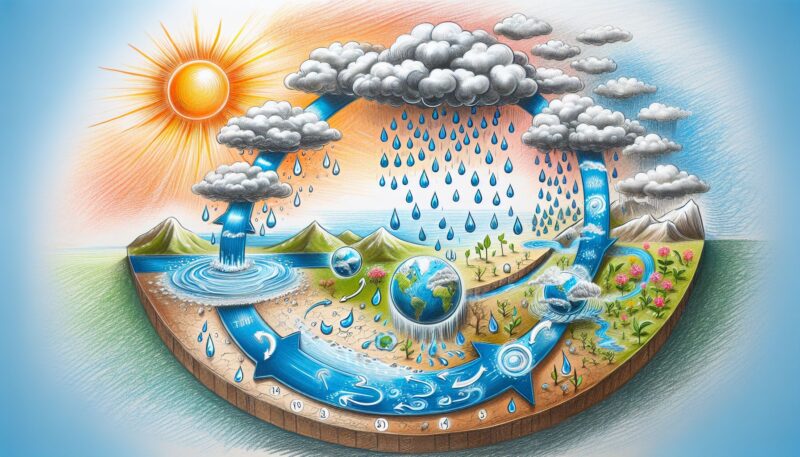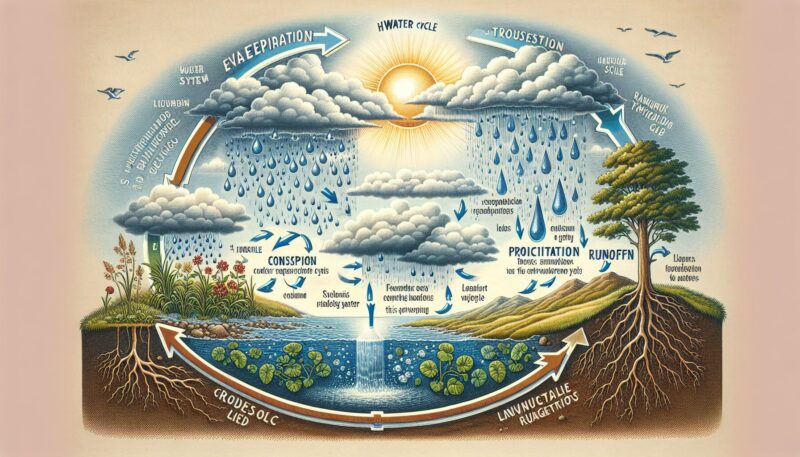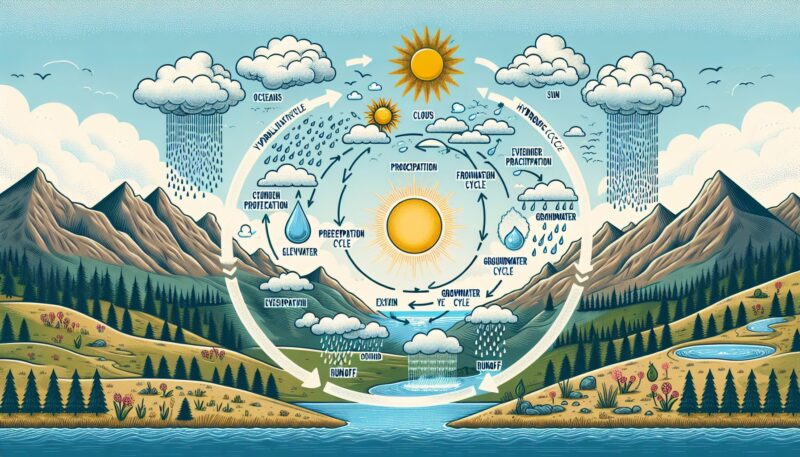
Water is the essence of life, and understanding its journey through the hydrologic cycle is fundamental to appreciating the complex interplay between our planet’s various ecosystems and the water they depend on. The hydrologic cycle, often called the water cycle, is a continuous and dynamic flow of water through different stages and mediums, including the atmosphere, land, and various bodies of water.
Introduction
The hydrologic cycle describes the continuous movement of water on, above, and below Earth’s surface. It’s a system powered by solar energy, and it involves processes such as evaporation, condensation, precipitation, infiltration, runoff, and more. This cycle is crucial for sustaining life, influencing climates, and shaping the geology of our planet.
The Stages of the Hydrologic Cycle
Understanding the hydrologic cycle starts with breaking it down into its component processes. Here’s how the cycle works:
Evaporation
The sun’s energy heats up water in rivers, lakes, and oceans, causing it to evaporate and rise into the atmosphere as water vapor. Plants also contribute to this process through transpiration, whereby water is released from leaves during photosynthesis. Combined, these processes are sometimes referred to as evapotranspiration.
Condensation
As water vapor rises, it cools and condenses into clouds. This process of condensation forms water droplets, which merge to create precipitation when they become heavy enough.
Precipitation
When water droplets in clouds grow and can no longer be held in the air, they fall to Earth as precipitation. This can occur in various forms, including rain, snow, sleet, or hail, depending on atmospheric conditions.
Infiltration and Percolation
Once water reaches the ground, it can seep into the soil, a process known as infiltration. It then moves downward, through soil and rock layers, a process called percolation, which feeds into underground aquifers – natural stores of groundwater.
Runoff and Streamflow
Not all water that falls to Earth infiltrates the ground; some becomes runoff, which flows over the land’s surface, collecting in rivers, lakes, and streams. Streamflow is the movement of water in streams and rivers, generally leading to the ocean.
Groundwater Movement
Groundwater doesn’t stay still; it moves through layers of soil and rock, sometimes emerging as springs or seeping into rivers, contributing to streamflow. This part of the cycle is slow but essential for maintaining water supplies during dry periods.
Baseflow
Baseflow is the term for groundwater that feeds into rivers through the riverbed. During dry spells, this can be the primary source of water in rivers.
Discharge
When groundwater reaches an outlet, such as a spring or a river, it is said to discharge from the aquifer. The discharged water then becomes part of the surface water system, continuing its journey through the hydrologic cycle.
The Impact of the Hydrologic Cycle on the Environment
The hydrologic cycle is more than just a series of processes; it’s interwoven with our climate, weather patterns, and the health of ecosystems around the globe.
Climate Regulation
The exchange of energy during evaporation and precipitation plays a significant role in regulating Earth’s climate. For instance, evaporation cools the surface, while the release of heat during condensation warms the atmosphere.
Aquatic Ecosystems
Rivers, lakes, and wetlands all depend on the balanced movement of the hydrologic cycle. These ecosystems support a vast diversity of life and provide essential services, like water filtration and habitat provision.
Human Use of Water
We rely on various stages of the hydrologic cycle for freshwater. Groundwater and surface water fulfill our agricultural, industrial, and domestic needs. However, human activities can disrupt the balance of the cycle, leading to water scarcity or pollution, which in turn affects its distribution and quality.
The Human Influence and the Hydrologic Cycle
Human actions can significantly impact the hydrologic cycle:
Water Pollution
Contaminants from industrial processes, agriculture, and urban runoff can pollute water sources, negatively impacting the cycle’s efficiency and harming aquatic life.
Land Use Changes
Urban development reduces infiltration and increases runoff, leading to more frequent and severe flooding. Deforestation can alter transpiration rates and change local weather patterns.
Climate Change
Global warming is altering the hydrologic cycle by increasing evaporation rates, changing precipitation patterns, and causing more extreme weather events, such as droughts and floods.
Sustainable Management of the Hydrologic Cycle
To ensure the resilience of the hydrologic cycle and our water resources, sustainable management practices are essential:
Water Conservation
Efficient use of water through practices like rainwater harvesting, greywater reuse, and mindful consumption helps preserve our water resources.
Protection of Watersheds
Watersheds are areas of land where all the water under it or draining off of it collects into the same place. Protecting these areas, also known as catchments or drainage basins, via conservation initiatives and regulations is vital in maintaining a balanced hydrologic cycle.
Restoration of Wetlands
Wetlands act as natural filters and buffers against flooding. Restoring these vital ecosystems can help support the hydrologic cycle and improve water quality.
Conclusion
The hydrologic cycle is a powerful reminder of the interconnectedness of Earth’s systems. It supports life in a multitude of ways and reflects the delicate balance necessary for ecosystems to thrive. As we move forward, understanding and respecting the stages and processes within this cycle are paramount for the sustainable management and conservation of our planet’s precious water resources.
Sources
-
United States Geological Survey (USGS) – The Water Cycle – https://www.usgs.gov/special-topic/water-science-school/science/water-cycle
-
National Oceanic and Atmospheric Administration (NOAA) – The Water Cycle – https://www.noaa.gov/education/resource-collections/freshwater/water-cycle
-
Environmental Protection Agency (EPA) – How We Use Water – https://www.epa.gov/watersense/how-we-use-water