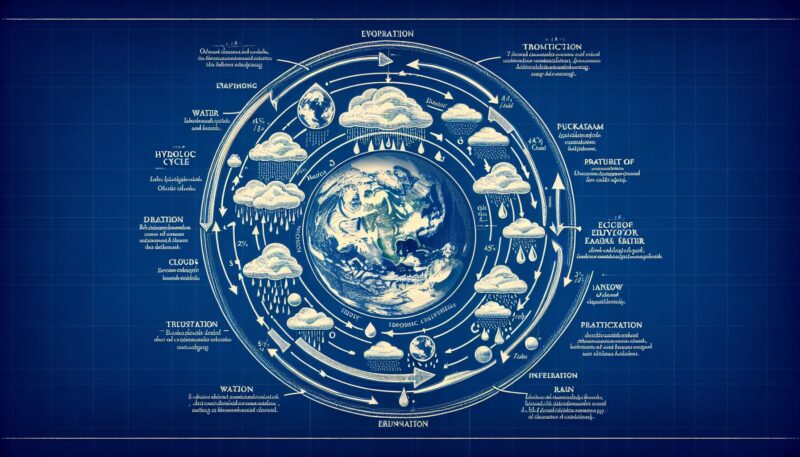
Water is the lifeblood of our planet, a critical element that supports the very essence of life as we know it. The hydrologic cycle, also known as the water cycle, is a central concept in hydrology, the science that deals with the distribution and movement of water on Earth. This cycle is an intricate process that replenishes our water sources and ensures the continual movement and transformation of water from one state to another. In this comprehensive article, we dive into the complexities of the hydrologic cycle, exploring each of its stages, its significance to our environment, and the impacts of human activity on this vital system.
The Stages of the Hydrologic Cycle
The hydrologic cycle consists of several key processes: evaporation, transpiration, condensation, precipitation, infiltration, percolation, runoff, streamflow, baseflow, and the roles of groundwater and aquifers. To understand the water cycle, we must comprehend each of these stages and their interconnections.
Evaporation
Water from Earth’s surface, primarily from oceans, lakes, and rivers, is transformed into water vapor through evaporation. This occurs when the sun’s energy heats water, causing it to change from a liquid to a gaseous state. Evaporation is a major supplier of vapor to the atmosphere and a key driver of the water cycle.
Transpiration
Transpiration is similar to evaporation, but it specifically refers to the process by which water within plants is transferred to the atmosphere. As plants absorb water from the soil, some of it moves to the leaves and eventually evaporates through tiny openings called stomata. This water vapor then contributes to the overall moisture in the atmosphere.
Condensation
Condensation happens when water vapor in the atmosphere cools and changes back into liquid droplets. These droplets cling to small particles in the air, such as dust, and form clouds. Condensation is the reverse of evaporation and a crucial process in the formation of precipitation.
Precipitation
When cloud particles grow large enough, they fall to the earth as precipitation in the form of rain, snow, sleet, or hail. Precipitation is a primary means by which water returns from the atmosphere to Earth’s surface, replenishing bodies of water and providing essential moisture to terrestrial ecosystems.
Infiltration and Percolation
Once precipitation reaches the ground, it does not always flow directly into water bodies. Some of it soaks into the soil, a process called infiltration. As water moves downward through the soil and bedrock layers by gravity, it percolates, which further filters the water and recharges aquifers.
Runoff and Streamflow
Water that does not infiltrate becomes runoff, flowing over the land surface toward rivers, lakes, and oceans. This surface runoff contributes to streamflow, the movement of water in natural channels, and is a significant means by which water travels across the landscape.
Baseflow
Baseflow is the sustained flow of a stream in the absence of direct runoff. It is primarily supplied by groundwater seeping into the stream bed, maintaining river levels between rain events and during dry periods.
Groundwater and Aquifers
Groundwater is water that exists beneath Earth’s surface within the pore spaces of soil and rock formations. An aquifer is a body of permeable rock or sediment that stores and transmits groundwater. Groundwater flows slowly and can be a stable source of fresh water for human use, contributing to both baseflow and our own water supply.
Recharge and Discharge
Groundwater systems are replenished, or recharged, by water infiltrating from the surface. Discharge occurs when groundwater flows out of an aquifer, either naturally into lakes, streams, and oceans, or through extraction via wells.
The Importance of the Hydrologic Cycle
The hydrologic cycle is a natural, dynamic system that distributes and cleanses water, making it suitable for all life forms. It moderates climate, shapes landscapes, and supports the functioning of ecosystems. Plants and animals depend on a consistent water supply to survive, and human societies rely on the cycle for agriculture, industry, and domestic use.
Ecosystems and Biodiversity
Healthy water circulation ensures habitats like wetlands, estuaries, and rivers flourish with biodiversity. These systems provide crucial services, such as habitat for wildlife, water purification, and flood regulation.
Climate Regulation
The movement of water between the land, the atmosphere, and the ocean plays a significant role in regulating Earth’s temperature. Water absorbs heat during evaporation and releases it during condensation and precipitation, influencing local and global climate patterns.
Human Usage and Water Safety
Groundwater and surface water are essential for human consumption, sanitation, and agriculture. The purification aspects of the water cycle—such as filtration during infiltration and natural aeration during streamflow—help maintain water quality. However, contamination through pollution can disrupt these processes.
Human Impacts on the Hydrologic Cycle
Water Pollution and Water Quality
Human activities, such as industrial discharges, agricultural runoff, and improper waste disposal, can introduce contaminants like heavy metals, nutrients, and pathogens into the water cycle, leading to problems like eutrophication and algal blooms. These issues compromise water quality and can create health risks for humans and ecosystems.
Climate Change Effects
Climate change, driven by global warming, affects the water cycle by altering precipitation patterns, increasing evaporation rates, and shifting snowpack and glacier melt. This can lead to water scarcity, droughts, and more frequent and severe floods.
Water Management Practices
Human interventions, such as building reservoirs, extracting groundwater through pumping stations, and altering natural waterways, impact the natural flow of water. These practices can change streamflow, deplete aquifers, and affect recharge rates.
Solutions for a Sustainable Water Future
To mitigate negative impacts on the hydrologic cycle and ensure a sustainable water supply, we must adopt responsible water management and conservation practices.
Water Treatment and Reuse
Water treatment technologies, including filtration, disinfection, chlorination, ozonation, and reverse osmosis, play a crucial role in making water safe for consumption and reuse. The reuse of treated wastewater, such as greywater, for non-potable purposes can reduce overall water demand.
Water Conservation and Efficiency
Simple measures like fixing leaks, installing efficient fixtures, and adopting water-saving technologies can greatly reduce water waste. Rainwater harvesting is another effective method to capture and store water for later use.
Protection of Water Sources
Protecting watersheds, maintaining healthy riparian zones, and implementing green infrastructure can safeguard our water sources from pollution and ensure their resilience against climate change. Restoring degraded ecosystems like wetlands can also enhance the natural water cycle.
International Cooperation
Water transcends borders, making water diplomacy and international cooperation essential for managing shared water resources and preventing water conflicts. Transparent and equitable agreements can help secure water access for all nations.
Conclusion
The hydrologic cycle is the invisible engine that