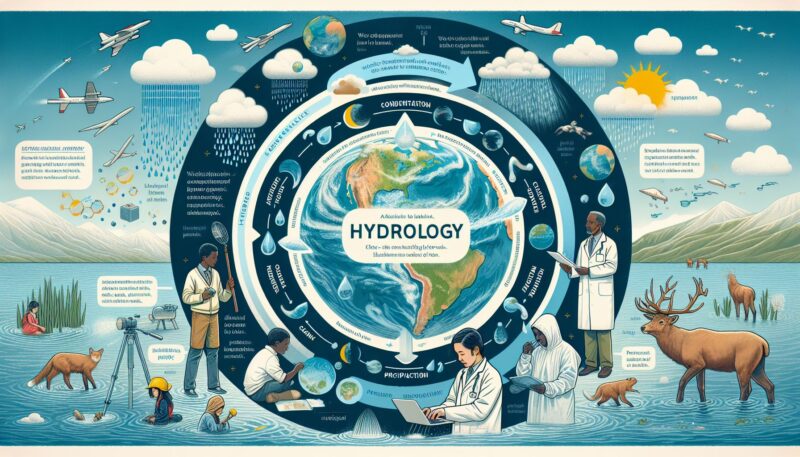
Water is essential for life on Earth, and its continuous movement through the hydrologic cycle plays a critical role in shaping our planet’s environment. This cycle, also known as the water cycle, is an intricate system that involves the transfer of water between various reservoirs, including the atmosphere, land, and oceans. It is a process that is both simple in its fundamental steps – evaporation, condensation, precipitation, and runoff – and complex in its interactions and dependencies. In this article, we will delve into the workings of the hydrologic cycle, its significance, and the various factors that sustain and alter its flow.
Understanding the Hydrologic Cycle
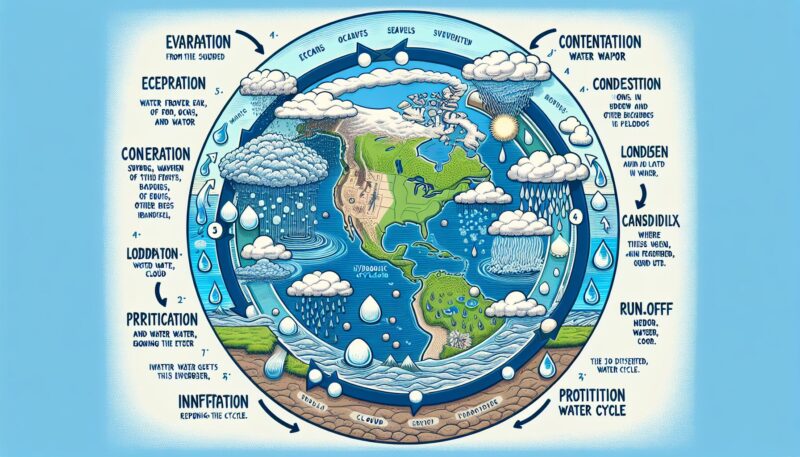
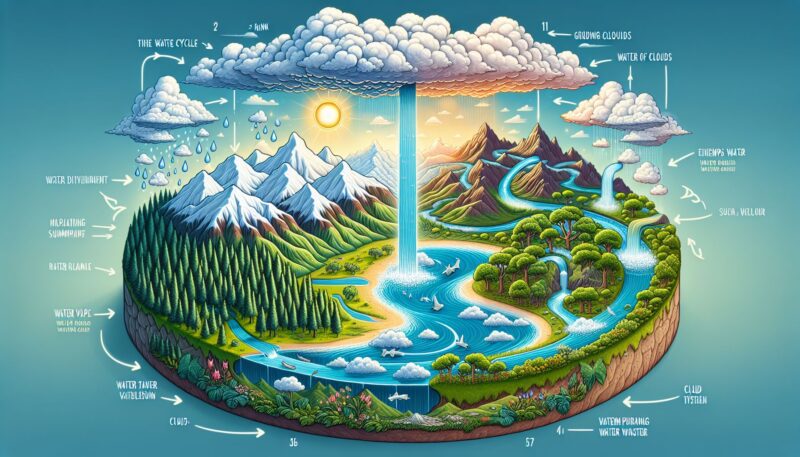
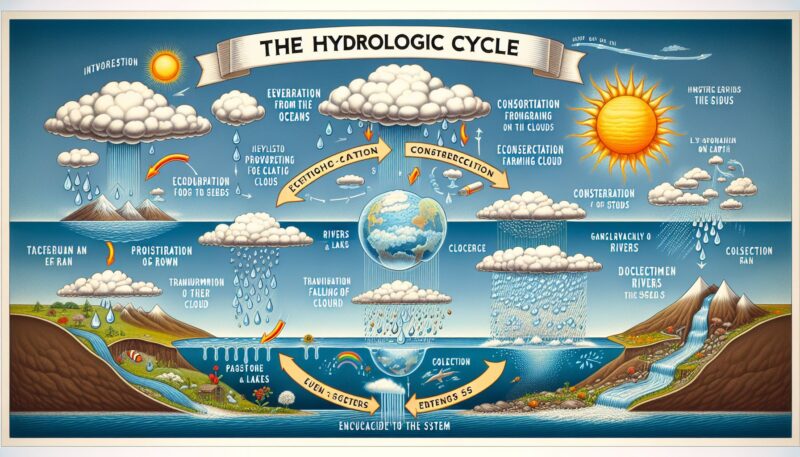
The hydrologic cycle describes the continuous circulation of water within the Earth’s hydrosphere, moving from one place to another and from one form to another. The main components of the cycle include:
– Evaporation – The transformation of water from liquid to gas, primarily from bodies of water, but also from vegetation (a process known as transpiration).
– Condensation – The conversion of water vapor back into liquid form, leading to cloud formation.
– Precipitation – The process by which condensed water in clouds falls to the Earth’s surface as rain, snow, hail, or sleet.
– Infiltration – The seeping of water into the ground where it becomes groundwater.
– Percolation – The downward movement of water through the soil and rock layers.
– Runoff – Water that flows over the surface of the land, eventually reaching rivers, lakes, and oceans.
– Streamflow/Baseflow – Water that flows within rivers and streams, which can be sustained by the release of groundwater (baseflow).
– Groundwater – Water that resides beneath the Earth’s surface in aquifers.
– Recharge – The process by which groundwater is replenished by infiltrated water.
– Discharge – The flow of groundwater into surface water bodies like streams, rivers, and oceans.
The Role of Oceans, Glaciers, and Snowpack
- Oceans are the largest storage of Earth’s water and a major source of evaporation, contributing to the hydrologic cycle by releasing moisture into the atmosphere.
- Glaciers and Icebergs play a significant role in storing freshwater, and as they melt, they contribute to sea levels and provide water that enters the cycle.
- Permafrost contains frozen water that, when it thaws, also impacts the hydrologic cycle and contributes to streamflow and groundwater levels.
- Snowpack accumulates during the winter months and, during melting, provides a slow release of water that replenishes rivers and reservoirs.
Significance of the Hydrologic Cycle
The hydrologic cycle is crucial for maintaining life on Earth and has several key roles:
- Regulating Climate: Water vapor is a greenhouse gas that helps regulate Earth’s temperature.
- Supporting Ecosystems: Water is a habitat for countless species and supports ecosystems both aquatic and terrestrial.
- Agriculture: Critical for irrigation, supporting the cultivation of crops that feed the world’s population.
- Drinking Water: Provides fresh water for consumption by all terrestrial life forms, including humans.
- Industrial Uses: Serves as a resource for industry, from cooling to manufacturing processes.
- Energy Production: Powers hydroelectric plants, providing renewable energy.
Threats to the Hydrologic Cycle
While the hydrologic cycle is a natural process, human activities and climate change are altering its dynamics:
- Water Pollution: Contaminants like heavy metals, pathogens, and nutrients disrupt water quality and affect the health of ecosystems.
- Eutrophication and Algal Blooms: Excessive nutrients, primarily from agricultural runoff, lead to the overgrowth of algae, depleting dissolved oxygen in water bodies.
- Climate Change: Alters precipitation patterns, intensifies droughts and floods, and changes snowpack and glacier dynamics.
- Deforestation: Reduces transpiration and the return of moisture to the atmosphere, impacting rainfall.
- Urbanization: Increases impervious surfaces, reducing infiltration and increasing runoff and the potential for floods.
Water Conservation and Management
The need to preserve and manage water resources is more critical than ever:
- Water Conservation: Efforts like rainwater harvesting and greywater reuse help in reducing demand on traditional water sources.
- Water Distribution and Storage: Systems including water towers, pumping stations, and pipe networks are essential for delivering clean water to communities.
- Water Treatment: Technologies like reverse osmosis and chlorination ensure water is safe for consumption and returned to the environment with minimal impact.
- Leak Detection and Repair: Minimizing water loss in distribution networks conserves valuable resources.
- Water Diplomacy: Resolving conflicts over water rights and usage is essential for global cooperation, peace, and sustainability.
Conclusion
The hydrologic cycle is a fundamental ecological system that supports life in numerous ways. Understanding this cycle allows us to appreciate the intrinsic value of water and the need for sustainable management of this critical resource. As global populations and climate dynamics continue to change, the need to adapt and conserve water resources becomes more pronounced. By working toward a more responsible and efficient usage of water, we can ensure that the hydrologic cycle remains balanced and continues to support life on our planet for generations to come.
Sources
- “The Water Cycle,” United States Geological Survey (USGS), https://www.usgs.gov/special-topics/water-science-school/science/water-cycle
- “The Hydrologic Cycle,” National Oceanic and Atmospheric Administration (NOAA), https://www.noaa.gov/education/resource-collections/freshwater/hydrologic-cycle
- “Water Use and Conservation,” Environmental Protection Agency (EPA), https://www.epa.gov/watersense/water-use-and-conservation