Water sustains all forms of life on Earth, shapes ecosystems, and fundamentally impacts the planet’s climate. At the heart of this is the hydrologic cycle, a continuous and dynamic movement of water within the various compartments of the Earth – atmosphere, land, and ocean. In this article, we delve deep into the hydrologic cycle, exploring its phases, significance, and the challenges it faces in the changing global climate.
The Hydrologic Cycle Explained
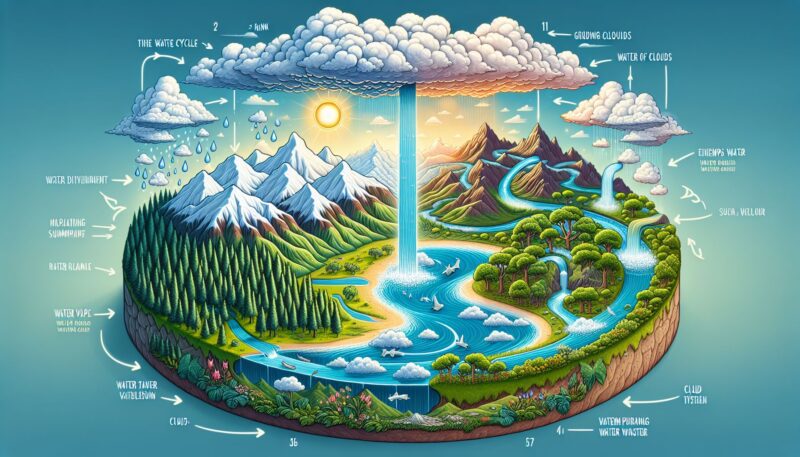
The hydrologic cycle, also known as the water cycle, is a sequence of processes by which water moves from the Earth’s surface to the atmosphere and back again. These processes include evaporation, transpiration, condensation, precipitation, infiltration, percolation, runoff, and groundwater flow. Together, they create a complex and interrelated system that transfers water from one place to another, from one state to another, and between different reservoirs of water.
Evaporation and Transpiration
Evaporation is the process by which water changes from a liquid to a gas, caused by heat from the sun. This invisible vapor rises into the atmosphere. Transpiration, on the other hand, is the process where plants absorb water through roots and then give off water vapor through pores in their leaves. These two processes collectively are often referred to as evapotranspiration and play a crucial role in the cycle by sending water into the atmosphere.
Condensation
As water vapor ascends and cools, it begins to condense into tiny droplets of liquid, forming clouds and fog. This process is known as condensation. Clouds are essentially masses of these tiny water droplets and ice crystals suspended in the atmosphere.
Precipitation
When cloud particles grow in size and can no longer be supported by the updrafts in the atmosphere, they fall to the earth as precitation, which includes rain, snow, sleet, or hail. The form that precipitation takes depends on the temperature profile of the atmosphere.
Infiltration, Percolation, and Runoff
Upon reaching the ground, precipitation can follow different paths. Infiltration is the process where water soaks into the substrate or soil. Some of this infiltrated water continues to move downward, through the soil and rock layers by percolation, ultimately replenishing aquifers—underground layers of water-bearing permeable rock. Water not absorbed by the ground becomes runoff, flowing on the surface to streams, rivers, lakes, or directly to the oceans.
Groundwater Flow and Discharge
Much of the infiltrated water becomes groundwater, which flows through aquifers and may eventually seep into streams, lakes, and oceans, a process known as groundwater discharge.
Streamflow and Baseflow
Streamflow is the actual flow of water within rivers and streams. Not all streamflow is directly from runoff; some of it originates from groundwater seeping into the bed of the river or stream in a process known as baseflow.
The Significance of the Hydrologic Cycle
The hydrologic cycle is a fundamental driver for the Earth’s climate system and supports various natural phenomena. It distributes heat across the globe, affecting weather and climate patterns. Moreover, it is vital for replenishing freshwater resources, maintaining biodiversity, and sustaining agricultural practices upon which human life relies.
Current Challenges to the Hydrologic Cycle
The hydrologic cycle is highly sensitive to changes in climate and human activities. Here are some of the major challenges faced today:
Climate Change
As global temperatures rise, there are increases in the rate of evaporation and transpiration, leading to more water vapor in the atmosphere. This, in turn, can lead to more intense and frequent precipitation events, disrupting traditional weather patterns and potentially causing floods, landslides, and soil erosion.
Water Pollution
Pollutants from agricultural runoff, wastewater discharges, and industrial activities can severely degrade water quality. Nutrients such as nitrogen and phosphorus can lead to eutrophication and algal blooms, reducing dissolved oxygen levels and harming aquatic ecosystems. Heavy metals and other toxic substances can also pose a direct threat to human and aquatic health.
Overexploitation of Groundwater
In many regions, groundwater is being withdrawn at a rate faster than it can be replenished naturally through the hydrologic cycle. This groundwater depletion leads to declining water tables, land subsidence, and a reduction in baseflow to streams and rivers, which can affect entire ecosystems and reduce water availability for human use.
Protecting the Hydrologic Cycle: What Can We Do?
Sustainable Water Management
Sustainable practices include integrating water reuse and recycling, implementing efficient irrigation, and protecting wetlands that naturally
recharge aquifers. Proper management of watersheds and catchment areas is also crucial for maintaining the integrity of the hydrologic cycle.
Pollution Prevention and Water Treatment
Reducing the contamination of water sources through robust regulation, industrial treatment, and public education is essential. Additionally, advancing water treatment technologies like reverse osmosis, filtration, and disinfection can ensure safe and clean water is returned to the cycle.
Climate Change Mitigation
Addressing climate change by reducing greenhouse gas emissions and investing in renewable energy sources can lessen the harmful impacts on the hydrologic cycle. Efforts to protect and restore forests, wetlands, and other natural landscapes will also help maintain the balance and resilience of water-related ecological systems.
Conclusion
The hydrologic system is a complex and indispensable component of Earth’s environment, and it is crucial to understand its processes and implications for the sustainability of water resources and ecosystems. Our collective efforts to manage and protect the water cycle will determine not only the health of the environment but the future of humanity as well.
References
- “The Water Cycle.” United States Geological Survey. https://www.usgs.gov/special-topic/water-science-school/science/water-cycle
- “Climate Change: Global Sea Level.” NASA. https://climate.nasa.gov/vital-signs/sea-level/
- “Water Use and Sustainability in California.” California Water Boards. https://www.waterboards.ca.gov/water_issues/programs/sustainable_groundwater_management/
By understanding and respecting the natural flow of the hydrologic cycle, we can ensure that this invaluable resource continues to nourish life on Earth for generations to come.