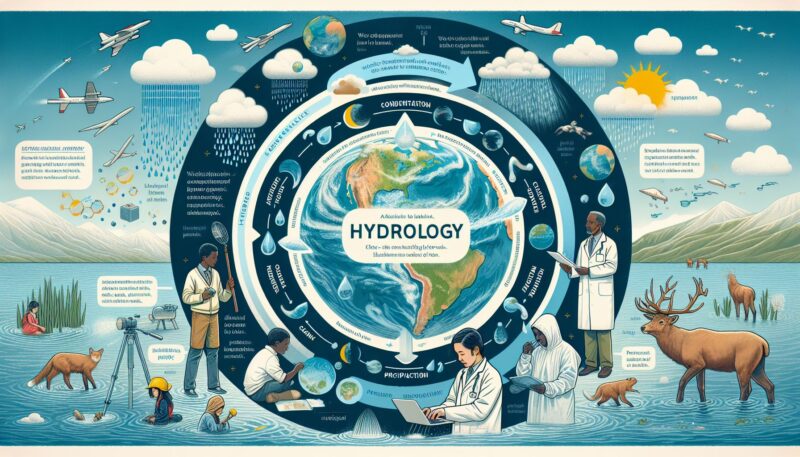
Hydrology, the branch of science that deals with the properties, distribution, and circulation of water on Earth, is a key player in understanding the planet’s most crucial resource. From the smallest creeched to the vast oceans, hydrology covers the study of water everywhere, how it affects the environment, and its significance for human societies. This article delves deep into the realm of hydrology, its processes, and the issues associated with this vital field.
What is Hydrology?
At its core, hydrology is the scientific study of water. It explores the water cycle, the distribution of water across various parts of the Earth, and the influence it has on the planet’s ecology and human civilizations. Hydrologists study processes such as precipitation, evaporation, transpiration, and runoff to understand the quantitative and qualitative aspects of water resources.
The Hydrologic Cycle: Earth’s Water Engine
The hydrologic cycle, also known as the water cycle, is the continuous circulation of water within the Earth’s hydrosphere. It comprises several key processes:
- Evaporation: The transformation of water from liquid to gas, mainly due to solar energy, occurring in oceans, lakes, and other water bodies.
- Transpiration: The release of water vapor from plants into the atmosphere, essentially ‘plant sweat.’
- Condensation: The conversion of water vapor into liquid, forming clouds and fog.
- Precipitation: When water returns from the atmosphere to the surface as rain, snow, hail, or sleet.
- Infiltration: The process of water soaking into the soil.
- Percolation: Water’s movement through the soil and its layers, heading towards the groundwater repositories.
- Runoff: Water, from rain or melted snow, that flows over the ground’s surface and can lead to streamflow.
- Baseflow: The portion of the river’s discharge that is provided by the seepage of groundwater into its bed.
- Streamflow: The flow of water in streams, rivers, and other channels.
During these processes, water changes its state and moves from one component of the environment to another, playing critical roles in shaping landscapes, influencing climates, and supporting life.
Groundwater: Earth’s Hidden Resource
Beneath our feet lies one of Earth’s largest sources of fresh water – groundwater. This resource fills the cracks and spaces in underground soil and rock layers and is held in aquifers, which are geologic formations capable of storing and transmitting water. Two critical terms in groundwater hydrology include:
- Recharge: The process through which groundwater aquifers are replenished with water from precipitation and surface water.
- Discharge: The natural or artificial removal of groundwater from an aquifer, often manifesting as springs or by being pumped out for human use.
The availability and sustainability of groundwater resources depend on the delicate balance between recharge and discharge. Overextraction of groundwater can lead to serious environmental and economic consequences such as subsidence, reduced water quality, and loss of surface water bodies.
Watersheds and River Systems
Watersheds, also called catchments or drainage basins, are land areas where precipitation collects and drains off into a common outlet—such as a river, bay, or other body of water. Understanding the hydrology of a watershed is crucial for managing water resources, preserving water quality, and mitigating flood risks. Rivers and streams within watersheds are interconnected systems that transport water, sediments, and nutrients across landscapes.
Surface Water: Lakes, Reservoirs, and Wetlands
Lakes, reservoirs, and wetlands are critical surface water features within the hydrologic cycle. Lakes are naturally formed bodies of water, while reservoirs are artificially created store water for various uses such as drinking water, agriculture, and hydropower. Wetlands are transitional areas between terrestrial and aquatic ecosystems, playing an important role in water purification, flood protection, and providing habitat for a diverse range of plants and animals.
Marine Systems: Oceans, Estuaries, and Glaciers
Covering over 70% of the Earth’s surface, oceans are the largest component of the hydrosphere. They are crucial for their role in regulating the climate, supporting marine ecosystems, and providing resources for human use. Estuaries are dynamic environments where freshwater from rivers meets saltwater from the ocean, serving as nurseries for many marine species.
Glaciers and icebergs, while not liquid water, represent significant freshwater reserves that are slowly released into the ocean and contribute to sea-level rise when they melt. Similarly, permafrost – permanently frozen soil found in polar regions – stores water that can be released as it thaws due to rising global temperatures.
Water Quality and Pollution
The quality of the water in our rivers, lakes, and aquifers is of paramount importance. Hydrologists study various aspects of water quality, including:
- Dissolved Oxygen: Crucial for the survival of aquatic life.
- Turbidity: The cloudiness of water, often caused by suspended solids.
- pH: An indication of the water’s acidity or alkalinity.
- Salinity: The salt content of water, particularly important in marine systems.
- Hardness: The concentration of calcium and magnesium, affecting water’s suitability for household tasks.
- Heavy Metals: These can be harmful to health and the environment, often resulting from industrial discharges.
Water pollution is a persistent problem affecting water systems worldwide. It comes from urban runoff, agricultural activities, waste disposal, and industrial effluents. Pollutants include nutrients like nitrogen and phosphorus that cause eutrophication and algal blooms, pathogens causing disease, and microplastics adversely impacting aquatic life.
Water Treatment and Management Strategies
To ensure safe and reliable water supplies for human and ecological needs, treatment and management strategies are essential. Water treatment technologies include:
- Filtration: Removing particulates from water.
- Disinfection: Using chlorine or other chemicals, ozonation, or UV irradiation to kill pathogens.
- Desalination: The process of removing salt from seawater, often using reverse osmosis.
Water management encompasses strategies like stormwater management, water conservation, and sustainable use practices like rainwater harvesting and greywater reuse. It also includes infrastructure such as water distribution networks, pumping stations, and reservoirs to deliver water where it is needed.
Sources
- “Principles of Hydrology” by R.C. Ward (http://hydrology-principles.com/)
- US Geological Survey: The Water Cycle. (https://www.usgs.gov/special-topics/water-science-school/science/water-cycle)
- World Health Organization: Water Sanitation Health. (https://www.who.int/teams/environment-climate-change-and-health/water-sanitation-and-health)
Conclusion
Hydrology connects every aspect of Earth’s water system, influencing our climate, landscapes, and living conditions. Understanding hydrological processes is essential for managing water resources sustainably, protecting ecosystems, and ensuring that clean, safe water is available for all life. As challenges like water scarcity and pollution become more pressing, the science of hydrology will continue to play a critical role in solving some of humanity’s