Category: Main

Hydrology: Understanding The Science of Water and Our Planet’s Lifelines

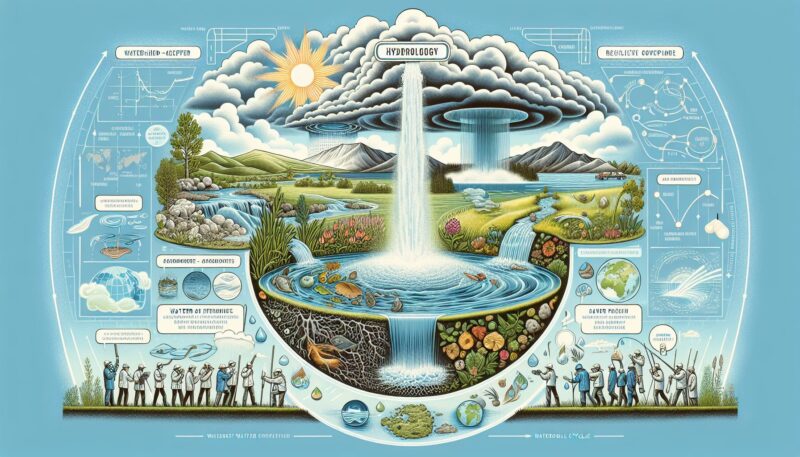
Water is the lifeblood of our planet, a resource so crucial that its abundance or scarcity can determine the fate of entire civilizations. Hydrology, the science dedicated to understanding the movement, distribution, and properties of Earth’s water, stands as a guardian of this precious resource. Within this scientific realm, concepts such as the hydrologic cycle, watersheds, and aquifers form the backbone of our understanding and management of water resources. In this article, we will dive deep into the complex world of hydrology, explore the interconnectedness of water systems, and consider the challenges and solutions in water management.

The Hydrologic Cycle: Earth’s System of Water Renewal

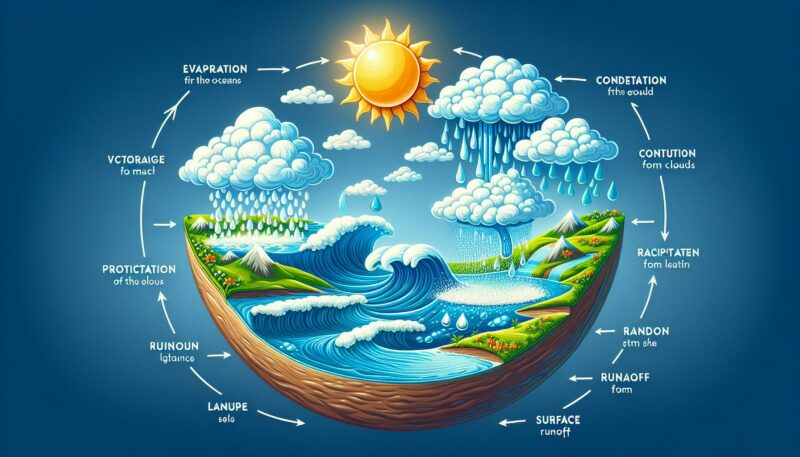
The hydrologic cycle, also known as the water cycle, is a continuous process by which water moves through the planet’s atmosphere, surface, and subsurface areas. It involves various stages, including precipitation, evaporation, transpiration, condensation, infiltration, percolation, and runoff.

Precipitation and Evaporation

Precipitation is the process through which water, in the form of rain, snow, sleet, or hail, falls from clouds to the Earth’s surface. It is the primary mechanism for delivering fresh water to the planet’s ecosystems and replenishing surface water and groundwater supplies.

Evaporation occurs when the sun’s energy turns liquid water into water vapor, which ascends into the atmosphere. Water bodies, soil moisture, and other wet surfaces all contribute to this process, releasing water into the air.

Transpiration and Condensation

Transpiration is the process by which water within plants evaporates into the atmosphere from leaves, stems, and flowers. Like evaporation, this process helps water vapor to rise and accumulate in the atmosphere.

Condensation is when water vapor in the air cools and changes back into liquid droplets, forming clouds and, eventually, precipitation once again.

Infiltration, Percolation, and Runoff

Infiltration occurs when water on the ground surface enters the soil, whilst percolation refers to the movement of this water through the soil layers and possibly into aquifers.

Runoff is water that flows over the ground surface, heading towards rivers, lakes, and oceans, typically after a heavy rain when the ground is saturated, and infiltration rates are exceeded.

Together, these processes create a dynamic and self-replenishing water system essential for all forms of life on Earth.

Watersheds and River Systems

A watershed, also known as a drainage basin or catchment, is an area of land that channels rainfall and snowmelt into creeks, streams, and rivers, and eventually to outflow points such as reservoirs, bays, and the ocean. These basins are crucial for collecting freshwater and are often the focal points for identifying and managing water resources.

River Systems

Rivers are a fundamental part of the hydrologic cycle and watersheds, providing a continuous flow of water powered by streamflow and baseflow. Streamflow is the water that flows over the surface due to rainfall or snowmelt, and baseflow is the portion of the river’s flow that is sustained between precipitation events, largely sourced from groundwater seeping into the river bed.

Lakes, Reservoirs, and Wetlands

Lakes are large bodies of freshwater that store water and support diverse ecosystems. Reservoirs, meanwhile, are man-made lakes created by damming rivers. They serve multiple purposes including water supply, flood control, and recreation.

Wetlands are areas where water covers the soil, or is present either at or near the surface of the soil all year or for varying periods of time during the year. They play a significant role in hydrology by filtering pollutants, storing floodwater, and maintaining surface water flow during dry periods.

Groundwater and Aquifers

Beneath our feet lies one of the most important but least visible components of the hydrologic cycle: groundwater. It fills the voids and cracks in the soil and rocks, and its largest storage locations are aquifers – permeable rock formations that can contain or transmit groundwater.

Recharge refers to the process of infiltration reaching the water table and adding to the groundwater reservoir. Groundwater flows very slowly and can remain in an aquifer for hundreds or even thousands of years. It is extracted through natural springs or wells for human use, a process known as discharge.

The Challenge of Sustainable Management

Managing these interconnected water systems involves understanding and balancing the natural movement of water with human demand. Knowledge of hydrologic principles helps in designing water distribution networks, water storage systems like water towers, and pumping stations.
Understanding the Hydrologic Cycle: The Pulse of Our Planet’s Water System

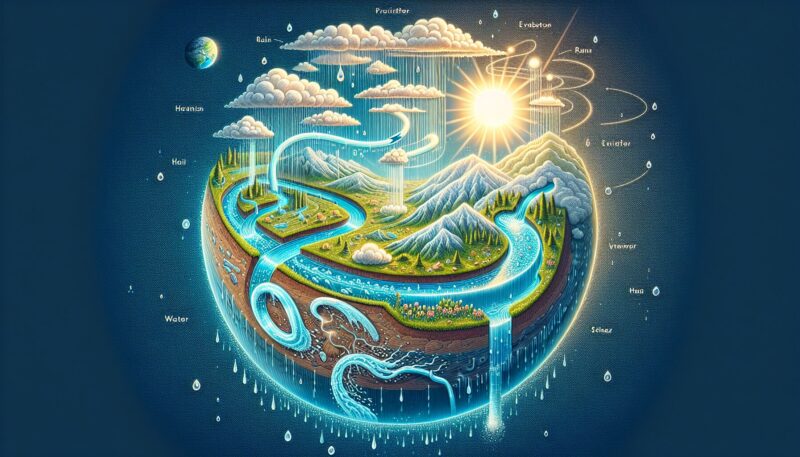
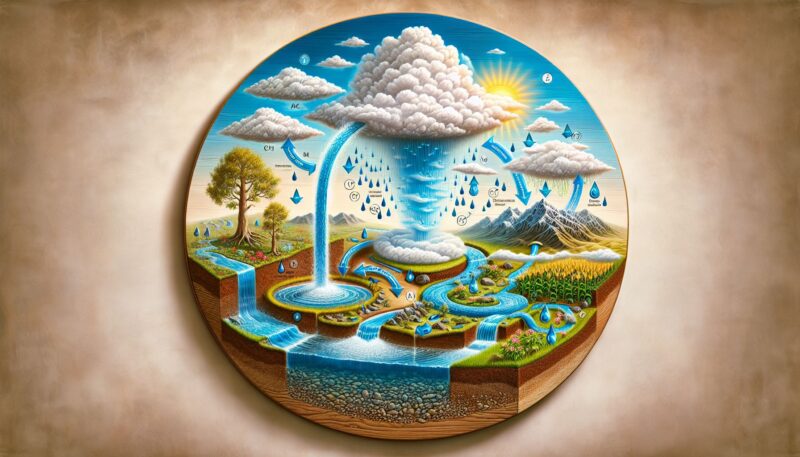
Water is the planet’s lifeblood, flowing through various channels and transforming between states, creating a dynamic system that shapes ecosystems, weather, and even geopolitics. At the heart of this system is the hydrologic cycle, a process that describes the continuous movement of water on, above, and below the Earth’s surface. This article will delve into the intricacies of the hydrologic cycle, exploring how it functions, its critical components, and the broader implications for our environment and society.

What is the Hydrologic Cycle?

The hydrologic cycle, also known as the water cycle, is the process that moves water throughout the Earth’s hydrosphere. It involves the constant circulation of water in the environment and encompasses various processes, including precipitation, evaporation, transpiration, condensation, infiltration, percolation, runoff, and more. This cycle is driven by solar energy and gravity and is responsible for the distribution of water resources across the globe.

The Processes of the Hydrologic Cycle

To fully grasp the hydrologic cycle’s complexity, we need to understand the different processes that comprise it:

Evaporation

Evaporation is the process by which water transforms from a liquid to a gas (water vapor) due to heat. The primary source of this heat is the sun. Bodies of water, such as oceans, lakes, and rivers, and wet surfaces like soil, contribute vast amounts of vapor to the air.

Transpiration

Transpiration occurs when plants absorb water from the soil and release water vapor from their leaves into the atmosphere. This, combined with evaporation, is often referred to as evapotranspiration.

Condensation

As water vapor rises and cools, it changes back into liquid form, creating clouds. This transformation is known as condensation. Condensation plays a crucial role in forming precipitation.

Precipitation

When water droplets in clouds become too heavy, they fall to the earth’s surface as precipitation—this includes rain, snow, sleet, or hail.

Infiltration

Infiltration is the process by which water on the surface enters the soil. Once inside the soil, the water can percolate into deeper layers and replenish groundwater reserves.

Percolation

Percolation is the movement of water through the soil’s pores and its downward migration towards the groundwater table.

Runoff

Not all water that falls as precipitation is absorbed by the soil. Excess water flows over the surface as runoff, eventually reaching rivers, lakes, and oceans.

Groundwater Movement

Water can remain underground as groundwater, flowing through aquifers – layers of permeable rock or sand that store and conduct water. This slow movement is a key component of the cycle.

Discharge

Groundwater often emerges as springs or seeps into rivers and lakes, a process called discharge, and this maintains baseflow in these water bodies, especially during dry periods.

Importance of the Hydrologic Cycle

The hydrologic cycle is essential for several reasons:

  • Supporting life: Water is vital for all known forms of life. The cycle ensures that water is made available to organisms in various habitats.
  • Regulating climate: Water’s movement between the surface and atmosphere helps regulate global temperatures through processes like evaporation and condensation.
  • Shaping landscapes: Water flow in its various forms can sculpt landscapes through erosion, sediment transport, and deposition.
  • Sustaining ecosystems: Aquatic and terrestrial habitats rely on the cycle for nutrient distribution and energy flow.

Implications for Water Quality and Accessibility

Human activity, climate change, and natural events can disrupt the harmonious balance of the hydrologic cycle, leading to significant challenges linked to water quality and accessibility.

Water Quality Concerns

The hydrologic cycle can spread pollutants once they enter the water system. Here’s how different processes contribute to or mitigate water quality issues:

  • Precipitation: While rain can cleanse the atmosphere, it can also carry pollutants to the ground.
  • Runoff: Surface water runoff often picks up pollutants from the land, including fertilizers, pesticides, and sediment, worsening water quality downstream.
  • Infiltration and Percolation: These processes naturally filter water but can also introduce pollutants into the groundwater system if the overlying soil is contaminated.
  • Discharge: Polluted groundwater can discharge into rivers and lakes, affecting the habitat for aquatic life.

Addressing water quality through effective water treatment infrastructure, such as using filtration, disinfection, and sedimentation techniques, is crucial for maintaining a reliable and safe water supply.

Water Accessibility and Scarcity

The hydrologic cycle underpins the global distribution of water resources, but this distribution is uneven, leading to regional disparities in water availability. Factors such as climate change and over-extraction can exacerbate water scarcity, stressing the need for sustainable water management practices, including conservation efforts and technological solutions like desalination and water recycling.

Water’s Journey Through Complex Landscapes

Landscapes strongly influence the hydrologic cycle’s progression. Topography dictates water’s flow and storage, with watersheds, catchments, and drainage basins serving as integral components:

Watershed

A watershed is an area of land that channels precipitation to creeks, streams, and rivers, and eventually to outflow points such as lakes, oceans, or other watersheds. Everything within a watershed is interconnected, and changes to land use or climate within it can have far-reaching effects.

Drainage Basin

A drainage basin refers to the area of land where all the water under it or draining off of it collects into the same place. It’s synonymous with a watershed but often used on larger scales.

Catchment

Catchment is another term similar to a watershed and is the area from which water collects into a predefined area, commonly used in the UK and Australia.

Aquifers and Groundwater Recharge

Groundwater systems and aquifers are critical repositories of freshwater. Their recharge is the process by which infiltrated water adds to the groundwater. Over-extraction and pollution can deplete these vital reserves, making recharge areas’ protection paramount.

Baseflow and Streamflow

Baseflow refers to the part of a river’s flow sustained by groundwater seeping into the bed, while streamflow is the total flow, including runoff and baseflow. Both elements are essential for river ecosystem health and for supplying water resources downstream.

The Hydrologic Cycle: Nature’s Remarkable System for Water Distribution

Water is essential to life on Earth, covering about 71% of our planet’s surface and constituting up to 60% of the human body. It’s a vital resource that we often take for granted, yet its journey through the environment is a complex and intricate process known as the hydrologic cycle. Understanding how this cycle works is crucial for managing our water resources, predicting weather patterns, and safeguarding ecosystems.

What is the Hydrologic Cycle?

The hydrologic cycle, also known as the water cycle, is the continuous movement of water on, above, and below the Earth’s surface. It is a system with many interconnected processes, including evaporation, transpiration, condensation, precipitation, infiltration, percolation, runoff, and more, that facilitate the distribution and recycling of the Earth’s water resources.

1. Evaporation and Transpiration

The journey of water starts with evaporation—the process by which water changes from a liquid to a gas (or vapor) form, primarily due to sun-driven energy. This occurs over oceans, lakes, rivers, and other bodies of water. In addition, plants also contribute through transpiration, wherein water absorbed by roots moves up through plants and escapes as vapor from their leaves.

2. Condensation

As water vapor rises and encounters cooler temperatures in the atmosphere, it transforms back into a liquid form—a process known as condensation. This leads to the formation of clouds, which are masses of billions of tiny water droplets or ice crystals suspended in the atmosphere.

3. Precipitation

Precipitation occurs when these water droplets or ice crystals merge to become heavy enough to fall back to the Earth due to gravity. This fall can be in the form of rain, snow, sleet, or hail.

4. Infiltration and Percolation

Upon reaching the ground, some of the water infiltrates into the soil, moving downward through the earth’s layers in a process called percolation. This water potentially recharges underground aquifers—natural reservoirs of groundwater.

5. Runoff and Streamflow

The remaining water typically flows over the land as runoff, eventually pouring into rivers, lakes, and oceans. This moving water is referred to as streamflow and is influenced by many factors, including topography, vegetation, and rainfall intensity.

6. Baseflow

Part of streamflow also comes from baseflow, which is the sustained flow of a stream derived from groundwater seeping into the bed and banks of a river or stream. This maintains river levels between rain events.

7. Groundwater and Aquifer Recharge

Below the Earth’s surface, water stored in soil or rock formations (aquifers) can act like sponges, soaking up water. This process, called recharge, replenishes the groundwater, which can be tapped into for human use via wells. Discharge is the opposite process, where groundwater enters into rivers or oceans.

The Importance of the Hydrologic Cycle

The hydrologic cycle is more than just scientific curiosity; it has profound implications:

  • Climate Regulation: By transferring heat from the tropics to other parts of the world through atmospheric circulation, the water cycle plays a critical role in regulating climate.
  • Life Support: Freshwater resources made available through this cycle are essential for drinking, agriculture, industry, and ecosystems.
  • Environmental Indicator: Changes in the water cycle can indicate broader environmental changes, such as global warming or deforestation.

Human Impact on the Hydrologic Cycle

While the hydrologic cycle is a natural process, human activities significantly impact it. Deforestation, urbanization, and pollution can disrupt the balance of this cycle, leading to critical issues like water scarcity, pollution, and extreme weather events.

Water Conservation and Sustainability

To mitigate these problems, water conservation efforts are critical. Techniques such as rainwater harvesting, which involves collecting and storing rainwater for reuse before it reaches the ground, and greywater reuse, which reuses water from baths, sinks, and washing machines for purposes other than drinking, are important sustainability strategies. Additionally, strategies to manage water footprints and virtual water, which measure the indirect water used to produce goods and services, are important for conserving water at a larger scale.

Challenges Like Drought and Flood

Extreme weather events such as droughts and floods underscore the delicate nature of the water cycle and the need for better water management policies. Droughts reflect periods of below-average precipitation, leading to water shortages, while floods result from excessive rain or snowmelt overwhelming river systems.

Looking Ahead: Water Diplomacy and Policy

With the recognition of water’s central role in political, economic, and social structures, the concepts of water diplomacy and water conflict come to the forefront. As access to freshwater becomes increasingly strained, cooperation across political boundaries is essential. Watersheds, catchments, and drainage basins often span multiple jurisdictions, making shared management and international policies critical.

Sources:

  1. “The Water Cycle,” United States Geological Survey (USGS). https://www.usgs.gov/special-topics/water-science-school/science/water-cycle
  2. “Hydrologic Cycle,” National Oceanic and Atmospheric Administration (NOAA). https://www.noaa.gov/education/resource-collections/hydrologic-cycle-education-resources
  3. “Water Use and Conservation,” World Wildlife Fund (WWF). https://www.worldwildlife.org/initiatives/freshwater

Understanding the complex web of processes that make up the hydrologic cycle is crucial for protecting our precious water resources. As citizens, we can contribute by being mindful of our consumption, supporting water conservation measures, and advocating for policies that promote sustainable water management. The fate of our blue planet and the life it supports depends on it.

Understanding the Hydrologic Cycle: Earth’s Essential Process for Water Circulation

Water is life, a stark reality that underpins the importance of the hydrologic cycle to our planet’s health and sustenance. The hydrologic cycle, also known as the water cycle, is a continuous process by which water circulates throughout the Earth’s hydrosphere, involving the atmosphere, land, and the oceans. It is a critical ecological cycle that impacts everything from global weather patterns to the availability of fresh water for human consumption. This article delves into the intricate process of the hydrologic cycle and its crucial role in regulating the Earth’s environment.

What is the Hydrologic Cycle?

The hydrologic cycle is the natural process that distributes and recycles Earth’s water supply. It is a dynamic system consisting of various stages such as evaporation, transpiration, condensation, precipitation, infiltration, percolation, runoff, and storage in bodies of water like rivers, lakes, and oceans.

Evaporation and Transpiration

Evaporation is the process where water is converted from liquid to vapor form and rises into the atmosphere. This process is primarily powered by the sun’s energy. Transpiration, on the other hand, is similar to evaporation, but it occurs in plants. As plants absorb water from the soil, they release water vapor from their leaves into the atmosphere. Together, evaporation and transpiration account for the significant movement of water into the air, a process collectively known as “evapotranspiration.”

Condensation and Precipitation

Condensation is when water vapor in the atmosphere cools and changes into liquid droplets, forming clouds. When these droplets combine and grow heavy enough, they fall to Earth’s surface as precipitation. Precipitation comes in various forms including rain, snow, sleet, and hail, depending on the temperature and atmospheric conditions.

Infiltration, Percolation, and Runoff

Once precipitation reaches the Earth’s surface, it participates in several pathways. Infiltration is the process of water seeping into the soil. Some of this water will continue to move deeper through the soil in a process called percolation, eventually replenishing aquifers — underground layers of water-bearing permeable rock or sediments.

Water that does not infiltrate the ground becomes surface runoff, flowing into streams, rivers, and lakes. The amount of runoff is influenced by many factors, including the rate of precipitation, ground saturation, topography, and the presence of vegetation.

Streamflow and Baseflow

Streamflow is the movement of water within a river or stream, driven by runoff and precipitation. Part of streamflow is maintained by baseflow, which is the sustained flow of a stream in the absence of direct runoff. This occurs as groundwater seeps into the riverbed, providing a constant contribution to the water in the stream, particularly during dry periods.

Groundwater and Aquifer Dynamics

Groundwater is a hidden resource that resides beneath the Earth’s surface within the pore spaces of soils and geological formations. Aquifers are the geological layers that contain sufficient permeability to store and transmit groundwater. The natural process of groundwater recharge replenishes these aquifers, typically through percolation from the surface. Discharge, on the other hand, is the flow of groundwater back into the environment, often into rivers, lakes, or the ocean.

The Importance of Water Quality in the Hydrologic Cycle

The hydrologic cycle is not just about the physical movement of water but also concerns the quality of water as it travels through different phases. Water quality refers to the chemical, physical, and biological characteristics of water, which determine its suitability for various uses. Human activities, such as industrial discharges, agricultural runoff, and urban development, can introduce pollutants like heavy metals, nutrients, pathogens, and microplastics into the water cycle, leading to water pollution challenges such as eutrophication and algal blooms.

Human Impact on the Hydrologic Cycle

Human activities like deforestation, urbanization, and the emission of greenhouse gases affect the hydrologic cycle. Changes in land use can alter evaporation rates, groundwater recharge, and runoff patterns. Increased greenhouse gas emissions contribute to climate change, affecting precipitation patterns and exacerbating extreme weather events such as droughts and floods.

Water Treatment and Management

Given the impact of human activity on water quality, water treatment has become essential in ensuring safe water for consumption. Modern water treatment processes, such as filtration, disinfection (chlorination, ozonation, UV irradiation), coagulation, flocculation, sedimentation, adsorption, ion exchange, and reverse osmosis, are employed to remove contaminants and provide clean water.

Desalination technology, which removes salts and other minerals from saline water, is also pivotal in regions suffering from water scarcity, providing an alternative source of freshwater.

Conservation and Sustainable Use

Water conservation is vital to maintain water supply and quality. Measures like rainwater harvesting, greywater reuse, and reducing water footprints are ways in which individuals and communities can contribute to the sustainable use of water resources. Managing the demand for virtual water—the water embedded in products and services—is also significant in reducing the overall water consumption.

Global Water Challenges: Scarcity, Stress, and Diplomacy

As populations grow, and the demand for water increases, water scarcity becomes a pressing issue for many regions. Water stress refers to the inability to meet human and ecological demand for water. It is exacerbated by overconsumption, pollution, and climate change.

Water conflicts can arise from the competition over limited water resources. In response, water diplomacy has emerged as a field that seeks to manage shared water resources in ways that are fair, equitable, and sustainable.

Protecting our Water Future

As guardians of the Earth’s water resources, we must be cognizant of our role within the hydrologic cycle. Increased awareness leads to better practices in water management, conservation, and collaboration. Only through a concerted effort to understand and respect the delicate balance of the hydrologic cycle can we safeguard the availability of fresh water for future generations.

References

  • U.S. Geological Survey. (n.d.). The Water Cycle. https://www.usgs.gov/special-topic/water-science-school/science/water-cycle
  • National Oceanic and Atmospheric Administration. (n.d.). Water Cycle. https://www.noaa.gov/education/resource-collections/freshwater/water-cycle
  • United Nations Water. (n.d.). Water Quality. https://www.unwater.org/water-facts/quality-and-wastewater

By gaining an understanding of the hydrologic cycle and its integral processes, we can appreciate the complex dynamics governing our planet’s freshwater resources. This deepened knowledge further emphasizes the need for responsible water use, effective regulation, and collaborative management to ensure the health of our water systems and, consequently, the life they support.