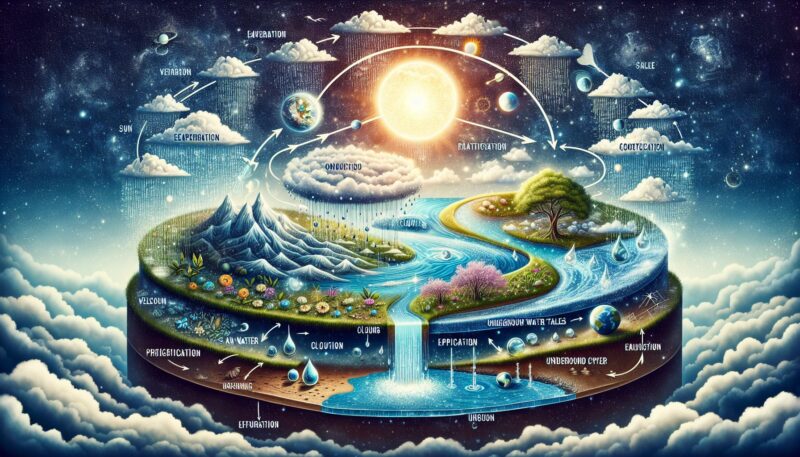
Water is the substance that underpins all life on Earth, a vital resource that cycles continuously through the environment in a process known as the hydrologic cycle. This complex system is crucial for maintaining the balance of ecosystems, supporting human activities, and regulating climate patterns. Within this pivotal cycle, each component plays a significant role in replenishing Earth’s water supply and ensuring its overall health and sustainability. In this article, we will explore the hydrologic cycle in depth, survey its components, and discuss the various processes such as evaporation, condensation, precipitation, and more that keep our water resources in a state of constant motion.
What is the Hydrologic Cycle?
The hydrologic cycle, also known as the water cycle, is a continuous movement of water on, above, and below the surface of the Earth. This cycle is powered by the energy from the sun and involves a complex system of exchange between the atmosphere, land, and water bodies. Its main components include evaporation, condensation, precipitation, infiltration, percolation, runoff, and groundwater flow.
Evaporation: The Cycle’s Engine
Evaporation is the process by which water transforms from a liquid state into water vapor. Sunlight heats the water in rivers, lakes, and oceans, giving the water molecules enough energy to escape into the atmosphere. This phase change does not only occur on the surface of open water bodies; it also happens on a smaller scale in soil moisture and through the transpiration of plants.
Transpiration: An Underappreciated Contributor
Transpiration is the evaporation of water from plant leaves. Plants absorb groundwater through their roots and transport it up to their leaves, where it evaporates into the atmosphere. Remarkably, transpiration accounts for approximately 10% of all the water vapor in the atmosphere, underscoring the vital role that plants play in the hydrologic cycle (Encyclopedia Britannica).
Condensation: Formation of Clouds
As water vapor rises and cools in the atmosphere, it undergoes condensation. This process converts the water vapor back into liquid water or ice crystals which clump together to form clouds. Condensation is a key part of the cycle, as it eventually leads to precipitation.
Precipitation: Water’s Return to Earth
When water droplets within clouds grow too heavy to stay suspended in the atmosphere, they fall to the Earth as precipitation. This can be in the form of rain, snow, sleet, or hail. Precipitation replenishes fresh water in rivers, lakes, and streams as well as contributing to soil moisture.
Infiltration and Percolation: The Earth’s Natural Filter
Once precipitation reaches the ground, it doesn’t just stay on the surface. Some of the water soaks into the soil in a process called infiltration. From there, it can move deeper underground through percolation, where it will eventually recharge aquifers. These subsurface water reservoirs act as natural filters, with the soil and rock layers removing impurities from the water.
Runoff: Rivers on the Move
Not all precipitation will infiltrate the ground; some of it will flow over the land as runoff. Runoff occurs when the ground is saturated or impervious, causing water to flow towards rivers, lakes, and oceans. This process is responsible for transferring nutrients and sediments across landscapes but can also lead to pollution if the runoff contains harmful substances.
Groundwater Movement: The Hidden Reservoirs
Groundwater doesn’t remain static. It moves slowly through aquifers and can return to the surface through springs or seep into rivers and lakes. Groundwater flow also carries nutrients and minerals, influencing the composition of soil and surface waters.
The Role of Bodies of Water
Lakes and Reservoirs: Natural and Man-made Storage
Lakes and reservoirs are crucial components of the local water cycle, serving as storage areas for freshwater. While lakes are typically natural formations, reservoirs are man-made and often created by damming rivers. They play a key role in providing water for various uses, including agriculture, drinking water, and recreational activities.
Rivers and Streams: Arteries of the Hydrologic Cycle
Rivers and streams are dynamic systems, constantly moving and changing, and they are key conduits for water as it moves from upstream to downstream locations. They connect the different parts of the hydrologic cycle, linking upland watersheds to oceans.
Wetlands, Estuaries, and Oceans: Complex Ecosystems
Wetlands, estuaries, and oceans are integral to the hydrologic cycle. Wetlands absorb excess water during storms, reducing the risk of flooding. Estuaries – where fresh and saltwater mix – are amongst the most productive ecosystems on Earth. Oceans are the largest storehouse of Earth’s water and are essential to weather and climate regulation.
Human Impact on the Hydrologic Cycle
Water Withdrawal and Consumption
Human activities have had a significant impact on the hydrologic cycle. Through withdrawal for agriculture, industry, and domestic use, we have altered the natural flow and availability of water. The excessive consumption of freshwater resources is causing depletion of aquifers and lowering water tables.
Water Pollution and Quality Concerns
Water quality is another major concern, with pollution from agricultural runoff, industrial discharges, and urban wastes entering the water cycle. These contaminants can lead to problems such as eutrophication, algal blooms, and the depletion of dissolved oxygen in water bodies, severely impacting aquatic life and making the water unsafe for consumption.
Climate Change and the Changing Cycle
Climate change is affecting the hydrologic cycle by altering precipitation patterns, increasing the intensity and frequency of extreme weather events, and causing the melting of glaciers and ice sheets. These changes have profound implications for water availability and quality worldwide.
Strategies for Sustainability
To address the challenges facing the hydrologic cycle and our water supplies, sustainable practices are essential.
Water Conservation and Management
Water conservation efforts, such as rainwater harvesting and greywater reuse, can reduce the demand on freshwater sources. Integrated water resource management (IWRM) that considers the interconnectedness of the hydrologic components can help in the equitable and sustainable distribution of water.
Protection and Restoration of Ecosystems
Protecting and restoring ecosystems such as wetlands and forests can improve the natural functioning of the hydrologic cycle. These ecosystems act as buffers, filtering pollutants and sustaining groundwater levels.
Technological Advancements in Water Treatment
Advancements in water treatment technologies, like reverse osmosis and advanced filtration systems, can help ensure safe and clean water. Water treatment plants utilize processes like coagulation, flocculation, and disinfection to remove contaminants and pathogens, providing communities with potable water.
Conclusion
The hydrologic cycle is a fascinating and intricate system that maintains life on Earth. It is crucial that we understand its components and processes to manage and preserve our water resources effectively. As climate change and human activities continue to place stress on the cycle, sustainable management and technologies will be ever more important to ensure the longevity of our planet’s water supply for generations to come.
For a deeper dive into the science of the hydrologic cycle and its importance to Earth’s