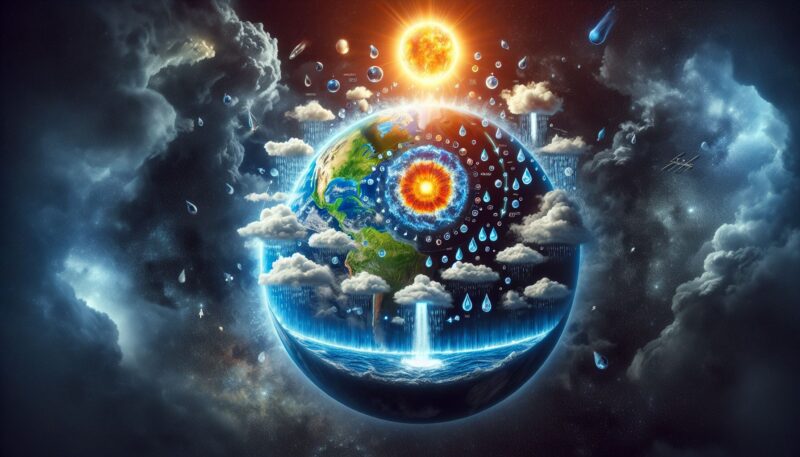
Water is Earth’s lifeblood, driving ecosystems, shaping landscapes, and sustaining all forms of life. At the heart of water’s dynamic journey through our planet is the hydrologic cycle, an intricate, continuous system that circulates water throughout the Earth’s hydrosphere. This article delves into the complexities of the hydrologic cycle, exploring its components, importance, and the challenges it currently faces.
What is the Hydrologic Cycle?
The hydrologic cycle, also known as the water cycle, is a fundamental natural process where water constantly moves, changes states, and gets redistributed within the Earth’s environment. It involves several key processes: evaporation, transpiration, condensation, precipitation, infiltration, percolation, runoff, and groundwater flow. Collectively, these processes recycle Earth’s finite water supply and ensure that water is available for a multitude of purposes – from drinking to agriculture to supporting biodiversity.
Evaporation & Transpiration
Water on Earth’s surface, primarily from oceans, rivers, and lakes, absorbs energy from the sun and turns into vapor in a process called evaporation. Plants also release water vapor into the air through their leaves in a similar process called transpiration. Together, these two processes are referred to as “evapotranspiration,” and they are the primary mechanisms by which water enters the atmosphere.
Condensation & Precipitation
As water vapor rises, it cools and condenses into tiny droplets that form clouds. When these droplets combine and grow heavy enough, they fall back to Earth as precipitation in the form of rain, snow, hail, or sleet, depending on the atmospheric conditions.
Infiltration, Percolation, and Runoff
Once on the ground, water can take one of three paths. Some of it infiltrates the soil, seeping down through the porous Earth material in a process known as percolation. This water can eventually reach and replenish groundwater supplies. Excess water that does not infiltrate or evaporate becomes runoff, which moves across the ground’s surface and feeds into streams, rivers, and eventually the oceans.
Groundwater Flow & Discharge
Groundwater flows through aquifers – permeable rock formations that can store and transmit water. It moves slowly, eventually discharging into streams, rivers, lakes, and oceans, or it may be tapped by wells for human use. This ongoing contribution of groundwater to surface water is known as baseflow.
Interconnectedness of Earth’s Water Systems
All these processes are interconnected, and together they form a global system. Water in the atmosphere regulates Earth’s climate and weather patterns, while water on or beneath the surface shapes landscapes and ecosystems. The hydrologic cycle is in constant motion, powered by the sun’s energy and the forces of gravity.
The Importance of the Hydrologic Machine
The hydrologic cycle is critical for numerous reasons:
- Supporting Life: All living organisms require water for survival. The cycle replenishes freshwater sources, making them available for consumption by plants, animals, and humans.
- Regulating Climate: Water in its various forms helps regulate Earth’s temperature. For example, evaporation cools the Earth’s surface, while water vapor traps heat in the atmosphere, creating a greenhouse effect that warms the planet.
- Sustaining Ecosystems: Different ecosystems rely on particular stages of the water cycle. Wetlands, for instance, are maintained by regular flooding and groundwater discharge.
- Shaping Landforms: Many of the Earth’s geological features result from long-term water movement. Rivers carve canyons, groundwater forms caverns, and glaciers sculpt valleys and peaks.
Threats to the Hydrologic Cycle
While the hydrologic cycle is a natural system, human activities are altering it in unprecedented ways. Some of the most significant threats include:
- Climate Change: Global warming is modifying precipitation patterns, causing more intense storms and altering snowmelt dynamics. Changes in the timing and distribution of water can lead to droughts or floods and impact water supply.
- Water Pollution: Contaminants like fertilizers, pesticides, heavy metals, and microplastics can enter the water cycle, affecting water quality and ecosystem health.
- Land Use Changes: Deforestation, urbanization, and agriculture modify the land surface, which can influence evapotranspiration rates, reduce infiltration, and increase runoff and erosion.
Protecting the Hydrologic Cycle
To safeguard the hydrologic cycle, several measures need to be taken:
- Sustainable Water Management: Responsible management of water resources, such as implementing efficient irrigation techniques and protecting watersheds, is crucial.
- Pollution Control: Reducing pollutants reaching water bodies through better regulatory frameworks, wastewater treatment, and sustainable agricultural practices can help maintain water quality.
- Climate Action: Mitigating climate change by reducing greenhouse gas emissions and enhancing carbon sequestration can help preserve the balance of the hydrologic cycle.
Conclusion
The hydrologic cycle is a remarkable natural phenomenon that maintains life on Earth as we know it. Its balanced processes are vital for our survival and the health of our planet. Understanding and preserving the integrity of this cycle is crucial, as its disruption can have far-reaching consequences. Through thoughtful stewardship and appreciation of the cycle’s role in our world, we can ensure that Earth’s water engine continues to sustain us well into the future.
Sources
- U.S. Geological Survey (USGS) – The Water Cycle: https://www.usgs.gov/special-topic/water-science-school/science/water-cycle
- National Oceanic and Atmospheric Administration (NOAA) – The Water Cycle: https://www.noaa.gov/education/resource-collections/freshwater/water-cycle
- Environmental Protection Agency (EPA) – How Does Climate Change Affect the Water Cycle?: https://www.epa.gov/climate-indicators/how-does-climate-change-affect-water-cycle