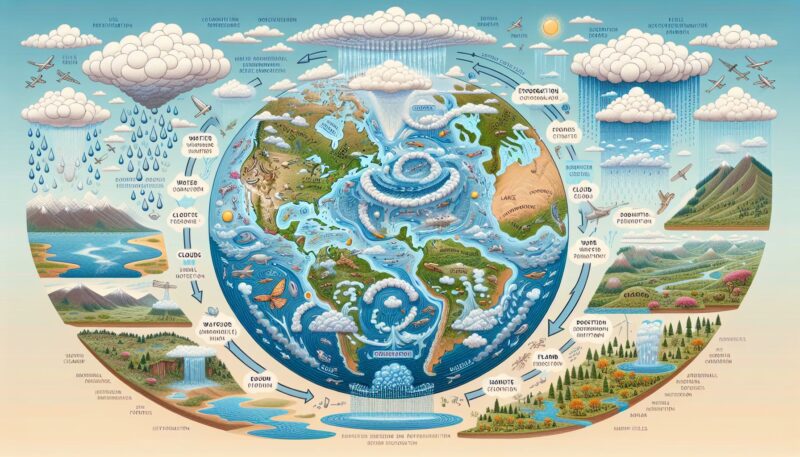
The hydrologic cycle, often referred to as the water cycle, is a fundamental concept in the field of hydrology and is vital to all life on our planet. This continuous process describes the movement and exchange of water within the Earth’s hydrosphere, encompassing the atmosphere, land, surface water, and groundwater systems. It is driven by the energy from the sun and gravity, and involves various stages such as evaporation, condensation, precipitation, infiltration, and runoff.
In this comprehensive article, we will delve into each stage of the hydrologic cycle and its significance, exploring how it affects ecosystems, human activities, and the global climate. Additionally, we will touch upon important related topics such as water pollution, conservation, and climate change, providing a holistic understanding of water’s journey from the clouds to our faucets.
Evaporation: The Solar-Driven Engine of the Water Cycle
Evaporation is the process by which water transforms from a liquid state into vapor. This occurs when the sun’s energy heats water bodies like oceans, rivers, and lakes, causing molecules to escape into the atmosphere. It is the primary pathway for water to enter the atmospheric part of the hydrologic cycle.
Transpiration: Nature’s Respiration
Not all evaporated water comes from open water bodies. A significant contribution is made by transpiration, a process in which plants absorb water from the soil and release it as vapor through their leaves. Transpiration, combined with evaporation, constitutes what is known as evapotranspiration.
Condensation: The Birth of Clouds
As water vapor rises and cools in the atmosphere, it undergoes condensation. The water molecules gather and convert back into liquid form, creating clouds. This is a crucial stage in the cycle as it sets the stage for precipitation.
Precipitation: Water’s Return to Earth
Precipitation occurs when condensation continues to the point where the water droplets or ice crystals in clouds become too heavy to stay aloft. Gravity then pulls them down to Earth in various forms such as rain, snow, sleet, or hail.
Runoff: The Downhill Journey
After precipitation, the water often travels over the surface of the land. This is known as runoff. If the ground is impermeable or saturated, water flows into streams, rivers, and eventually back into larger water bodies. Runoff is an essential contributor to streamflow in rivers.
Infiltration and Percolation: Soaking into the Earth
When precipitation falls on permeable surfaces, it seeps into the ground through infiltration. The water then moves downward by percolation, through soil and rock layers, potentially recharging aquifers, which are underground layers of water-bearing permeable rock or materials.
Groundwater Movement: The Hidden Reservoir
Beneath our feet lies a vast amount of water stored in the ground. Groundwater moves slowly through aquifers and can emerge naturally at springs or be extracted through wells. This underground component plays a vital role in maintaining rivers’ baseflow during dry periods.
Discharge and Recharge: The Equilibrium of Aquifers
Aquifers maintain a balance between the water that is discharged through springs, seepage into oceans, and water extracted by humans, versus the recharge they receive from precipitation seeping down. This equilibrium is crucial for the sustainability of groundwater resources.
The Significance of the Hydrologic Cycle
The hydrologic cycle is not just a series of steps, but an interconnected system that impacts climate, topography, soil fertility, and the very existence of life. It regulates weather patterns, supports agriculture, and sustains ecosystems.
Climate Regulation
Water in the atmosphere plays a significant role in regulating the Earth’s temperature by absorbing and redistributing heat. The continuous movement of water is also integral to forming local weather patterns and long-term climate trends.
Aquatic and Terrestrial Ecosystems
Aquatic environments, from mighty rivers to humble ponds, owe their existence to the hydrologic cycle. Terrestrial ecosystems also rely on this cycle, as it affects soil moisture and the availability of water for plants, animals, and microbes.
Human Activities
Our societies are built around the availability of fresh water. It is essential for drinking, agriculture, industry, energy production, and recreation. The way we manage our water resources can greatly impact the hydrologic cycle.
Water Pollution and Treatment
One anthropogenic impact on the hydrologic cycle is water pollution. Pollutants can enter water bodies through runoff, industrial discharges, or sewage leaks, affecting water quality and ecosystems. To ensure safe water for consumption and ecosystem health, water treatment processes such as filtration, disinfection, and reverse osmosis are employed.
Water Scarcity and Conservation
Despite the continuous nature of the hydrologic cycle, water scarcity is a growing issue due to overuse and pollution. Conservation efforts like rainwater harvesting, greywater reuse, and mindful water use are vital for maintaining a sustainable balance.
Climate Change Implications
Climate change influences the hydrologic cycle by altering patterns of precipitation and evaporation. These changes can lead to more extreme weather events, such as droughts and floods, vastly impacting human and environmental systems.
Water Conservation and Management Strategies
Given the importance of the hydrologic cycle, there are several strategies that individuals and communities can adopt to conserve and manage water resources:
-
Rainwater Harvesting: Capturing and storing rainwater for later use reduces the demand on other water sources and helps control runoff.
-
Greywater Reuse: Treatment and reuse of wastewater from sinks, showers, and washing machines for non-potable purposes like irrigation can significantly reduce freshwater consumption.
-
Improving Water Distribution Systems: Updating infrastructure to minimize leaks and ensuring efficient water distribution plays a crucial role in water conservation.
-
Sustainable Agriculture: Implementing water-saving irrigation techniques and crop choices can mitigate the impact of agriculture on water resources.
-
Public Education and Awareness: Teaching the public about water conservation and the importance of the hydrologic cycle encourages responsible water use.
Conclusion
The hydrologic cycle is a dynamic and essential component of Earth’s system. Understanding how it works and its repercussions helps shed light on the complex interactions that maintain life on our planet. As we face challenges like water scarcity and pollution, the knowledge of the hydrologic cycle becomes ever more critical, guiding our conservation efforts and policy decisions for a sustainable future.
Sources
- United States Geological Survey (USGS) – The Water Cycle: https://www.usgs.gov/special-topics/water-science-school/science/water-cycle
- National Oceanic and Atmospheric Administration (NOAA) – The Water Cycle: https://www.noaa.gov/education/resource-collections/freshwater/water-cycle