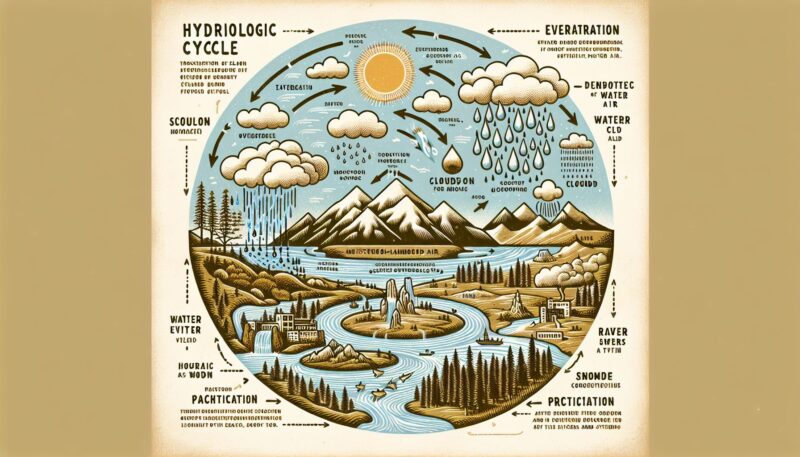
Water is, quite literally, the lifeblood of our planet. Every organism depends on it, ecosystems thrive because of it, and human civilizations have been built around it. One of the most fascinating aspects of water is how it moves through the environment in a continuous cycle known as the hydrologic cycle. This vast, global process is essential for maintaining the climate, weather patterns, and the availability of fresh water for all life on Earth.
In this comprehensive guide, we will delve deep into the hydrologic cycle, exploring each of its stages—precipitation, evaporation, transpiration, condensation, infiltration, percolation, and runoff—and the crucial roles they play. We will also consider human impacts on this cycle and the importance of water conservation in the face of increasing water stress worldwide.
What is the Hydrologic Cycle?
The hydrologic cycle, also known as the water cycle, describes the continuous movement of water on, above, and below the surface of the Earth. It is a complex system dictated by the laws of physics and influenced by geological, biological, and chemical processes. At its core, the cycle involves the conversion of water between its three states: liquid, gas, and solid.
The Stages of the Hydrologic Cycle
There are several key stages in the hydrologic cycle. Each stage plays a distinct role:
1. Evaporation
Evaporation is the process by which water changes from a liquid to a vapor. It occurs when the sun heats up water in the oceans, rivers, lakes, or the soil, causing it to rise into the air.
2. Transpiration
Transpiration is similar to evaporation, but it specifically refers to water released from plants and trees. As plants absorb water from the soil, some of it evaporates from their leaves into the atmosphere.
3. Condensation
Condensation is where water vapor cools as it rises higher in the atmosphere and transforms back into liquid droplets. These droplets cluster around dust particles, forming clouds and eventually precipitation.
4. Precipitation
Precipitation occurs when these water droplets combine to become heavy enough to fall from clouds due to gravity. It can take various forms: rain, snow, sleet, or hail.
5. Infiltration
When precipitation reaches the ground, it can seep into the soil, a process known as infiltration. This water then becomes part of the groundwater system.
6. Percolation
Percolation is the downward movement of water through the soil and rock layers, further contributing to groundwater supplies.
7. Runoff
Not all water infiltrates; some flows along the surface of the land as runoff. This water can replenish rivers, lakes, and eventually return to the oceans.
8. Baseflow
Baseflow is the part of the streamflow that is provided by groundwater seeping into the river or stream. It is crucial for maintaining water levels, particularly during dry periods.
Each of these stages is interconnected, and the cycle itself has no beginning or end. It is driven by the sun’s energy and the force of gravity.
Human Impacts on the Hydrologic Cycle
Human activity can significantly alter the hydrologic cycle. Deforestation, urban development, and pollution can affect evaporation and transpiration rates, as well as infiltration and runoff. Over-extraction of groundwater for agriculture and industry can lower water tables, and climate change can disrupt rainfall patterns, leading to issues like drought or flooding. These disruptions to the natural cycle may result in serious consequences for water availability and ecosystem health.
Water Conservation and the Hydrologic Cycle
Given the immense pressures on freshwater resources, sustainable water management is essential. Water conservation involves using water efficiently and preventing waste. Practices such as rainwater harvesting, greywater reuse, and the adoption of water-efficient technologies in homes and industries can reduce the strain on existing water supplies. By safeguarding our water resources, we can help maintain the balance of the hydrologic cycle and ensure that it continues to sustain life on Earth for generations to come.
Sources
To learn more about the hydrologic cycle and water conservation, consider visiting the following sources:
-
“The Water Cycle,” by the U.S. Geological Survey. This resource provides a detailed explanation of the water cycle, complete with diagrams.
-
“Water Conservation Tips,” by the U.S. Environmental Protection Agency. This page offers practical tips for saving water at home and in the workplace.
-
“Climate Change: Global Sea Level,” by NASA’s Climate Change and Global Warming initiative. This resource highlights the impact of climate change on our planet’s water systems, particularly the oceans.
Understanding the hydrologic cycle is not just an academic exercise; it’s crucial for our survival. As our global population increases and the climate continues to change, managing this cycle sustainably becomes more important than ever. Only through awareness and proactive conservation can we safeguard our most precious resource—water.