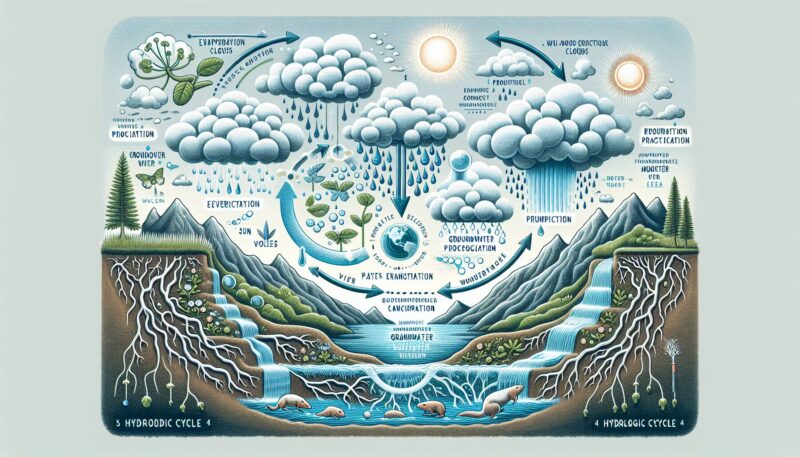
Water is the lifeblood of our planet, an essential component for all living organisms. It’s a resource we often take for granted, despite its crucial role in ecosystems, weather patterns, and human survival. The journey of water from the atmosphere to the earth and back is continuous and dynamic—a process known as the hydrologic cycle. In this article, we’ll delve into this extraordinary cycle, exploring key components like precipitation, evaporation, transpiration, and more.
What is the Hydrologic Cycle?
The hydrologic cycle, also referred to as the water cycle, is the constant movement of water within the Earth and the atmosphere. It’s an intricate and complex system that involves various processes, including evaporation, transpiration, condensation, precipitation, infiltration, percolation, runoff, and more.
Evaporation
Evaporation is the transformation of water from a liquid to a gas. It mainly occurs on the surface of bodies of water, like oceans, rivers, and lakes, as well as from moist surfaces such as soil. This process is primarily powered by the sun’s energy.
Transpiration
Similar to evaporation, transpiration is the release of water vapor into the atmosphere from plants and trees. It happens as part of the photosynthesis process, with plants taking in water from the roots and releasing it through stomata—tiny openings on their leaves.
Condensation
After evaporation and transpiration send water vapor into the atmosphere, it cools and condenses to form clouds. This process occurs as water vapor encounters cooler temperatures at higher altitudes, transforming it back into liquid droplets.
Precipitation
When these droplets within clouds grow heavy enough, they fall to the Earth as precipitation—in the form of rain, snow, sleet, or hail. This is a crucial step, as it replenishes surface water and groundwater sources.
Infiltration and Percolation
Once precipitation reaches the ground, it either flows over the land as surface runoff or infiltrates the soil. When water seeps deeper into the ground, it’s known as percolation. This water can recharge aquifers, which are underground layers of water-bearing permeable rock.
Runoff and Streamflow
Water that does not infiltrate the soil becomes runoff, flowing into creeks, streams, and rivers. Streamflow refers to the movement of water within these watercourses, contributing to the overall dynamics of the hydrologic cycle.
Groundwater Movement
The movement of water underground is slower compared to surface water. Groundwater can travel through aquifers and may emerge as springs, or feed into rivers, contributing to their baseflow.
The Return to the Atmosphere
Eventually, surface water and groundwater find their way back to the atmosphere through evaporation and transpiration, completing the cycle and starting the process anew.
Significance of the Hydrologic Cycle
The hydrologic cycle is critical for several reasons—it distributes heat around the globe, supports all plant and animal life, and shapes Earth’s weather patterns.
Climate Regulation
Through the movement of water in its various forms, the hydrologic cycle contributes to the regulation of Earth’s temperature. The energy transfer involved in evaporation and precipitation patterns is a key driver of weather and climate.
Ecosystem Support
Water is fundamental for all living ecosystems. The cycle provides habitats like wetlands and rivers, enabling diverse forms of life to flourish. It also supports agriculture, which is vital for food production and the economy.
Natural Filtration and Purification
As water moves through the cycle, especially during infiltration and percolation, it undergoes natural filtration. This process can reduce water pollution and improve water quality by removing particulates and contaminants.
Human Interaction with the Hydrologic Cycle
Human activities have significantly impacted the hydrologic cycle. Activities such as deforestation, urbanization, and the construction of dams alter the natural movement of water. Agricultural practices, while critical for food production, can affect local water tables and lead to over-extraction of groundwater.
Water Scarcity and Conservation
Increasingly, regions are facing water scarcity due to overuse and climate change. This has heightened the importance of water conservation strategies such as rainwater harvesting, greywater reuse, and the development of water-efficient technologies.
Water Pollution
Human-induced water pollution is another concern affecting the hydrologic cycle, with contaminants ranging from nutrient runoff leading to eutrophication and algal blooms, to heavy metals and microplastics contaminating water sources.
Climate Change Impacts
Climate change is altering precipitation patterns, increasing the frequency of droughts and floods, and causing glaciers and snowpacks to melt rapidly. These changes have far-reaching impacts on the availability of freshwater resources.
Protecting the Hydrologic Cycle
Protecting the integrity of the hydrologic cycle is imperative. Here are several ways this can be achieved:
Sustainable Water Management
Implementing sustainable water management practices is essential. This includes efficient use of water resources, protection of watersheds, and the construction of infrastructure that minimizes adverse impacts on the cycle.
Pollution Prevention
Reducing pollution through improved agricultural practices, industrial waste management, and urban planning can significantly enhance water quality.
Climate Action
Mitigating climate change by reducing greenhouse gas emissions can help stabilize the hydrologic cycle. Efforts must be in place to adapt to changing water availability patterns due to a warming planet.
Research and Monitoring
Continuous research and monitoring of the hydrologic cycle are critical for understanding and predicting changes in water resources. This information is vital for creating policies that protect our water systems.
Conclusion
Understanding the hydrologic cycle is fundamental to managing our most precious resource—water. Recognizing the complexities of the cycle and the ways in which human activities impact it, we can take informed steps to ensure its health and longevity. Whether adopting water-saving techniques or advocating for policies that secure sustainable water management, we all have a role to play in safeguarding the seamless movement of water that sustains life on Earth.
Sources
- National Oceanic and Atmospheric Administration (NOAA): The Water Cycle
- United States Geological Survey (USGS): The Water Cycle
- Environmental Protection Agency (EPA): Water Research