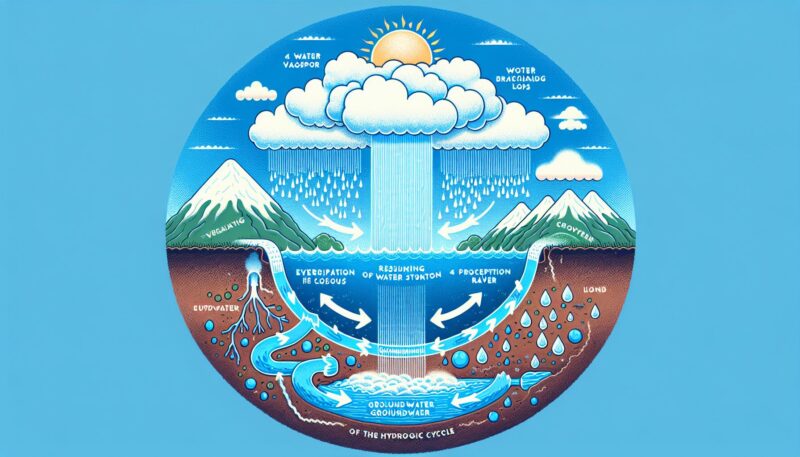
Water is the lifeblood of our planet, playing an integral role in sustaining life and shaping the Earth’s landscape. It’s a remarkable substance that exists in three states – liquid, solid, and gas – and moves in a constant, dynamic cycle known as the hydrologic cycle. This cycle is a complex framework that describes how water travels from the earth’s surface, into the atmosphere, and back again.
In this article, we will take an in-depth look at the hydrologic cycle, exploring its fundamental processes, including precipitation, evaporation, transpiration, condensation, infiltration, and runoff. Our understanding of these processes is crucial for managing water resources, predicting weather patterns, and mitigating the impacts of climate change.
The Hydrologic Cycle: An Overview
The hydrologic cycle, also known as the water cycle, is a continuous movement of water on, above, and below the surface of the Earth. This cycle is powered by the sun’s energy and involves a complex network of processes and pathways. It acts as a natural water recycling and distribution system that sustains ecosystems and regulates the Earth’s climate.
Key Processes of the Hydrologic Cycle
The hydrologic cycle hinges on several key processes:
- Evaporation: The transformation of water from a liquid to a gaseous state (water vapor) due to heat from solar radiation.
- Transpiration: The release of water vapor from plants and soil into the atmosphere.
- Condensation: When water vapor cools upon rising higher into the atmosphere, it shifts back into a liquid state to form clouds.
- Precipitation: When water in the form of rain, snow, sleet, or hail falls from clouds to the Earth’s surface.
- Infiltration: The process whereby water on the ground surface enters the soil.
- Percolation: The movement of water through the soil and pores or crevices in rocks.
- Runoff: Water that flows over the soil surface and into bodies of water, like rivers and lakes, instead of being absorbed into the ground.
- Streamflow: The flow of water in streams and rivers, leading towards larger bodies of water like estuaries or the ocean.
- Baseflow: The portion of streamflow that is sustained between periods of precipitation, fed by groundwater seeping into riverbeds.
Surface Water and Groundwater Interactions
An essential aspect of the hydrologic cycle is the interaction between surface water and groundwater. When precipitation lands on the Earth’s surface, it can either contribute to runoff, which eventually replenishes rivers and lakes, or it can infiltrate the ground, filtering through porous rock and soil to become groundwater.
Groundwater reserves, or aquifers, can be vast, storing huge amounts of freshwater that can last for centuries. The movement of groundwater is generally slower than surface water, meaning it can be a more reliable source during periods of drought. This groundwater can return to the surface through springs or be discharged into the ocean, keeping the hydrologic cycle in continuous motion.
Human Impact on the Hydrologic Cycle
Human activities have significantly impacted the hydrologic cycle. Urbanization, deforestation, agriculture, and climate change have all altered natural water distribution and availability. Impervious surfaces like roads and buildings reduce infiltration and increase runoff, exacerbating flooding in heavy rains. Agricultural practices can lead to over-extraction of groundwater, resulting in lowered water tables and land subsidence.
Climate change is expected to increase the frequency and intensity of extreme weather events. More intense rainfall can lead to increased runoff and flooding, while longer and more severe droughts can deplete surface water and groundwater resources.
Addressing Water Challenges
Understanding the intricacies of the hydrologic cycle is essential to tackling many of the water-related challenges facing the world today. Climate change, pollution, water scarcity, and water management are deeply intertwined with this vital cycle.
Water Conservation and Management
Water conservation is critical for ensuring sustainable water supplies. Conservation strategies include:
- Reducing water wastage in homes and industries.
- Implementing efficient irrigation techniques in agriculture.
- Protecting wetlands, which act as natural water filters and storage systems.
- Rainwater harvesting to capture and store rain for later use.
Water managers also need to ensure the appropriate allocation of water to maintain the health of aquatic ecosystems, which support biodiversity and provide human benefits like clean water, flood regulation, and recreational opportunities.
Mitigation of Pollution
Any alterations to the hydrologic cycle can have a ripple effect on water quality. Contaminants from agricultural runoff, industrial waste, and urban areas can end up in bodies of water, leading to …
- Eutrophication: Excessive nutrient pollution, often from fertilizers, leading to algal blooms that deplete oxygen in water and harm aquatic life.
- Water pollution with heavy metals and chemicals: These substances can enter waterways from various sources, posing risks to human health and ecosystems.
- Pathogens and microplastics: The introduction of disease-causing organisms and tiny plastic particles threaten the health of all organisms that rely on water.
Carbon emissions also affect the hydrologic cycle by changing the climate. Warmer temperatures can increase evaporation rates, altering precipitation patterns worldwide.
Technological Advancements in Water Treatment
Technological advancements have led to improved methods of water treatment to ensure a safe, potable water supply and the health of water bodies. These are some widely adopted water treatment processes:
- Desalination: The process of removing salt and other minerals from sea water to produce fresh water.
- Reverse osmosis: A filtration method that removes many types of large molecules and ions from water by applying pressure to the water when it is on one side of a selective membrane.
- Chlorination and ozonation: These are chemical treatments to disinfect and kill pathogens in the water.
- Coagulation and flocculation: Chemical processes that help remove particles from water by causing them to clump together so they can be easily separated from the water.
Education and Diplomacy in Water Issues
Education plays a pivotal role in promoting sustainable water use and conservation. An informed public can make educated decisions and demand better practices from policymakers and industry.
Moreover, as many rivers and groundwater aquifers cross political boundaries, water diplomacy becomes essential. Water-sharing agreements and international cooperation are critical for preventing conflicts and ensuring that water resources are shared equitably and sustainably across borders.
Conclusion
The hydrologic cycle is much more than a scientific concept; it’s a foundational principle for understanding and managing Earth’s water resources. It’s a reminder of the delicate balance that exists in nature and the significant role water plays in our lives. As our planet faces increasing pressures, from population growth to climate change, the hydrologic cycle offers insights into the patterns and processes that dictate the availability of water, giving us a roadmap for sustainability.
By deepening our understanding of the hydrologic cycle and the challenges and solutions related to water management, we can create a world where clean, accessible water is a reality for all.
References:
- “The Water Cycle,” United States Geological Survey (USGS). [https://www.usgs.gov/special-topic/water-science-school/science/water-cycle](https://www.usgs.gov/special-topic/water-science-school/science