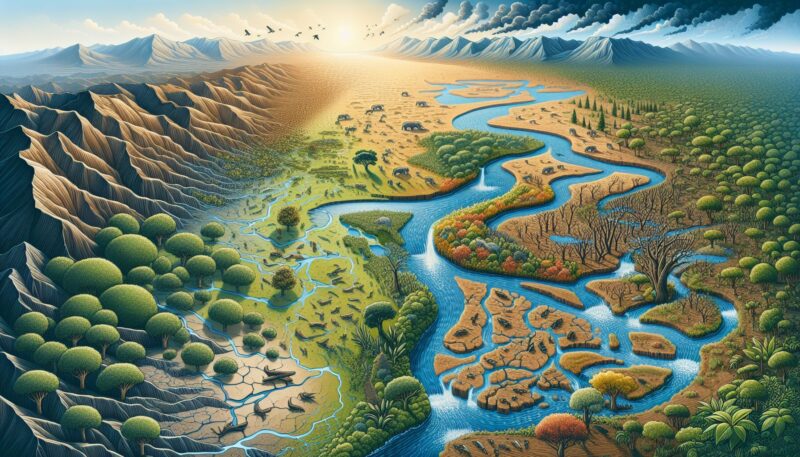
Freshwater resources are the lifeblood of human civilization. They are fundamental to everything from drinking water and agriculture to sanitation and industrial processes. Among the various terms associated with the management and conservation of water, the concept of a “watershed” is paramount. Watersheds, also known as drainage basins or catchments, are the land areas that channel rainfall and snowmelt to creeks, streams, and rivers, and eventually to outflow points such as reservoirs, bays, and the ocean. Effective watershed management is a key element in ensuring a sustainable water supply for future generations. This article delves deep into the meaning and significance of watersheds, explores the challenges they face, and emphasizes the need for responsible stewardship.
What is a Watershed?
A watershed is an area of land where all of the water that falls within it and drains off of it goes into a common outlet. Watersheds can be as small as a footprint in the mud or as large as the Mississippi River basin, which encompasses parts of 31 U.S. states and 2 Canadian provinces.
Each watershed is like a funnel, collecting all the water within the area and channeling it into streams and rivers. These smaller water bodies converge into larger ones, eventually leading to the ocean. A watershed boundary is determined by the topographical high points around it, referred to as divides.
The Hydrologic Cycle within a Watershed
The hydrologic cycle—also known as the water cycle—is the continuous circulation of water in the Earth’s hydrosphere. It involves the processes of evaporation, transpiration, condensation, precipitation, infiltration, percolation, runoff, and streamflow. This cycle is at work within every watershed and is essential to the distribution and quality of water resources.
Components of a Watershed
- River Systems: The network of rivers and streams that transport water within the watershed.
- Lakes and Reservoirs: Bodies of water that store water and provide habitat for aquatic plants and animals.
- Wetlands: Areas where water covers the soil or is present either at or near the surface of the soil all year or for varying periods during the year, including during the growing season.
- Groundwater: Water that soaks into the ground and is stored in aquifers; it contributes to baseflow in rivers and streams.
- Vegetation: Plants and trees that play a critical role in the water cycle through transpiration and intercept precipitation.
The Challenges Facing Watersheds
Watersheds are subject to various natural and anthropogenic threats, which affect their ability to supply clean, sustainable water. Among these are:
- Water Pollution: The introduction of pollutants, including nutrients, pathogens, heavy metals, and microplastics, deteriorates water quality.
- Urban Development: Construction and impervious surfaces lead to increased runoff and reduced infiltration.
- Agriculture: Runoff from farms often carries pesticides, fertilizers, and sediment, contributing to water pollution.
- Climate Change: Alterations in precipitation patterns and increased frequency of extreme weather events impact watersheds.
- Deforestation: The removal of trees reduces the ability to manage stormwater and maintain water quality.
- Overextraction: Excessive withdrawal of water, particularly groundwater, can lead to scarcity and affect river flows.
The Importance of Effective Watershed Management
Effective watershed management involves a multitude of strategies designed to protect and improve the quality and quantity of water resources within a watershed. The approach is comprehensive, addressing ecological, social, and economic considerations, and requires cooperation among various stakeholders.
Key Principles for Watershed Management
- Holistic Approach: Considering the watershed as a whole system and recognizing the interdependence of land use, water resources, and the community.
- Participatory Process: Involving local communities, governments, and various stakeholders in planning and decision-making.
- Adaptive Management: Utilizing continuous monitoring and being ready to adjust strategies in response to new information and changing conditions.
- Sustainable Practices: Employing land and water use practices that do not degrade the resources for future generations.
Conservation and Restoration Efforts
Conservation and restoration efforts within a watershed are critical for maintaining its health. Some of these efforts include:
- Riparian Buffers: Vegetated areas next to streams that reduce erosions, filter pollutants, and provide wildlife habitat.
- Wetland Restoration: Returning degraded wetlands to their natural state to improve water quality and provide flood control.
- Reforestation: Planting trees to improve water infiltration, reduce runoff, and stabilize soils.
- Sustainable Agriculture: Implementing practices such as conservation tillage, crop rotation, and proper manure management to protect water quality.
Case Studies and Best Practices
- The Chesapeake Bay Program (Chesapeake Bay Program) is a regional partnership that leads and directs Chesapeake Bay restoration and protection. It involves federal and state governments, environmental organizations, academia, and the public.
- The Murray-Darling Basin in Australia is another example where significant efforts have been undertaken to improve water resource management in the face of extensive agricultural use (Murray–Darling Basin Authority).
- New York City’s watershed management approach is noteworthy as well, focusing on protecting the quality of its drinking water through land acquisition, regulation, and partnership with upstate communities (NYC Environmental Protection).
Leveraging Technology for Watershed Stewardship
Advancements in technology offer new avenues for managing watersheds effectively:
- GIS Mapping: Geographic Information System (GIS) technology helps delineate watershed boundaries and identify critical areas for protection or restoration.
- Remote Sensing: Satellites and drones are used for monitoring changes in land use and detecting potential issues early.
- Data Analytics: Collecting and analyzing environmental data supports decision-making in watershed management.
Looking Ahead
Watershed management is a dynamic and ongoing process. The key to its success lies in striking a balance between human needs and the natural functions of the watershed. Continuous education and participation of the public in understanding and respecting the value of watersheds are essential. Strategies must evolve as we learn more about the complex interplay between natural water cycles and human interventions.
In conclusion, watersheds play a critical role in sustaining our freshwater resources. It is our collective responsibility to ensure that these complex systems are managed wisely and protected for the present and future wellbeing of our environment and our societies. Through informed policy, community action, and sustainable practices, we can maintain the delicate balance of the natural water cycle while meeting the needs of an ever-growing population.