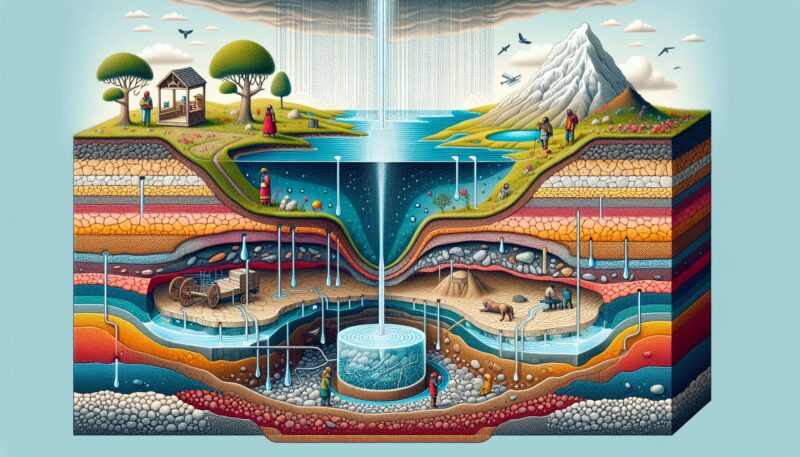
Groundwater is the hidden component of the water cycle, often overlooked in comparison to the more visible lakes, rivers, and oceans. However, it is a critical resource for human settlements, agriculture, and ecosystems. This article delves into the depth of the earth’s surface to explore the importance, dynamics, and challenges associated with groundwater.
Understanding Groundwater
What is Groundwater?
Groundwater is the water found underground in the cracks and spaces in soil, sand, and rock. It is stored in and moves slowly through geologic formations of soil, sand, and rocks called aquifers. These underground reservoirs of water can be found at varying depths, from a few meters to several hundred meters below the surface.
The Hydrologic Cycle and Groundwater
The hydrologic cycle, also known as the water cycle, is a continuous process by which water is circulated throughout the Earth’s systems. Groundwater plays a key role in this cycle, particularly through the processes of infiltration, percolation, recharge, and discharge. USGS Hydrologic Cycle
- Infiltration: Rain or snowmelt that flows over the land can enter the ground and infiltrate the soil, which is the first step in replenishing groundwater.
- Percolation: Water moves downward through the soil and subsurface materials to the water table, where it joins the groundwater reservoir.
- Recharge: Areas where water infiltrates and percolates down to the aquifers are known as recharge zones.
- Discharge: Groundwater emerges naturally at the surface as springs or seeps and can also be discharged into lakes, rivers, and the oceans.
The Relationship Between Groundwater and Surface Water
Groundwater and surface water are interconnected. Groundwater can feed rivers and lakes through a process called baseflow, maintaining their flow during periods without rain. Conversely, rivers and lakes can recharge aquifers when their water levels are high, especially in permeable geologic formations.
Types of Aquifers
Aquifers come in many shapes and sizes, and their characteristics depend on the materials from which they’re formed:
- Unconfined Aquifers: These are covered by soil and can be replenished directly by rainwater percolating down through the ground.
- Confined Aquifers: These have an impermeable dirt or rock layer above them that restricts water flow into the aquifer. The replenishment of these aquifers is limited to areas where the impermeable layer is absent.
Challenges Faced by Groundwater Sources
Overuse and Depletion
As human populations grow and climate change affects the availability of surface water, reliance on groundwater increases. Agricultural irrigation, industrial uses, and drinking water provision for cities are leading to aquifers being depleted faster than they can be naturally recharged. Depletion can lead to a lowering of the water table, increased pumping costs, and land subsidence.
Pollution and Quality Degradation
Groundwater is susceptible to contamination from a variety of sources, including:
- Agricultural Activities: Nutrients, pesticides, and livestock waste can percolate into aquifers.
- Industrial Activities: Improper disposal of chemicals and industrial waste can lead to contamination.
- Landfills and Septic Systems: Leachate from these can infiltrate the soil, carrying various contaminants.
Polluted groundwater is difficult and costly to clean up and can become a non-viable source of water for decades, or even centuries.
Climate Change and Groundwater
Climate change is affecting groundwater resources in several ways:
- Altered Precipitation Patterns: Changes in the amount and timing of rainfall can affect recharge rates and the availability of groundwater.
- Increased Temperature: Higher temperatures may lead to increased evaporation rates and changes in vegetation cover, influencing how much water infiltrates down to aquifers.
Sustainability and Management of Groundwater
Monitoring and Management
Sustainable groundwater management requires understanding the behavior of aquifers and developing strategies for their long-term use. Key actions include:
- Assessment: Accurate mapping and characterization of aquifers, their recharge zones, and discharge areas.
- Monitoring: Implementing groundwater monitoring programs to keep track of water levels and quality over time.
- Regulation: Establishing legal frameworks that control groundwater extraction and protect recharge areas.
Innovative Approaches to Groundwater Management
Several innovative approaches to groundwater management are being implemented around the world:
- Artificial Recharge: Techniques such as spreading grounds or injection wells are used to increase the rate at which water enters the groundwater system.
- Managed Aquifer Recharge (MAR): Controlled use of surface water to refill aquifers during periods of surplus.
- Conservation and Efficient Use: Encouraging practices that reduce water waste and promote more efficient use, particularly in agriculture.
Case Study: The Ogallala Aquifer
The Ogallala Aquifer, spanning eight states in the central United States, is one of the world’s largest aquifers and a prime example of the challenges and importance of managing groundwater sustainably. Intensive agriculture in the region relies heavily on this water source, leading to significant declines in water levels and raising concerns about the long-term viability of the aquifer. Efforts such as crop rotation, irrigation technology improvements, and regulated water rights are being utilized to address the issue.
Groundwater and Ecosystems
Groundwater is also vital for supporting ecosystems. Wetlands, rivers, and lakes often depend on consistent groundwater inputs. The health of these ecosystems can be threatened when groundwater levels decline or when water quality deteriorates due to pollution.
Conclusion
Groundwater may be out of sight, but it should never be out of mind. As a crucial component of the hydrosphere, it warrants careful stewardship to ensure that this valuable resource is available for future generations. Addressing the challenges faced by groundwater requires a combination of science, policy, and community engagement. By valuing and managing groundwater, we protect not only our water supply but also the health of the ecosystems upon which we depend.