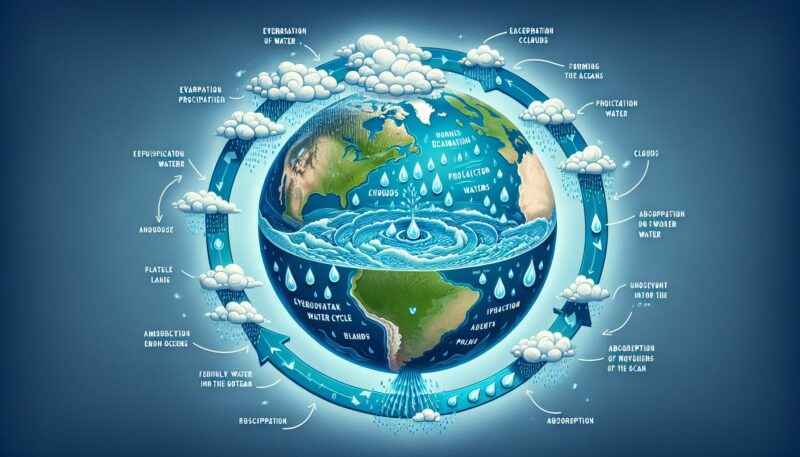
The hydrologic cycle, also known as the water cycle, is the continuous movement of water within the Earth and its atmosphere. This cycle is a complex system that involves various processes, including evaporation, transpiration, condensation, precipitation, infiltration, percolation, runoff, and storage in bodies of water such as rivers, lakes, and oceans. It is vital for sustaining life on our planet, regulating climate, and shaping our natural landscape.
Understanding the Hydrologic Cycle
The hydrologic cycle is an intricate and dynamic system responsible for the distribution and movement of water around the globe. To comprehend its complexity, let’s explore each step of the cycle in more detail.
Evaporation and Transpiration
Evaporation and transpiration are the mechanisms by which water is transferred from the Earth’s surface to the atmosphere. Evaporation occurs when liquid water is heated by the sun and turns into water vapor, while transpiration is the process by which plants release water vapor into the atmosphere from their leaves.
Together, these processes are responsible for adding immense quantities of water vapor to the atmosphere, which in turn form clouds and eventually lead to precipitation. According to the U.S. Geological Survey (USGS), evapotranspiration (the combination of evaporation and transpiration) accounts for approximately 70% of the atmospheric moisture in the interior of continents (USGS, n.d.).
Condensation
Condensation is the reverse of evaporation. It occurs when water vapor in the atmosphere cools and changes back into liquid droplets. These droplets clump together to form clouds and, when they are heavy enough, fall to the Earth’s surface as precipitation.
Precipitation
Precipitation is water released from clouds in the form of rain, snow, sleet, or hail. It is the primary method through which water in the atmosphere is delivered back to the Earth’s surface. Precipitation is essential for replenishing freshwater resources and for the continuation of the water cycle.
Infiltration and Percolation
When precipitation reaches the ground, some of it infiltrates the soil, filtering down through the layers of soil and rock through a process known as percolation. Infiltration replenishes groundwater, which is stored in aquifers – underground layers of water-bearing permeable rock, rock fractures, or unconsolidated materials (gravel, sand, or silt).
Runoff and Streamflow
Not all precipitation that falls to the ground infiltrates the soil. Some of it becomes surface runoff, which flows into streams, rivers, and lakes. Streamflow is the flow of water in streams and rivers, eventually reaching larger bodies of water, such as lakes, seas, and oceans.
Groundwater and Baseflow
Groundwater, water that has infiltrated the soil and resides in aquifers, significantly contributes to sustaining river flows during dry periods. This sustained flow is known as baseflow and is essential for maintaining ecosystems within and around the streams and rivers, especially during periods of little or no precipitation.
Aquifer Recharge and Discharge
Recharge is the process by which water moves downward from surface water to groundwater. This is an essential process that replenishes aquifers. Discharge, on the other hand, is the process by which groundwater moves to the surface, either naturally at springs or through man-made wells.
Understanding the Bigger Picture
The hydrologic cycle is not just a local but a global system that connects water in all its forms around the world. The cycle influences climate patterns, forms landscapes, and supports all living organisms. Any changes or disruptions to the cycle can have profound impacts on ecosystems and human societies.
Impacts of Human Activities on the Hydrologic Cycle
Human activities such as deforestation, urban development, and the emission of greenhouse gases have impacted the natural balance of the hydrologic cycle.
Climate Change and the Hydrologic Cycle
Climate change brought about by global warming is perhaps one of the most critical influences on the hydrologic cycle. As temperatures rise globally, the cycle intensifies – more water evaporates and transpires, leading to greater amounts of precipitation in some areas, while others may experience more prolonged and severe droughts. The distribution and availability of water resources are thus significantly altered, with implications for water supply, agriculture, and biodiversity.
Land Use Changes
Deforestation and urban development can reduce infiltration and increase runoff, leading to more frequent and severe flooding. Impervious surfaces such as concrete and asphalt prevent water from soaking into the ground, further exacerbating flood conditions in urban areas. Additionally, such activities can decrease the amount of water that is available to recharge aquifers, leading to a diminished supply of groundwater.
Pollution and Water Quality
Water pollution, from sources like agricultural runoff, industrial discharges, and improper waste disposal, can severely impact water quality within the hydrologic cycle. Pollutants can contaminate both surface water and groundwater, affecting not only the environment but also the health of populations that rely on these waters for drinking, agriculture, and recreation.
Conservation and Sustainable Management
To mitigate the impacts of human activities on the hydrologic cycle, it is crucial to adopt water conservation practices and sustainable water management strategies. Saving water at home, using water-efficient technologies, protecting natural habitats that support the cycle, and managing water supply in an environmentally responsible manner are all critical steps toward ensuring the health of the hydrologic cycle.
Conclusion
The hydrologic cycle is a phenomenal process that supports life, shapes our planet, and is intrinsically interwoven with the climate system. As responsible stewards of Earth’s resources, it is imperative that we understand and protect this cycle, considering the far-reaching implications of our actions. By working collectively to conserve and manage our water resources, we can safeguard this vital system for future generations.
For a more in-depth look into the hydrologic cycle and its importance, you can explore educational resources provided by the U.S. Geological Survey (USGS, n.d.) and the National Aeronautics and Space Administration (NASA) (NASA’s Water Cycle). These organizations provide invaluable insights into how the water cycle operates and the critical role it plays in sustaining life on our planet.
It is only through our continued education, awareness, and proactive efforts that we can ensure a sustainable and resilient hydrologic cycle, capable of withstanding the pressures of climate change and human expansion, continuing to nurture life on Earth for eons to come.