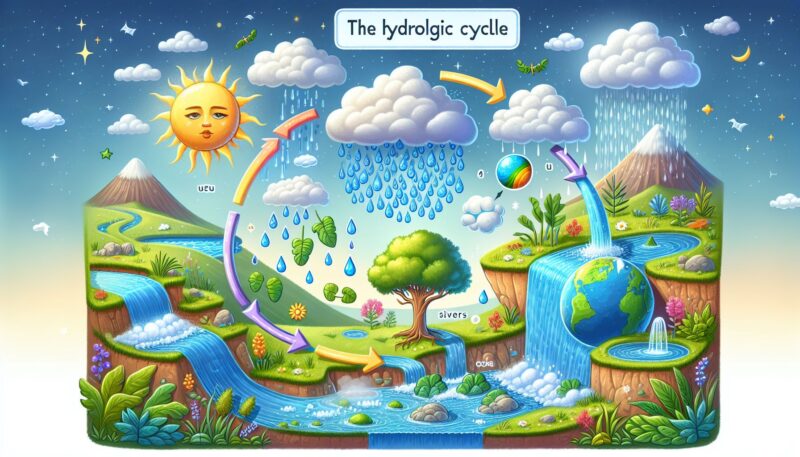
Water is the elixir of life. It shapes our planet’s surface, governs weather patterns, sustains all known forms of life, and performs a central role in the Earth’s hydrologic cycle. This cycle, also known as the water cycle, is a continuous movement of water within the Earth-atmosphere system. It is a complex process that is critical to the existence of life on our blue planet.
Understanding the Hydrologic Cycle
The hydrologic cycle describes the endless and dynamic flow of water above, on, and below the Earth’s surface. It is a natural sequence of processes that include evaporation, transpiration, condensation, precipitation, infiltration, percolation, runoff, and groundwater flow. These processes are interconnected and powered by the energy from the sun.
Evaporation
Evaporation is the transformation of water from a liquid to a gas. This occurs when the sun heats up water bodies such as oceans, rivers, and lakes, causing the water to vaporize and rise into the atmosphere.
Transpiration
Transpiration is a similar process but involves water released from plants. As plants absorb water from the ground, they lose moisture to the air through their leaves—a vital process for plant health and growth.
Condensation
Upon rising, the water vapor cools and transforms back into tiny liquid water droplets. This process of condensation forms clouds in the atmosphere. When these droplets combine and grow large enough, they fall to the Earth’s surface as precipitation.
Precipitation
Precipitation occurs in several forms: rain, snow, sleet, or hail. It replenishes water in rivers and lakes and provides moisture to the soil.
Infiltration and Percolation
Once on the ground, water can seep into the soil through infiltration and move downward through percolation. These processes contribute to the recharge of aquifers, which are layers of permeable rock, sand, or gravel that can store substantial amounts of water.
Runoff and Streamflow
Water that doesn’t infiltrate into the ground becomes runoff. Runoff collects in rivers, streams, and finally returns to the oceans where it becomes part of the streamflow. Along the way, it supports ecosystems and helps sustain human populations.
Groundwater Flow
Meanwhile, groundwater flow refers to the movement of water within aquifers. This occurs very slowly compared to runoff and plays an essential role in maintaining rivers and wetlands, especially during dry periods.
Baseflow
Some of the water that infiltrates the ground replenishes rivers through a process known as baseflow. This baseflow is crucial for maintaining water levels in rivers during periods with no rain.
Water Qualities
The qualities of water such as pH, salinity, hardness, and dissolved oxygen are critical in determining its suitability for ecosystems, human consumption, and use.
Cycle Challenges: Pollution and Scarcity
However, this vital cycle is currently threatened by human activities. Water pollution from heavy metals, nutrients, and pathogens can degrade water quality. Additionally, water scarcity due to overuse and drought, water conflicts, and the impact of climate change are major challenges.
The Global Impact of the Hydrologic Cycle
The vast movement of water affects every continental and oceanic corner of the globe. Watersheds and catchments are critical geographical areas that collect precipitation and contribute to the water cycle by directing flow towards streams and rivers.
Aquifers: The Underground Reservoirs
Aquifers, invisible to the naked eye, are another significant component of the cycle. These subterranean water stores can be immense and provide groundwater for people and ecosystems. Their recharge and discharge are pivotal for supplying fresh water and maintaining natural habitats.
Estuaries and Wetlands
Estuaries and wetlands serve as natural filters for pollutants, protect against floods, and provide habitats for diverse wildlife species. They are integral to the health of the hydrologic cycle.
Frozen Components: Glaciers, Icebergs, and Permafrost
Frozen elements such as glaciers, icebergs, and permafrost also play a part in the water cycle. Although these components occupy a smaller volume in the cycle, their meltwater feeds into rivers and influences sea levels globally.
Human Influence on the Hydrologic Cycle
Water Treatment and Distribution
Humans have developed various techniques such as water treatment, desalination, and reverse osmosis to make water safe for consumption. Water is then distributed through a vast network of pipes, water towers, and pumping stations.
Water Conservation Strategies
Water conservation has become increasingly important, leading to practices like rainwater harvesting and greywater reuse. As populations grow, optimizing water storage and water distribution systems is also crucial.
Climate Change: A Growing Concern
Climate change is altering the hydrologic cycle, causing increases in extreme weather events like droughts and floods. These incidents not only disrupt ecosystems but also human livelihoods and can lead to water conflicts.
The Future of the Hydrologic Cycle
Looking to the future, it is evident that we must balance our needs with the finite nature of the hydrologic cycle. Investment in sustainable water infrastructure, better water quality management, and international water diplomacy are essential.
Through education, innovation, and cooperation, we can plot a course toward a secure water future that respects the delicate balance of Earth’s hydrologic cycle. By protecting and preserving this cycle, we are, in essence, safeguarding our very existence.
References
- National Oceanic and Atmospheric Administration (NOAA) – The Water Cycle:
https://www.noaa.gov/education/resource-collections/freshwater/water-cycle - United States Geological Survey (USGS) – The Water Cycle:
https://www.usgs.gov/special-topics/water-science-school/science/water-cycle - World Health Organization (WHO) – Drinking Water:
https://www.who.int/health-topics/drinking-water#tab=tab_1