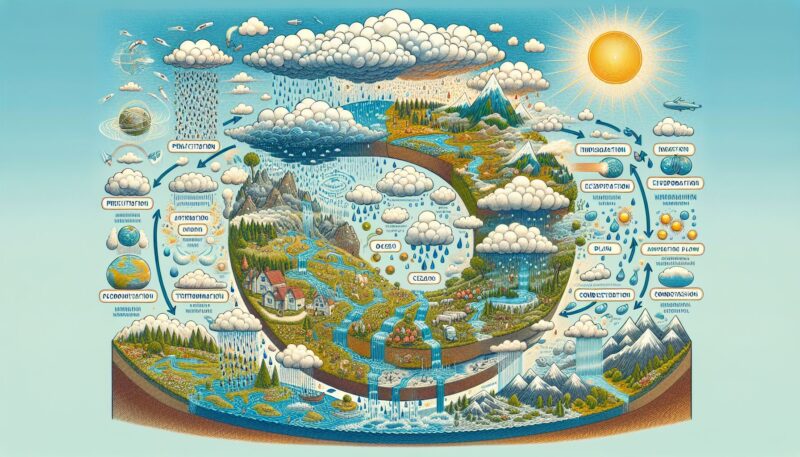
The hydrologic cycle, also known as the water cycle, is a continuous and dynamic movement of water between the Earth’s atmosphere, land, and oceans. This natural process is pivotal for the sustenance of life on our planet, influencing climate patterns, shaping landscapes, and providing fresh water for all organisms. In this article, we will delve deep into the intricacies of the hydrologic cycle, exploring each phase and its crucial role in maintaining the balance of Earth’s ecosystems.
Understanding the Hydrologic Cycle
At its core, the hydrologic cycle is powered by the energy from the sun. This energy drives the cycle beginning with evaporation, which turns water from rivers, lakes, and oceans into vapor. Plants also contribute through transpiration when they release vapor into the atmosphere. As the water vapor rises, it cools down and condenses into clouds. Under the right conditions, these clouds lead to precipitation, which can be in the form of rain, snow, sleet, or hail. Once the water reaches the ground, it can enter water bodies directly or percolate through soil to become groundwater. Some of this water will eventually re-enter the ocean, where the cycle begins anew.
Evaporation: Water’s Aerial Ascent
Evaporation is the process where liquid water is transformed into a gaseous state through the addition of heat. On a global scale, oceans are the primary source of evaporation given their vast surface area. Evaporation rates are affected by temperature, humidity, wind, and the water’s surface area. This phase is essential in transferring water from the Earth’s surface to the atmosphere.
Transpiration: Plants’ Contribution to the Cycle
Not all of the Earth’s water is found in bodies of water; a significant portion is held within the world’s plant life. Transpiration is the release of water vapor from plant leaves, which occurs when plants open their stomata to take in carbon dioxide for photosynthesis. Together with evaporation, this process is referred to as evapotranspiration.
Condensation: The Birth of Clouds
As water vapor rises, it encounters cooler temperatures, leading to condensation. This is where water vapor transforms back into a liquid state, forming clouds. Depending on atmospheric conditions, these droplets can combine to create larger drops and eventually fall back to the Earth as precipitation.
Precipitation: Water’s Return to Earth
Precipitation occurs when water droplets within clouds grow heavy enough to fall to Earth due to gravity. Precipitation can fall as rain, snow, sleet, or hail. The type of precipitation largely depends on the temperature of the atmosphere between the clouds and the Earth’s surface.
Infiltration and Percolation: Soil’s Thirst for Water
Upon reaching the ground, part of the water will seep into the soil through infiltration. This is the process where water soaks into the ground, driven by gravity and the porosity of the soil. Percolation is the movement of infiltrated water through soil and its pores, eventually reaching the groundwater stores.
Runoff: The Overland Journey of Water
Water that does not infiltrate the soil becomes runoff, which flows overland and collects in rivers, lakes, and streams. Runoff is an important component as it helps distribute fresh water across the landscape. However, excessive runoff can lead to erosion and transport pollutants into waterways.
Streamflow and Baseflow: Veins of the Landscape
Streamflow is the flow of water in rivers and streams that is directly related to precipitation and runoff events. Baseflow, on the other hand, is the sustained flow of a stream in the absence of direct runoff. It is largely derived from groundwater seeping into the streambed, providing a critical source of water during dry periods.
Groundwater: The Hidden Resource
Beneath the Earth’s surface lies a vast reservoir of groundwater, which feeds wells, springs, and supports stream baseflow. Groundwater exists in aquifers, which are layers of rock and soil saturated with water. The top of the groundwater in an aquifer is called the water table, which can rise or fall depending on the balance between recharge and discharge.
Recharge and Discharge: Groundwater’s Ebb and Flow
Recharge is the process by which groundwater is replenished, typically from precipitation percolating downward from the surface. Discharge, on the other hand, is the natural or artificial removal of groundwater, such as through springs, well extraction, or baseflow into streams.
Importance of the Hydrologic Cycle
The hydrologic cycle is crucial for several reasons:
- It distributes heat across the globe, influencing weather and climate patterns.
- It provides the fresh water necessary for all life forms.
- It shapes geological features by weathering rocks and creating sedimentation.
- It supports ecosystems through the movement and distribution of water and nutrients.
Human Interaction with the Hydrologic Cycle
Human activities can have a profound impact on the hydrologic cycle. Urban development creates impervious surfaces that increase runoff, reducing infiltration and potentially leading to flooding and pollutant transport. Agricultural practices can alter evapotranspiration rates and soil’s ability to percolate water. Furthermore, the extraction of water for human use affects groundwater levels and streamflow, which can lead to conflicts and require careful management.
Water Conservation: A Crucial Endeavor
Preserving the integrity of the hydrologic cycle is vital for sustaining life on Earth, making water conservation efforts paramount. Practices such as rainwater harvesting, greywater reuse, and the protection of wetlands help maintain the cycle’s balance.
Concluding Thoughts on the Hydrologic Cycle
The hydrologic cycle is more than just a sequence of processes. It is the lifeblood of our planet, interconnecting every aspect of the Earth system. By understanding its mechanisms and respecting its limitations, we can ensure that this fundamental cycle continues to sustain life for generations to come.
For a more technical and expansive understanding of the hydrologic cycle, readers can refer to the United States Geological Survey (USGS) and their thorough resources on the topic (USGS Water Science School). For insights into water conservation strategies and the human impact on the cycle, the Environmental Protection Agency (EPA) provides valuable guidance (EPA WaterSense).
In summary, the hydrologic cycle is an elegant and intricate system that showcases nature’s balance and resilience. It is our responsibility to ensure that our actions harmonize with this cycle, securing the longevity and health of our planet’s water resources.