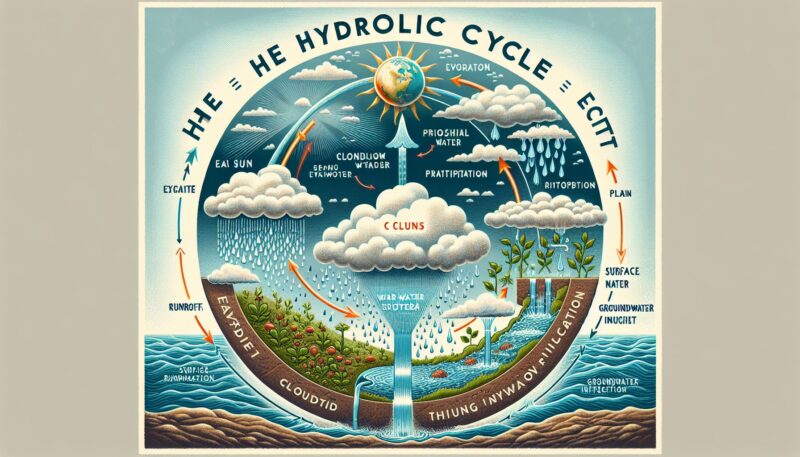
The hydrologic cycle, also known as the water cycle, is the continuous movement of water on, above, and below the surface of the Earth. This cycle is a fundamental concept in hydrology and is crucial for sustaining life, regulating climate, and shaping the planet’s surface. In this article, we’ll delve into the intricate processes of the hydrologic cycle, its importance, and how human activities are impacting this delicate system.
What is the Hydrologic Cycle?
The hydrologic cycle describes the endless circulation of water as it evaporates from surfaces, condenses in the atmosphere, precipitates back to the ground, and travels through various paths before starting the cycle anew. The sun powers this cycle by providing the energy for evaporation, and gravity drives the movement of water from the atmosphere back to Earth and through river systems to the oceans.
Key Components of the Hydrologic Cycle
-
Evaporation: The transformation of water from a liquid to a gaseous state, mostly from the surfaces of bodies of water, soil, and plant leaves.
-
Transpiration: The release of water vapor from the stomata of plants into the atmosphere is a biological component of evaporation.
-
Condensation: The conversion of water vapor into liquid water as it cools in the atmosphere, forming clouds and fogs.
-
Precipitation: The discharge of water from the atmosphere in various forms, including rain, snow, sleet, or hail.
-
Infiltration: The process by which water enters the soil surface and becomes soil moisture.
-
Percolation: The downward movement of water through soil and rock, which can lead to the replenishment of aquifers.
-
Runoff: Water that flows over the land surface, often reaching rivers, lakes, and oceans.
-
Streamflow: The flow of water within rivers and streams that moves as part of surface runoff.
-
Baseflow: The portion of streamflow that is sustained between periods of precipitation, primarily supplied by groundwater.
-
Groundwater: Water that accumulates in spaces and fractures within rocks and sediments beneath the Earth’s surface.
-
Aquifer: A body of permeable rock or sediment that can store and transmit groundwater.
-
Recharge: The process by which groundwater is replenished, usually by percolation from the surface.
-
Discharge: The release of groundwater into rivers, lakes, oceans, or onto the land surface.
The Importance of the Hydrologic Cycle
The hydrologic cycle is essential for supporting all forms of life and maintaining the Earth’s environmental systems. It is responsible for:
– Distribution of heat across the globe through the movement of water, moderating temperatures.
– Delivery of freshwater to ecosystems, which is vital for drinking, agriculture, and habitat for species.
– Formation and maintenance of habitats, including wetlands, estuaries, and coral reefs.
Human Impact on the Hydrologic Cycle
Human activities have significantly altered the natural hydrologic cycle. Examples include:
– Climate Change: Changes in the climate can alter precipitation patterns, leading to extreme weather events like droughts and floods.
– Land Use Changes: Deforestation, urbanization, and agriculture change the way water infiltrates into the ground, potentially reducing recharge and increasing runoff and erosion.
– Water Withdrawal: Excessive pumping of groundwater for irrigation and consumption can lower water tables and reduce baseflow to streams and rivers.
– Pollution: The introduction of pollutants, such as pathogens, heavy metals, and microplastics, degrades water quality and harms aquatic life.
Preservation and Restoration Efforts
Given the importance of a balanced hydrologic cycle, efforts to mitigate human impact are crucial. Practices such as:
– Water Conservation: Efficient use of water resources, including rainwater harvesting and greywater reuse.
– Wetland Restoration: Reestablishing wetlands to improve natural water filtration and storage.
– Sustainable Water Management: Implementing policies that regulate water withdrawal and protect recharge areas.
Conclusion
The hydrologic cycle is a complex system that sustains life, shapes the Earth’s surface, and influences our climate. Its balance must be maintained to ensure a stable environment for future generations. Understanding this cycle is the first step toward better water management and conservation efforts.
Sources
- “Hydrology: An Introduction” by Wilfried Brutsaert, Cambridge University Press. This text provides a comprehensive introduction to the principles and processes of hydrology, including in-depth discussions on the hydrologic cycle.
- “The United States Geological Survey (USGS) Water Science School.” A reliable, scientific resource that offers detailed information about various aspects of the hydrologic cycle and the role of water in Earth’s processes (USGS Water Science School).
Please note that as my knowledge is frozen as of early 2023, the sources cited above may have more recent editions or updates beyond that date.