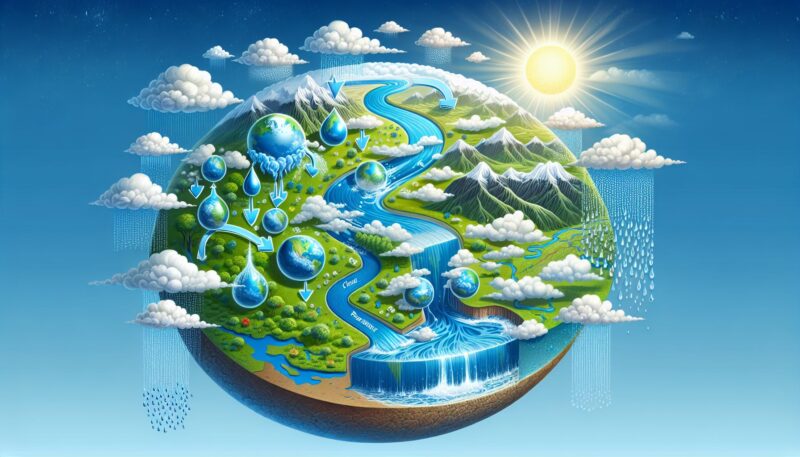
Water is the lifeblood of our planet. It shapes landscapes, regulates climate, and sustains all forms of life. Beneath its simplicity, water participates in a complex, never-ending cycle that moves it through various states and environments. This is known as the hydrologic cycle, and it’s responsible for everything from the water we drink, to the rain that nourishes crops, to the unseen water beneath our feet. Let’s immerse ourselves in the intricacies of this fundamental earth process and understand how it influences every aspect of our environment and our lives.
Understanding the Hydrologic Cycle
The hydrologic cycle, also known as the water cycle, describes the continuous movement of water on, above, and below the surface of the Earth. This cycle is driven by the sun’s energy and involves several key processes: evaporation, transpiration, condensation, precipitation, infiltration, percolation, runoff, and storage in various reservoirs. Each step in the cycle plays a vital role in maintaining a balance of water on our planet.
Evaporation
The journey of the hydrologic cycle often begins with evaporation. Solar radiation heats bodies of water such as oceans, rivers, and lakes, causing water molecules to gain energy and escape into the air as water vapor. This invisible vapor rises and disperses, becoming part of the atmosphere.
Transpiration
Transpiration is the process by which plants absorb water from the soil and release it as water vapor through their leaves. This crucial step joins evaporation in contributing to the atmospheric moisture. Together, evaporation and transpiration are referred to as “evapotranspiration.”
Condensation
As water vapor rises and encounters cooler temperatures at higher altitudes, it undergoes condensation. This is the process that transforms water vapor into tiny water droplets or ice crystals, which clump together to form clouds. Depending on the temperature and atmospheric conditions, these droplets can become large enough to fall to the Earth’s surface as precipitation.
Precipitation
Precipitation occurs when condensed water in the clouds grows heavy enough to fall to the ground. This can happen in various forms: rain, snow, sleet, or hail. Precipitation replenishes freshwater resources and is a critical component for surface water and groundwater systems.
Infiltration and Percolation
Once water reaches the ground, it doesn’t just stop moving. Some of the water infiltrates the soil, moving downward through percolation, a slow process that filters water through soil layers and eventually refills aquifers—natural underground water reservoirs.
Runoff and Streamflow
Not all water that falls as precipitation is absorbed by the soil. Some water flows across the surface as runoff, feeding into rivers, streams, and eventually the ocean. This process is known as streamflow, and it’s an important factor in shaping our landscapes through erosion and the transport of sediments.
Groundwater Flow and Discharge
Groundwater, which resides in aquifers, moves through rock formations and may return to the surface through springs, or discharge directly into the oceans, lakes, and rivers. Groundwater flow is a slower component of the cycle, but it is crucial for maintaining baseflows in rivers, especially during dry periods.
Storage and Distribution
Throughout the water cycle, water is stored in many forms: as ice in glaciers, as fresh liquid in lakes and reservoirs, as salty liquid in oceans, or as vapor in the atmosphere. These various storage methods distribute water and make it available to ecosystems and human societies across the globe.
The Importance of the Hydrologic Cycle
The hydrologic cycle is essential for several reasons:
-
Supports Ecosystems: Water from the cycle supports all ecosystems. Forests, wetlands, grasslands, and aquatic ecosystems each rely on specific aspects of the hydrologic cycle.
-
Regulates Climate: The cycle plays a crucial role in temperature regulation. For instance, evaporation is a cooling process, while the release of heat during condensation warms the air, influencing weather patterns.
-
Provides Freshwater: Freshwater resources used for drinking, agriculture, and industry are all products of the hydrologic cycle.
-
Shapes the Landscape: As water moves, it erodes rock and soil, carving valleys, and shaping mountains. This geological shaping forms the habitats in which various organisms live.
Human Impact on the Hydrologic Cycle
Human activities have significant impacts on the hydrologic cycle. Climate change, land-use changes, deforestation, and urban development affect evapotranspiration rates, precipitation patterns, groundwater recharge, and runoff conditions. These alterations can exacerbate droughts, lead to more severe flooding, and challenge water management practices.
Addressing Water Cycle Challenges
It is crucial for society to understand and protect the natural hydrologic cycle processes to secure water for future generations. Strategies such as sustainable water resource management, reforestation, land conservation practices, and investments in green infrastructure can help mitigate the human impacts on the cycle.
Conclusion
The hydrologic cycle is a fascinating and complex series of processes that are indispensable to life on Earth. As the cycle faces changes and challenges, it becomes increasingly important for individuals and communities to recognize their role in conserving this precious resource. By taking action to protect and preserve the natural movements of water, we ensure that the Earth’s circulatory system remains healthy for countless generations to come.