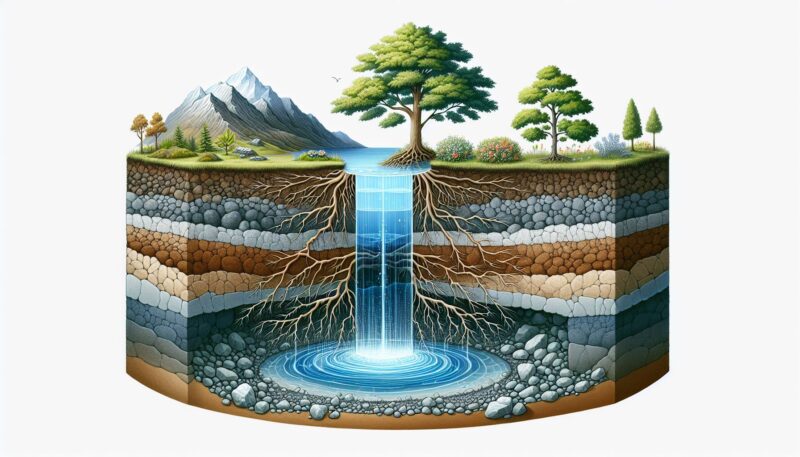
Groundwater is one of the most crucial, yet often overlooked components of our planet’s hydrosphere. As the world grapples with the challenges posed by climate change, population growth, and water scarcity, understanding and managing groundwater resources becomes ever more important. This article delves into the hidden world of groundwater, exploring what it is, how it functions within the hydrologic cycle, and why it is vital for our survival.
What is Groundwater?
Groundwater is the water that fills the cracks and spaces in underground soil and rock layers. It is a key part of the hydrologic cycle, which also includes precipitation, evaporation, transpiration, condensation, runoff, and percolation. Essentially, groundwater is the water beneath our feet – the unseen part of the water cycle that has a profound impact on our ecosystems, agriculture, and potable water supplies.
How Groundwater Fits into the Hydrologic Cycle
The hydrologic cycle describes the continuous movement of water on, above, and below the surface of the Earth. Groundwater plays a central role in this process:
-
Infiltration and Percolation: When precipitation falls to the ground, it doesn’t stop there. Some of the water infiltrates the soil surface and moves down into the subsurface through a process called percolation, eventually reaching the water table and contributing to groundwater.
-
Baseflow and Streamflow: Groundwater contributes to streams, rivers, and lakes, maintaining flow during dry periods through a process known as baseflow. This is different from runoff, which is the water flow that occurs when the soil is saturated or frozen, or when precipitation is too intense for infiltration.
-
Discharge and Recharge: Groundwater discharges to other bodies of water such as seas, rivers, and wetlands. Recharge, on the other hand, is the process where new water is added to an aquifer, usually from precipitation or streams.
-
Aquifers and Water Movement: Groundwater is stored in geological formations called aquifers, which can be confined or unconfined. Water moves slowly through these aquifers, which can transport nutrients and, unfortunately, contaminants too.
The Importance of Groundwater
Groundwater serves several essential functions:
-
Drinking Water Supply: Groundwater serves as a major source of fresh water for billions of people worldwide. In many regions, aquifers provide a reliable source of high-quality drinking water with minimal treatment needed.
-
Agriculture: Groundwater is also used extensively for irrigation. It enables farmers to grow crops even in areas where surface water is scarce or during times when rivers and reservoirs run low.
-
Industrial Use: Many industries rely on groundwater for processes such as cooling and manufacturing.
-
Ecological Balance: In addition to serving human needs, groundwater is critical for maintaining the health of ecosystems. Many wetlands, rivers, and lakes would dry up without the continual recharge from underground sources.
Threats to Groundwater
Despite its importance, groundwater faces several threats:
-
Overuse: Excessive pumping, often for agriculture, can lower the water table and deplete aquifers, a phenomena known as groundwater mining.
-
Contamination: Groundwater is vulnerable to pollutants such as heavy metals, pathogens, pesticides, and nutrients, which can leach into the water supply from various sources, including industrial waste and agricultural runoff.
-
Land-Use Changes: Urbanization and deforestation can alter recharge rates and patterns, affecting both the quantity and quality of groundwater.
Groundwater and Water Scarcity
Water scarcity is already a pressing issue in many parts of the world and is expected to intensify with climate change and population growth. Groundwater can buffer communities against drought and water scarcity; however, it is not an infinite resource. When groundwater is over-extracted, it can lead to a host of problems, including falling water tables, increased costs for water extraction, land subsidence, and reduced water quality.
Groundwater Management and Sustainability
To ensure that groundwater can meet the needs of both current and future generations, sustainable management practices are crucial:
-
Monitoring and Regulations: It is important to monitor groundwater levels and quality to manage them effectively. Regulations that control extraction rates can help prevent overuse and depletion.
-
Water Conservation: Reducing water waste and improving water use efficiency can lessen the demand on groundwater resources.
-
Enhanced Recharge: Artificial recharge projects, like spreading grounds and recharge wells, can help increase the rate at which groundwater is replenished.
-
Pollution Prevention: Strategies to prevent contamination, such as proper waste disposal and reduction of chemical use in agriculture, are essential for maintaining groundwater quality.
The Future of Groundwater
As we look toward the future, the way we manage groundwater will shape our resilience to water scarcity and environmental challenges. Innovative technologies in water treatment and conservation, along with integrated water resource management, are crucial in securing the sustainability of groundwater resources. Understanding the complexities of groundwater dynamics helps us make informed decisions about land use, resource allocation, and environmental stewardship.
Conclusion
Groundwater might be out of sight, but it shouldn’t be out of mind. This important resource sustains life in many ways – from the drinking water we depend on to the health of natural ecosystems. As the world continues to face the challenges of water scarcity and climate change, the hidden power of groundwater remains a beacon of hope for a sustainable future. It is our collective responsibility to ensure that this vital resource is managed wisely and protected for generations to come.
Sources
- “Ground Water and the Rural Homeowner” by Roger M. Waller, U.S. Geological Survey. https://pubs.usgs.gov/gip/gw_ruralhomeowner/
- “Groundwater depletion” by Leonard Konikow, U.S. Geological Survey. https://water.usgs.gov/ogw/gw_depletion.html
- “The Hidden Resource: Groundwater” by National Ground Water Association. https://www.ngwa.org/what-is-groundwater/About-groundwater