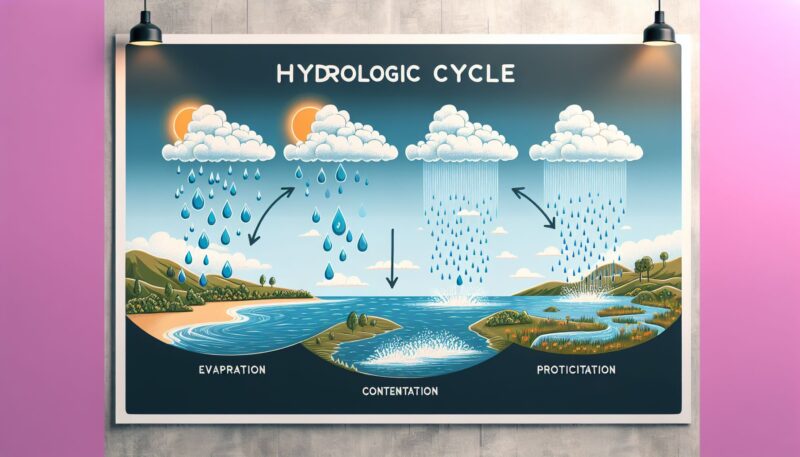
Water is the lifeblood of our planet, a vital resource that shapes ecosystems, supports agriculture, and sustains all life forms. The hidden journey that water undertakes as it moves through the environment is known as the hydrologic cycle. This intricate process is fundamental to the functioning of the Earth’s climate system, the provision of freshwater resources, and the maintenance of biodiversity.
What is the Hydrologic Cycle?
The hydrologic cycle, also known as the water cycle, describes the continuous movement of water on, above, and below the surface of the Earth. It is a complex system consisting of various processes that involve the exchange of water between the atmosphere, land, oceans, and living organisms. These processes include precipitation, evaporation, transpiration, condensation, infiltration, percolation, runoff, and streamflow.
Precipitation
Precipitation is the process whereby water vapor condenses into droplets and falls from the atmosphere as rain, snow, sleet, or hail. It is the primary mechanism through which water is transferred from the atmosphere to the Earth’s surface.
Evaporation and Transpiration
Evaporation is the transformation of liquid water into vapor, primarily due to the energy provided by the sun. Bodies of water, moist soil, and other wet surfaces lose water to the atmosphere through this process. Transpiration occurs when plants release water vapor from their leaves into the air, a crucial part of the water cycle that aids in the movement of water through the ecosystem and the cooling of the environment.
Condensation
Condensation is the process by which water vapor in the atmosphere cools and changes back into liquid droplets. These droplets can form clouds, fog, or dew, and are the precursors for precipitation.
Infiltration and Percolation
When precipitation reaches the ground, it can either flow over the surface or penetrate the soil. Infiltration is the process through which water seeps into the soil from the surface. From there, it may continue to move downward through the soil layers in a process known as percolation, ultimately reaching the groundwater storage areas.
Runoff and Streamflow
Runoff is the portion of precipitation that flows over the land’s surface and is not absorbed into the ground. It can collect in rivers, streams, and lakes, contributing to streamflow—the movement of water within these bodies.
Baseflow and Groundwater
Baseflow refers to the part of the streamflow that is sustained by groundwater seeping into rivers and streams during periods of low precipitation. Groundwater is the water that fills the cracks and spaces in underground soil and rock layers, stored within aquifers—a vital source of drinking water for many communities.
Recharge and Discharge
Recharge is the process through which groundwater is replenished, typically from precipitation infiltrating the ground. Discharge is the natural or artificial removal of groundwater, such as when it flows into rivers, is extracted by wells, or taken up by plant roots.
The Global Significance of the Hydrologic Cycle
The hydrologic cycle is crucial for climate regulation, water supply, and ecosystem health. It determines the distribution and quality of freshwater resources, influences weather patterns, and plays a significant role in mitigating the impacts of climate change by acting as a global transfer mechanism for heat.
Water Quality and Pollution
Water quality is affected by the hydrologic cycle as pollutants from the air, land, and human activities can be transported and diluted within the cycle. Water pollution, including the presence of harmful chemicals, heavy metals, and pathogens, poses significant threats to ecosystems and human health, necessitating effective strategies for water treatment and management.
Climate Change and the Hydrologic Cycle
Climate change impacts the hydrologic cycle by altering precipitation patterns, increasing the intensity of storms, altering evaporation and transpiration rates, and causing changes in the distribution of snow and ice. These changes can lead to water scarcity in some regions and increased flooding in others.
Preserving the Cycle: Conservation and Management
Managing the hydrologic cycle involves understanding and balancing the needs of human populations with those of the environment. Water conservation efforts, such as rainwater harvesting and greywater reuse, can help maintain the delicate balance of this cycle. Additionally, water management strategies, including the development of sustainable water distribution and storage systems, are integral to the preservation of water resources.
Conclusion
In conclusion, the hydrologic cycle is a fundamental aspect of the Earth’s intricate environmental systems. With growing challenges such as water scarcity and pollution, understanding and stewarding this continuous movement of water is of paramount importance for sustaining our planet’s health and supporting future generations. By taking a holistic approach to water management and actively engaging in conservation efforts, we can ensure that the hidden journey of water continues to nourish and sustain all forms of life.
Sources
- United States Geological Survey (USGS) Water Science School: https://water.usgs.gov/edu/watercycle.html
- The National Oceanic and Atmospheric Administration (NOAA): https://www.noaa.gov/education/resource-collections/freshwater/water-cycle