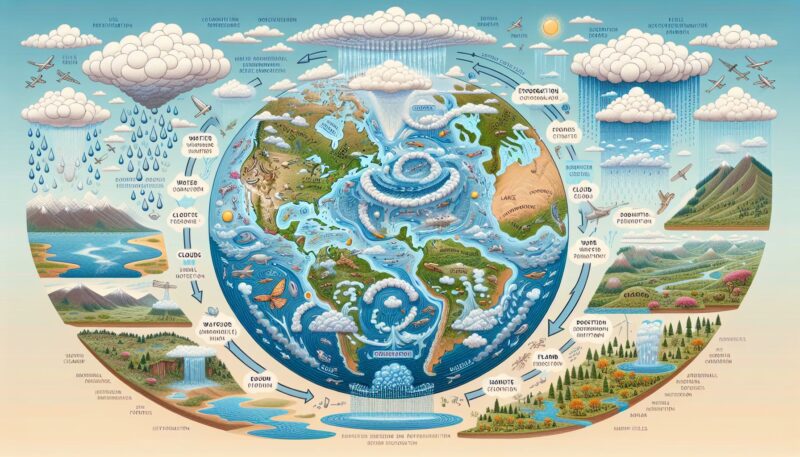
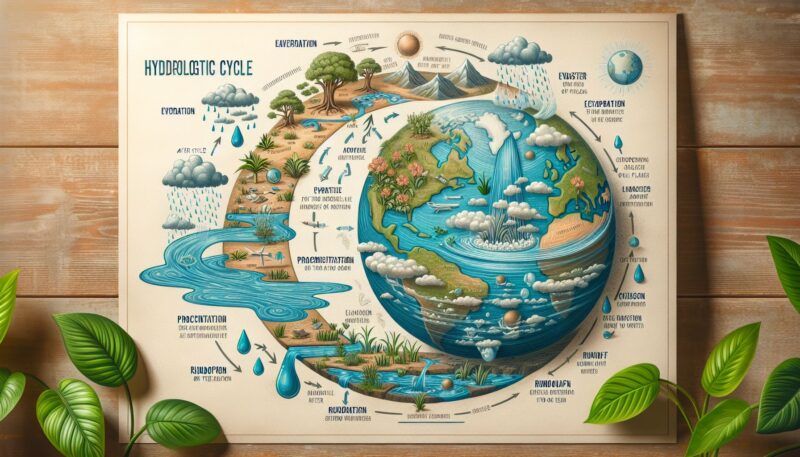
The hydrologic cycle, also known as the water cycle, is a continuous process that describes the movement of water on, above, and below the surface of the Earth. This vital cycle plays a significant role in the sustenance of life, the shaping of weather patterns, and the maintenance of the ecosystem. It can be broken down into several key processes: precipitation, evaporation, transpiration, condensation, infiltration, percolation, runoff, and streamflow. Each stage of the cycle is crucial in its own right, and together, they form a complex and interdependent system that is fundamental to the planet’s well-being.
Precipitation: The Delivery of Water from Sky to Earth
Precipitation occurs when water vapor condenses in the atmosphere and falls to the ground in various forms—rain, snow, sleet, or hail. This process begins as the sun’s energy heats bodies of water like rivers, lakes, and oceans, causing evaporation. Water vapor then rises into the atmosphere, cools, and condenses into clouds. When the clouds become heavy enough, gravity takes over, and water returns to the Earth’s surface.
Precipitation is a primary source of freshwater for many ecosystems and human activities. It replenishes soil moisture and surface water bodies and thus plays an essential role in the availability of water for agricultural and urban use.
Evaporation and Transpiration: Returning Water to the Air
Evaporation is the transformation of water from a liquid to a gaseous state. It occurs when water on Earth’s surface heats up and rises as water vapor. This can happen from locations like oceans, rivers, and soil, contributing significant amounts of water vapor to the atmosphere.
Transpiration is similar to evaporation, but it occurs in plants. As plants absorb water from the soil, some of it evaporates from stomata—tiny openings on the leaves. Collectively, evapotranspiration refers to the sum of evaporation and transpiration from the Earth’s land and water surfaces into the atmosphere.
Condensation: Cloud Formation and the Prelude to Precipitation
Condensation is the process by which water vapor cools and changes back into liquid droplets, forming clouds. These droplets can clump together, and when they become too heavy to stay suspended in the air, they fall as precipitation.
Infiltration and Percolation: The Earth’s Natural Filtration Process
Infiltration occurs when water on the surface seeps into the ground. This process is influenced by the soil type, vegetation, topography, and level of saturation. Percolation is a deeper infiltration where the water moves through soil layers and porous rocks, potentially recharging groundwater sources.
Runoff and Streamflow: Channels of Movement across the Surface
Runoff happens when the rate of precipitation exceeds the rate of infiltration. The excess water flows over the land, directed by gravity, typically ending up in rivers, lakes, or oceans. Streamflow is the movement of water within these rivers and streams, and it contributes to the overall water levels in different bodies of water.
Baseflow: Groundwater’s Contribution to Rivers and Streams
Baseflow is the sustained flow of a stream in the absence of direct runoff. It comes from groundwater seeping into the streambed and is vital during dry periods as it sustains streamflow and aquatic life.
Groundwater: The Hidden Resource Beneath our Feet
Groundwater is water found underground in the cracks and spaces in soil, sand, and rock. It is stored in, and moves slowly through, geologic formations of soil, sand, and rocks called aquifers.
Groundwater is a critical component of the hydrologic cycle. It provides much of the flow in many streams and rivers and has a significant influence on the health of wetlands and the organisms that live in them. Groundwater helps maintain the water levels in many surface water bodies, and in many parts of the world, it is the major source of water for both irrigation and human consumption.
Aquifers: Nature’s Underground Storage Tanks
An aquifer is a body of permeable rock that can contain or transmit groundwater. When rainwater infiltrates the soil, it can percolate down to the water-saturated zone of an aquifer. Aquifer recharge occurs when the water table is replenished with this water, which can then be drawn upon for various human needs.
Recharge and Discharge: The Balancing Act of Groundwater Levels
Recharge is the process through which groundwater is replenished. This can occur naturally through precipitation or artificially through methods like recharge basins. Discharge, on the other hand, is the natural or artificial removal of water from an aquifer. Understanding the balance between recharge and discharge is crucial for sustainable groundwater management.
Watershed: The Crucial Catchments of the Hydrologic Cycle
A watershed, also known as a drainage basin or catchment, is an area of land where precipitation collects and drains off into a common outlet, such as a river, bay, or other body of water. Watersheds are natural systems that we rely on for clean water supplies, recreation, and healthy ecosystems. Protecting these areas is essential for maintaining the quality and quantity of water.
The Hydrologic Cycle and Climate Change: An Uncertain Future
Climate change has the potential to disrupt the hydrologic cycle in profound ways. Changes in temperature can alter evaporation rates, influence precipitation patterns, and lead to more extreme weather events, such as droughts or floods. These changes have cascading effects on water availability, water quality, and the ecosystems and human populations that depend on them.
Conclusion
By understanding the hydrologic cycle and its components, we can better appreciate the intricate interplay of processes that underpin our very existence. Humanity’s challenge lies in managing this vital resource responsibly to ensure its sustainability for generations to come.
Sources:
- UNESCO Water Cycle Description: UNESCO Hydrological Process
- EPA Watershed Information: EPA Watersheds
The hydrologic cycle remains one of the Earth’s most fascinating and essential environmental processes, governing the distribution and quality of water across the globe. It is a complex system of transfer and transformation—a symphony of elements working together to sustain life on Earth. As we continue to face new environmental challenges and strive toward sustainable living, a deep understanding of this cycle is more important than ever. Through responsible water use, conservation efforts, and global cooperation, we can help preserve the intricate balance of this marvelous, life-giving cycle.