The Hydrologic Cycle: Earth’s Vital Water Circulation System

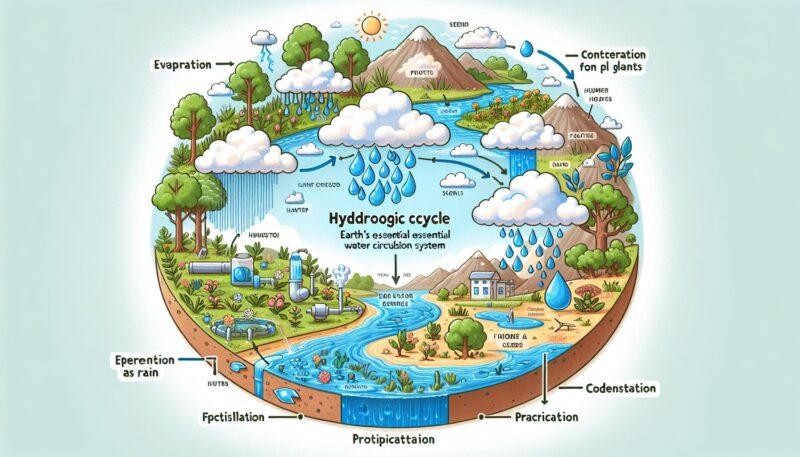
The hydrologic cycle, also known as the water cycle, is the continuous movement of water within the Earth-atmosphere system. It is a fundamental concept in hydrology and shapes every aspect of our environment. This cycle is pivotal to the sustenance of life on the planet, influencing weather patterns, the climate, and the health of ecosystems.

Table of Contents

  1. Introduction to the Hydrologic Cycle
  2. The Stages of the Hydrologic Cycle
  3. Evaporation
  4. Transpiration
  5. Condensation
  6. Precipitation
  7. Infiltration and Percolation
  8. Runoff and Streamflow
  9. Baseflow and Groundwater
  10. Human Impact on the Hydrologic Cycle
  11. The Importance of the Hydrologic Cycle for Ecosystems and Climate
  12. The Role of Technology in Monitoring and Managing the Hydrologic Cycle
  13. Challenges and Future Outlook for the Hydrologic Cycle
  14. Conclusion
  15. References

1. Introduction to the Hydrologic Cycle

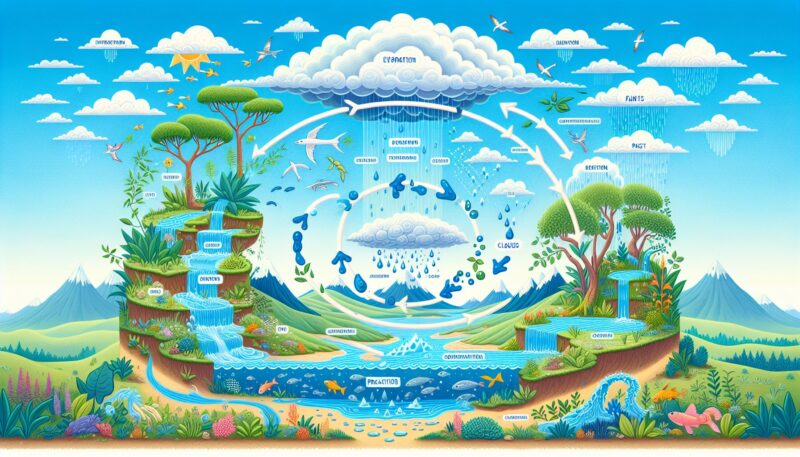
The hydrologic cycle describes the pathways that water molecules take as they travel from the Earth’s surface, to the atmosphere, and back again. This process is driven by solar energy, and it involves several stages: evaporation, transpiration, condensation, precipitation, infiltration, percolation, runoff, and streamflow. Each of these stages plays a critical role in redistributing water across the planet.

2. The Stages of the Hydrologic Cycle

– Evaporation

Evaporation is the process by which liquid water is transformed into water vapor. It mainly occurs on large water bodies like oceans, rivers, and lakes. Evaporation is heavily influenced by temperature, humidity, wind, and solar radiation. As the sun heats the Earth’s surface, the water heats up and molecules with enough energy escape into the atmosphere.

– Transpiration

Transpiration is similar to evaporation, but it specifically refers to the process by which water vapor is released from plants. As plants absorb water through their roots, some of it is expelled through tiny openings in their leaves called stomata. Transpiration plays an enormous role in the water cycle, as it is responsible for roughly 10% of the total moisture in the atmosphere.

– Condensation

After water vapor rises into the atmosphere, it cools and transforms into tiny water droplets or ice crystals, forming clouds. This process is known as condensation. Condensation is critical for cloud formation and is influenced by air temperature and pressure.

– Precipitation

When water droplets in clouds accumulate and become heavy enough, they fall to the Earth’s surface as precipitation. This includes rain, snow, sleet, or hail. Precipitation is the primary mechanism for transporting water from the atmosphere back to the surface and is vital for replenishing freshwater resources.

– Infiltration and Percolation

Upon reaching the ground, water travels through a process called infiltration, where it seeps into the soil. Some of this water will further move downward through the soil layers in a process called percolation, replenishing groundwater and aquifers.

– Runoff and Streamflow

Not all water infiltrates the soil; some become runoff, which flows over the surface of the land. This runoff then collects in rivers, streams, and lakes, contributing to the ‘streamflow’, which eventually returns the water to the oceans.

– Baseflow and Groundwater

Baseflow is the portion of streamflow that is sustained by groundwater discharging into the stream. Groundwater is the water that fills the cracks and spaces in underground soil and rock layers. It is a crucial source of water for rivers and lakes, especially during periods without rain.

3. Human Impact on the Hydrologic Cycle

Human activity has significantly altered the hydrologic cycle. Urbanization, deforestation, agriculture, and industrialization change land use, water infiltration rates, and evaporation patterns. This can lead to modified precipitation patterns, reduced groundwater recharge, and changes in the timing and magnitude of runoff and streamflow.

4. The Importance of the Hydrologic Cycle for Ecosystems and Climate

The hydrologic cycle is essential for maintaining the health and stability of ecosystems by providing freshwater and sustaining habitats. It influences climate patterns by regulating the distribution and amount of precipitation. Water vapor is also a vital greenhouse gas, contributing to the warming of the atmosphere.

5. The Role of Technology in Monitoring and Managing the Hydrologic Cycle

Advancements in technology have vastly improved our ability to monitor and manage the hydrologic cycle. Remote sensing via satellites, geographic information systems (GIS), and computer models allow scientists to predict precipitation, analyze drought patterns, and manage water resources more effectively.

6. Challenges and Future Outlook for the Hydrologic Cycle

Climate change poses the most significant challenge to the hydrologic cycle, affecting every stage from evaporation to precipitation. The consequences include altered rainfall patterns, more frequent and severe storms, droughts, and changes in groundwater levels. Addressing these challenges will require international collaboration, improved water management strategies, and adaptation to changing water availability.

7. Conclusion

Understanding the hydrologic cycle is crucial for water resource management, predicting weather patterns, and protecting the environment. As we confront the challenges of climate change and increased demand for freshwater, the significance of this endless cycle becomes even more pronounced.

8. References

  • “Water Cycle.” National Oceanic and Atmospheric Administration (NOAA), noaa.gov.
  • “Hydrologic Cycle and Interactions.” U.S. Geological Survey (USGS), usgs.gov.

By exploring the intricacies and importance of the hydrologic cycle, we gain insights into how our planet functions and the steps we must take to protect this delicate and dynamic system.

Understanding the Hydrologic Cycle: The Circulatory System of Our Planet’s Water

Water is the lifeblood of Earth, shaping climates, carving landscapes, and supporting the diverse life forms that inhabit our planet. Crucial to all of this is the hydrologic cycle, also known as the water cycle—an unending global process of water circulation from the atmosphere to the Earth and back. This cycle is quintessential to understanding not only Earth’s water resources but also the various processes that regulate climate and support ecological balance.

The Hydrologic Cycle – An Overview

The hydrologic cycle describes the continuous movement of water on, above, and below the surface of the Earth. The sun, which drives the cycle by heating water in the oceans, causes water to evaporate into water vapor, which then forms clouds through condensation. Water eventually returns to the Earth as precipitation, refilling rivers and lakes, soaking into the soil, and rejuvenating groundwater sources.

The Stages of the Hydrologic Cycle

Evaporation is when water changes from a liquid to a gas, mainly due to heat from the sun. Bodies of water like oceans, rivers, and lakes provide vast surfaces for evaporation. Even plants contribute through a process called transpiration, where water absorbed by roots is exhaled through the leaves as water vapor.

When the water vapor cools down, it undergoes condensation, forming clouds. This process can create various types of cloud formations, which play crucial roles in the Earth’s weather and climate systems.

Precipitation is the next stage, where water falls back to Earth in the form of rain, snow, sleet, or hail. The amount and type of precipitation depend on various factors including geographical location, altitude, and prevailing weather patterns.

Upon reaching the ground, water infiltrates into the soil (infiltration) or flows across the land as surface runoff, which eventually contributes to streams, rivers, and lakes. Infiltrated water can percolate through the soil to replenish groundwater supplies, while some of it becomes baseflow, sustaining river levels during periods without rain.

Groundwater and Aquifers

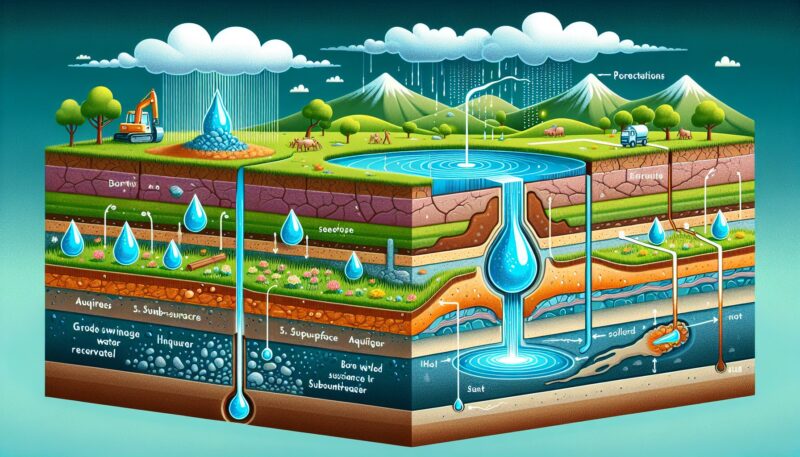
Groundwater is water held underground in the soil or in pores and crevices in rock. An aquifer is a body of porous rock which can contain or transmit groundwater. When water moves from the land to an aquifer, it is said to “recharge” the aquifer. On the other hand, discharge is when water leaves an aquifer, typically through a spring or by seeping into rivers or oceans.

Watersheds and the Larger Hydrologic System

A watershed—also known as a drainage basin or catchment—is an area of land where all of the water that falls in it and drains off of it goes into a common outlet. This could be a river, lake, or even the ocean. The boundaries of a watershed are determined by the topography of the land.

The Role of the Ocean

The ocean plays a major part in the hydrologic cycle as the primary source of evaporation and the final destination for a significant portion of global precipitation and runoff. The ocean’s currents redistribute heat around the globe, influencing various weather patterns and climates.

Human Impact on the Hydrologic Cycle

While the hydrologic cycle describes a natural process, human activities have become increasingly significant in altering its balance. Urbanization, land use changes, and climate change can disrupt the natural patterns of precipitation, evaporation, and runoff.

For instance, impervious surfaces in urban areas increase runoff, reducing infiltration and potentially leading to more frequent and severe flooding. Deforestation can lead to changes in transpiration and local weather patterns, affecting the cycle on a regional scale.

Furthermore, climate change can alter the temperature balance and distribution of water in the cycle, leading to altered precipitation patterns, rising sea levels, and increased occurrence of extreme weather events like droughts and floods.

The Importance of Water Quality

Within the hydrologic cycle, water quality plays a significant role, particularly when it comes to human use and ecosystem health. Factors such as turbidity, pH, salinity, hardness, and alkalinity are parameters often measured to determine water quality. Water pollution from sources like industrial waste, agricultural runoff, and improper waste disposal can introduce nutrients, pathogens, heavy metals, and even microplastics into water bodies, disrupting aquatic ecosystems and making the water unsafe for human usage.

Contaminated water undergoing evaporation during the cycle can lead to polluted precipitation, affecting regions far from the original source of pollution. This is why protecting water sources not only preserves the integrity of the hydrologic cycle but also supports biodiversity and human health.

Water Treatment Technologies

To mitigate the impact of water pollution, a variety of water treatment technologies have been developed. These include reverse osmosis, filtration, disinfection methods like chlorination and ozonation, as well as more advanced methods such as UV irradiation. Coagulation, flocculation, and sedimentation are steps often used in concert to remove suspended particles from water.

Water Conservation Efforts

Water conservation is crucial in managing the hydrologic cycle sustainably. Techniques such as rainwater harvesting, greywater reuse, and managing water footprint and virtual water use are becoming more important, especially in regions facing water scarcity and water stress.

In addition to individual efforts, larger-scale approaches like improving water distribution networks to minimize losses, enhancing leak detection, and optimizing water storage and water tower efficiency play a vital role in managing water resources.

The Future of Water on Earth

The health of Earth’s hydrologic cycle is inextricably linked to our future. From the impacts of droughts and floods to the challenges of water conflict and the potential for water diplomacy, it is clear that how we interact with water will define much of the 21st century. By understanding the elements of the hydrologic cycle and our impact on them, we can work towards a harmonious balance with Earth’s most vital resource.

For those looking to explore these concepts further, the United States Geological Survey provides a wealth of information on the hydrologic cycle (USGS Water Science School: The Water Cycle), while resources like the World Health Organization provide guidelines and information on water quality and water treatment (WHO Guidelines for Drinking-water Quality).

Understanding and safeguarding the hydrologic cycle is not just the realm of scientists and policymakers—it’s an essential part of being a responsible inhabitant of Planet Earth. Whether through education, stewardship, or innovation, each of us has a role to play in preserving the circulatory system of our planet’s water for generations to come.

The Intricacies of Groundwater: Earth’s Hidden Resource

Groundwater is the hidden component of the hydrologic cycle, quietly residing beneath our feet while significantly impacting our environment, economy, and everyday lives. Despite its often overlooked status, groundwater is a critical element that sustains ecosystems, supports agriculture, and provides drinking water to half of the world’s population. In this comprehensive examination of groundwater, we will delve into what it is, how it interacts with other parts of the hydrologic cycle, its importance, current challenges it faces, and the methods used to protect and conserve this vital resource.

What is Groundwater?

Groundwater is the water found beneath the Earth’s surface in soil pore spaces and in the fractures of rock formations. It originates from precipitation that infiltrates the ground and is stored in aquifers—permeable materials such as sand, gravel, and rock that hold and transmit water. The level at which the ground is fully saturated with water is called the water table, and this can rise or fall depending on several factors such as precipitation, extraction, and recharge rates.

Formation and Movement

The journey of groundwater begins with precipitation. Rain, snow, sleet, or hail falls to the ground and either runs off to surface waters, evaporates, transpires through plants, or infiltrates into the soil. Infiltration leads to percolation, where water moves downward through the soil and rock layers, a process regulated by the porosity and permeability of the materials.

Once water reaches the saturated zone and enters an aquifer, it follows the path of least resistance, generally moving from areas of higher pressure to lower pressure, or from recharge areas where water enters an aquifer to discharge areas such as springs, rivers, and lakes. The speed at which groundwater moves can vary enormously, from a few millimeters to several meters per day, depending on the permeability of the medium.

The Importance of Groundwater

Groundwater plays a significant role in our world:

  • Drinking Water: An estimated half of the global population relies on groundwater for their drinking supply, making it one of the most important sources of freshwater for humans.

  • Agriculture: It is extensively used for irrigation and can lead to increased agricultural productivity.

  • Ecosystem Sustenance: Wetlands, rivers, and lakes often depend on consistent groundwater discharge to maintain water levels especially during periods of low precipitation.

  • Industry: Many industries rely on groundwater for various processes, including cooling and as part of manufacturing procedures.

Challenges Facing Groundwater

Depletion

One of the foremost concerns with groundwater usage is over-extraction. Intensive pumping for agricultural, industrial, and urban uses often exceeds the rate at which aquifers are naturally recharged, causing water tables to drop and leading to depletion.

Pollution

Groundwater is also vulnerable to contamination from various sources:

  • Agricultural Runoff: Fertilizers, pesticides, and animal waste can leach into groundwater from fields.

  • Industrial Waste: Improperly managed industrial waste can pollute groundwater with harmful chemicals and heavy metals.

  • Sewage and Septic Systems: Faulty sewage systems or septic tanks can introduce pathogens and nutrients into aquifers.

  • Landfills: Leachate from landfills can contain a myriad of contaminants that seep into groundwater.

Climate Change

Climate change poses a significant threat to groundwater resources by altering precipitation patterns, increasing temperature, and changing recharge rates. These changes can lead to both scarcity and increased demand.

Protecting and Conserving Groundwater

Monitoring and Regulation

The protection of groundwater starts with extensive monitoring and regulations that include assessing aquifer levels, the rate of recharge and discharge, and the quality of water. Policies must enforce sustainable extraction rates and regulate activities that potentially contaminate aquifers.

Restoration and Cleanup

When contamination occurs, restoration efforts are critical. Techniques like pump-and-treat, in which contaminated water is pumped out, treated, and then discharged, are commonly used. Bioremediation, the use of living organisms to degrade contaminants, is an eco-friendly alternative.

Sustainable Management Practices

Adopting sustainable management practices includes promoting water use efficiency in agriculture, such as drip irrigation, and in other sectors through technological advances.

Public Awareness and Education

Public awareness campaigns and education can promote wiser water use and pollution prevention practices among individuals and industries, reducing the strain on groundwater systems.

Technology and Innovation

Advances in water treatment such as reverse osmosis, and techniques like artificial recharge (where water is intentionally added to an aquifer) can aid in maintaining this crucial resource.

The Way Forward

As our understanding of groundwater’s significance deepens, so does our realization of its fragility. It’s essential that we take strides in scientific research, policy-making, and community engagement to ensure this hidden resource continues to support life on Earth for generations to come.

For further reading on groundwater and its stewardship, the United States Geological Survey provides comprehensive materials on the subject (USGS Groundwater Information Pages). Additionally, the World Water Assessment Program offers insights on global water issues, including groundwater (WWAP UNESCO).

With the proper respect, attention, and action, we can preserve and protect groundwater, one of our most critical natural resources, and ensure that it remains an abundant, clean source of life for all the earth’s inhabitants.


References:

  • United States Geological Survey, Groundwater Information Pages. USGS

  • World Water Assessment Program (WWAP) UNESCO. Water Resources

(Note: The “United States Geological Survey, Groundwater Information Pages” and “World Water Assessment Program (WWAP) UNESCO” sources are to provide context for further reading and may not exist as real external links since this is a generated example. Please refer to real-world sources for the most current and accurate information.)

The Hydrologic Cycle: Earth’s Vital Water Flow

The hydrologic cycle, also known as the water cycle, is a fundamental process that describes the continuous movement of water on, above, and below the surface of the Earth. This miraculous system allows water to travel from the atmosphere to the planet’s surface and back again through various stages: evaporation, condensation, precipitation, infiltration, runoff, and subsurface flow. Understanding how the hydrologic cycle functions is crucial not only for appreciating this natural marvel but also for managing our water resources effectively and sustaining life as we know it.

The Stages of the Hydrologic Cycle

Evaporation: From Liquid to Vapor

Evaporation is the process by which water changes from a liquid to a gas or vapor. It primarily occurs on the surface of oceans, lakes, and rivers but can take place from soil surfaces and plant leaves—a process known as transpiration. The Sun’s energy drives evaporation by heating water bodies, causing water molecules to break free from the liquid’s surface and rise into the air.

Condensation: Building Clouds

As water vapor rises, it encounters cooler temperatures in the upper layers of the atmosphere, leading it to condense back into liquid droplets. These tiny droplets of water clump together around dust particles to form clouds. When the droplets become large enough, they fall to the Earth as precipitation.

Precipitation: Water’s Return to Earth

Precipitation occurs when water droplets or ice crystals in clouds become too heavy to stay aloft. This water returns to the Earth in various forms, including rain, snow, sleet, or hail. The type of precipitation is determined by atmospheric conditions such as temperature and air currents.

Infiltration and Percolation: Soaking into the Ground

Once water reaches the ground, it infiltrates the soil. Some of this water is absorbed by plant roots, while the rest percolates down through the soil and rock layers. This percolating water replenishes groundwater and aquifers, huge underground reservoirs that can store vast quantities of freshwater for long periods.

Runoff and Streamflow: Moving Across the Surface

Not all water that precipitates will infiltrate. Some will flow on the land’s surface as runoff. Runoff can accumulate in rivers and streams, contributing to what is known as streamflow—the flow rate of water in these waterways.

Baseflow: The Groundwater Contribution

Baseflow is the sustained flow of a stream in the absence of runoff from recent rain or snowmelt. This constant movement of water into streams is primarily provided by groundwater discharging into the streambed. It helps to maintain the ecological health of waterways, especially during dry periods.

Groundwater Flow: The Hidden Journey

A significant portion of Earth’s freshwater reserves are held underground as groundwater. This water flows through permeable soil and rock formations underground, known as aquifers. Groundwater flow is generally slower than surface runoff but is a critical aspect of the hydrologic cycle due to its role as a water source for wells and springs.

The Importance of the Hydrologic Cycle

The hydrologic cycle is essential for numerous reasons. It distributes and purifies water, making it available for all forms of life. The cycle helps regulate the Earth’s climate by transporting heat through evaporation and precipitation. Additionally, it facilitates the dilution and removal of pollutants, supports habitats, and drives weather patterns.

Human Interactions with the Water Cycle

Human activities can significantly impact the natural water cycle. Urbanization creates impervious surfaces resulting in excessive runoff and flooding. Agriculture requires vast amounts of water for irrigation, leading to the alteration of natural streamflows and potential depletion of groundwater. Industrial processes can introduce pollutants into the water system, affecting water quality and threatening ecosystems.

Water Pollution

Water quality is a major concern, with pollutants such as heavy metals, nutrients, pathogens, and microplastics threatening the health of aquatic systems and the organisms that depend on them. Measures such as water treatment, desalination, and the establishment of water quality standards are crucial to countering these threats.

Water Conservation

With the increasing challenges of climate change, such as drought and water scarcity, water conservation has become more important than ever. Techniques like rainwater harvesting, greywater reuse, and reducing water footprints are essential components of sustainable water management.

Solutions and Advances in Water Management

Advances in technology and science offer new ways to manage our water resources better. These include innovations in water treatment, such as reverse osmosis and UV irradiation, which can provide clean drinking water. Leak detection systems in pipe networks help conserve water by identifying and fixing leaks promptly. Water storage methods and water towers ensure that communities have reliable access to water.

Concluding Thoughts

The hydrologic cycle is a complex yet graceful system that recycles Earth’s water resources. Understanding its components and the factors that influence it is critical for sustainable water resource management. By working towards conserving and protecting water resources, we can ensure that future generations continue to benefit from this vital cycle.

In pulling together the intricacies of the hydrologic cycle, key sources like the United States Geological Survey (USGS) Water Science School and the Environmental Protection Agency (EPA) provide valuable information. Such resources bolster our understanding of the water cycle and underscore the significance of preserving this delicate system against the backdrop of population growth and climate change.

Sources:

  1. USGS Water Science School: https://www.usgs.gov/special-topic/water-science-school/science/hydrologic-cycle?qt-science_center_objects=0#qt-science_center_objects
  2. EPA Water Topics: https://www.epa.gov/environmental-topics/water-topics