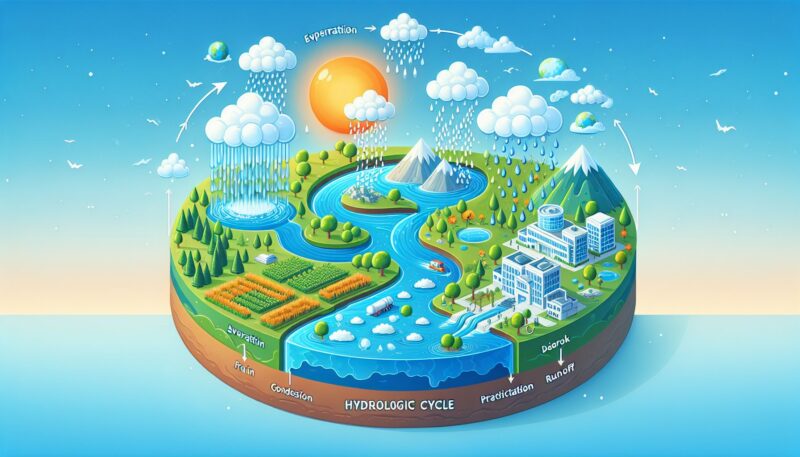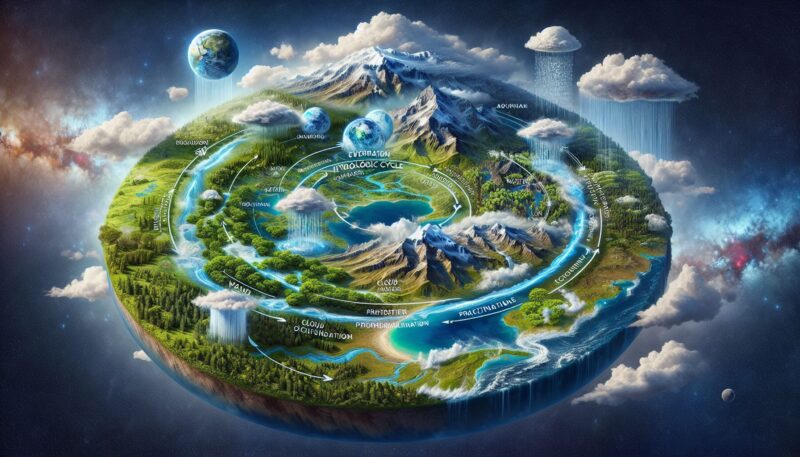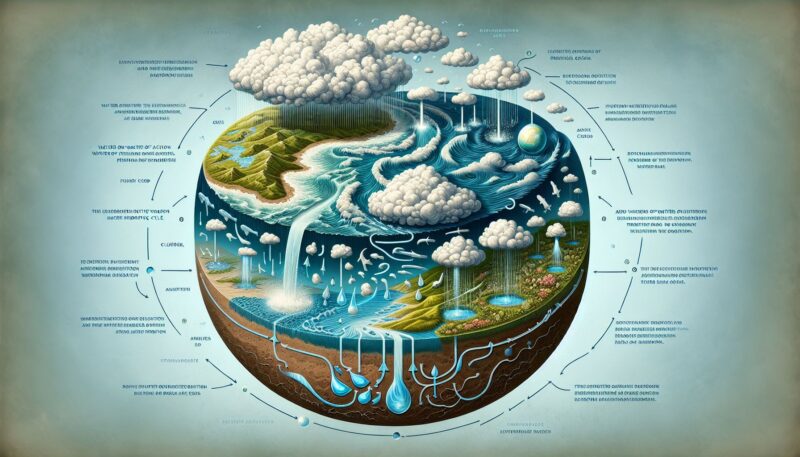
Water is the lifeblood of our planet. It sweeps across our landscapes, fills the pores of the earth, and envelopes much of our world in vast oceans. Each drop of water on Earth is a part of the magnificent and complex hydrologic cycle, a system that sustains life and shapes our environment in countless ways.
What is the Hydrologic Cycle?
The hydrologic cycle, also known as the water cycle, describes the continuous movement of water above, on, and below the surface of the Earth. This cycle is a critical ecological and geological process that enables the distribution and recycling of the Earth’s water resources.
The Main Processes of the Hydrologic Cycle
- Evaporation: Water from oceans, rivers, lakes, and even soil transforms into water vapor due to the heat from the sun, beginning the cycle.
- Transpiration: Plants release water vapor into the air through leaves, a process similar to evaporation.
- Condensation: As water vapor rises and cools, it changes back into liquid, forming clouds.
- Precipitation: When clouds become saturated, water falls back to Earth in the form of rain, snow, sleet, or hail.
- Infiltration: Water seeps into the ground, filtering through soil and rock layers.
- Percolation: Further movement of infiltrated water through soil to replenish aquifers.
- Runoff: Water flows over the land, collecting in puddles, streams, rivers, and eventually making its way to the oceans.
- Baseflow: Part of the water in rivers and streams that is provided by groundwater seeping into the riverbed.
Each of these stages is interconnected, and the cycle itself is driven by the sun’s energy and gravity. The delicate balance of the hydrologic cycle is essential for maintaining Earth’s climate, weather patterns, and the habitats of all living organisms.
The Significance of the Hydrologic Cycle
The hydrologic cycle has profound implications for the planet:
- Ecosystem Health: Aquatic habitats rely on the precise timing and quantity of water flow. Any alteration in the cycle can lead to the disruption of sensitive ecosystems.
- Water Quality: As water moves through the cycle, natural filtration occurs, affecting the quality of water available to ecosystems and for human use.
- ~~Climate Regulation~~: The exchange of heat during evaporation and condensation significantly impacts global and local climate patterns.
Threats to the Hydrologic Cycle
Human actions can disrupt this natural cycle, leading to severe consequences.
- Climate Change: Alterations in the global temperature patterns can affect the rates of evaporation and precipitation, thus changing the water cycle’s balance.
- Deforestation: Removing trees disrupts transpiration, reducing the amount of water vapor released into the atmosphere, which can affect local and global water cycles.
- Urbanization: Impermeable surfaces like roads and buildings prevent water from seeping into the ground, increasing runoff and potentially leading to flooding.
- Water Pollution: When water becomes contaminated, it can disrupt the natural purification processes within the cycle, posing risks to health and the environment.
The Hydrologic Cycle in Detail
Let’s explore each primary process of the hydrologic cycle in more depth.
Evaporation
Evaporation is the process where water changes from a liquid to a gas due to heat. Most evaporation occurs from the oceans, accounting for about 86% of the total water vapor in the atmosphere (National Weather Service). Factors such as temperature, wind, and humidity influence the rate of evaporation.
Transpiration
Transpiration is the evaporation of water from plant leaves. This ‘invisible’ process plays a vital role in the water cycle by releasing a substantial amount of water vapor into the atmosphere. When combined with evaporation from other sources, the total process is termed “evapotranspiration.”
Condensation
As water vapor rises and encounters cooler temperatures in the atmosphere, it undergoes condensation. Condensed water vapor forms tiny droplets, which collectively become clouds. When these droplets combine and grow, they fall to the ground as precipitation.
Precipitation
Precipitation comes in several forms: rain, snow, sleet, or hail. The type of precipitation that falls depends on the temperature profiles in the atmosphere. Precipitation is essential as it is the primary mechanism that provides freshwater to sustain terrestrial life.
Infiltration and Percolation
Once water reaches the Earth’s surface, it can infiltrate into the soil. Infiltration rates depend on the soil’s permeability and the current level of saturation. Percolation is the downward movement of water through soil and rock layers, often reaching the groundwater stores.
Runoff and Baseflow
Runoff is the movement of water, typically from precipitation, over the land’s surface towards rivers, lakes, or oceans. Baseflow is the sustained flow in streams, primarily supplied by groundwater seeping into the riverbed—a critical factor in maintaining river ecosystems, especially during dry periods.
Groundwater and Aquifers
Groundwater is the water found underground in the cracks and spaces in soil, sand, and rock. It is stored in and moves slowly through geologic formations of soil, sand, and rocks called aquifers. Aquifers are critical sources of water for drinking, agriculture, and industrial uses. The process of groundwater naturally entering and replenishing an aquifer is called recharge.
Watershed Dynamics
All these processes are interconnected within a watershed or drainage basin. A watershed is defined as the land area that channels precipitation to creeks, streams, and rivers, and eventually to outflow points such as reservoirs, bays, and the ocean. Managing watersheds is essential for maintaining water quality and supply.
Human Impact and Water Conservation
Human activities can disrupt the hydrologic cycle in many ways. Over-extraction of groundwater, deforestation, pollution, and urbanization can all have significant negative impacts. Conservation measures, such as rainwater harvesting, greywater reuse, and reducing water footprints, are becoming increasingly important.
Repair and Conservation Strategies
- Sustainable Water Management: This includes using water more efficiently, protecting wetlands that absorb excess water, and designing cities that manage runoff better.
- Wetland Restoration: Wetlands play a vital role in the hydrologic cycle. Restoring them can help maintain the natural flow of water and provide critical habitats.
- Rainwater Harvesting: Collect mainly runoff from roofs, can reduce the impacts of runoff pollution and provide a supplemental water source.
- Greywater Reuse: Using wastewater from baths, sinks, washing machines, and other kitchen appliances can reduce the reliance on fresh water sources.
Each effort to conserve water, reduce pollution, and manage our resources responsibly contributes to the health of the global hydrologic cycle, upon which all life depends.
Conclusion
The hydrologic cycle is an extraordinary process that sustains life and shapes our world in endless ways. As stewards of this planet, it’s our responsibility to understand and protect this vital cycle. The actions we take today to conserve and reverence water resources will ensure that future generations continue to enjoy the benefits of a healthy and balanced hydrologic cycle.
Sources
- National Oceanic