Exploring the Depths of Groundwater: Nature’s Hidden Resource

We rarely consider what happens beneath our feet, as most of our daily interactions with water involve the visible parts of the hydrosphere: the rivers that cut through our cities, the lakes we visit during holidays, and the rain that dampens our streets. However, hidden from our sight is one of the most crucial components of Earth’s freshwater supply – groundwater. Beneath the soil and rock layers lies a vast reservoir that plays a fundamental role in our ecosystems, agriculture, and daily lives. In this deep dive, we will explore groundwater: its formation, significance, threats, and management, shedding light on a resource as vital as it is often overlooked.

What is Groundwater?

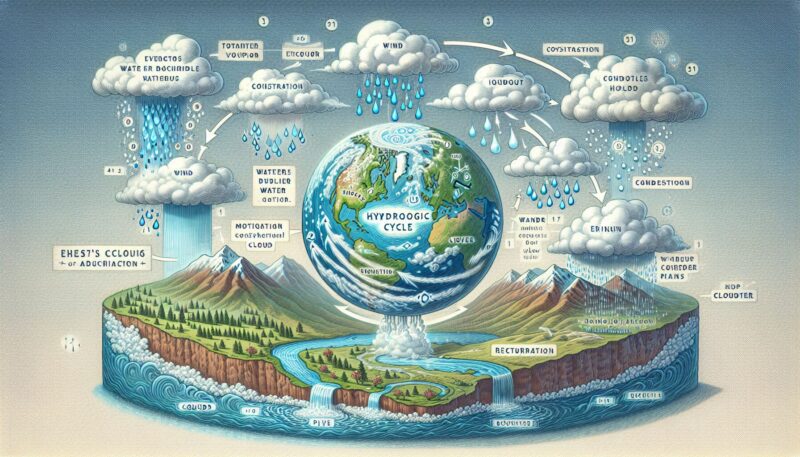
Groundwater refers to the water that fills the pores, fractures, and voids in underground materials such as sand, soil, and rock. It’s a critical component of the hydrologic cycle, which includes other processes like evaporation, transpiration, condensation, precipitation, infiltration, and percolation. While each of these processes is essential in maintaining the cycle, groundwater is our primary focus due to its relevance in ensuring water availability across various landscapes and climates.

Formation and Movement

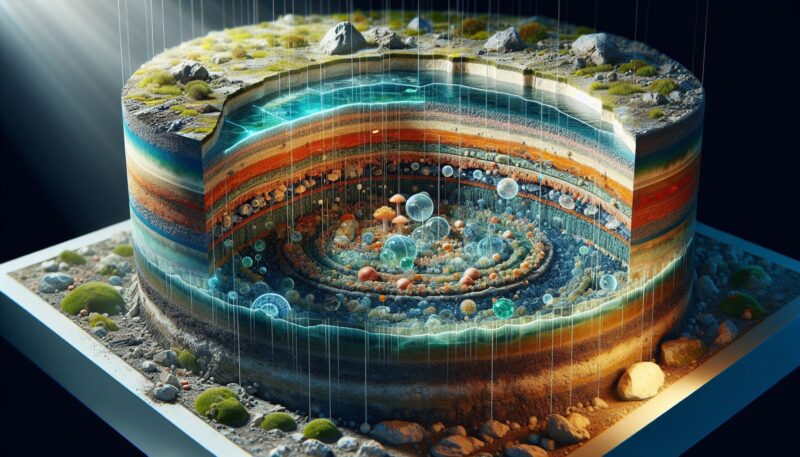
Groundwater is formed through the process of recharge, where water from precipitation or other sources percolates through the soil and down to the water table—the boundary between unsaturated ground and the saturated zone where groundwater resides. Below the water table, the aquifer—an underground layer of water-bearing permeable rock or unconsolidated materials—holds and allows the movement of groundwater.

The movement of groundwater is generally slow and directionally controlled by the slope of the water table and the porosity (the spaces within the material) and permeability (the ability to transmit water) of the rocks. Baseflow, the portion of streamflow sustained by groundwater discharge, is a critical component for maintaining river ecosystems, especially during dry periods.

Types of Aquifers

Aquifers can come in various forms, with confined and unconfined being the primary types. Confined aquifers are bound between impermeable layers and may be under pressure, giving rise to artesian wells where water flows to the surface without pumping. Unconfined aquifers, on the other hand, are directly recharged by surface water and are not under pressure, sometimes leading to water tables that rise and fall with seasons or extraction rates.

Significance of Groundwater

The significance of groundwater cannot be overstated. It’s a primary source of freshwater for irrigation and a drinking water supply for nearly half the global population. Its buffered temperature and typically lower turbidity compared to surface water make it a reliable resource for many needs. However, groundwater’s hidden nature makes its stewardship particularly challenging.

Threats to Groundwater

Several anthropogenic activities threaten groundwater quality and availability. Over-extraction leads to depleted water tables, while land use changes can reduce recharge rates. Contamination from industrial spills, agricultural runoffs, or improper waste disposal can render groundwater unfit for consumption. Naturally occurring contaminants like arsenic or fluoride can also pose risks.

Management and Conservation

Active management and conservation of groundwater involve measures like pollution control, setting sustainable withdrawal limits, and artificial recharge projects. Techniques for protecting and enhancing groundwater reserves include water treatment, desalination, reverse osmosis, and water recycling. Furthermore, laws and policies at various government levels aim to address water rights, allocation, and conflict resolution.

Conclusion

Groundwater, often out of sight, should never be out of mind. A treasure trove of freshwater, beneath layers of earth and rock, it is as vulnerable as it is valuable. Our exploration has revealed its journey from precipitation to aquifer, its critical role in maintaining ecosystems, and its provision for human needs. The threats it faces underscore the urgency with which we must protect it.

In protecting our groundwater, we also guard against future water scarcity, ensuring its availability for generations to come. Groundwater conservation is not just a matter of environmental stewardship—it is an imperative for our survival and a challenge that requires collective action and sustainable practices.

By understanding and respecting the intricacies of groundwater systems, we can better appreciate this hidden subsurface treasure and work towards secure, clean, and plentiful water for all. With informed decisions, responsible management, and a commitment to preserving the integrity of our natural world, groundwater will continue to sustain life in all its forms.

Sources

  1. “Groundwater.” United States Geological Survey (USGS). https://www.usgs.gov/special-topics/water-science-school/science/groundwater
  2. “Protecting Water Quality from Agricultural Runoff.” United States Environmental Protection Agency (EPA). https://www.epa.gov/agriculture/agriculture-nutrient-management-and-water-quality
  3. “Principles of Groundwater Flow.” National Water Research Institute, Canada. https://www.nwri.ca/aquifers/flow-e.html
Understanding the Hydrologic Cycle: Earth’s Vital Water Circulation System

Water is the elixir of life. Without it, the intricate web of life on our planet would unravel. It is so essential that Earth’s natural system has a dedicated cycle for it—known as the hydrologic cycle, which ensures that water is continuously recycled and distributed around the globe. In this article, we will delve into the complexities and critical components of the hydrologic cycle, unravel its profound impact on the environment, and explore how human actions intersect with this vital planetary process.

What is the Hydrologic Cycle?

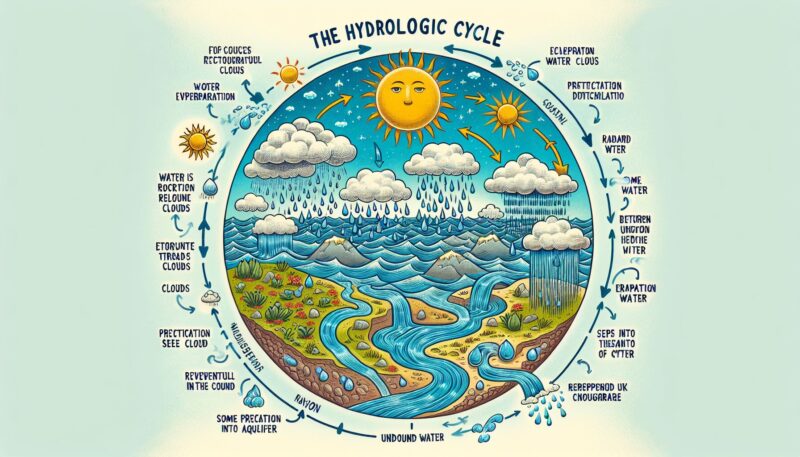
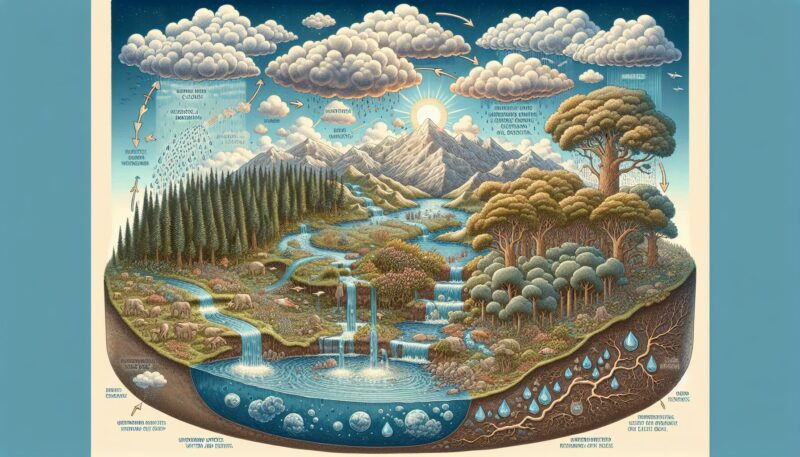
The hydrologic cycle, also referred to as the water cycle, is the constant movement of water above, on, and below the surface of the Earth. This cycle is crucial for maintaining the balance of water on our planet, ensuring that it supports ecosystems, shapes landscapes, and sustains human societies.

The Stages of the Hydrologic Cycle

The hydrologic cycle consists of several interrelated processes:

1. Evaporation

The sun’s heat causes water from oceans, rivers, lakes, and other bodies to transform from a liquid state into vapor. Plants also contribute to this vapor through a process known as transpiration. Together, evaporation and transpiration are often referred to as evapotranspiration.

2. Condensation

As water vapor rises and cools, it changes back into liquid form, creating clouds. This process is called condensation. At high altitudes, the cold temperatures can also lead to the formation of ice crystals.

3. Precipitation

When the droplets in clouds combine and become heavy enough, they fall to the ground as precipitation—rain, snow, hail, or sleet. Precipitation is the primary method by which water returns from the atmosphere to Earth’s surface.

4. Infiltration and Percolation

Once water reaches the ground, it can soak into the soil in a process called infiltration. The water then moves deeper into the ground, filtering through soil and rock layers in a process called percolation, eventually replenishing groundwater in aquifers.

5. Runoff and Streamflow

Part of the water that falls as precipitation runs off the land surface into streams, rivers, lakes, and oceans. This runoff can be influenced by factors like land slope, vegetation, soil type, and land use. Streamflow is the movement of water within the river channels and is a significant component of the water cycle, as it drains the landscape and transports water from land to oceans.

6. Groundwater Movement

Groundwater is the subsurface water that fills pores in soils and rock formations. It can move slowly through the ground and eventually discharge into springs, rivers, lakes, and oceans, or be drawn up by plants through their roots.

7. Baseflow

Baseflow is the portion of river or stream flow that is provided by groundwater seeping into the bed of the watercourse. It’s an important source of water for rivers during periods with no precipitation.

Human Impact on the Hydrologic Cycle

The natural balance of the hydrologic cycle can be disrupted by human activities. Urbanization, deforestation, agriculture, and industrial practices can change evaporation rates, alter precipitation patterns, and increase runoff. Climate change, largely driven by the burning of fossil fuels and the resultant greenhouse gas emissions, is also having profound effects on the water cycle, leading to more extreme weather events like droughts and floods.

Groundwater: The Hidden Resource

One of the lesser-seen but vitally important parts of the hydrologic cycle is groundwater. Groundwater is the water that is found underground in the cracks and between particles in the soil, sand, and rocks. It is stored in and moves slowly through geologic formations of soil, sand, and rocks called aquifers.

The Significance of Groundwater

  • Drinking Water: Groundwater serves as a crucial source of drinking water. According to the United States Geological Survey (USGS), about 40% of the U.S. population relies on groundwater for its drinking supply.
  • Agriculture: It is used extensively for irrigation and is, therefore, critical for food production.
  • Industrial Use: Groundwater is also utilized in various manufacturing processes and cooling mechanisms for power plants.
  • Ecological Balance: It helps maintain the level of rivers and wetlands, especially during dry times, supporting ecosystems and wildlife.

Recharge and Discharge of Groundwater

Groundwater recharge is the process by which water moves from the surface to the groundwater. It typically occurs during rainfall or when streams or rivers overflow, allowing water to infiltrate the ground. Discharge, on the other hand, is when groundwater flows into lakes, rivers, oceans, or onto the surface of the land.

Aquifers can take centuries to refill, making them a resource that must be carefully managed. Over-extraction of groundwater for agriculture or urban use can lead to a decline in water levels, called groundwater depletion, which can have severe environmental and economic consequences.

Protecting Water Quality in the Hydrologic Cycle

Water quality is an essential aspect of the hydrologic cycle as it affects ecosystems, human health, and the usability of water for various purposes. As water moves through the cycle, it can pick up pollutants from the air, land, and human activities.

Common Pollutants and Issues

  • Nutrients: Fertilizer runoff can cause an excess of nutrients in water bodies, leading to eutrophication and harmful algal blooms.
  • Pathogens: Bacteria and viruses from sewage or livestock can contaminate drinking water sources, posing health risks.
  • Heavy Metals: Industrial discharges can lead to toxic heavy metals entering water bodies, with harmful effects on wildlife and humans.
  • Microplastics: These tiny particles are increasingly being discovered in freshwater and marine environments, with uncertain but potentially significant ecological impacts.

Water Treatment and Conservation

To ensure safe drinking water, communities use various methods to treat water:

  • Filtration: Removes particulates through physical barriers.
  • Disinfection: Using chlorine, ozonation, or ultraviolet (UV) irradiation to kill or inactivate pathogens.
  • Reverse Osmosis: Using a semipermeable membrane to remove ions, unwanted molecules, and larger particles.

Water conservation efforts are also vital in protecting the hydrologic cycle:

  • Rainwater Harvesting: Capturing and storing rainwater for reuse conserves groundwater and reduces urban runoff.
  • Greywater Reuse: Treated wastewater from baths, sinks, washing machines, and other kitchen appliances can be reused for irrigation or industrial processes.
  • Water Conservation Techniques: Low-flow fixtures, efficient irrigation systems, and public awareness campaigns are all critical in reducing water waste.

Conclusion

The hydrologic cycle is a complex and dynamic system that is central to life on Earth. By understanding how it works and the role it plays in our environment, we can appreciate the need to protect this precious resource through sustainable management and conservation practices. Human activities and the impacts of climate change underscore the importance of being stewards of the water sources we so critically depend on.

Further Reading and Sources

To deepen your understanding of the hydrologic cycle and water management, here are some recommended sources:

  1. USGS Water

Exploring the Intricacies of the Hydrologic Cycle and Its Critical Role in Earth’s Ecosystem

The hydrologic cycle, often referred to as the water cycle, is a fundamental and continuous process that distributes Earth’s water resources and impacts every living organism on the planet. It is a complex system that ensures the movement, distribution, and quality of water across different spheres of the Earth. Through processes like evaporation, transpiration, condensation, precipitation, infiltration, percolation, runoff, and more, water in its various forms flows through the environment, sustaining life and shaping ecosystems.

In this article, we will delve deep into the hydrologic cycle—exploring its phases, understanding its significance, and examining the challenges it faces due to human activities, such as water pollution. We’ll learn how the cycle works to replenish and purify our water sources and what we can do to protect it.


Understanding the Hydrologic Cycle

The hydrologic cycle is the Earth’s natural mechanism for transporting and recycling water. The cycle works through five key processes:

  1. Evaporation: The transformation of water from a liquid to a gas or vapor state, primarily due to solar heat.
  2. Transpiration: The process by which moisture is carried through plants from roots to small pores on the underside of leaves, where it changes into vapor and is released into the atmosphere.
  3. Condensation: The change of water from a gaseous state into a liquid state, forming clouds.
  4. Precipitation: The process by which water, in the form of rain, snow, sleet, or hail, falls from clouds to the Earth’s surface.
  5. Runoff: Water that flows over the ground, driven by gravity, eventually making its way into rivers, lakes, and oceans.

Each of these steps is essential to the functionality and health of our planet’s water systems.

Evaporation and Transpiration

Evaporation occurs when the sun heats water bodies, causing the water on the surface to warm and rise into the atmosphere as vapor. While evaporation comes mainly from oceans, seas, and other large bodies of water, transpiration is its terrestrial counterpart, where plants absorb groundwater and release it as water vapor through leaves. Together, they contribute to atmospheric moisture – a combination termed as “evapotranspiration.”

Condensation and Precipitation

As water vapor rises, it cools and condenses into tiny particles called aerosols, creating clouds in a process called condensation. When these clouds become heavy, gravity leads the condensed water droplets or ice to fall as precipitation – completing a significant part of the cycle by delivering fresh water back to the Earth’s surface.

Infiltration, Percolation, and Runoff

Once water reaches the ground, it doesn’t just remain on the surface. Some of it infiltrates, or seeps, into the soil and moves downward through spaces within the soil and rocks in a process called percolation. This infiltration recharges aquifers—significant stores of groundwater that can provide water supplies for human use.

The remaining water that doesn’t infiltrate becomes surface runoff. Runoff can enter streams, rivers, lakes, and eventually the ocean, transporting nutrients and sediment along the way and shaping the landscape by erosion.

Significance of the Hydrologic Cycle

The hydrologic cycle is crucial for sustaining life, influencing weather patterns, and shaping the biosphere. It regulates climate by transferring heat from the tropics to the poles and supports ecosystems by distributing fresh water. Moreover, the cycle filters and dilutes pollutants, a service that becomes increasingly important as human impacts on the environment grow.

Impacts of Human Activities

Human activities such as deforestation, urban development, agriculture, and industrial processes significantly affect the hydrologic cycle. Deforestation, for instance, reduces transpiration and therefore, atmospheric moisture, which can alter regional rainfall patterns. Urbanization, with its impervious surfaces, alters runoff patterns and can increase the frequency and severity of flooding.

Moreover, water pollution from industrial discharges, agricultural runoff, and urban waste introduces harmful substances into the water cycle. Chemicals, heavy metals, nutrients, pathogens, and microplastics can all degrade water quality, harm aquatic ecosystems, and pose risks to human health.

Water Pollution Challenges

Water pollution is a growing crisis, with sources of pollution ranging from point sources, such as sewage treatment plants or industrial facilities, to nonpoint sources, like agricultural runoff. Pollutants of concern include:

  • Nutrients: Excess nitrogen and phosphorus can lead to eutrophication, causing algal blooms which deplete dissolved oxygen in water and harm aquatic life.
  • Pathogens: Disease-causing bacteria, viruses, and parasites from sewage and animal waste can contaminate water sources.
  • Heavy Metals: Lead, mercury, and cadmium can accumulate in water and living organisms, causing health issues.
  • Microplastics: Tiny plastic fragments can absorb toxins and are ingested by wildlife and humans.

Water Treatment and Conservation

To combat water pollution, water treatment processes such as filtration, disinfection, and advanced methods like reverse osmosis and UV irradiation are employed to ensure safe drinking water. Water conservation measures such as rainwater harvesting, greywater reuse, and reducing water footprints help sustain water resources in times of scarcity.

Climate Change Effects

Climate change poses a significant threat to the stability of the hydrologic cycle. Changes in temperature and precipitation patterns can result in altered evapotranspiration rates, shifting snowpack and permafrost melt, and changing river flows. These impacts can lead to water scarcity, affect water quality, and increase the frequency of extreme weather events such as floods and droughts.

Water Diplomacy and the Future of the Hydrologic Cycle

As freshwater becomes increasingly scarce, tensions over water resources are likely to rise, potentially leading to conflicts. Water diplomacy aims to promote collaboration and equitable sharing of water resources across political boundaries, focusing on mutual benefits, cooperation, and conflict resolution.

The future of the hydrologic cycle depends on our understanding and actions. Addressing climate change, pollution, and management of water resources are essential steps in ensuring a sustainable water cycle for future generations.

Sources

For further reading and to gain a more in-depth understanding of the hydrologic cycle, these sources provide valuable information:

  1. “Water Cycle.” United States Geological Survey. https://www.usgs.gov/special-topic/water-science-school/science/water-cycle
  2. “Effects of Urban Development on Floods.” United States Geological Survey. https://www.usgs.gov/special-topic/water-science-school/science/effects-urban-development-floods
  3. “Water Quality Information.” Environmental Protection Agency. https://www.epa.gov/ground-water-and-drinking-water/drinking-water-contaminants-information

The hydrologic cycle is a complex but pivotal process that maintains our planet’s water resources. Through our understanding and stewardship, we can ensure that this cycle continues to

Understanding the Hydrologic Cycle: Earth’s Vital Water Movement

The hydrologic cycle, often known as the water cycle, is an essential concept in the study of hydrology, providing insights into how water travels through the various compartments of the Earth’s system. In this comprehensive exploration, we delve into the mechanisms and importance of the hydrologic cycle, examining processes such as precipitation, evaporation, transpiration, condensation, infiltration, and runoff. These processes play crucial roles in maintaining life on Earth, influencing weather patterns, shaping landscapes, and supporting ecosystems.

Introduction to the Hydrologic Cycle

The hydrologic cycle is a continuous and dynamic process that describes how water moves above, on, and below the Earth’s surface. It’s a system that has no beginning or end; water constantly cycles in various forms through different phases and processes. The sun’s energy drives the cycle, powering the evaporation of water from surfaces, which eventually falls back as precipitation. This intricate movement supports life, regulates climate, and shapes our environment.

The Components of the Hydrologic Cycle

Evaporation

Evaporation is the transformation of water from a liquid to a gas. This primarily occurs on the surface of oceans, rivers, and lakes, as well as from moist soil and plant surfaces. The energy from the sun heats water, causing individual water molecules to escape into the air. Evaporated water as water vapor contributes to the atmospheric moisture content, playing a vital role in weather and climate patterns.

Transpiration

Transpiration is a similar process to evaporation, but it specifically involves the release of water vapor from plants. Water absorbed by plant roots travels up through the plant to small pores on the underside of leaves, where it changes to vapor and is released. Both evaporation and transpiration contribute to the cycle’s atmospheric moisture, often grouped under the term ‘evapotranspiration’.

Condensation

Condensation is the process by which water vapor in the air is changed into liquid water. This often results in the formation of clouds. When air containing water vapor cools to its dew point, the vapor begins to condense around tiny particles like dust or smoke, forming droplets. This is the reverse of evaporation.

Precipitation

Precipitation occurs when droplets of water in clouds grow large enough to fall to the Earth’s surface due to gravity. This can occur in various forms, including rain, snow, sleet, or hail, depending on the temperature and conditions of the atmosphere. Precipitation is the primary way that water in the atmosphere returns to Earth’s surface, thereby replenishing freshwater in the bodies of water.

Infiltration and Percolation

Infiltration is the process where water on the ground surface enters the soil. Percolation refers to the movement of water through the layers of soil and porous rocks. Water that infiltrates the ground can percolate down to recharge groundwater or move laterally through the soil to help maintain river baseflows during dry periods.

Runoff

Runoff is the movement of water over the ground surface as a result of rain, snowmelt, or other sources when the ground is saturated and cannot absorb more water or when the precipitation rate exceeds the infiltration capacity of the land surface. This excess water flows towards streams, rivers, lakes, or oceans.

Streamflow and Baseflow

Streamflow, or channel runoff, is the flow of water in streams and rivers. It can vary greatly depending on precipitation patterns. Baseflow is the portion of streamflow that comes from groundwater seeping into the river bed, and it maintains river flows during dry periods.

Groundwater

Groundwater is the water found underground in the cracks and spaces in soil, sand, and rock. It can be held within aquifers, which are layers of rock and sediment that store vast amounts of groundwater. Groundwater moves slowly, but it’s a critical source of water for springs, wells, rivers, and lakes.

The Significance of the Hydrologic Cycle

Climate Regulation

The hydrologic cycle is a natural regulator of the earth’s climate. Processes like evaporation and transpiration transfer heat from the surface to the atmosphere, while condensation releases heat into the atmosphere, affecting weather and climate.

Supporting Ecosystems

Aquatic ecosystems depend on the continuous movement of water. Terrestrial ecosystems also rely on the hydrologic cycle for maintaining soil moisture and the health of plants, which are foundational to the food web.

Water Availability

The hydrologic cycle is responsible for the distribution and renewal of the Earth’s freshwater resources. It affects water availability for drinking, agriculture, industry, and energy production.

The Impact of Human Activities on the Hydrologic Cycle

Human activities can disrupt the natural flow of the hydrologic cycle. Urban development leads to increased runoff and reduced infiltration, affecting streamflow and groundwater recharge. Land use changes, such as deforestation, can alter evapotranspiration rates and precipitation patterns. Pollution from various sources can also negatively impact water quality, affecting the health of ecosystems and humans.

Protecting and Managing the Hydrologic Cycle

Proper management of the hydrologic cycle requires understanding its processes and the impact of human activities. Sustainable water practices, such as water conservation, rainwater harvesting, and the protection of wetlands, can help maintain the balance of the water cycle.

Conclusion

The hydrologic cycle is a complex but fundamental natural system that supports life on Earth. It is our collective responsibility to understand and protect this vital resource, ensuring its health for future generations. Through sustainable practices, we can mitigate human impacts and preserve the natural movement and quality of water within the cycle.

References

  • National Oceanic and Atmospheric Administration. (n.d.). The Water Cycle. Retrieved from https://www.noaa.gov/education/resource-collections/freshwater/water-cycle
  • United States Geological Survey. (2021). The Water Cycle. Retrieved from https://www.usgs.gov/special-topics/water-science-school/science/water-cycle
  • National Aeronautics and Space Administration. (n.d.). The Water Cycle. Retrieved from https://earthobservatory.nasa.gov/features/Water

By understanding and appreciating the complexity of the hydrologic cycle, we can approach water as more than a commodity—it’s a link to the very systems that sustain our planet’s health and our own well-being.