Unveiling the Hydrologic Cycle: Earth’s Essential System for Water Movement

Water is the essence of life, and understanding its journey through the hydrologic cycle is fundamental to appreciating the complex interplay between our planet’s various ecosystems and the water they depend on. The hydrologic cycle, often called the water cycle, is a continuous and dynamic flow of water through different stages and mediums, including the atmosphere, land, and various bodies of water.

Introduction

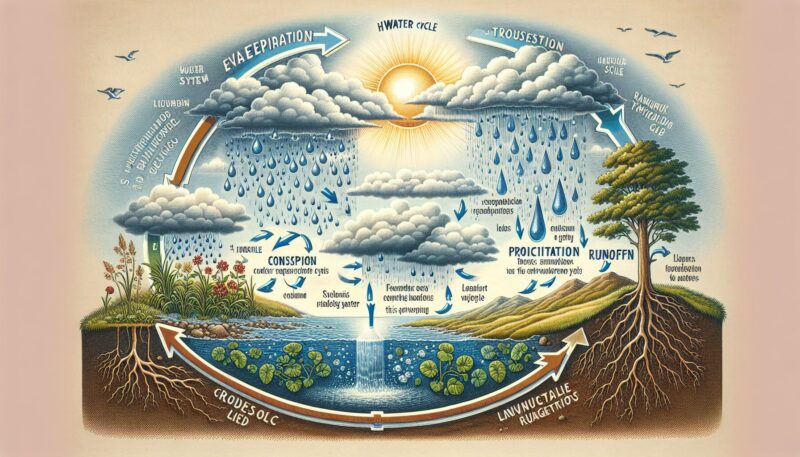
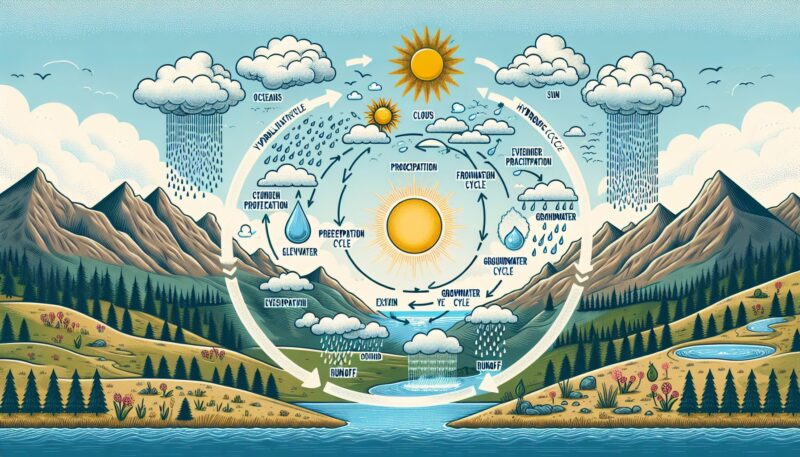
The hydrologic cycle describes the continuous movement of water on, above, and below Earth’s surface. It’s a system powered by solar energy, and it involves processes such as evaporation, condensation, precipitation, infiltration, runoff, and more. This cycle is crucial for sustaining life, influencing climates, and shaping the geology of our planet.

The Stages of the Hydrologic Cycle

Understanding the hydrologic cycle starts with breaking it down into its component processes. Here’s how the cycle works:

Evaporation

The sun’s energy heats up water in rivers, lakes, and oceans, causing it to evaporate and rise into the atmosphere as water vapor. Plants also contribute to this process through transpiration, whereby water is released from leaves during photosynthesis. Combined, these processes are sometimes referred to as evapotranspiration.

Condensation

As water vapor rises, it cools and condenses into clouds. This process of condensation forms water droplets, which merge to create precipitation when they become heavy enough.

Precipitation

When water droplets in clouds grow and can no longer be held in the air, they fall to Earth as precipitation. This can occur in various forms, including rain, snow, sleet, or hail, depending on atmospheric conditions.

Infiltration and Percolation

Once water reaches the ground, it can seep into the soil, a process known as infiltration. It then moves downward, through soil and rock layers, a process called percolation, which feeds into underground aquifers – natural stores of groundwater.

Runoff and Streamflow

Not all water that falls to Earth infiltrates the ground; some becomes runoff, which flows over the land’s surface, collecting in rivers, lakes, and streams. Streamflow is the movement of water in streams and rivers, generally leading to the ocean.

Groundwater Movement

Groundwater doesn’t stay still; it moves through layers of soil and rock, sometimes emerging as springs or seeping into rivers, contributing to streamflow. This part of the cycle is slow but essential for maintaining water supplies during dry periods.

Baseflow

Baseflow is the term for groundwater that feeds into rivers through the riverbed. During dry spells, this can be the primary source of water in rivers.

Discharge

When groundwater reaches an outlet, such as a spring or a river, it is said to discharge from the aquifer. The discharged water then becomes part of the surface water system, continuing its journey through the hydrologic cycle.

The Impact of the Hydrologic Cycle on the Environment

The hydrologic cycle is more than just a series of processes; it’s interwoven with our climate, weather patterns, and the health of ecosystems around the globe.

Climate Regulation

The exchange of energy during evaporation and precipitation plays a significant role in regulating Earth’s climate. For instance, evaporation cools the surface, while the release of heat during condensation warms the atmosphere.

Aquatic Ecosystems

Rivers, lakes, and wetlands all depend on the balanced movement of the hydrologic cycle. These ecosystems support a vast diversity of life and provide essential services, like water filtration and habitat provision.

Human Use of Water

We rely on various stages of the hydrologic cycle for freshwater. Groundwater and surface water fulfill our agricultural, industrial, and domestic needs. However, human activities can disrupt the balance of the cycle, leading to water scarcity or pollution, which in turn affects its distribution and quality.

The Human Influence and the Hydrologic Cycle

Human actions can significantly impact the hydrologic cycle:

Water Pollution

Contaminants from industrial processes, agriculture, and urban runoff can pollute water sources, negatively impacting the cycle’s efficiency and harming aquatic life.

Land Use Changes

Urban development reduces infiltration and increases runoff, leading to more frequent and severe flooding. Deforestation can alter transpiration rates and change local weather patterns.

Climate Change

Global warming is altering the hydrologic cycle by increasing evaporation rates, changing precipitation patterns, and causing more extreme weather events, such as droughts and floods.

Sustainable Management of the Hydrologic Cycle

To ensure the resilience of the hydrologic cycle and our water resources, sustainable management practices are essential:

Water Conservation

Efficient use of water through practices like rainwater harvesting, greywater reuse, and mindful consumption helps preserve our water resources.

Protection of Watersheds

Watersheds are areas of land where all the water under it or draining off of it collects into the same place. Protecting these areas, also known as catchments or drainage basins, via conservation initiatives and regulations is vital in maintaining a balanced hydrologic cycle.

Restoration of Wetlands

Wetlands act as natural filters and buffers against flooding. Restoring these vital ecosystems can help support the hydrologic cycle and improve water quality.

Conclusion

The hydrologic cycle is a powerful reminder of the interconnectedness of Earth’s systems. It supports life in a multitude of ways and reflects the delicate balance necessary for ecosystems to thrive. As we move forward, understanding and respecting the stages and processes within this cycle are paramount for the sustainable management and conservation of our planet’s precious water resources.

Sources

  1. United States Geological Survey (USGS) – The Water Cycle – https://www.usgs.gov/special-topic/water-science-school/science/water-cycle

  2. National Oceanic and Atmospheric Administration (NOAA) – The Water Cycle – https://www.noaa.gov/education/resource-collections/freshwater/water-cycle

  3. Environmental Protection Agency (EPA) – How We Use Water – https://www.epa.gov/watersense/how-we-use-water
The Hydrologic Cycle: Journey of Earth’s Vital Fluid

Water is the lifeline of our planet, cycling continuously through the Earth’s atmosphere, land, and oceans. This journey, known as the hydrologic cycle, is vital to the survival of all life forms and shapes our world’s diverse ecosystems. Understanding the hydrologic cycle is key to managing water resources sustainably and adapting to environmental changes. In this article, we’ll delve deep into the components and significance of the hydrologic cycle, exploring each stage, its impacts, and the importance of preserving this natural phenomenon.

Introduction to the Hydrologic Cycle

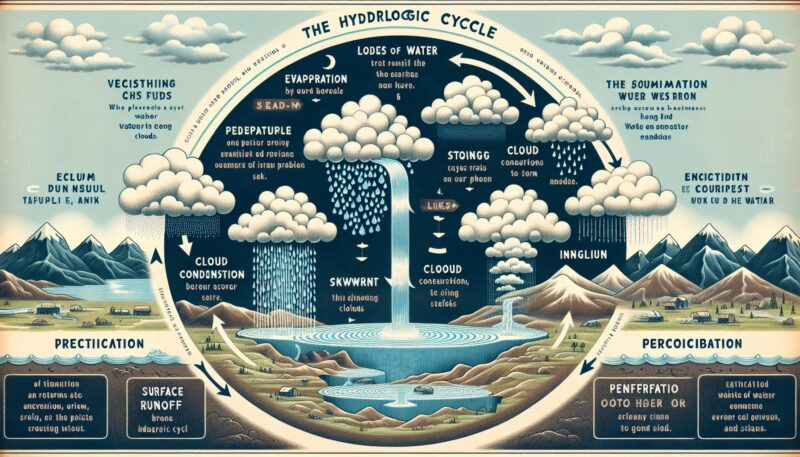
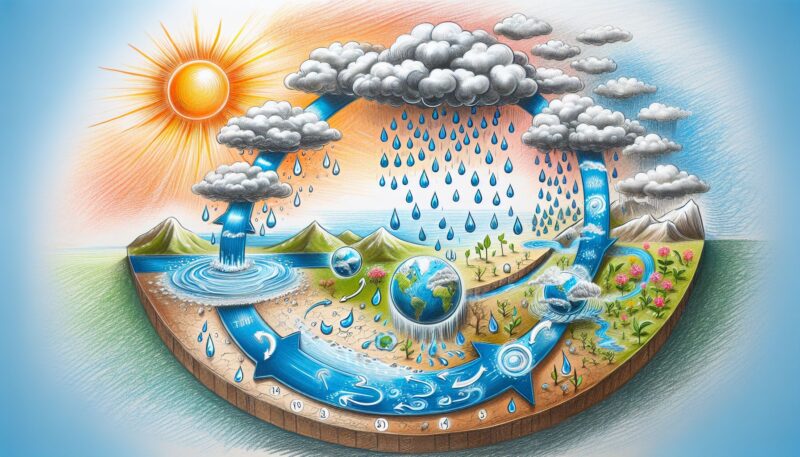
The hydrologic cycle, also referred to as the water cycle, is a continuous process by which water moves from the Earth’s surface to the atmosphere and back again. It comprises various stages, including precipitation, evaporation, transpiration, condensation, infiltration, percolation, runoff, and more. This complex system is driven by solar energy and influenced by a multitude of factors, including topography, climate, and vegetation.

The Stages of the Hydrologic Cycle

Precipitation

Precipitation is the first visible stage of the hydrologic cycle. It occurs when water vapor in the atmosphere cools and condenses into water droplets or ice crystals that eventually fall to the ground as rain, snow, sleet, or hail. Precipitation replenishes water bodies and soil moisture, which is crucial for plant growth and maintaining ecological balance.

Evaporation

Evaporation is the process of water turning from a liquid into vapor. The sun’s heat provides the energy required for evaporation, which primarily occurs from the surfaces of water bodies like oceans, lakes, and rivers. It also takes place from the land surface and vegetation after a rainfall event.

Transpiration

Transpiration is similar to evaporation but specifically involves water released from plants. As plants absorb water from the soil through their roots, water moves up to their leaves, where it evaporates into the atmosphere. Transpiration is a significant contributor to the moisture content in the air and plays a key role in the water cycle.

Condensation

Condensation is the transformation of water vapor back into liquid form as it cools. In the atmosphere, this leads to the formation of clouds and fog. The water droplets that make up clouds may eventually become heavy enough to fall as precipitation, completing a full cycle.

Infiltration and Percolation

Once precipitation hits the ground, it can either flow across the surface or penetrate the soil in a process called infiltration. Water that infiltrates the soil can percolate further down to replenish groundwater reserves in aquifers, which serve as natural water storage systems.

Runoff and Streamflow

Runoff refers to the water that flows over the ground surface towards streams, rivers, or lakes. This can happen quickly, especially on impermeable surfaces, leading to rapid increases in water levels known as streamflow. Runoff is a critical part of the cycle as it ties together the land-based and ocean-based components of the hydrologic system.

Groundwater Movement and Baseflow

Groundwater is the water that fills the pore spaces and fractures in underground materials such as soil and rock. It moves slowly through geologic formations and contributes to rivers and lakes through baseflow, maintaining stream levels between rain events.

The Significance of the Hydrologic Cycle

The hydrologic cycle is essential for climatic regulation, ecosystem support, and human survival. It governs the availability of freshwater resources, which we rely on for drinking, agriculture, industry, and recreation. Moreover, the cycle plays a crucial role in global climate patterns, as the transfer of heat and moisture influences weather and long-term climatic conditions.

Human Impact on the Hydrologic Cycle

Human activities can profoundly affect the hydrologic cycle:

Urbanization

The creation of impervious surfaces increases runoff, reducing infiltration and groundwater recharge while also elevating the risk of flash floods.

Deforestation

Removing forests can reduce transpiration, leading to decreased rainfall and altered localized climate patterns.

Climate Change

The increasing global temperatures are expected to intensify the water cycle, causing more extreme weather events, including heavy rains and prolonged droughts.

Water Withdrawal

Excessive withdrawal of freshwater for agricultural, industrial, and domestic uses can deplete rivers, lakes, and aquifers, leading to water scarcity and environmental degradation.

Pollution

Contamination of water with pollutants disrupts ecosystems, harms wildlife, and poses health risks to humans.

Solutions for a Sustainable Hydrologic Cycle

To mitigate the impacts of human activities on the hydrologic cycle, various strategies need to be employed:

Water Conservation

Practices such as rainwater harvesting, greywater reuse, and the adoption of water-efficient appliances can help reduce water wastage and lessen the strain on water resources.

Restoration of Natural Habitats

Reforestation, wetland restoration, and the establishment of green spaces in urban areas can improve infiltration, reduce runoff, and support biodiversity.

Sustainable Water Management

Implementing integrated water resource management (IWRM) that considers the entire watershed or catchment area helps maintain the natural functions of the hydrologic cycle.

Pollution Control

Effective wastewater treatment, the reduction of agricultural runoff, and the regulation of industrial discharges can safeguard water quality.

Conclusion

The hydrologic cycle is a remarkable natural process that sustains life and shapes our environment. Human actions have far-reaching effects on this cycle, and it is our collective responsibility to ensure that we manage and protect our water resources for the present and future generations. By understanding and respecting the intricate workings of the hydrologic cycle, we can better prepare for its inherent variability and ensure that clean, ample water remains accessible to all living creatures on our planet.

Sources:

  1. “Hydrologic Cycle.” National Oceanic and Atmospheric Administration (NOAA), https://www.noaa.gov/education/resource-collections/freshwater/hydrologic-cycle.
  2. “The Water Cycle.” United States Geological Survey (USGS), https://www.usgs.gov/special-topic/water-science-school/science/water-cycle.
  3. “Managing Water under Uncertainty and Risk.” United Nations World Water Development Report 4. UNESCO, http://www.unesco.org/new/en/natural-sciences/environment/water/wwap/wwdr/wwdr4-2012/.

“`markdown

The Hydrologic Cycle: Journey of Earth’s Vital Fluid

Water is the lifeline of our planet, cycling continuously through the Earth’s atmosphere, land, and oceans. This journey, known as the hydrologic cycle, is vital…

Introduction to the Hydrologic Cycle

The hydrologic cycle, also referred to as the water cycle…

The Stages of the Hydrologic Cycle

Precipitation

Precipitation is the first visible stage of the hydrologic cycle…

Evaporation

Transpiration

Condensation

Infiltration and Percolation

Runoff and Streamflow

Groundwater Movement and Baseflow

The Significance of the Hydrologic Cycle

Human Impact on the Hydrologic Cycle

Solutions for a Sustainable Hydrologic Cycle

Conclusion

Sources:

  1. “Hydrologic Cycle.” National Oceanic and Atmospheric Administration (NOAA)

Unveiling the Hydrologic Cycle: Earth’s Eternal Water Dance

Water is the essence of life—a precious resource that shapes our planet’s landscapes, supports diverse ecosystems, and sustains human societies. Yet, the journey of water is not limited to its momentary presence in the rivers we cross, the lakes we swim in, or the rain that drums on our rooftops. It is part of a grand and continuous dance orchestrated by the forces of nature known as the Hydrologic Cycle.

The Hydrologic Cycle represents the constant movement and endless recycling of water between the Earth’s surface, the atmosphere, and the subsurface realms. This article delves into the intricacies of this cycle, which encompasses processes like precipitation, evaporation, transpiration, and much more. Understanding this cycle is not merely an academic pursuit—it is crucial for managing our water resources, predicting weather patterns, and preserving the environment for future generations.

What is the Hydrologic Cycle?

The Hydrologic Cycle, also known as the Water Cycle, is a global system through which water circulates from the land to the sky and back again. It involves various components and processes that work together to move water in different forms—liquid, vapor, and ice—across different parts of the ecosystem such as rivers, lakes, oceans, atmosphere, glaciers, and groundwater systems.

The Key Processes of the Hydrologic Cycle

Evaporation

Evaporation is the process through which water changes from liquid to vapor. This occurs when sunlight heats the bodies of water like oceans, rivers, and lakes. As water molecules absorb energy, they break free from the surface and rise into the atmosphere.

Transpiration

Transpiration refers to the release of water vapor from plants. As plants take in water from the soil, they use some of this water for photosynthesis and other metabolic functions. The excess water is expelled through tiny pores in their leaves, called stomata, into the air.

Precipitation

Precipitation occurs when water vapor in the atmosphere cools and condenses, forming droplets that combine to create clouds. When these droplets become too heavy, they fall to the earth as rain, snow, sleet, or hail.

Condensation

Condensation is the transformation of water vapor into liquid water. It is the opposite of evaporation and is responsible for the formation of dew, fog, and clouds.

Infiltration

Infiltration happens when water on the surface soaks into the soil. From here, the water can percolate deeper into the ground, becoming part of the groundwater system, or it can flow horizontally, nourishing plants’ roots along the way.

Percolation

Percolation is the downward movement of water through soil and rock layers. This filtered water replenishes the groundwater stored in aquifers, which are underground layers of water-bearing permeable rock.

Runoff

Runoff is the movement of water across the land surface, often reaching creeks, streams, and rivers. Runoff is influenced by various factors such as precipitation intensity, land slope, vegetation cover, and soil type.

Advanced Interactions in the Hydrologic Cycle

Streamflow and Baseflow

Streamflow is the flow of water in streams and rivers, primarily composed of surface runoff. Baseflow, on the other hand, is the sustained flow of a stream that is fed by groundwater seepage into the streambed.

Groundwater Flow

Groundwater flow refers to the movement of water within aquifers, driven by gravity and pressure differentials. This slow process can transport water over vast distances underground.

Recharge and Discharge

Groundwater recharge is the process by which water from precipitation or surface waters infiltrates the ground and reaches aquifers. Discharge, conversely, is the flow of groundwater emerging from springs or seeping into rivers and wetlands.

Temporary Storages in the Hydrologic Cycle

  • Reservoirs: Man-made or natural lakes used to store water for various purposes like drinking water, irrigation, and hydroelectric power.
  • Glaciers and Icebergs: Massive repositories of freshwater in the form of solid ice.
  • Snowpack: Accumulations of snow that can act as temporary storage of water.
  • Wetlands: Areas where water covers the soil or is present near the surface for varying periods.

The Hydrologic Cycle is not just a series of isolated events but a complex, interconnected web that sustains life.

The Hydrologic Cycle and Climate Change

Climate change impacts the Hydrologic Cycle by altering temperature patterns, precipitation, and evaporation rates. Rising global temperatures can intensify the water cycle, leading to more extreme weather events such as heavy rainstorms and severe droughts. Additionally, melting glaciers and ice caps contribute to rising sea levels, which can affect ocean currents and coastal ecosystems.

The Management and Conservation of Water Resources

Awareness of the Hydrologic Cycle is pivotal to water resource management. Sustainable practices like rainwater harvesting, efficient irrigation, and water conservation techniques aim to maintain the delicate balance of the cycle, ensuring availability for all forms of life.

Challenges in Water Quality

Water quality is another critical aspect of the Hydrologic Cycle. Natural processes and human activities can introduce pollutants like heavy metals, nutrients, pathogens, and microplastics into the water system. These contaminants can have detrimental effects on ecosystems and human health.

Water treatment technologies such as reverse osmosis, filtration, disinfection, and coagulation play a crucial role in maintaining clean water supplies.

Understanding through Monitoring and Education

Continuous monitoring of the Hydrologic Cycle is necessary to understand and respond to changes in our environment. Advanced technologies like remote sensing and computer models help scientists and policymakers make informed decisions about water management.

Public education is equally important, as it raises awareness about the relevance of water conservation, the impacts of pollution, and the value of protecting water sources.

The Role of International Cooperation

Water scarcity and stress are growing worldwide issues that often transcend national boundaries. Water diplomacy aims to foster cooperation between countries, especially in shared catchment areas or transboundary watersheds, to manage and allocate water resources fairly and peacefully.

In conclusion, the Hydrologic Cycle is a testament to the dynamic nature of our planet—constantly changing yet timelessly constant. By understanding and respecting this cycle, we can better protect and preserve the blue gold that is water for the prosperity of all Earth’s inhabitants.

Sources:

  1. United States Geological Survey (USGS) – Water Science School: The Water Cycle. https://www.usgs.gov/special-topic/water-science-school/science/water-cycle
  2. National Aeronautics and Space Administration (NASA) – Goddard Space Flight Center: The Water Cycle. https://earthobservatory.nasa.gov/features/Water
  3. Intergovernmental Panel on Climate Change (IPCC) – Climate Change and Water. https://www.ipcc.ch/report/ar5/wg2/water/

The Hydrologic Cycle: Nature’s Vital Water Recycling System

Water is the lifeblood of our planet, sustaining every form of life and shaping the world we live in. It’s easy to take for granted the water that flows from our taps or the rain that waters our crops, but have you ever stopped to wonder about the journey that water takes through our environment? This relentless voyage is known as the hydrologic cycle, a critical process that keeps our rivers flowing, our atmosphere moist, and our ecosystems thriving. Understanding the hydrologic cycle is fundamental to grasping how water moves through the earth’s systems and how it supports life on our planet.

What is the Hydrologic Cycle?

The hydrologic cycle, also referred to as the water cycle, is the continuous movement of water in the Earth’s system. It encompasses various stages—evaporation, transpiration, condensation, precipitation, infiltration, percolation, runoff, and baseflow—that work together to recycle and distribute water across different spheres of the earth, including the atmosphere, land, and water bodies. This cyclical movement ensures that water is renewed and made available for a plethora of uses to all forms of life.

Key Components of the Hydrologic Cycle

  • Evaporation: Water from the oceans, rivers, and lakes turns into vapor and rises into the atmosphere.
  • Transpiration: Water vapor is also released into the atmosphere from plants and trees.
  • Condensation: As vapor rises, it cools and condenses into clouds.
  • Precipitation: Water falls back to the earth as rain, snow, sleet, or hail.
  • Infiltration: Water seeps into the soil, which recharges aquifers and provides moisture to plants.
  • Percolation: Water moves downward within the soil, reaching the groundwater storage.
  • Runoff: Water flows over the land surface, joining rivers, streams, and eventually, the oceans.
  • Baseflow: Groundwater feeds into rivers and streams, maintaining their flow especially during dry periods.

The Importance of the Hydrologic Cycle

The hydrologic cycle is integral to climate regulation, ecosystem support, and the provision of fresh water for human use. It affects weather patterns, shapes landscapes, and enables agriculture. Without this cycle, life, as we know it, would not be possible.

Climate Regulation

Water in its various forms has a profound influence on the climate. It absorbs heat during the day and releases it at night, moderates temperatures by transporting heat around the globe, and influences weather patterns through precipitation and evaporation dynamics.

Ecosystem Support

Aquatic ecosystems depend on the regular supply of fresh water from the hydrologic cycle. Terrestrial habitats also rely on precipitation and groundwater to sustain plant and animal life. The variability and distribution of water shape biodiversity and the functioning of ecosystems.

Human Use

Humans depend on components of the hydrologic cycle for drinking water, agriculture, industry, and energy production. Understanding and managing this cycle is crucial to ensuring water availability and mitigating the risks of droughts and floods.

Threats to the Hydrologic Cycle

Human activities can disrupt the delicate balance of the hydrologic cycle, impacting availability and distribution of water resources. Climate change, deforestation, pollution, and urbanization are significant threats that can alter evaporation rates, reduce groundwater recharge, and affect river flows.

Climate Change

As the climate warms, intensified evaporation and altered precipitation patterns can lead to more extreme weather events. These changes can disrupt the balance and predictability of the water cycle, leading to water scarcity or excess in different parts of the world.

Deforestation

Removing trees and vegetation reduces transpiration, which in turn can decrease rainfall. Forests also play a key role in maintaining groundwater levels and reducing runoff.

Pollution

Contaminants from industrial, agricultural, and residential sources can pollute water sources. This not only threatens ecosystems and human health but can also change the chemical dynamics of evaporation and precipitation.

Urbanization

Impermeable surfaces in urban areas prevent infiltration, leading to increased runoff and reduced groundwater recharge. Urban heat islands can also affect local evaporation and condensation cycles.

Protecting the Hydrologic Cycle

To safeguard the future of water resources, it’s essential to protect the processes of the hydrologic cycle. There are several strategies that can be employed:

Water Conservation

Conserving water reduces the strain on the cycle and protects resources for future use. Simple actions like fixing leaks, taking shorter showers, and choosing water-efficient appliances can collectively make a significant difference.

Sustainable Development

Incorporating green spaces, permeable pavements, and rain gardens into urban planning helps maintain natural infiltration and reduces pollution.

Protected Natural Spaces

Preserving wetlands, forests, and other vital ecosystems ensures that the natural processes of the water cycle are maintained. Protected spaces also serve as buffers during extreme weather events, reducing the impact of floods and droughts.

Responsible Agriculture

Agricultural practices that minimize water use and prevent runoff can protect water quality and support sustainable water supply. Techniques like drip irrigation, cover crops, and no-till farming all contribute to preserving the hydrologic cycle.

Conclusion

The hydrologic cycle is a remarkable natural phenomenon that connects every corner of our planet, sustaining life and sculpting landscapes. Protecting this cycle is imperative for the future of our species and the countless other organisms that depend on water for survival. As we become more aware of our impact on the environment, we must act responsibly to ensure the integrity of this vital earth system. By understanding and respecting the processes of the hydrologic cycle, we can work towards a sustainable future with secure water resources for all.

Sources

  1. “The Water Cycle.” United States Geological Survey (USGS). https://www.usgs.gov/special-topics/water-science-school/science/water-cycle
  2. “Climate Change: How Do We Know?” NASA. https://climate.nasa.gov/evidence/
  3. “Water Conservation Tips.” Environmental Protection Agency (EPA). https://www.epa.gov/watersense/water-conservation-tips