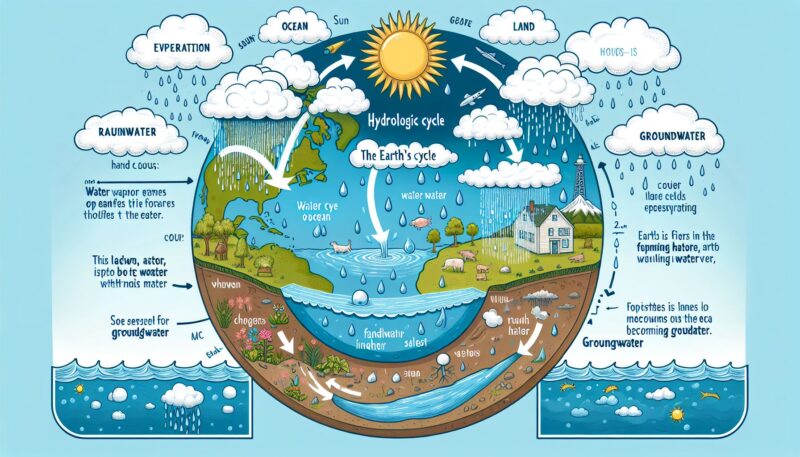
Water is the essence of life, an indispensable resource that supports all living organisms and ecosystems on our planet. To appreciate water’s significance and complexities, we must look at the hydrologic cycle, a process that perpetually distributes and recycles Earth’s water. This vast cycle is critical to understanding climate, water supply, and ecosystems. In this comprehensive exploration, we’ll dive into the dynamics of the hydrologic cycle and its broad implications for the environment and humanity.
What is the Hydrologic or Water Cycle?
The hydrologic cycle, also commonly called the water cycle, is a continuous process that describes the movement and transformation of water within the Earth’s atmosphere, surface, and subsurface environments. This cycle encompasses various stages, such as evaporation, condensation, precipitation, infiltration, percolation, runoff, and subsurface flow. Each component plays a vital role in water distribution and ecosystem health^1^.
Stages of the Hydrologic Cycle
Evaporation
Evaporation is the process by which water changes from a liquid to a gaseous state, primarily due to solar radiation. It occurs from various surfaces, including oceans, rivers, and soil. This evaporated water vapor rises into the atmosphere, becoming part of the air’s moisture content.
Transpiration
Similarly, transpiration occurs when plants release water vapor into the atmosphere from their leaves and stems—a critical process for both the water cycle and plant health.
Condensation
As water vapor rises and cools in the atmosphere, it undergoes condensation. During this stage, water vapor forms droplets on particles in the air. This is the process that leads to cloud formation.
Precipitation
When these droplets combine and grow heavy enough, they fall to the ground as precipitation—rain, snow, sleet, or hail. Precipitation is the primary mechanism by which water returns from the atmosphere to Earth’s surface.
Infiltration
Once on the ground, some of the water infiltrates the soil, moving downward through the soil’s pores and fractures. This process replenishes groundwater and soil moisture, crucial for plant life.
Percolation
Percolation refers to the downward flow of infiltrated water through the soil and rock layers, which can eventually reach the groundwater reservoirs or aquifers.
Runoff
Excess water from rain or melting snow that does not infiltrate the ground becomes runoff. Runoff flows over the land’s surface and collects in puddles, lakes, and rivers. It’s a primary source of surface water bodies and an important component for transporting water across the landscape.
Streamflow and Baseflow
Streamflow is the movement of water in rivers and streams, often fed by runoff. During dry periods, streams are sustained by baseflow, which is the continual contribution of groundwater to rivers and streams.
Groundwater Movement
Groundwater, water present beneath Earth’s surface in soil pore spaces and rock formations, moves slowly through aquifers—aquatic highways of permeable rock or sediment.
Discharge and Recharge
Aquifers are naturally replenished by the process of recharge, where water from precipitation and runoff percolates down to fill them. Groundwater discharge, on the other hand, occurs when this stored water naturally flows out into oceans, rivers, and the surface, or is extracted for human use.
Importance of the Hydrologic Cycle
The hydrologic cycle is not just a fascinating scientific concept; it is fundamental to life on Earth. Here are a few reasons why it is so crucial:
- Weather and Climate: Water in the atmosphere is critical to the formation of weather patterns and, in the longer term, influences the climate.
- Water Availability: The cycle ensures a continuous supply of fresh water, vital for drinking, agriculture, sanitation, and industrial processes.
- Ecosystem Health: Many ecosystems depend on regular water flow and seasonal changes driven by the water cycle.
- Soil Fertility: The cycle helps in transporting nutrients and replenishing soils.
- Purification: As water moves through the cycle, it naturally filters and purifies, helping to maintain water quality^2^.
Human Impact on the Hydrologic Cycle
Human activities can significantly disrupt the natural balance of the hydrologic cycle:
- Climate Change: Human-induced climate change is altering precipitation patterns, intensifying storms, and changing evaporation rates, which impacts water resources globally.
- Land Use Changes: Urban development reduces land’s natural ability to absorb water, increasing runoff and reducing recharge.
- Water Extraction: Over-extraction of groundwater for agriculture and industry can lead to depleted aquifers and reduced surface water levels^3^.
- Pollution: Discharging pollutants into water bodies affects water quality and can disrupt aquatic ecosystems and drinking water sources.
Protecting and Managing Water Resources
Given the vital importance of the hydrologic cycle, we need to manage and protect our water resources. Some strategies include:
- Water Conservation: Reducing water use and improving efficiency in homes, industries, and agriculture can minimize stress on the water system.
- Engaging in water diplomacy to resolve water conflicts and share resources effectively across boundaries.
- Protecting watersheds and wetlands that play key roles in the natural water cycle.
- Employing water treatment and pollution prevention methods to maintain water quality.
- Investing in infrastructure for water storage, such as reservoirs, to manage supply during variability in precipitation.
Conclusion
The hydrologic cycle is a complex but beautifully orchestrated natural system that sustains life on Earth. Its interlinked stages ensure that water is always on the move, being renewed and distributed across the planet. However, as the human footprint enlarges, managing the cycle’s delicate balance becomes increasingly critical. Awareness and proactive management are the way forward to securing water for future generations and preserving Earth’s precious ecosystems. Through understanding and respect for the hydrologic cycle, we can undertake the shared responsibility to maintain this life-giving system that flows through all of us.
References:
1. U.S. Geological Survey. (n.d.). The Hydrologic Cycle. https://www.usgs.gov/special-topics/water-science-school/science/hydrologic-cycle
2. Environmental Protection Agency. (n.d.). Learn About Water. https://www.epa.gov/hwp
3. National Geographic. (n.d.). Freshwater Crisis. https://www.nationalgeographic.com/environment/article/freshwater-crisis