Category: Main

Understanding the Hydrologic Cycle: Earth’s Vital Water Flow

Introduction

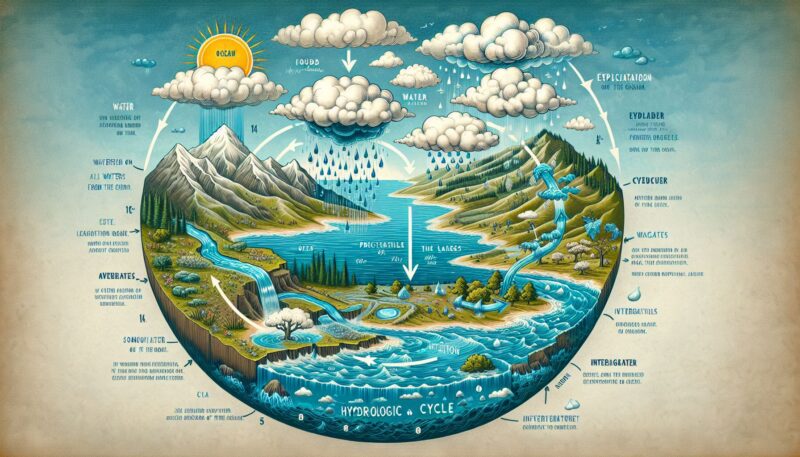
Without a doubt, one of the most vital processes on our planet is the Hydrologic Cycle, also known as the water cycle. It encompasses the continuous movement of water on, above, and below the surface of the Earth, driven by the energy from the sun and the force of gravity. The hydrologic cycle plays a crucial part in the functioning of ecosystems, supports human civilizations, and shapes Earth’s weather and climate.

Overview of Hydrologic Cycle Components

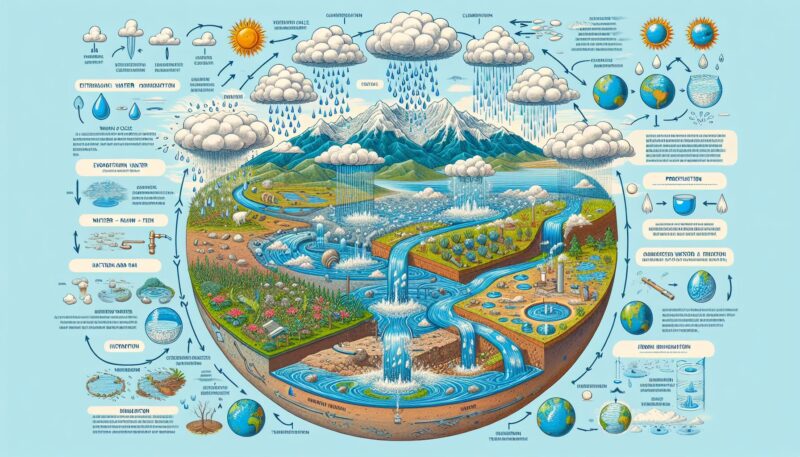
The hydrologic cycle is composed of six main processes: evaporation, transpiration, condensation, precipitation, infiltration, and runoff. Together, these elements move water through various states and locations, ensuring that it is renewed and redistributed in a balanced manner.

Evaporation

Evaporation is the transformation of water from a liquid to a gas. It occurs when the sun heats the surface of bodies of water like oceans, lakes, rivers, and also from the ground. This process is the primary pathway through which water enters the atmosphere, and plays an essential role in regulating Earth’s temperature.

Transpiration

Plants contribute to the water cycle too. Transpiration is the process by which moisture is carried from the roots to small pores on the underside of leaves, where it changes to vapor and is released into the atmosphere. Transpiration and evaporation combined are referred to as evapotranspiration.

Condensation

Condensation is the process by which water vapor in the air is changed into liquid water. This is the opposite of evaporation. Condensation results in the formation of clouds, which are an essential component in the precipitation process.

Precipitation

After condensing, water falls from the atmosphere back to the surface of the Earth in various forms, including rain, snow, sleet, or hail. Precipitation is a crucial phase in the water cycle as it is the primary method by which water is delivered from the atmosphere to the Earth’s surface.

Infiltration

Once precipitation hits the Earth’s surface, it either remains on the surface or is absorbed into the soil through a process called infiltration. The rate at which water infiltrates into the soil depends on various factors, such as soil type, vegetation cover, topography, and the presence of soil moisture from previous rainfalls.

Runoff and Streamflow

Water that does not infiltrate into the ground becomes runoff, flowing horizontally across land and accumulating in rivers, streams, or lakes. Streamflow is the actual flow of water in streams and rivers, moving towards lakes, seas, or oceans. It is a vital component that shapes the Earth’s landscape through erosion and deposition.

Interaction with Other Earth Systems

Groundwater and Aquifers

A significant part of the hydrologic cycle involves the interaction with groundwater systems. Some of the water that infiltrates the soil percolates deeper to replenish underground stores of water known as aquifers. These can be tapped into for agricultural, industrial, and domestic use.

Baseflow

Baseflow is another crucial component of the hydrologic cycle. It refers to the portion of the river or stream’s flow that is sustained by groundwater seepage into the channel, providing a continuous flow even during dry periods.

Watershed Dynamics

The areas of land that catch precipitation and contribute runoff to a particular river, stream, or body of water are known as watersheds or catchments. Every watershed is an individual, interconnected water system, playing a specific role in the broader hydrologic cycle.

Human Influence and Impact

Water Pollution and Quality

Human activities significantly influence the hydrologic cycle, particularly in terms of water quality. Water pollution occurs when harmful substances—like heavy metals, nutrients, pathogens, and microplastics—end up in water bodies, negatively impacting ecosystems and human health.

Climate Change

Climate change, driven by human-induced greenhouse gas emissions, is altering the hydrologic cycle, leading to changed precipitation patterns, melting glaciers, rising sea levels, more intense droughts, and increased flood risks.

Water Management

Water resources need to be appropriately managed to ensure availability and quality. Strategies in water treatment, conservation, and sustainable usage are necessary to maintain the hydrologic cycle’s balance.

The Central Role of the Hydrologic Cycle in Our World

Water might seem like a limitless resource, yet the truth is that the freshwater that sustains life on Earth is part of a delicately balanced cycle. Understanding and respecting the hydrologic cycle’s dynamics are crucial for securing clean water for future generations, supporting biodiversity, and mitigating the effects of climate change.

Sources

  • Gleick, P. H. (1993). Water in Crisis: A Guide to the World’s Fresh Water Resources. Oxford University Press.
  • United States Geological Survey (USGS). The Water Cycle. USGS Water Science School.
  • World Meteorological Organization (WMO). (2021). The State of the Global Water Cycle. WMO-No. 1264.
Exploring the Vital Lifeline: Understanding the Hydrologic Cycle

Water is the most critical component of life on Earth—an elixir without which the tapestry of life would remain threadbare and incomplete. From the sprawling oceans to the boundless skies, water exists across various stages in a continuous cycle known as the hydrologic cycle. It involves processes that are fundamental to the earth’s climate, ecosystems, and human civilizations. In this article, we delve into the intricacies of this life-sustaining cycle, examining its phases, impacts, and the increasing challenges it’s facing due to human intervention and climate change.

The Hydrologic Cycle: Earth’s Circulatory System

The hydrologic cycle is often compared to the Earth’s circulatory system. It’s the unending flow and storage of water between the atmosphere, land, and oceans. Let’s break down the stages to understand how they contribute to this dynamic system.

Evaporation: The Beginning of the Journey

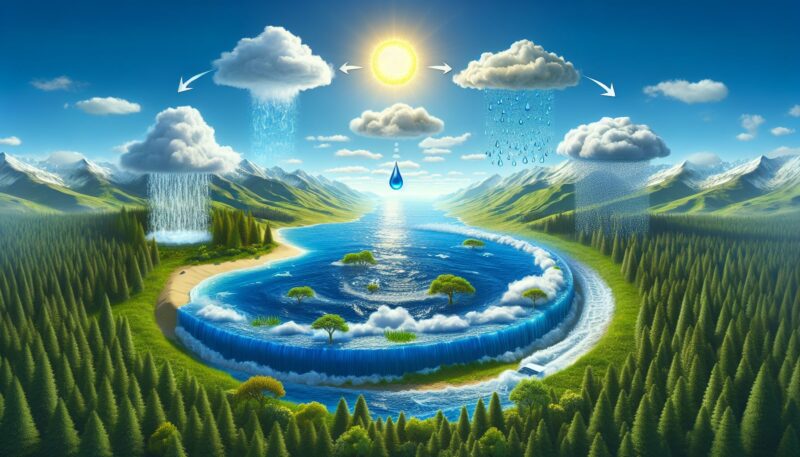
The sun’s energy heats bodies of water, primarily oceans, causing water to evaporate and ascend into the atmosphere as water vapor. This invisible process is the primary engine that fuels the cycle.

Transpiration: Nature’s Respiration

Plants also contribute to the cycle through transpiration, where water absorbed by roots is eventually released into the atmosphere from their leaves and stems. Collectively, evaporation from the surface and transpiration from plants is referred to as evapotranspiration.

Condensation: Clouds Taking Shape

As water vapor rises, it cools and condenses into clouds. Air currents often carry these clouds across vast distances. The transition from gaseous to liquid or solid state forms the basis of precipitation.

Precipitation: Return to Earth

When the cloud particles become too heavy to stay afloat, they fall back to the Earth in the form of rain, snow, hail, or sleet. Precipitation is the primary mechanism for distributing fresh water across the planet’s surface.

Infiltration and Percolation: The Earth’s Thirst

Once water reaches the ground, gravity pulls some of it down into the soil—a process known as infiltration. Infiltration replenishes aquifers—natural underground storage areas. The downward movement of water through soil and rock layers is called percolation.

Runoff: Rivulets to Rivers

Not all water infiltrates. Some forms runoff, flowing on the surface toward lower elevations, ultimately reaching rivers, lakes, or oceans. Runoff is a vital source of fresh water, but it can also carry pollutants from the land into aquatic systems.

Streamflow and Baseflow: Steady Streams and Groundwater Contributions

Streamflow is the movement of water within a river or stream, driven by gravity. During drier periods, groundwater feeds into these waterways, maintaining flow—a process referred to as baseflow.

Groundwater: The Unseen Reservoir

Groundwater constitutes a significant portion of the Earth’s fresh water. It exists in aquifers and can remain trapped underground for centuries, providing a critical water supply during times of drought.

Recharge and Discharge: The Cycle’s Pulse

Groundwater recharge occurs when water from precipitation and runoff percolates down to aquifers. Discharge is the process where groundwater emerges at the surface, replenishing lakes, rivers, and wetlands.

The Connection with Climate and Weather

The hydrologic cycle is a key driver of weather patterns and climatic conditions. For instance, evaporation and transpiration add humidity to the air, influencing rainfall patterns. In their turn, precipitation and temperature determine the intensity and distribution of the hydrologic processes.

Human Impacts on the Hydrologic Desalination

Human activities have significantly altered the natural flow of the hydrologic cycle. Urbanization, agriculture, deforestation, and climate change disrupt the balance of water movement between the various stages, with potentially dire consequences.

Water Pollution: Tainting the Lifeblood

Industrial waste, agricultural runoff, and other pollutants contaminate water, threatening ecosystems and human health. Nutrient runoffs can lead to eutrophication, causing algal blooms that deplete oxygen in water and harm aquatic life.

Water Scarcity: When the Well Runs Dry

Over-extraction of groundwater, combined with prolonged droughts, has led to water scarcity in many regions. As the population grows and the demand for water increases, managing this finite resource becomes increasingly critical.

Addressing the Challenges: Sustainability and Conservation

To address the challenges facing our water resources, sustainable management practices are essential. Water conservation methods, such as rainwater harvesting and greywater reuse, can help mitigate the impact of human activities.

Innovative Solutions: Purifying and Conserving Water

Technological advancements have led to improved water treatment methods, such as reverse osmosis and UV irradiation, ensuring clean water supplies. Meanwhile, strategies like desalination are turning seawater into a viable resource for regions experiencing water scarcity.

Conclusion

The hydrologic cycle is the heartbeat of our planet’s water system. It maintains a delicate balance that supports life in all its forms. However, this balance is increasingly threatened by human activities. It is imperative that we recognize the value of this incredible cycle and work diligently to protect and sustain it to ensure a viable future for all.

Understanding the Hydrologic Cycle: Earth’s Crucial Water System

Water, the lifeblood of our planet, is in constant motion, traveling through a complex system known as the hydrologic cycle. This cycle is vital for sustaining all forms of life, maintaining climatic patterns, and shaping the Earth’s environment. In this comprehensive exploration, we’ll delve into the workings of the hydrologic cycle and its key components, and consider the effects of human activity on this critical natural process.

The Mechanics of the Hydrologic Cycle

At its core, the hydrologic cycle, also referred to as the water cycle, describes the continuous movement of water on, above, and below the Earth’s surface. It involves several processes that work in unison to circulate water through various stages and states. The main mechanisms are evaporation, transpiration, condensation, precipitation, infiltration, percolation, runoff, and streamflow.

Evaporation and Transpiration

Evaporation is the process by which water changes from a liquid to a vapor, primarily driven by solar energy. Water bodies like oceans, rivers, and lakes are the primary sources for this vapor. Transpiration, on the other hand, involves the release of water vapor from plants into the atmosphere. Combined, these processes are often referred to as evapotranspiration, highlighting their interconnected roles in the cycle.

Condensation and Precipitation

As water vapor rises and cools in the atmosphere, it undergoes condensation, forming clouds. When these cloud particles grow large enough, they fall to the Earth as precipitation in the form of rain, snow, sleet, or hail. This return of water to the Earth’s surface replenishes our freshwater resources and is critical for the survival of terrestrial ecosystems.

Infiltration, Percolation, and Groundwater

Upon reaching the ground, some of the water infiltrates the soil, moving downwards through the subsurface in a process called percolation. This water can then join the groundwater systems in aquifers — natural reservoirs below the Earth’s surface. Groundwater plays a crucial role as it helps maintain river flows during dry periods and provides a major source of water for irrigation and drinking.

Runoff, Streamflow, and Baseflow

Excess water that does not infiltrate the soil becomes runoff, flowing over the land. This runoff collects in rivers, streams, and lakes, contributing to streamflow. The component of streamflow that is provided by the slow release of groundwater into rivers is known as baseflow. Together, runoff and baseflow ensure that waterways continue to flow, even during periods without precipitation.

The Impact of Human Activities

Human actions have significantly altered the hydrologic cycle. Extensive development and urbanization have changed natural patterns of infiltration and runoff, compromising water quality and increasing the risk of flooding. Additionally, industries and agriculture contribute to water pollution, introducing heavy metals, nutrients, and pathogens into the water systems.

Water Pollution

Water quality is a growing concern worldwide. Pollutants like nutrients can lead to eutrophication and algal blooms, disrupting aquatic ecosystems and affecting the supply of potable water. Water treatment techniques such as filtration, disinfection, and coagulation have been developed to address these issues, but the challenge of keeping water clean remains significant.

Changing Climate and the Cycle

Climate change also has a profound impact on the hydrologic cycle. Changes in temperature and precipitation patterns can lead to more extreme droughts and floods, putting stress on water resources. The melting of glaciers and permafrost due to rising global temperatures further contribute to sea-level rise, altering ocean currents and weather patterns.

The Role of Water Conservation

Given the pressures on the hydrologic cycle, efforts in water conservation are more important than ever. Techniques like rainwater harvesting, greywater reuse, and the adoption of technologies that reduce the water footprint of products and processes all contribute to the sustainable management of our water resources.

The Global Water Crisis

Despite the Earth’s abundance of water, water scarcity and water stress are becoming commonplace, especially in arid regions. With the population growing and the demand for water increasing, conflicts over water usage are on the rise. This has given way to the concept of water diplomacy – where nations work together to manage and share this precious resource.

The Bigger Picture: Earth’s Water Systems

Understanding the hydrologic cycle is incomplete without recognizing the interconnectedness of Earth’s waters. The hydrosphere — all of the water on the planet’s surface — is linked through the cycle. It includes the water contained in glaciers, icebergs, lakes, rivers, and wetlands, which all play a role in shaping the cycle.

Watersheds and Catchments

A watershed, also known as a drainage basin or catchment, is an area of land where all precipitation collects and drains off into a common outlet, such as a river or bay. Wetlands and estuaries within watersheds serve as natural buffers, protecting against floods and filtering pollutants.

Human Infrastructure

The hydrologic cycle is also heavily influenced by human-built infrastructure like reservoirs, water towers, and pumping stations. These systems, along with a complex pipe network, are essential for water distribution and storage. However, they can also disrupt natural water movement and introduce new challenges such as leak detection and maintenance.

Conclusion

The hydrologic cycles is a marvel of nature’s balance, ensuring that water is continuously recycled and made available for sustaining life. However, human activities have imposed severe stresses on this system. It is now imperative for us to understand and respect this cycle, reduce pollution, manage our water resources wisely, and work together to safeguard this invaluable process for future generations.

Sources

To further your understanding of the hydrologic cycle and its importance, consider exploring these reputable sources:

Continued vigilance and education can help ensure that the hydrologic cycle remains a source of life and sustenance for all organisms on our blue planet.

The Hydrologic Cycle: Earth’s Vital Water Flow

The hydrologic cycle, also known as the water cycle, is a fundamental process that describes the continuous movement of water on, above, and below the surface of the Earth. This cycle plays a crucial role in shaping the Earth’s climate, influencing ecosystems, and supporting human life and societies. Understanding the hydrologic cycle is not only important for academic purposes but also for managing water resources sustainably and addressing challenges such as water scarcity, pollution, and climate change.

In this detailed exploration of the hydrologic cycle, we will delve into the key processes involved, examine the impact of human activities on these natural phenomena, and discuss the importance of maintaining a balanced cycle for the health of our planet.

The Processes of the Hydrologic Cycle

The hydrologic time is a complex system that includes various stages, such as evaporation, transpiration, condensation, precipitation, infiltration, percolation, runoff, and groundwater flow. Each step is vital, as they interlink to form the continuous loop that renews and purifies Earth’s freshwater supplies.

Evaporation

Evaporation is the process by which water changes from a liquid to a vapor. It is primarily driven by solar energy, which heats the water in rivers, lakes, and oceans, causing it to rise into the atmosphere. Evaporation accounts for the majority of atmospheric water vapor and is an essential part of the cycle.

Transpiration

Transpiration occurs when plants absorb water from the soil through their roots and release water vapor into the atmosphere through their leaves. Along with evaporation, transpiration contributes to the continuous exchange of moisture between the land, the atmosphere, and living organisms—a process collectively referred to as evapotranspiration.

Condensation

As water vapor rises and cools, it condenses into tiny droplets, forming clouds. Condensation is the reverse of evaporation and a critical step leading up to precipitation. It is also responsible for releasing latent heat into the atmosphere, which plays a role in weather patterns and the formation of storms.

Precipitation

Precipitation is any form of water, such as rain, snow, sleet, or hail, that falls from the atmosphere to the Earth’s surface. It results from the cooling of air containing water vapor, leading to the condensation of the vapor into water droplets that combine and grow until they are heavy enough to fall due to gravity.

Infiltration and Percolation

Once precipitation reaches the ground, it can infiltrate the soil, seeping down through the spaces between soil particles or cracks in rocks. This infiltrated water may continue to percolate through the soil or rock layers, eventually replenishing aquifers and contributing to groundwater supplies.

Runoff

Not all precipitation infiltrates the soil; some water flows across the surface and is directed into streams, rivers, and lakes. This process, called runoff, is influenced by factors like land slope, vegetation cover, and soil composition. Runoff is an essential component of maintaining streamflow and the hydrologic inputs to bodies of water.

Groundwater Flow

Groundwater is the subsurface water that fills the pores and fractures in the soil, sediment, and rocks. Groundwater flow moves slowly and can take many years to travel from recharge areas where the water enters the ground to discharge areas such as springs, lakes, and oceans.

The Human Impact

Human activities have a considerable impact on the hydrologic cycle. Urbanization, deforestation, agriculture, and climate change alter the cycle’s natural balance, affecting water availability and quality across the globe.

Urbanization

Urbanization increases impervious surfaces, like concrete and asphalt, which reduces infiltration and increases runoff. This can lead to more frequent and severe flooding, as well as reduced groundwater recharge.

Deforestation

Trees play a significant role in transpiration and soil retention. Deforestation disrupts these processes, leading to decreased evapotranspiration, altered precipitation patterns, and increased erosion and runoff.

Agriculture

Irrigated agriculture alters the natural distribution of water by redirecting it from rivers and aquifers to croplands. This can lead to reduced streamflow, degraded water quality, and depleted groundwater.

Climate Change

Climate change is modifying the hydrologic cycle by affecting the intensity and distribution of precipitation, increasing evaporation rates, and altering patterns of snowmelt and runoff. These changes can lead to more extreme weather events, such as droughts and floods, and impact water resources’ availability and quality.

Maintaining the Balance

It is crucial to maintain a balanced hydrologic cycle to ensure the availability of clean, fresh water for both ecological and human needs. Sustainable water management practices, such as conserving water, protecting watersheds, and enhancing natural processes like infiltration and wetland function, are vital.

Conservation

Water conservation involves using water efficiently and avoiding waste. Simple measures like fixing leaks, using water-saving appliances, and adopting efficient irrigation practices can significantly reduce water consumption.

Watershed Protection

Watershospitality management, including preserving forests, wetlands, and grasslands, helps maintain the natural processes of the hydrologic cycle. These efforts protect water quality and reduce the impacts of floods and droughts.

Enhancing Natural Processes

Restoring wetlands, creating green infrastructure, and implementing practices like rainwater harvesting and graywater reuse can enhance the natural cycles of infiltration, purification, and storage, counteracting some of the impacts of human activities.

Conclusion

The hydrologic cycle is a marvel of nature that supports all life on Earth. Understanding this cycle and the ways human actions intersect with and influence it is critical to managing our water resources effectively. By recognizing the interconnections within the cycle and the importance of each process, we can take steps to protect this essential system and ensure a sustainable water future for generations to come.

Sources

  1. “Water in the Earth System.” Water Science School, U.S. Geological Survey. https://www.usgs.gov/special-topic/water-science-school/science/water-cycle
  2. “The Hydrologic Cycle and Human Impact on It.” National Oceanic and Atmospheric Administration. https://www.noaa.gov/education/resource-collections/freshwater/hydrologic-cycle-and-human-impact-on-it
  3. “Hydrologic Cycle.” National Center for Atmospheric Research & UCAR Community Programs. https://ncar.ucar.edu/what-we-offer/educators/hydrologic-cycle