Category: Main

Unlocking the Mysteries of the Aquifer: A Vital Source of Freshwater

Water is fundamental to life on Earth; it nurtures ecosystems, sustains humans, and powers industries. Beneath the surface, a critical component of our planet’s water supply – the aquifer – quietly holds and conveys vast quantities of this priceless resource. In this deep dive into the world of hydrology, we will explore what aquifers are, how they function, and why they are so important for our survival and prosperity.

Understanding Aquifers

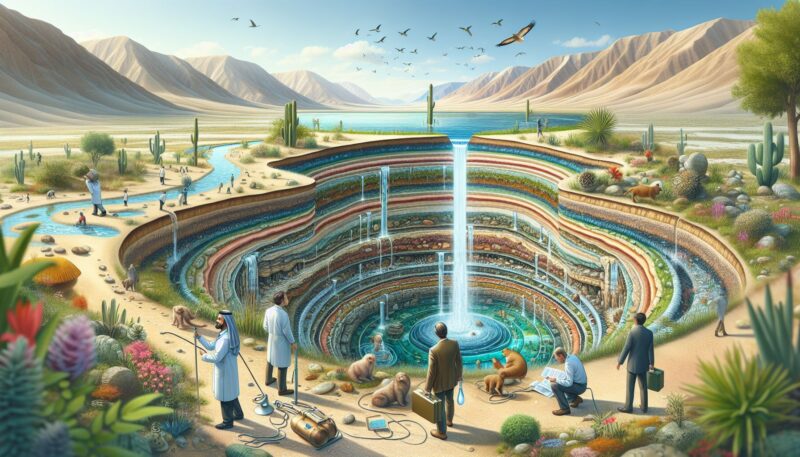
Before we can appreciate the role of aquifers, we must understand what they are. In the simplest terms, an aquifer is a subsurface layer of water-bearing permeable rock or unconsolidated materials (gravel, sand, silt, or clay) from which groundwater can be extracted. This extraction is often performed using water wells.

Types of Aquifers

Aquifers come in distinct shapes and sizes and can broadly be classified based on their geologic characteristics or the way they interact with the surrounding environment:

  • Confined Aquifer: These aquifers are trapped between layers of relatively impermeable rock or clay which impedes water flow into or out of the aquifer.
  • Unconfined Aquifer: Also known as water-table aquifers, these have a permeable water table and are not overlain by impermeable materials.
  • Artesian Aquifer: A type of confined aquifer where the pressure is sufficient to rise the water level above the top of the aquifer.

How Aquifers are Recharged

Aquifers are replenished or ‘recharged’ by the process of infiltration, where water from precipitation, streams, and rivers seeps through the soil and percolates downward into the aquifer. This can occur over extensive areas or at focused recharge points.

The Hydrologic Cycle’s Influence on Aquifers

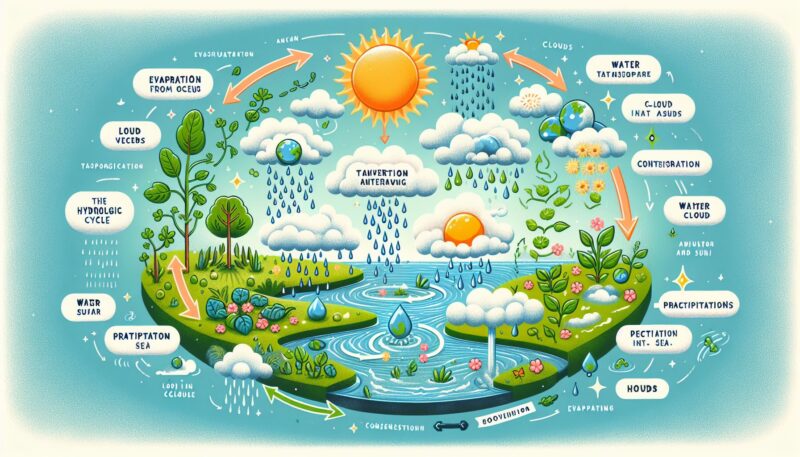
Aquifers are an integral part of the hydrologic cycle, where water circulates from the atmosphere, to the surface, into the ground, and back again. Precipitation contributes to both surface water bodies and groundwater, which is eventually discharged back into rivers, lakes, oceans, or once again ascends to the atmosphere through processes like evaporation and transpiration.

The Importance of Aquifers

Aquifers are hidden jewels of the hydrosphere, playing a crucial role in our ecosystem:

  • Source of Freshwater: They are one of the chief sources of freshwater, crucial for drinking, agriculture, and industry.
  • Natural Filtration System: As water percolates through soil and rock, impurities are naturally filtered out, often improving water quality.
  • Drought Resilience: Compared to surface waters, aquifers can provide more reliable water supplies during droughts because they may not be as subject to rapid depletion.
  • Ecosystem Services: Groundwater from aquifers nourishes wetlands, rivers, and lakes, supporting biodiversity and ecosystem health.

Global Significance of Aquifers

Aquifers are not just essential locally but also have global significance. For instance, the Great Artesian Basin in Australia, one of the world’s largest aquifer systems, supports agricultural industries and provides water to remote communities. Similarly, in the parched landscapes of North Africa, the Nubian Sandstone Aquifer System holds ancient “fossil” water, a critical resource in a region scarce in freshwater.

Challenges Faced by Aquifers

Despite their value, aquifers face numerous challenges:

Overexploitation

The exploitation of aquifers can outpace their natural recharge rates leading to depletion. This is especially prevalent in arid regions or areas with intensive agricultural activity.

Pollution

Aquifers are susceptible to contamination from various sources, including industrial discharges, agricultural runoff, and improper disposal of waste. Once an aquifer is contaminated, it is difficult and expensive to clean.

Land Subsidence

Excessive pumping of groundwater can cause the ground above an aquifer to settle or subside, damaging infrastructure and reducing the aquifer’s storage capacity.

Climate Change Impacts

Climate change is altering precipitation patterns and increasing temperatures, which can impact aquifers. Changes in snowpack, glaciers, and permafrost all influence the recharge of many aquifers.

Conservation and Sustainable Management

Monitoring and Protection

Proper management begins with careful monitoring of aquifer levels and water quality. Establishing protection zones and regulating activities that can pollute or excessively tap groundwater are essential strategies.

Enhanced Recharge

Artificial recharge projects, such as injecting water into an aquifer during times of surplus, can help restore depleted groundwater levels.

Efficient Use

Improving the efficiency of water use in agriculture and industry can significantly reduce the strain on aquifers. Using drip irrigation systems and water-efficient industrial processes can conserve a lot of water.

Legal and Policy Framework

Strong legal frameworks and policies are critical for the sustainable management of aquifers. This includes water rights, withdrawal limits, and cross-border agreements for transboundary aquifers.

Innovative Technologies for Aquifer Management

Advances in technology play a vital role in managing aquifers effectively:

  • Remote Sensing: Satellite imagery can help monitor changes in groundwater storage.
  • Geographic Information Systems (GIS): GIS mapping of aquifers can pinpoint areas of recharge and risk.

The Road Ahead

The future of aquifers is intertwined with the future of humanity. As the demand for freshwater continues to grow, the sustainable management of these precious sources is not just an environmental concern; it is an urgent socio-economic challenge.

International Cooperation

Internationally shared aquifers require cooperation between nations. Across geopolitical lines, water diplomacy emerges as a critical factor for peace and sustainability.

Education and Public Awareness

Educating the public about the importance of aquifers is vital for conservation efforts. Individuals can conserve water, support policies that protect aquifers, and reduce pollution through responsible consumption.

Research and Development

Continued research is essential to understand aquifer dynamics better, develop more efficient recharge techniques, and predict the impacts of climate change on groundwater resources.

Conclusion

Aquifers, the invisible reservoirs beneath our feet, hold the key to a sustainable future for freshwater. As our global population rises and climate patterns shift, the clear call to action is to recognize the value of aquifers, raise awareness of their challenges, and advocate for their sustainable management.

Sources

  1. UNESCO – International Groundwater Resources Assessment Centre. (n.d.). Groundwater Governance – A Global Framework for Country Action. https://www.un-igrac.org/resource/groundwater-governance-global-framework-country-action

  2. National Groundwater Association. (n.d.). Information on Earth’s Water. https://www.ngwa.org/what-is-groundwater/About-groundwater

  3. U.S. Geological Survey. (2021). The Groundwater Foundation. [https://www.usgs.gov/mission-areas/water-resources/science/groundwater-foundation](https://www.usgs.gov/mission-
The Hydrologic Cycle: Earth’s Vital Water Engine

Water is the lifeblood of our planet, shaping landscapes, supporting ecosystems, and sustaining all life forms. At the heart of the intricate water systems on Earth is the hydrologic cycle, a continuous sequence of movement that distributes water across different reservoirs from the skies to the depths of the earth. This article delves into the wonders of the hydrologic cycle, exploring its components, importance, and impact on the broader hydrosphere.

Understanding the Hydrologic Cycle

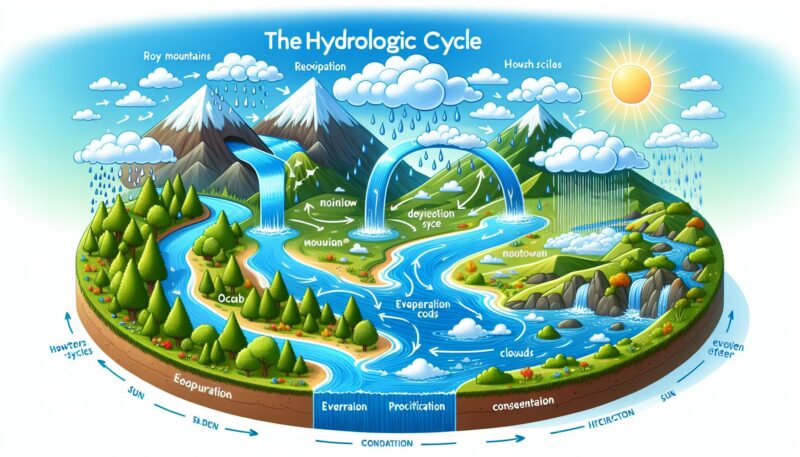
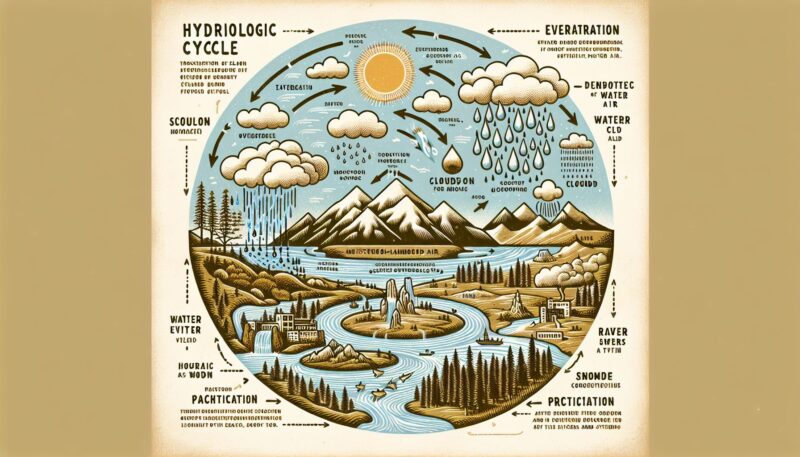
The hydrologic cycle, also known as the water cycle, describes the continuous movement of water on, above, and below the surface of the Earth. It’s a complex system that encompasses various processes, including precipitation, evaporation, transpiration, condensation, infiltration, percolation, runoff, streamflow, baseflow, and direct exchanges with the atmosphere. These processes are driven by solar energy and gravity.

Evaporation and Transpiration

Water in liquid form is transformed into vapor primarily through evaporation. This occurs when the sun heats the surface of bodies of water, such as oceans, rivers, and lakes. Additionally, water is released as vapor from plants through a process called transpiration. Together, evaporation and transpiration are often referred to as “evapotranspiration,” highlighting their interconnected nature.

Condensation and Precipitation

As water vapor rises and cools in the atmosphere, it undergoes condensation, forming clouds. When these cloud particles grow heavy enough, they fall back to Earth as precipitation— be it rain, snow, sleet, or hail.

Infiltration, Percolation, and Groundwater

Some of the water that reaches the ground seeps into the soil through infiltration. It travels down through layers of soil and rock in a process known as percolation, eventually replenishing groundwater reservoirs, including aquifers.

Runoff and Streamflow

Not all water is absorbed by the ground. Excess water typically flows over the land’s surface, a process called runoff. This water eventually collects in streams and rivers, contributing to the overall streamflow.

Baseflow and Recharge

Baseflow represents the portion of streamflow that’s sustained by groundwater seeping into rivers and streams. The process through which water enters an aquifer or groundwater reservoir is known as recharge.

Discharge

Discharge is the natural or artificial removal of water from an aquifer or surface water body. Discharges often occur at springs where groundwater exits to become part of rivers or directly contribute to the ocean.

Understanding this cycle is crucial to managing freshwater resources, addressing water quality issues, and preparing for the challenges posed by climate change.

The Importance of the Hydrologic Cycle

The hydrologic cycle is crucial for numerous reasons:

  1. Climate Regulation: Water vapor is a significant greenhouse gas, influencing Earth’s energy balance and climate.
  2. Ecosystem Sustenance: It supports diverse ecosystems by distributing water to various habitats.
  3. Soil Fertility: Precipitations transport nutrients to different parts of the ecosystem, supporting plant life and soil fertility.
  4. Water Purification: The infiltration and percolation processes naturally filter water, improving its quality.
  5. Human Needs: It provides the freshwater necessary for agriculture, industry, and personal consumption.

Impact on the Hydrosphere

The hydrosphere encompasses all water on Earth’s surface, including oceans, rivers, lakes, and ice. The hydrologic cycle is the driving force behind changes in the hydrosphere, determining water distribution and movement within these various reservoirs.

  1. Oceans are the primary source of evaporation, feeding water vapor into the atmosphere.
  2. Rivers and Lakes are both sources and destinations within the cycle, receiving runoff and precipitation, but also contributing to evaporation.
  3. Glaciers and Icebergs play a role in the cycle by storing freshwater and gradually releasing it through melting.
  4. Wetlands, such as swamps and marshes, act as natural sponges, absorbing excess water during floods and releasing it during dry periods.

Human Impact on the Hydrologic Cycle

Human activities are increasingly altering the natural flow of the hydrologic cycle. Urbanization and deforestation can change infiltration and runoff patterns, potentially leading to more frequent flooding. Agriculture, industry, and the over-extraction of groundwater affect recharge and streamflow. Furthermore, climate change is shifting precipitation patterns and intensifying the hydrologic cycle, leading to more extreme weather events.

Water Quality and Pollution

The hydrologic cycle also influences water quality. As water traverses various environments, it can become contaminated with pollutants such as heavy metals, nutrients, pathogens, and microplastics. Processes like eutrophication, resulting from nutrient overload, can lead to algal blooms that deplete dissolved oxygen, harming aquatic life.

The Pillars of Water Management

To protect water resources and ensure their sustainable use, effective management strategies focus on:

  1. Water Treatment: Methods such as reverse osmosis, filtration, disinfection, chlorination, ozonation, UV irradiation, coagulation, flocculation, sedimentation, adsorption, and ion exchange are used to purify water to safe standards.
  2. Water Distribution: Systems involving water storage, water towers, pumping stations, pipe networks, valves, and meters, are crucial in delivering potable water to consumers.
  3. Leak Detection: Identifying and repairing leaks in distribution systems ensures water conservation and minimizes waste.
  4. Water Conservation Strategies: Techniques like rainwater harvesting, greywater reuse, and awareness of water footprint and virtual water can reduce demand and stress on water resources.

Navigating Water Scarcity and Climate Challenges

Water scarcity and stress due to drought, increasing demand, and ecosystem degradation require us to rethink our relationship with water. Climate change is amplifying these challenges, producing unpredictable flood and drought patterns. Proactive measures such as water diplomacy and conflict resolution become necessary in regions where water scarcity fuels tensions.

Conclusion

The hydrologic cycle is Earth’s natural system for water replenishment and distribution, integral to our planet’s ecology and human existence. As stewards of the environment, it is our responsibility to understand, protect, and sustainably manage this critical resource. Embracing water conservation, improving water management practices, and reducing pollution are key to ensuring a stable hydrologic cycle and a secure water future.

Sources

  1. US Geological Survey – The Water Cycle. https://www.usgs.gov/special-topics/water-science-school/science/water-cycle
  2. National Oceanic and Atmospheric Administration – Water Cycle. [https://www.noaa.gov/education/resource-collections/f

Understanding the Hydrologic Cycle: Earth’s Water Movement

Water is, quite literally, the lifeblood of our planet. Every organism depends on it, ecosystems thrive because of it, and human civilizations have been built around it. One of the most fascinating aspects of water is how it moves through the environment in a continuous cycle known as the hydrologic cycle. This vast, global process is essential for maintaining the climate, weather patterns, and the availability of fresh water for all life on Earth.

In this comprehensive guide, we will delve deep into the hydrologic cycle, exploring each of its stages—precipitation, evaporation, transpiration, condensation, infiltration, percolation, and runoff—and the crucial roles they play. We will also consider human impacts on this cycle and the importance of water conservation in the face of increasing water stress worldwide.

What is the Hydrologic Cycle?

The hydrologic cycle, also known as the water cycle, describes the continuous movement of water on, above, and below the surface of the Earth. It is a complex system dictated by the laws of physics and influenced by geological, biological, and chemical processes. At its core, the cycle involves the conversion of water between its three states: liquid, gas, and solid.

The Stages of the Hydrologic Cycle

There are several key stages in the hydrologic cycle. Each stage plays a distinct role:

1. Evaporation

Evaporation is the process by which water changes from a liquid to a vapor. It occurs when the sun heats up water in the oceans, rivers, lakes, or the soil, causing it to rise into the air.

2. Transpiration

Transpiration is similar to evaporation, but it specifically refers to water released from plants and trees. As plants absorb water from the soil, some of it evaporates from their leaves into the atmosphere.

3. Condensation

Condensation is where water vapor cools as it rises higher in the atmosphere and transforms back into liquid droplets. These droplets cluster around dust particles, forming clouds and eventually precipitation.

4. Precipitation

Precipitation occurs when these water droplets combine to become heavy enough to fall from clouds due to gravity. It can take various forms: rain, snow, sleet, or hail.

5. Infiltration

When precipitation reaches the ground, it can seep into the soil, a process known as infiltration. This water then becomes part of the groundwater system.

6. Percolation

Percolation is the downward movement of water through the soil and rock layers, further contributing to groundwater supplies.

7. Runoff

Not all water infiltrates; some flows along the surface of the land as runoff. This water can replenish rivers, lakes, and eventually return to the oceans.

8. Baseflow

Baseflow is the part of the streamflow that is provided by groundwater seeping into the river or stream. It is crucial for maintaining water levels, particularly during dry periods.

Each of these stages is interconnected, and the cycle itself has no beginning or end. It is driven by the sun’s energy and the force of gravity.

Human Impacts on the Hydrologic Cycle

Human activity can significantly alter the hydrologic cycle. Deforestation, urban development, and pollution can affect evaporation and transpiration rates, as well as infiltration and runoff. Over-extraction of groundwater for agriculture and industry can lower water tables, and climate change can disrupt rainfall patterns, leading to issues like drought or flooding. These disruptions to the natural cycle may result in serious consequences for water availability and ecosystem health.

Water Conservation and the Hydrologic Cycle

Given the immense pressures on freshwater resources, sustainable water management is essential. Water conservation involves using water efficiently and preventing waste. Practices such as rainwater harvesting, greywater reuse, and the adoption of water-efficient technologies in homes and industries can reduce the strain on existing water supplies. By safeguarding our water resources, we can help maintain the balance of the hydrologic cycle and ensure that it continues to sustain life on Earth for generations to come.

Sources

To learn more about the hydrologic cycle and water conservation, consider visiting the following sources:

  • The Water Cycle,” by the U.S. Geological Survey. This resource provides a detailed explanation of the water cycle, complete with diagrams.

  • Water Conservation Tips,” by the U.S. Environmental Protection Agency. This page offers practical tips for saving water at home and in the workplace.

  • Climate Change: Global Sea Level,” by NASA’s Climate Change and Global Warming initiative. This resource highlights the impact of climate change on our planet’s water systems, particularly the oceans.

Understanding the hydrologic cycle is not just an academic exercise; it’s crucial for our survival. As our global population increases and the climate continues to change, managing this cycle sustainably becomes more important than ever. Only through awareness and proactive conservation can we safeguard our most precious resource—water.

Understanding the Hydrologic Cycle: Earth’s Lifeline

The functioning of our planet’s hydrology is a complete marvel—one that is vital for the survival of nearly every form of life. The hydrologic cycle is a continuous, intricate process that recycles water on Earth, providing fresh water to the ecosystem, and regulating climate patterns. This article takes a deep dive into the hydrologic cycle, examining its phases and importance, and how it impacts both the environment and human activity.

The Hydrologic Cycle Explained

Hydrology, the science of water movement, distribution, and quality, is at the heart of understanding the hydrologic cycle. This cycle, also known as the water cycle, is the process through which water circulates from the Earth’s surface to the atmosphere and back again.

Key Processes of the Hydrologic Cycle

Evaporation: The transformation of liquid water into vapor, primarily due to the energy provided by the sun.

Transpiration: The process through which plants release water vapor into the atmosphere from their leaves.

Condensation: The change of water from its gaseous form (vapor) into liquid, more commonly witnessed as cloud formation.

Precipitation: The fall of water from clouds as rain, snow, sleet or hail.

Infiltration: The process by which water soaks into the soil from the ground surface.

Percolation: The downward movement of water through the soil, which can recharge aquifers—natural underground storage areas.

Runoff: Water that flows over the surface of the ground, usually reaching rivers, lakes, and oceans.

Streamflow: The flow of water within a stream or river channel.

Baseflow: A component of streamflow that is sustained by groundwater seepage into a stream.

Groundwater Movement: The subsurface water that moves through soil and rock, typically supplying wells and springs.

Each of these processes plays a vital role in maintaining the cycle, contributing to the overall balance and sustainability of Earth’s water resources.

The Significance of the Hydrologic Cycle

The hydrologic cycle is significant for several reasons:

  1. Supports Life: Water is a fundamental necessity for all known forms of life. The hydrologic cycle ensures that water is renewed and purified, sustaining ecosystems worldwide.

  2. Regulates Climate: The movement and phase changes of water contribute to weather patterns and climate. For instance, evaporation leads to humidity, while precipitation is necessary for sustaining flora and fauna.

  3. Shapes Landforms: Water flow, particularly runoff and streamflow, can shape the landscape through erosion and deposition, creating valleys, canyons, and deltas.

  4. Replenishes Fresh Water Supplies: Through precipitation, recharge of aquifers, and filtration, fresh water supplies are continually refreshed, which is crucial for human consumption, agriculture, and industry.

Human Interaction with the Hydrologic Cycle

Human activities profoundly impact the hydrologic cycle. Urbanization and deforestation can alter infiltration and increase runoff, leading to erosion and potential flooding. Pollution from industrial, agricultural, and residential sources can degrade water quality, affecting ecosystems, human health, and the economy.

Managing the Hydrologic Cycle

Efforts to manage and protect the hydrologic cycle include:

  • Water Conservation: Reducing water usage and waste to ensure a sustainable supply.
  • Rainwater Harvesting: Capturing and storing rainwater for domestic use, agriculture, and replenishing groundwater.
  • Water Treatment: Removing contaminants from water to make it suitable for consumption or return to the environment.
  • Wetland Protection: Preserving wetlands that act as natural water filters and buffers against flooding.
  • Sustainable Agriculture: Implementing practices that minimize irrigation demands and prevent runoff.

It’s crucial for policymakers, environmentalists, and the public to understand the hydrologic cycle to make informed decisions about water usage and conservation.

Water Scarcity and the Future

As our climate changes and populations grow, water scarcity is becoming a pressing issue. Changes in precipitation patterns and the melting of glaciers and snowpacks are altering water availability. Regions experiencing water stress may face challenges such as droughts, which can lead to crop failure and water conflict.

To ensure a sustainable future, we must take collective action to preserve the hydrologic cycle, which could involve investments in infrastructure like reservoirs and efficient irrigation systems, and innovations in water recycling and desalination technologies.

Conclusion

The hydrologic cycle is an intricate and essential process that sustains life, regulates climate, and shapes our world. Human activities have a significant impact on this cycle, and it is imperative to manage water resources responsibly to ensure a sustainable future for our planet.

Sources

  1. “The Hydrologic Cycle and its Role in Arctic and Global Environmental Change” by Ward, J. V., and Voelz, N. J. (1994) in Freshwater Biology, Wiley Online Library (https://onlinelibrary.wiley.com/)
  2. “Global Water Cycle: Combining Evaporation and Precipitation” by Schmitt, R. W., Bogden, P., & Dorman, C. E. (1989) in The Marine Evaporation Experiment, Journal of Geophysical Research (https://agupubs.onlinelibrary.wiley.com/)
  3. “Water Scarcity: The Food Factor” by Postel, S. L. (2001) in Issues in Science and Technology Online (https://issues.org/)

By understanding and respecting the hydrologic cycle, we can work towards a stable and healthy environment that continues to support diverse life forms and human endeavours for generations to come.