Author: Tracy Castro

Unveiling the Mysteries of the Hydrologic Cycle: Earth’s Vital Water Engine

The hydrologic cycle, also known as the water cycle, is a continuous and dynamic process that describes the movement of water on, above, and below the surface of the Earth. This cycle is fundamental to life as we know it, playing a critical role in regulating climate, supporting ecosystems, and providing freshwater for human consumption, agriculture, and industry. Today, we embark on an in-depth exploration of this vital cycle, examining its various stages and the crucial role it plays in sustaining life on our planet.

Understanding the Hydrologic Cycle

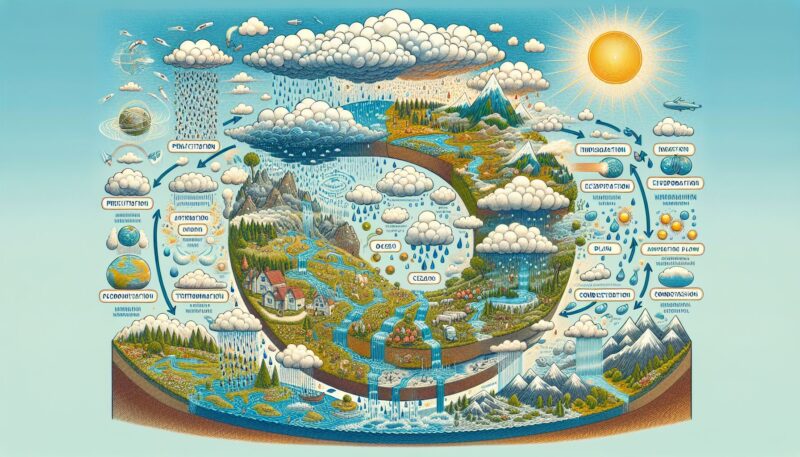
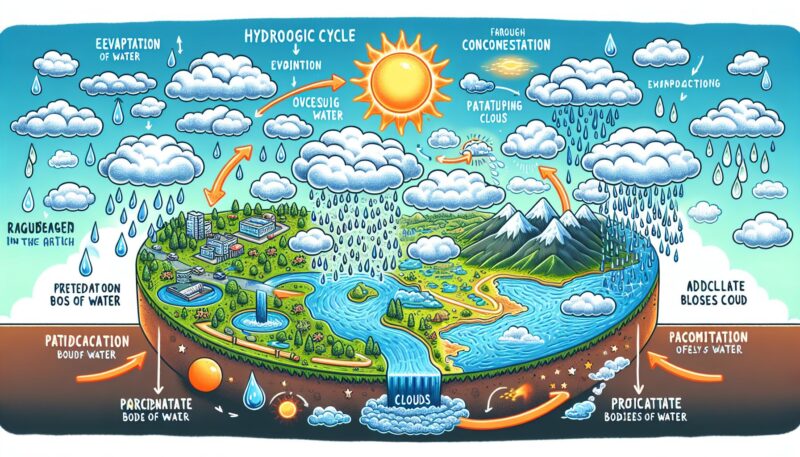
The hydrologic cycle is powered by the energy from the Sun, which drives the exchange of water between the atmosphere, land, and the oceans. This cycle involves several processes including evaporation, transpiration, condensation, precipitation, infiltration, percolation, runoff, and groundwater flow. These processes are interconnected and occur simultaneously across the globe, fostering a delicate balance that regulates water distribution.

Evaporation and Transpiration

Water begins its journey in the hydrologic cycle through evaporation – the process by which water changes from a liquid to a vapor. This occurs over bodies of water, like oceans, rivers, and lakes, as well as over moist land surfaces.

Plants also contribute to this vapor-flux through transpiration, where water absorbed by roots is released into the atmosphere from leaves. Remarkably, transpiration accounts for around 10% of the moisture present in the atmosphere. A term that combines both these processes – evaporation from surfaces and transpiration from plants – is evapotranspiration.

Condensation

As water vapor rises and encounters cooler temperatures in the atmosphere, it undergoes condensation. This is when the vapor cools and changes back into liquid droplets, forming clouds and fog. It’s the condensation process that’s responsible for the beautiful and sometimes menacing cloud formations we observe in the sky.

Precipitation

When these droplets combine and grow large enough, they fall to the ground as precipitation. This can happen in various forms: rain, snow, sleet, or hail, depending on atmospheric conditions. Precipitation is a primary mechanism by which the atmosphere purges itself of water, sending it back to the Earth’s surface.

Infiltration and Percolation

Upon reaching the land, some of the water seeps into the ground through a process called infiltration, where it percolates through soil and porous rock layers. The rate of infiltration can be influenced by factors such as soil type, vegetation, topography, and saturation level of the ground.

Runoff and Streamflow

Water that doesn’t infiltrate becomes runoff, flowing across the land’s surface towards rivers, lakes, and oceans. This streamflow is a vital component of the hydrologic cycle, shaping landscapes and supplying fresh surface water to ecosystems and human communities.

Groundwater Flow and Aquifers

Water that has infiltrated the soil and percolated down to fill the spaces in soil and rock is called groundwater. This groundwater moves slowly and can travel significant horizontal distances over time, emerging eventually as springs, or feeding into rivers during dry periods in a process called baseflow.

Groundwater is stored in geological formations called aquifers. When an aquifer’s water-bearing permeable rock becomes full, the water can wait for hundreds or even thousands of years until it’s drawn to the surface again through natural or artificial discharge, such as springs or wells.

Recharge and Discharge

Groundwater is replenished or recharged primarily by rainfall that infiltrates the ground, but it can also be augmented by other sources like rivers and melting snowpack. Recharge areas are critical for maintaining the volume and sustainability of groundwater resources.

Discharge occurs when groundwater flows out of the aquifer, returning to the surface water bodies or directly into the oceans, completing a segment of the hydrologic cycle.

The Role of Climate and Human Activity

The hydrologic cycle is intimately linked with climate patterns. For instance, warmer temperatures increase evaporation and can amplify extremes such as droughts and floods.

Human activities have significant impacts on the hydrologic cycle. Urbanization replaces permeable land with impermeable surfaces leading to increased runoff and reduced infiltration. Agriculture and industry consume vast amounts of surface water and groundwater. Climate change, driven by human-induced greenhouse gas emissions, alters precipitation patterns, exacerbating water scarcity in some regions and flooding in others.

Moreover, pollution from agricultural runoffs, industrial waste, and other sources contributes to water quality degradation, which impacts every stage of the hydrologic cycle.

Water Conservation and Management

Given the critical importance of the hydrologic cycle, it is essential to adopt sustainable water management practices. Measures such as water conservation, rainwater harvesting, and greywater reuse help mitigate the impacts of human activity on this natural cycle.

One essential conservation technique involves the protection of natural watersheds or catchment areas, which are land areas drained by rivers and their tributaries. These areas are pivotal for maintaining the integrity of the hydrologic cycle.

Advances in technology, like reverse osmosis in water treatment or leak detection in pipe networks, offer innovative ways to address water scarcity and reduce waste.

The Hydrologic Cycle and You

Every drop of water you use has traversed the hydrologic cycle, potentially journeying for thousands of years before reaching your faucet. Understanding this extraordinary cycle can spur us to make more sustainable choices regarding water use.

In conclusion, the hydrologic cycle is a marvel of nature’s engineering. Its importance cannot be overstated, and its health and sustainability are vital for the future of our species and the planet. Protecting and understanding this global process is more than an act of scientific curiosity—it is a critical responsibility we all share.


Sources:

Unveiling the Mysteries of Groundwater: Earth’s Hidden Resource

Groundwater is a term that’s rarely discussed with the excitement of mysterious ocean depths or the grandeur of rivers and lakes, yet it is an essential component of the Earth’s hydrology. Hidden beneath our feet, it represents a vital source of freshwater for human consumption, agriculture, and ecosystems. Its invisibility belies its importance—groundwater sustains streams, lakes, wetlands, and importantly, the livelihood of billions. This article delves into the world beneath us, exploring groundwater: what it is, how it forms, moves, and interacts with the environment, the challenges it faces, and the future of this precious hidden resource.

What is Groundwater?

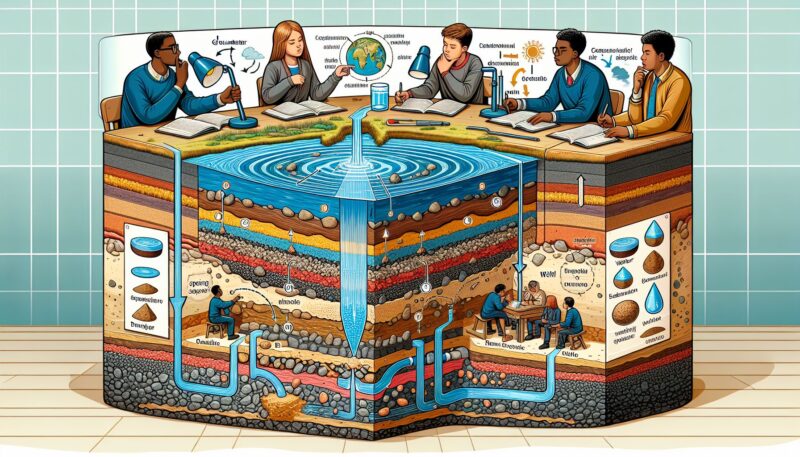
Groundwater is the water that fills the cracks, spaces, and pores in soil, sand, and rock beneath the ground’s surface. It is held in, and moves slowly through, geologic formations of soil, sand, and rocks called aquifers. These underground reservoirs can be drilled into and water can be extracted through wells. A common misconception is that groundwater is a vast underground river or lake, but in reality, it is found in the small spaces between particles and in the fractures of rocks.

The Formation of Groundwater

The journey of groundwater starts with precipitation—rain, snow, hail, or sleet. When water from precipitation does not evaporate, transpire through vegetation, or run off into streams and rivers, it soaks into the ground, a process known as infiltration. Depending on the permeability of the surface material, water will penetrate to varying depths until reaching an impermeable layer that halts its descent. Above this layer, a zone of saturation forms where all the spaces are filled with water; this is called the water table, which is effectively the surface of an unconfined aquifer.

Infiltration and Percolation

The process of water seeping into the ground is known as infiltration, while the downward movement of water through soil and rock is referred to as percolation. The rate at which these processes occur depends on several factors, including soil composition, land cover, and the presence of vegetation.

Aquifers and Their Types

Aquifers are the storage rooms of groundwater and can be categorized as unconfined or confined. Unconfined aquifers are partially filled with water and bordered at the top by the water table; they are readily recharged by surface water. Confined aquifers are bordered between two impermeable layers, making their recharge process slower and more limited. They often contain water that is much older, sometimes known as ‘fossil water’.

The Movement of Groundwater

Groundwater doesn’t remain static—it moves through aquifers under the force of gravity and pressure. The movement is generally slow, measured in centimeters per day, meters per year, or even slower. The speed and direction of groundwater flow are influenced by the slope of the water table and the permeability of the aquifer materials.

Baseflow and Recharge

As groundwater flows, it plays a significant role in keeping rivers, lakes, and wetlands fed during periods of low precipitation. This contribution to streamflow is known as baseflow. Recharge, on the other hand, is the process by which groundwater is replenished—often occurring when there’s excess precipitation or from rivers, lakes, and melted snow that percolates down.

Groundwater’s Role in the Ecosystem

Groundwater is a significant ecological actor. It contributes to the maintenance of wetlands and river flow, which are critical habitats for a multitude of species. It also interacts with surface water, contributing to the overall hydrologic balance and providing resilience against periods of drought.

Challenges Facing Groundwater

Despite its vastness and importance, groundwater is under threat from over-extraction, pollution, and climate change.

Over-Extraction

As surface water becomes scarce or polluted, the reliance on groundwater increases, leading to its over-extraction. This can cause a drop in the water table, making it difficult for the ecosystem and wells to keep up.

Pollution

Contaminants from agricultural runoff, industrial processes, and improper disposal of waste can seep into aquifers, making the water unsafe for consumption and harming aquatic life. Pollution can sometimes require costly cleanup efforts or render an aquifer unusable.

Climate Change

Alterations in precipitation patterns, increased evaporation rates, and rising sea levels associated with climate change all pose risks to groundwater reserves. For instance, climate change could alter recharge rates or cause seawater to intrude into coastal aquifers, increasing their salinity.

Groundwater Management and Protection

Proactive management and protection strategies are critical to ensuring the sustainability of groundwater resources.

Sustainable Withdrawal

To maintain a healthy balance, water withdrawn from aquifers must not exceed the rate at which it’s replenished. Regulating groundwater pumping and creating sustainable water use plans are vital steps.

Pollution Prevention

Protecting aquifers from contamination involves managing land use, controlling sources of pollution, and establishing protective regulations. Cleanup efforts for polluted groundwater can be lengthy and expensive.

Integrated Water Resource Management

Integrated Water Resource Management (IWRM) takes a holistic approach to managing water resources, considering the interdependencies between water use, energy production, and ecological health.

The Future of Groundwater

The future of groundwater relies on our ability to recognize its importance, understand its dynamics, and act to protect it. Groundwater will continue to be a cornerstone of global water supply, but its fate is intrinsically linked to our stewardship. By investing in research, embracing sustainable practices, and employing innovative technologies, we can ensure that groundwater remains a reliable resource for generations to come.

Conclusion

Groundwater may be out of sight, but it should not be out of mind. With sound management practices and a commitment to preserving this crucial resource, we can secure the future of our water supplies. As we endeavor to meet the demands of a growing population and mitigate the impacts of climate change, the role of groundwater will only become more critical. It is a hidden treasure that holds the key to our survival, flourishing ecosystems, and a stable climate.


Sources:

  • National Ground Water Association (ngwa.org)
  • United States Geological Survey (USGS) Water Science School (water.usgs.gov/edu)

The Hydrologic Cycle: Earth’s Vital Water Engine

The hydrologic cycle, also known as the water cycle, is a continuous and dynamic movement of water between the Earth’s atmosphere, land, and oceans. This natural process is pivotal for the sustenance of life on our planet, influencing climate patterns, shaping landscapes, and providing fresh water for all organisms. In this article, we will delve deep into the intricacies of the hydrologic cycle, exploring each phase and its crucial role in maintaining the balance of Earth’s ecosystems.

Understanding the Hydrologic Cycle

At its core, the hydrologic cycle is powered by the energy from the sun. This energy drives the cycle beginning with evaporation, which turns water from rivers, lakes, and oceans into vapor. Plants also contribute through transpiration when they release vapor into the atmosphere. As the water vapor rises, it cools down and condenses into clouds. Under the right conditions, these clouds lead to precipitation, which can be in the form of rain, snow, sleet, or hail. Once the water reaches the ground, it can enter water bodies directly or percolate through soil to become groundwater. Some of this water will eventually re-enter the ocean, where the cycle begins anew.

Evaporation: Water’s Aerial Ascent

Evaporation is the process where liquid water is transformed into a gaseous state through the addition of heat. On a global scale, oceans are the primary source of evaporation given their vast surface area. Evaporation rates are affected by temperature, humidity, wind, and the water’s surface area. This phase is essential in transferring water from the Earth’s surface to the atmosphere.

Transpiration: Plants’ Contribution to the Cycle

Not all of the Earth’s water is found in bodies of water; a significant portion is held within the world’s plant life. Transpiration is the release of water vapor from plant leaves, which occurs when plants open their stomata to take in carbon dioxide for photosynthesis. Together with evaporation, this process is referred to as evapotranspiration.

Condensation: The Birth of Clouds

As water vapor rises, it encounters cooler temperatures, leading to condensation. This is where water vapor transforms back into a liquid state, forming clouds. Depending on atmospheric conditions, these droplets can combine to create larger drops and eventually fall back to the Earth as precipitation.

Precipitation: Water’s Return to Earth

Precipitation occurs when water droplets within clouds grow heavy enough to fall to Earth due to gravity. Precipitation can fall as rain, snow, sleet, or hail. The type of precipitation largely depends on the temperature of the atmosphere between the clouds and the Earth’s surface.

Infiltration and Percolation: Soil’s Thirst for Water

Upon reaching the ground, part of the water will seep into the soil through infiltration. This is the process where water soaks into the ground, driven by gravity and the porosity of the soil. Percolation is the movement of infiltrated water through soil and its pores, eventually reaching the groundwater stores.

Runoff: The Overland Journey of Water

Water that does not infiltrate the soil becomes runoff, which flows overland and collects in rivers, lakes, and streams. Runoff is an important component as it helps distribute fresh water across the landscape. However, excessive runoff can lead to erosion and transport pollutants into waterways.

Streamflow and Baseflow: Veins of the Landscape

Streamflow is the flow of water in rivers and streams that is directly related to precipitation and runoff events. Baseflow, on the other hand, is the sustained flow of a stream in the absence of direct runoff. It is largely derived from groundwater seeping into the streambed, providing a critical source of water during dry periods.

Groundwater: The Hidden Resource

Beneath the Earth’s surface lies a vast reservoir of groundwater, which feeds wells, springs, and supports stream baseflow. Groundwater exists in aquifers, which are layers of rock and soil saturated with water. The top of the groundwater in an aquifer is called the water table, which can rise or fall depending on the balance between recharge and discharge.

Recharge and Discharge: Groundwater’s Ebb and Flow

Recharge is the process by which groundwater is replenished, typically from precipitation percolating downward from the surface. Discharge, on the other hand, is the natural or artificial removal of groundwater, such as through springs, well extraction, or baseflow into streams.

Importance of the Hydrologic Cycle

The hydrologic cycle is crucial for several reasons:

  • It distributes heat across the globe, influencing weather and climate patterns.
  • It provides the fresh water necessary for all life forms.
  • It shapes geological features by weathering rocks and creating sedimentation.
  • It supports ecosystems through the movement and distribution of water and nutrients.

Human Interaction with the Hydrologic Cycle

Human activities can have a profound impact on the hydrologic cycle. Urban development creates impervious surfaces that increase runoff, reducing infiltration and potentially leading to flooding and pollutant transport. Agricultural practices can alter evapotranspiration rates and soil’s ability to percolate water. Furthermore, the extraction of water for human use affects groundwater levels and streamflow, which can lead to conflicts and require careful management.

Water Conservation: A Crucial Endeavor

Preserving the integrity of the hydrologic cycle is vital for sustaining life on Earth, making water conservation efforts paramount. Practices such as rainwater harvesting, greywater reuse, and the protection of wetlands help maintain the cycle’s balance.

Concluding Thoughts on the Hydrologic Cycle

The hydrologic cycle is more than just a sequence of processes. It is the lifeblood of our planet, interconnecting every aspect of the Earth system. By understanding its mechanisms and respecting its limitations, we can ensure that this fundamental cycle continues to sustain life for generations to come.

For a more technical and expansive understanding of the hydrologic cycle, readers can refer to the United States Geological Survey (USGS) and their thorough resources on the topic (USGS Water Science School). For insights into water conservation strategies and the human impact on the cycle, the Environmental Protection Agency (EPA) provides valuable guidance (EPA WaterSense).

In summary, the hydrologic cycle is an elegant and intricate system that showcases nature’s balance and resilience. It is our responsibility to ensure that our actions harmonize with this cycle, securing the longevity and health of our planet’s water resources.