Author: Tracy Castro

The Hidden World Beneath Our Feet: Unveiling the Secrets of Groundwater and Aquifers

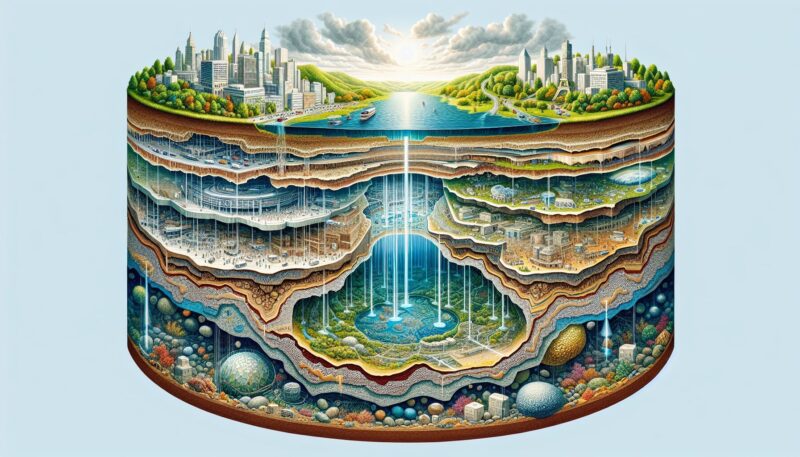
The very essence of life—water—flows beneath us, unseen, in abundant reservoirs known as aquifers. Groundwater, the precious resource found within these natural underground storages, is a crucial contributor to human livelihoods, agricultural sustenance, and ecological balance. This article embarks on an exploration of the depths, unveiling the mysteries and mechanics of groundwater and aquifers, while touching upon the elements that threaten their purity and existence.

What is Groundwater?

Groundwater is the water located beneath the Earth’s surface, filling the porous spaces in soil, sediment, and rocks. It accounts for approximately 30% of the world’s fresh water supply, excluding the massive quantities trapped in ice caps and glaciers. The importance of groundwater cannot be overstated—it not only supplies drinking water for more than half the global population but also irrigates crops, sustains streams during dry periods, and maintains wetland habitats.

The Hydrosphere’s Hidden Component: Aquifers Explored

An aquifer is essentially a geological formation that can store and transmit water. These formations can range from vast, porous rocks to sand and gravel layers, typically bound by less permeable materials like clay or rock that act as a barrier to water flow.

Types of Aquifers

Aquifers are classified into two main categories:

Confined Aquifers: These aquifers are sandwiched between impermeable rock or clay layers, creating a pressurized environment. Water within confined aquifers may be old, often termed as “fossil water”, as it has been trapped for millennia.

Unconfined Aquifers: These have a permeable layer above and an impermeable layer below. The water level in an unconfined aquifer can rise and fall depending on factors like precipitation and consumption.

The Vital Cycle: Groundwater Movement and the Hydrologic Cycle

Groundwater movement is a component of the broader hydrologic cycle, which diagrams the movement of water above, on, and below the Earth’s surface. The stages relevant to groundwater include:

Infiltration and Percolation

When rain falls to the ground, it doesn’t all run off into rivers or evaporate. Some of it soaks into the ground in a process called infiltration. From there, water slowly percolates through soil and rock layers until it reaches the water table—the boundary between unsaturated soil and the aquifer.

Recharge and Discharge

Recharge areas are where water infiltrates through the soil and adds to an aquifer. Conversely, discharge areas are where groundwater finds its way back to the surface naturally via springs or can seep into rivers and lakes.

The Role of Wells

Wells, bored deep into aquifers, are man-made discharge points. Pumping from wells can lower the water table and, if done unsustainably, deplete an aquifer.

Groundwater Quality and Contaminants

The purity of groundwater is fundamental for health and the environment. However, various contaminants threaten this invisible resource.

Common Contaminants Include:

  • Pathogens from sewage or animal waste
  • Nutrients, particularly nitrogen and phosphorus, which can cause eutrophication
  • Heavy Metals like arsenic and lead from natural sources or industrial processes
  • Pesticides and Herbicides from agricultural runoff
  • Microplastics, an emerging pollutant, are increasingly found in groundwater sources.

Contaminated groundwater can lead to serious health problems and negatively affect ecosystems.

Protection Measures and Restoration

Efforts to preserve groundwater include sharply monitoring withdrawals, preventing pollution, and enforcing robust land use practices that respect recharge zones. In cases of contamination, advanced bioremediation and filtration technologies can restore water quality.

Managing and Sustaining Aquifers

Aquifer depletion is a growing global concern, especially in arid regions where groundwater is the primary water source. Overexploitation can lead to subsidence—where the ground sinks due to diminishing support from drained pore spaces—and saltwater intrusion in coastal areas.

Sustainable Practices Include:

  • Artificial Recharge: Enhancing natural recharge rates through techniques like spreading basins
  • Regulated Extraction: Implementing policies to control groundwater withdrawal
  • Integrated Water Resources Management (IWRM): Coordinating the use of surface and groundwater resources to maximize efficiency and sustainability.

Challenges Facing Groundwater Reserves

Groundwater is not immune to the challenges of the 21st century. Climate change, for instance, can alter precipitation patterns and consequently recharge rates. Pollution from industry, agriculture, and improper waste disposal can render groundwater unfit for use. Moreover, conflicts arise when multiple users compete for this hidden resource.

Addressing Water Scarcity

Groundwater can be a strategic reserve in times of drought, but its role must be carefully managed to avoid over-reliance. Programs such as rainwater harvesting and greywater reuse can alleviate pressure on aquifers.

Groundwater’s Role in Ecosystems

Groundwater discharge provides essential flows to rivers and wetlands. In arid environments, groundwater-dependent ecosystems are oases of biodiversity. These environments must be protected to preserve the species reliant on them.

Conclusion

Groundwater and aquifers are integral to our planet’s health, economy, and the wellbeing of all its inhabitants. As stewards of the Earth, it is crucial to understand, protect, and sustainably manage this precious resource.

Sources

Groundwater and the complex systems of aquifers beneath us serve as a lifeline for humanity and the environment. As our understanding of these critical resources deepens, so does the realization that our actions on the surface resonate through the hidden veins of water below. It is imperative that we proceed with a sense of responsibility and urgency to safeguard our subterranean reservoirs to ensure that they continue to nourish life for generations to come.

The Hydrologic Cycle: Earth’s Vital Water Engine

The hydrologic cycle, or water cycle, is the continuous movement of water within the Earth and its atmosphere. A seemingly simple concept, the hydrologic cycle is, in reality, a complex, vital system that enables the existence of life. This cycle involves several processes that include evaporation, transpiration, condensation, precipitation, infiltration, percolation, runoff, and groundwater flow. Each one of these plays a critical role in maintaining the balance and distribution of Earth’s water resources.

Understanding the hydrologic cycle is crucial for several reasons. It not only helps us to appreciate the intricacies of our environment but also allows us to manage our water resources effectively, predict weather patterns, support agriculture, and deal with the impacts of climate change. Let’s delve into each component of the cycle, explore its significance, and examine the human influence on this natural process.

Evaporation – The Invisible Ascension

Evaporation is the process where water changes from its liquid form into vapor and rises into the atmosphere. This process occurs mainly over the oceans, lakes, rivers, and wetlands, with the sun’s heat providing the energy required for evaporation. While less visible, evaporation plays a tremendous role in moving vast quantities of water into the atmosphere, setting the stage for precipitation.

Transpiration – Nature’s Respiration

Transpiration is the release of water vapor from plants and vegetation into the atmosphere. Through tiny openings in leaves, called stomata, plants release moisture, which is a byproduct of photosynthesis. The combined effect of transpiration and evaporation from land surfaces is referred to as evapotranspiration, an essential process for recycling soil water and influencing local weather patterns and climate.

Condensation – The Cloud Manufacturer

As water vapor rises, it cools and eventually condenses to form clouds. Condensation is the transformation from gaseous state back into liquid, and it is a critical precursor to precipitation. It occurs when the air is saturated, and when there is a presence of particles, such as dust or sea salt, that serve as nuclei for cloud droplets to form. This is why higher altitudes, where the air temperature decreases, tend to be the birthplace of clouds.

Precipitation – When the Clouds Can’t Hold On

Precipitation occurs when the condensed water vapor in the atmosphere accumulates into droplets heavy enough to overcome air resistance and fall to the ground. It can take several forms: rain, snow, hail, or sleet, depending on the temperature and atmospheric conditions. This process is what most commonly brings fresh water from the sky to the Earth’s surface, replenishing water supplies in bodies of water and soils.

Infiltration and Percolation – Earth’s Natural Filtering System

Infiltration is the process by which water on the surface enters the soil. Once water infiltrates the ground, it travels downward through soil and porous rock in a process known as percolation. Along the way, the water is naturally filtered as particles and some contaminants are removed. This helps to improve water quality and is one of Earth’s natural water treatment systems.

Runoff – Streams and Rivers on the Move

When precipitation occurs, not all the water is absorbed by the soil. Surplus water flows downslope over the surface, a process known as runoff. Runoff contributes to the water levels in streams, rivers, and lakes, and is a key element in shaping the landscape by erosion.

Streamflow and Baseflow – The Continuous Journey

Streamflow is the flow of water in streams and rivers, also part of the runoff process. During dry periods, rivers are sustained by baseflow, which is the portion of groundwater that naturally discharges into river beds. Baseflow maintains river levels between precipitation events and contributes to the overall streamflow.

Groundwater – The Invisible Reservoir

Groundwater is the water found beneath Earth’s surface, which fills the porous spaces within geologic substrates. Groundwater moves slowly and can be stored for long periods, acting as a crucial reservoir that can buffer against droughts and maintain baseflows. The rate at which aquifers are replenished, or recharged, affects the availability of groundwater.

Aquifers – The Subterranean Sponges

An aquifer is an underground layer of rock or sediment that holds groundwater. Aquifers vary in size and depth, making some more accessible than others. They are critical sources of fresh water for agricultural, industrial, and domestic use. However, over-extraction of water from aquifers can lead to depletion and other environmental concerns.

Recharge and Discharge – The Balancing Act

Recharge is the process by which infiltrated water reaches aquifers, while discharge is the natural or artificial removal of groundwater from aquifers. An aquifer’s sustainability depends on maintaining a balance between recharge rates and discharge. Human activities, such as irrigation and urbanization, dramatically influence this balance, potentially leading to aquifer depletion.

Watershed – Nature’s Water Collection System

A watershed, also known as a drainage basin or catchment, is an area of land where all the water under it or draining off of it goes into the same place. Watersheds can vary in size from a few acres draining into a small stream to large international rivers like the Mississippi or the Nile. Management of watersheds is crucial as they supply our rivers and lakes with water.

Human Impact and the Need for Sustainable Management

The hydrologic cycle is not a closed system isolated from human influence. Activities such as deforestation, urban development, and agriculture change the landscape and can have profound effects on the components of the water cycle. These changes can lead to altered evaporation rates, increased runoff, reduced infiltration, and other disruptions in the natural balance.

Moreover, issues like water pollution from industrial discharges, the presence of heavy metals, nutrients from agricultural runoff leading to eutrophication, the impact of microplastics, and the need for effective water treatment methods highlight the importance of protecting the integrity of our water systems.

Water Treatment: Keeping Our Water Clean

Water treatment is essential to ensure safe and clean water reaches homes and industry. Techniques like reverse osmosis, filtration, chlorination, ozonation, and UV irradiation are employed to remove contaminants and make water safe for consumption. Advanced methods like coagulation, flocculation, sedimentation, adsorption, and ion exchange are also critical in treating water to remove various impurities.

Water Conservation: Every Drop Counts

As the human population increases, so does the demand for fresh water. Water conservation efforts, such as rainwater harvesting, greywater reuse, and reducing our water footprint, are paramount. Understanding virtual water – or the hidden flow of water in food and products – can help us recognize the true water cost of our consumption patterns.

Water Stress and Scarcity: A Global Issue

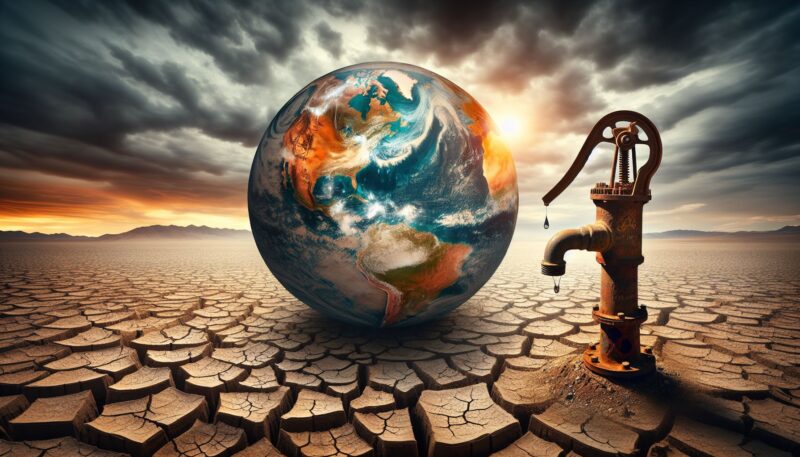
Many regions worldwide are experiencing water stress and scarcity, aggravated by factors such as climate change, pollution, and overuse of resources. Drought and over-extraction of water are real threats that need immediate attention through better management practices, innovation, and international cooperation.

Conclusion

The hydrologic cycle is an intricate and vital system, ensuring the delivery and renewal of the Earth’s water supply. It is through an appreciation and understanding of this cycle that we can begin to address

Water Scarcity: A Crisis Unfolding Across the Globe

Water scarcity is a grave issue that affects millions of people worldwide, threatening the very fabric of communities, economies, and ecosystems. While it may be hard to imagine in places where water flows freely from taps and fountains, many regions struggle with access to this essential resource. This article will delve into the various facets of water scarcity, its causes, impacts on society and the environment, and potential solutions to address the crisis.

Causes of Water Scarcity

Climate Change: One of the key contributors to water scarcity is climate change. Rising temperatures and shifting weather patterns can lead to longer and more severe droughts, reducing the availability of fresh water in many regions. Climate change also alters precipitation patterns, making it difficult to predict water availability and manage water resources.

Population Growth: As the global population continues to soar, the demand for water increases. More people means more agricultural production, more industry, and more households requiring water, often in places where water resources are already limited.

Overuse and Mismanagement: Our water resources are finite, and yet, we tend to use water as if it were limitless. Inefficient water use in agriculture, industry, and domestic settings lead to wastage and depletion of water supplies. This is compounded by poor management practices and inadequate infrastructure, which further exacerbates water scarcity.

Pollution: Contamination of water bodies with agricultural runoff, untreated sewage, industrial waste, and other pollutants can render water sources unusable. This not only decreases the amount of available clean water but also harms aquatic life and ecosystems, which can have a cascade of effects on water availability.

Impacts of Water Scarcity

Human Health: Access to clean water is crucial for hygiene, cooking, and drinking. Water scarcity can lead to the use of unsafe water sources, increasing the risk of waterborne diseases, malnutrition, and other health problems.

Food Security: Water is fundamental to agriculture. Scant water supplies mean lower crop yields, threatening food security and livelihoods, especially in agrarian societies and developing countries.

Economic Development: Industries from manufacturing to energy production rely heavily on water. Water scarcity can hamper industrial operations, reduce economic productivity, and lead to job losses.

Social Conflicts: When water becomes scarce, competition over the limited resource can lead to conflicts at local, national, and international levels. Water scarcity can exacerbate geopolitical tensions and contribute to social unrest.

Environmental Degradation: Ecosystems need water just like humans do. Water scarcity can lead to the loss of biodiversity, desertification, and the collapse of aquatic environments, with long-term consequences for the planet’s health and our own.

Addressing Water Scarcity

Conservation and Efficient Use: Reducing water use and improving efficiency are crucial steps towards alleviating water scarcity. This includes modernizing agricultural practices, promoting water-saving technologies, and raising awareness about water conservation.

Investment in Infrastructure: Building and maintaining infrastructure, such as dams, water treatment plants, and efficient irrigation systems, can improve water management and distribution, reducing water loss and ensuring a more reliable supply.

Pollution Prevention: Implementing strict regulations on waste disposal and runoff can help prevent water sources from becoming contaminated. This is essential not only for protecting human health but also for preserving ecosystems.

Innovative Technologies: Advances in technology are offering new solutions to tackle water scarcity. For example, desalination turns seawater into freshwater, and new water treatment systems can reclaim and recycle wastewater.

Water Harvesting and Storage: Capturing and storing rainwater during wet periods can help communities ride out the dry spells. This includes constructing reservoirs, rain barrels, and other water harvesting systems.

International Cooperation: Water doesn’t adhere to political boundaries, so international collaboration is key to managing transboundary water resources. Water diplomacy can help prevent conflict and promote sustainable water management across borders.

The Path Forward

The challenges of water scarcity are daunting, but they are not insurmountable. Through a combination of good governance, community engagement, scientific innovation, and international cooperation, we can forge a path to a more water-secure world.

Sources

  • United Nations World Water Development Report: Water and Climate Change (2020).
  • The World Bank: Water Scarcity (https://www.worldbank.org/en/topic/waterscarcity).

By exploring the issue of water scarcity in depth, we can better understand the stakes involved and the urgency of taking action. Everyone has a role to play, from individual conservation efforts to global initiatives, in ensuring that this vital resource is preserved for generations to come.

Understanding the Hydrologic Cycle: The Circulatory System of Our Planet

Water is the lifeblood of planet Earth; circulating through various states, it shapes the landscape, regulates climate, supports innumerable organisms, and carries out countless essential processes. One critical concept in hydrology, the science that encompasses the study and management of Earth’s water resources, is the hydrologic cycle (or water cycle). This complex system is the perpetual movement of water within the Earth and the atmosphere. In this article, I will dive deep into the intricacies of the hydrologic cycle, exploring how it functions and why it is so important for our planet’s health.

The Hydrologic Cycle, Explained

At its core, the hydrologic cycle is a natural process powered by the sun. It can be broken down into several key stages: evaporation, condensation, precipitation, infiltration, percolation, runoff, and transpiration.

Evaporation: The Invisible Uplift

Evaporation is the process where water is transformed from a liquid into a gas. Powered by the sun’s heat, water from the oceans, lakes, and rivers turns into water vapor, rising into the atmosphere. This invisible uplift is responsible for removing heat from the Earth’s surface, providing a cooling effect that is essential in balancing global temperatures.

Condensation: The Cloud Factory

As water vapor rises, it comes into contact with cooler air in the atmosphere. This drop in temperature causes it to condense into tiny water droplets, which collect and form clouds. Condensation is not just the birth of clouds; it also releases heat into the atmosphere, which can affect weather patterns and climate.

Precipitation: When Clouds Burst

Clouds are the cradles of rain, snow, sleet, or hail – collectively known as precipitation. Under the right conditions, when water droplets or ice crystals within clouds grow heavy enough, they fall to the Earth due to gravity. This process replenishes the Earth’s surface water and is essential for the survival of ecosystems.

Infiltration and Percolation: Earth’s Natural Filter

When precipitation reaches the ground, it doesn’t always flow immediately into water bodies. Much of it infiltrates the soil, seeping down through cracks and pore spaces in a process known as percolation. This filtered water replenishes groundwater supplies and can eventually feed into rivers, lakes, and oceans. Soil acts as a natural purifier, trapping pollutants and preventing them from entering the groundwater system.

Runoff: Pathways to the Sea

Excess water from rain or melting snow that cannot infiltrate the ground becomes runoff. This water travels over the surface of the land, picking up soil, nutrients, and pollutants before depositing them into rivers, lakes, and oceans. Runoff is a crucial process for transporting water from the land to larger bodies of water, but it can also contribute to soil erosion and water pollution.

Transpiration: Nature’s Respiration

Transpiration is the process by which water is absorbed by plant roots, moves up through the stems, and is released as water vapor from the leaves back into the atmosphere. This process not only contributes to the hydrologic cycle but also helps distribute heat and maintain atmospheric moisture levels.

Groundwater: The Hidden Resource

Not all water runs off; some seep deeper to become groundwater, which fills the cracks and spaces in underground soil and rock layers. Groundwater supplies are crucial for human use, from agricultural irrigation to drinking water. Aquifers, which are layers of saturated rock or sediment holding significant amounts of groundwater, act as natural storage containers.

Cycling Back Again: The Continuous Journey

Eventually, all these individual processes feed back into each other. Groundwater can resurface to join streams or wetlands, lakes and oceans release water vapor back into the sky through evaporation, and the cycle begins anew. This endless loop ensures that water is always on the move, playing critical roles in sustaining life, shaping landscapes, and affecting weather and climate.

Why the Hydrologic Cycle Matters

The hydrologic cycle is more than just a series of natural processes; it is integral to life on Earth. Here are some reasons why it is so important:

  • Climate Regulation: The transfer of heat and moisture across the globe by the hydrologic cycle influences weather patterns and climate.
  • Water Availability: It is the primary source of freshwater for all living organisms, including humans, who depend on it for survival.
  • Habitat Formation: Bodies of water created and sustained by the hydrologic cycle are home to diverse ecosystems.
  • Soil Fertility: It redistributes nutrients through the landscape, promoting plant growth and soil fertility.
  • Pollutant Removal: Infiltration and percolation help filter out contaminants, maintaining the quality of groundwater.

Human Impacts on the Hydrologic Cycle

While the hydrologic cycle is a natural system, human activities have dramatically altered its function. Urbanization, deforestation, and the construction of dams and reservoirs change how water moves through the environment. Pollution from agriculture, industry, and urban runoff can contaminate waterways.

Climate change also has significant effects on the cycle. Rising temperatures can increase evaporation rates, alter precipitation patterns, and accelerate the melting of snow and ice. These changes can lead to extreme weather events like droughts and floods, disrupting the delicate balance of the hydrologic system.

The Importance of Water Management

Given the centrality of the hydrologic cycle to life on Earth, understanding and managing it is vital. Strategies like sustainable water management, investment in green infrastructure, and conservation efforts are necessary to preserve water resources. Additionally, education about the hydrologic cycle can help individuals make informed decisions about their water use.

Conclusion

The hydrologic cycle is the circulatory system of our planet, a complex network of processes that are essential for sustaining life. As we contend with increasing environmental challenges, understanding this cycle is more critical than ever. By valuing and protecting our water resources, we ensure the health and vitality of the entire Earth system for generations to come.

Sources

  • “Water Cycle.” USGS Water Science School. USGS
  • “The Hydrologic Cycle.” National Oceanic and Atmospheric Administration. NOAA