Introduction
Without a doubt, one of the most vital processes on our planet is the Hydrologic Cycle, also known as the water cycle. It encompasses the continuous movement of water on, above, and below the surface of the Earth, driven by the energy from the sun and the force of gravity. The hydrologic cycle plays a crucial part in the functioning of ecosystems, supports human civilizations, and shapes Earth’s weather and climate.
Overview of Hydrologic Cycle Components
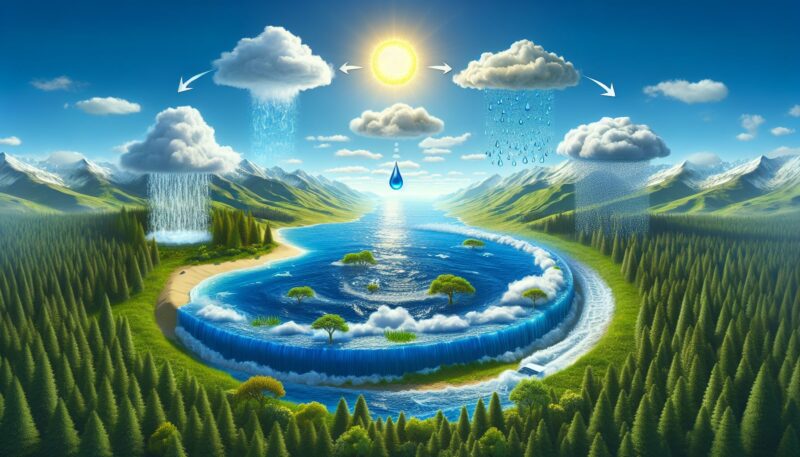
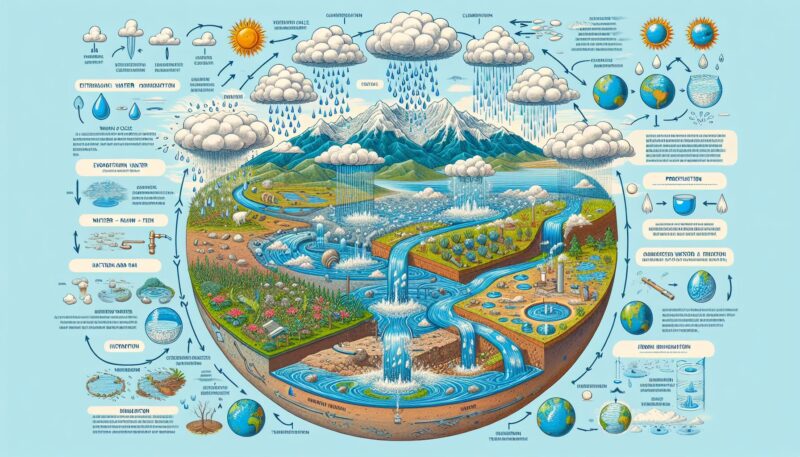
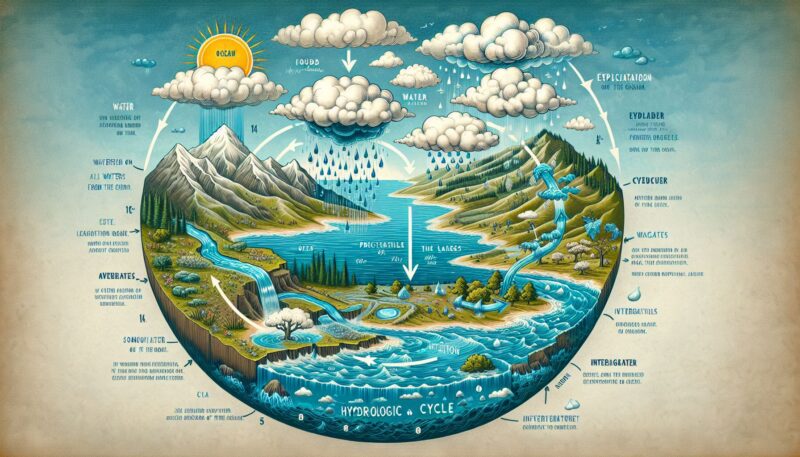
The hydrologic cycle is composed of six main processes: evaporation, transpiration, condensation, precipitation, infiltration, and runoff. Together, these elements move water through various states and locations, ensuring that it is renewed and redistributed in a balanced manner.
Evaporation
Evaporation is the transformation of water from a liquid to a gas. It occurs when the sun heats the surface of bodies of water like oceans, lakes, rivers, and also from the ground. This process is the primary pathway through which water enters the atmosphere, and plays an essential role in regulating Earth’s temperature.
Transpiration
Plants contribute to the water cycle too. Transpiration is the process by which moisture is carried from the roots to small pores on the underside of leaves, where it changes to vapor and is released into the atmosphere. Transpiration and evaporation combined are referred to as evapotranspiration.
Condensation
Condensation is the process by which water vapor in the air is changed into liquid water. This is the opposite of evaporation. Condensation results in the formation of clouds, which are an essential component in the precipitation process.
Precipitation
After condensing, water falls from the atmosphere back to the surface of the Earth in various forms, including rain, snow, sleet, or hail. Precipitation is a crucial phase in the water cycle as it is the primary method by which water is delivered from the atmosphere to the Earth’s surface.
Infiltration
Once precipitation hits the Earth’s surface, it either remains on the surface or is absorbed into the soil through a process called infiltration. The rate at which water infiltrates into the soil depends on various factors, such as soil type, vegetation cover, topography, and the presence of soil moisture from previous rainfalls.
Runoff and Streamflow
Water that does not infiltrate into the ground becomes runoff, flowing horizontally across land and accumulating in rivers, streams, or lakes. Streamflow is the actual flow of water in streams and rivers, moving towards lakes, seas, or oceans. It is a vital component that shapes the Earth’s landscape through erosion and deposition.
Interaction with Other Earth Systems
Groundwater and Aquifers
A significant part of the hydrologic cycle involves the interaction with groundwater systems. Some of the water that infiltrates the soil percolates deeper to replenish underground stores of water known as aquifers. These can be tapped into for agricultural, industrial, and domestic use.
Baseflow
Baseflow is another crucial component of the hydrologic cycle. It refers to the portion of the river or stream’s flow that is sustained by groundwater seepage into the channel, providing a continuous flow even during dry periods.
Watershed Dynamics
The areas of land that catch precipitation and contribute runoff to a particular river, stream, or body of water are known as watersheds or catchments. Every watershed is an individual, interconnected water system, playing a specific role in the broader hydrologic cycle.
Human Influence and Impact
Water Pollution and Quality
Human activities significantly influence the hydrologic cycle, particularly in terms of water quality. Water pollution occurs when harmful substances—like heavy metals, nutrients, pathogens, and microplastics—end up in water bodies, negatively impacting ecosystems and human health.
Climate Change
Climate change, driven by human-induced greenhouse gas emissions, is altering the hydrologic cycle, leading to changed precipitation patterns, melting glaciers, rising sea levels, more intense droughts, and increased flood risks.
Water Management
Water resources need to be appropriately managed to ensure availability and quality. Strategies in water treatment, conservation, and sustainable usage are necessary to maintain the hydrologic cycle’s balance.
The Central Role of the Hydrologic Cycle in Our World
Water might seem like a limitless resource, yet the truth is that the freshwater that sustains life on Earth is part of a delicately balanced cycle. Understanding and respecting the hydrologic cycle’s dynamics are crucial for securing clean water for future generations, supporting biodiversity, and mitigating the effects of climate change.
Sources
- Gleick, P. H. (1993). Water in Crisis: A Guide to the World’s Fresh Water Resources. Oxford University Press.
- United States Geological Survey (USGS). The Water Cycle. USGS Water Science School.
- World Meteorological Organization (WMO). (2021). The State of the Global Water Cycle. WMO-No. 1264.