Water is the lifeblood of our planet, shaping landscapes, fueling ecosystems, and sustaining both human civilization and all known forms of life. The journey water takes as it flows through its various states and landscapes is known as the hydrologic cycle – a process so crucial that without it, Earth would be devoid of its lush biodiversity and human existence. In this bold exploration, we delve into each stage of the hydrologic cycle, revealing its complexities and the essential role it plays in maintaining the balance of our planet’s hydrosphere.
What is the Hydrologic Cycle?
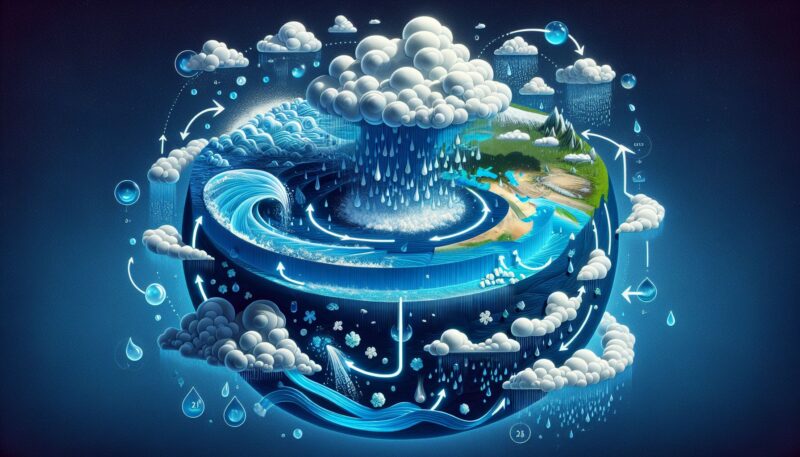
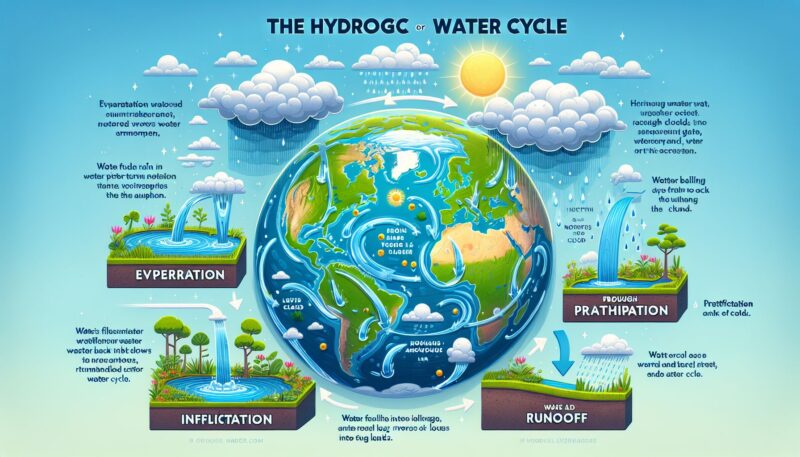
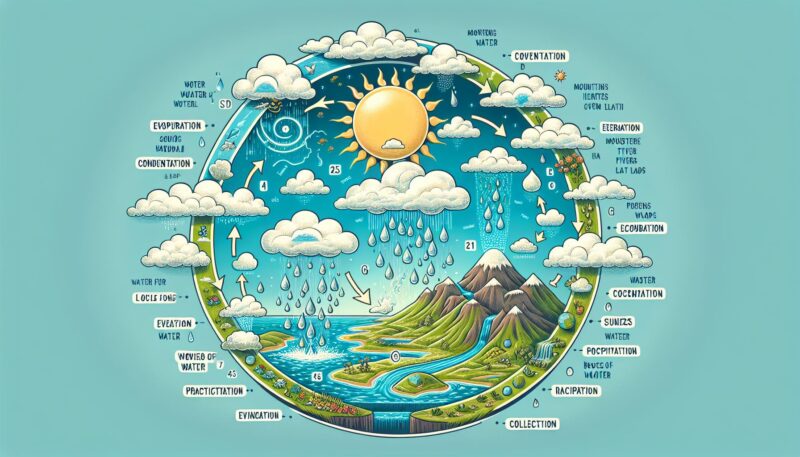
The hydrologic cycle, also known as the water cycle, describes the continuous movement of water on, above, and below the surface of the Earth. Driven by the sun’s energy, it is a natural sequence of processes including evaporation, condensation, precipitation, infiltration, percolation, runoff, and transpiration.
Evaporation
Evaporation is the process through which water changes from a liquid to a gas, called water vapor. Energy from the sun heats the water in rivers, lakes, and oceans, giving molecules enough speed to escape the surface and rise into the atmosphere.
Transpiration
Transpiration is similar to evaporation, but it specifically involves the loss of water from plants. Water absorbed from the ground travels through plants and escapes from small openings in the leaves called stomata. Combined, evaporation and transpiration are referred to as evapotranspiration.
Condensation
As water vapor rises, it cools and loses energy. When it reaches saturation, vapor condenses into tiny droplets of liquid water, forming clouds. This process is the reverse of evaporation.
Precipitation
When these droplets coalesce into larger droplets, they fall to the Earth due to gravity in the form of precipitation – rain, snow, sleet, or hail.
Infiltration and Percolation
Some of the precipitation soaks into the ground, a process known as infiltration. The water then moves downward through the soil in a process called percolation, replenishing groundwater and aquifers.
Runoff
Water that doesn’t infiltrate the ground surface flows as runoff into nearby bodies of water like streams, rivers, and lakes. Runoff also transports nutrients and pollutants to larger water bodies.
Baseflow and Streamflow
Groundwater seeps back into rivers through a process called baseflow, contributing to streamflow – the flow of water in streams and rivers.
Discharge – Groundwater and Surface Water Exchange
Groundwater discharge is the movement of water from the ground to the surface, contributing to streams, rivers, and oceans. Conversely, water from these surfaces can recharge groundwater supplies.
Why the Hydrologic Cycle Matters
The hydrologic cycle is integral to the functioning of Earth’s climate system. It regulates temperature, transports nutrients, replenishes freshwater supplies, and is involved in nearly every natural and biological process.
The cycle is intricately linked to weather patterns and climate change. For example, as Earth’s atmosphere warms due to climate change, it holds more moisture, leading to changes in precipitation, more extreme storms, and altered groundwater recharge rates.
Importance of Groundwater
Groundwater holds a vital but often overlooked position in the hydrologic cycle. It acts as a massive subterranean reservoir that buffers the supply of water to streams, rivers, and lakes during dry periods. Aquifers – underground layers of rock saturated with groundwater – are critical sources for human consumption, agriculture, and industry.
Basin Dynamics
A watershed, or drainage basin, is the land area that funnels water to a common outlet like a river or lake. Understanding the interplay of various parts of the hydrologic cycle within a watershed is key to managing water resources and predicting the impact of human activities and natural changes.
The Ocean’s Role
The ocean is the final destination for many paths of the hydrologic cycle, holding about 97% of Earth’s water. The exchange between the ocean and atmosphere influences climate patterns like El Niño and the distribution of marine and terrestrial life.
Human Interactions with the Hydrologic Cycle
Human activities have a profound influence on the hydrologic cycle. From altering the landscape through urban development to affecting the climate through greenhouse gas emissions, our impact on this delicate system can lead to resource depletion, water pollution, and exacerbate conditions such as drought and flood.
Water Quality and Pollution
One of the most pressing concerns is water quality. Pollutants like heavy metals, nutrients, pathogens, and microplastics can enter the cycle through agricultural runoff, industrial discharge, and inadequate waste management. Water pollution affects human health, harms wildlife and can lead to ecosystem disruptions like eutrophication and algal blooms.
Water Scarcity and Stress
Water scarcity, a situation where the demand for water exceeds the available amount, affects large swaths of the global population. It is often a result of overuse, pollution, and inefficient management. Similarly, water stress occurs when the quality or quantity of water is insufficient to meet human and environmental needs.
Addressing Water Challenges
Addressing the challenges posed by water scarcity, pollution, and stress requires a multifaceted approach. Solutions include water treatment technologies, efficient water use and distribution systems, and strategies for water conservation.
Water Treatment Technologies
Advanced technologies for treating water, such as reverse osmosis, coagulation, flocculation, and sedimentation, are essential to providing safe drinking water. Disinfection methods like chlorination, ozonation, and UV irradiation help eliminate pathogens.
Water Conservation
Conservation strategies, including rainwater harvesting, greywater reuse, and the reduction of water footprints, are critical to sustainable water management. Education about the water cycle also plays a vital role in helping individuals and communities make informed decisions.
Policy and Management
Governments and organizations worldwide are implementing policies to conserve and manage water resources effectively. Water diplomacy and conflict resolution are becoming increasingly important as climate change and population growth intensify competition for water.
Sources of Information and Further Reading
To expand on the complexities of the hydrologic cycle and its wider implications, readers might explore the following sources:
-
The United States Geological Survey (USGS) Water Science School provides detailed explanations and educational materials on various aspects of the hydrologic cycle: USGS Water Science School
-
The Environmental Protection Agency (EPA) offers resources on water conservation and protection, including strategies for maintaining water quality: EPA Water
-
The World Health Organization (WHO) provides guidelines and reports on water, sanitation, and health, addressing issues like water treatment and disease prevention: WHO Water, Sanitation and Health
The hydrologic cycle is an extraordinary process, serving as the ecological and hydrological backbone of our planet. By understanding and respecting its intricacies and power, we can ensure that water remains a source of life and prosperity for generations to come.