Author: Tracy Castro

Understanding the Hydrologic Cycle: Earth’s Essential System of Water Movement

Water, a vital resource for all forms of life, sustains our environment in a myriad of ways. It nurtures ecosystems, supports agriculture, and provides for our daily needs. Yet, its journey across the planet is something that many of us take for granted. In this article, we will delve deep into the hydrologic cycle, a complex system that circulates water around our planet. By exploring each component from evaporation to precipitation, and gaining insights into the underlying processes, we will appreciate how this cycle plays a crucial role in the sustenance of life and the health of our environment.

Defining the Hydrologic Cycle

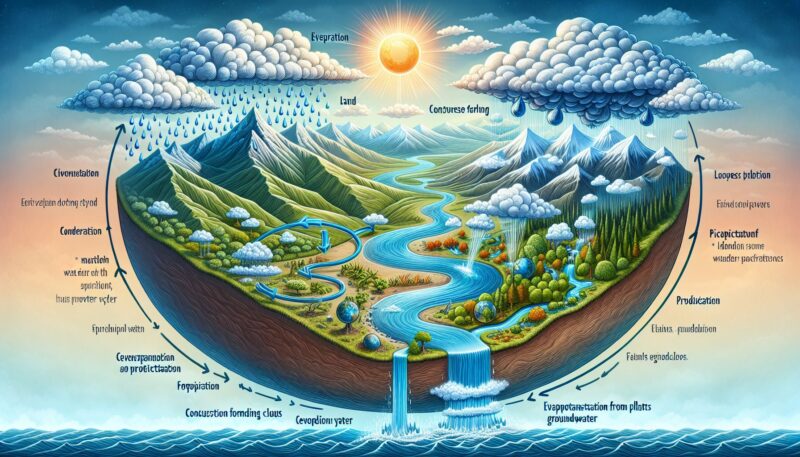
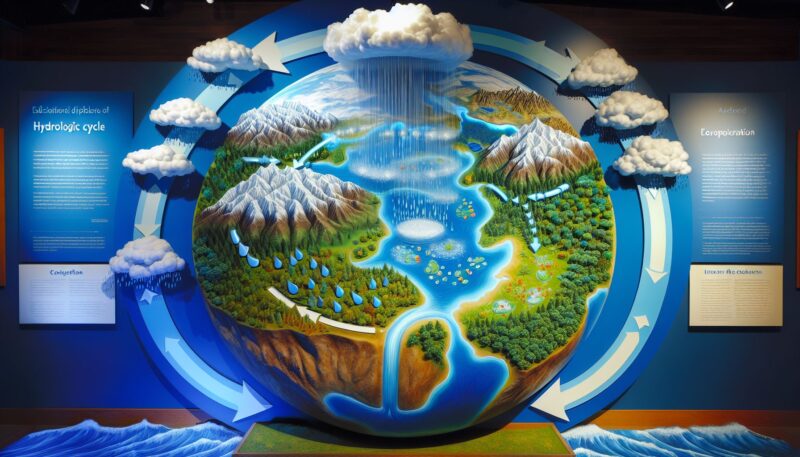
The hydrologic cycle, also known as the water cycle, describes the continuous movement of water on, above, and below the surface of the Earth. It’s a closed system meaning that the total amount of water does not change, but it is redistributed in various forms — liquid, solid, and gas — through different processes such as evaporation, condensation, and precipitation.

Evaporation and Transpiration

Evaporation is the process where water changes from a liquid to a gas, due to heat from the sun. Water bodies like oceans, lakes, and rivers provide the majority of the water vapor in the air as a result of evaporation. Transpiration occurs when plants release water vapor into the air from their leaves, an essential part of their respiratory process. Combined, evaporation and transpiration are referred to as evapotranspiration.

Condensation and Precipitation

As water vapor rises into the atmosphere, it cools and condenses, forming clouds. These clouds are made up of tiny water droplets or ice crystals. When these droplets combine and grow large enough, they fall to the ground as precipitation — which can be in the form of rain, snow, sleet, or hail.

Infiltration, Percolation, and Runoff

Once precipitation hits the land, it either infiltrates the soil or flows on the surface as runoff. Infiltration is the process wherein water soaks into the soil and is then subject to percolation, where the water moves downward through soil and rock layers. Runoff, on the other hand, occurs when the soil is saturated with water, or when precipitation falls too quickly to be absorbed. Runoff contributes to the water found in streams, rivers, and lakes.

Groundwater and Aquifers

Water that infiltrates the soil can become groundwater, which is stored in the small spaces within soil and rock. Sometimes, this water is stored in large underground reservoirs known as aquifers. Aquifers are critical sources of freshwater for many regions.

Recharge and Discharge

Recharge is when water from precipitation and runoff permeates through the ground to refill aquifers. Discharge, conversely, is when groundwater flows out of the aquifer, typically into a surface water body such as a stream, river, or ocean.

The Importance of the Hydrologic Cycle

The hydrologic cycle is essential for redistributing fresh water across the globe, which supports all life forms. It’s a driver for weather and climate patterns and is responsible for delivering fresh water to ecosystems that rely on a constant supply for survival.

Weather and Climate

Weather patterns are significantly influenced by the hydrologic cycle. The release of heat during condensation can drive weather systems, and the distribution of precipitation affects global climate zones.

Ecosystems and Biodiversity

Different stages of the cycle create diverse habitats. For instance, wetlands, rivers, and lakes are each defined by unique water processes, and these ecosystems are home to an array of species that have adapted specifically to these conditions.

Human Impact and Challenges

Human activities have dramatically affected the hydrologic cycle. Climate change is disrupting this balance, leading to more extreme weather, shifts in precipitation patterns, and increasing global temperatures. Besides, activities like deforestation and urbanization change land surfaces and can reduce infiltration, increase runoff, and lead to soil erosion.

Water Pollution

Pollutants from industry, agriculture, and urban areas can contaminate water sources. Nutrients from fertilizers can lead to eutrophication and algal blooms in lakes and rivers, reducing water quality and killing aquatic life due to depleted oxygen levels.

Water Scarcity and Water Stress

As the global population grows, so does the demand for water. Overuse and pollution have led to water scarcity in many parts of the world. Water stress occurs not only where water is scarce but also where the quality or delivery infrastructure is inadequate.

Solutions and Innovations

Despite the challenges, various solutions aim to manage and protect the water cycle.

Water Conservation and Sustainable Use

Water-saving technologies and strategies for industrial, agricultural, and domestic use can help reduce water waste. Rainwater harvesting and greywater reuse are examples of conservation practices that help mitigate water scarcity.

Water Treatment and Pollution Control

Advanced water treatment technologies like reverse osmosis and UV irradiation purify water making it safe for consumption. Stricter regulations and best practices in agriculture and industry can prevent pollutants from entering waterways.

Climate Change Mitigation

Efforts to reduce greenhouse gas emissions and increase carbon capture can help stabilize climate patterns and maintain the integrity of the hydrologic cycle.

Conclusion

The hydrologic cycle is a fundamental yet complex system that ensures water, a precious resource, is continually redistributed throughout the environment. Its unending motion provides for ecosystems, weather patterns, and human needs, but it also faces threats from human activities. Understanding this cycle and our place within it is crucial to managing our water resources responsibly and ensuring a sustainable future for all forms of life on our planet.

Sources

  1. United States Geological Survey (USGS) – The Water Cycle
  2. Environmental Protection Agency (EPA) – Nutrient Pollution
  3. World Meteorological Organization (WMO) – Hydrology and Water Resources Programme

Remember, this intricate dance of water across our world is something to cherish, protect, and respect. Our lives, and those of future generations, depend on it.
Understanding the Hydrologic Cycle: The Lifeline of Our Hydrosphere

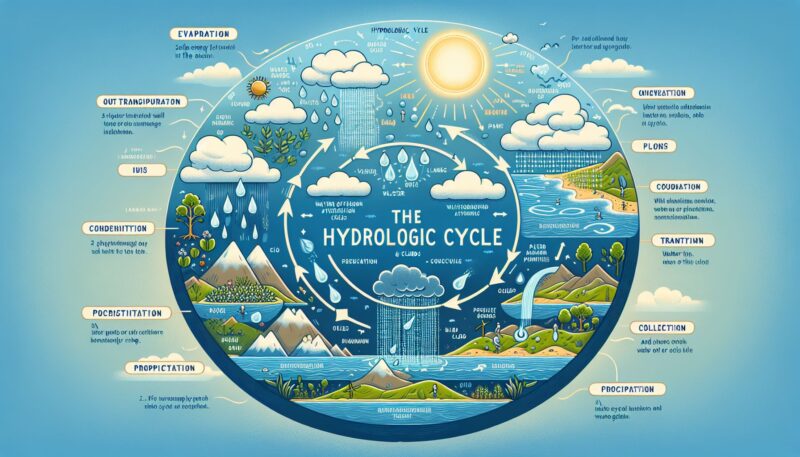
Water is the elixir of life. It shapes our world in countless ways, most of which we hardly ever pause to think about. The journey of a single drop of water might start and end in the vast expanse of the ocean. But as it travels through Earth’s diverse systems, it unveils the marvels of the hydrologic cycle. The hydrologic cycle, often referred to as the water cycle, is a fundamental process sustaining life on our planet. It involves various phases including evaporation, transpiration, condensation, precipitation, infiltration, percolation, and runoff. This cycle does more than just quench our thirst; it affects climate patterns, shapes landscapes, and maintains ecosystems.

Phases of the Hydrologic Cycle

The hydrologic cycle is a continuous process that can be observed everywhere: from the tiny water droplets on leaves to the grandeur of ocean currents. To appreciate its complexity and grand scale, let’s take a closer look at the individual processes.

Evaporation

Evaporation is the transformation of water from a liquid to a gas. Sunlight heats the water in oceans, rivers, lakes, and even moist soil, allowing molecules to escape into the air as water vapor. It is a crucial first step, accounting for 86% of global evaporation occurring from the oceans.^[1]^

Transpiration

Closely linked to evaporation is transpiration – where water within plants evaporates into the atmosphere from the surface of leaves, stems, and flowers. This less visible but significant phase is often combined with evaporation and termed “evapotranspiration.”

Condensation

As water vapor rises, it cools and condenses into tiny droplets, forming clouds. Condensation is the process responsible for this phase change from a gas back to a liquid, which prepares the water to return to the earth’s surface.

Precipitation

When the droplets in clouds combine to become heavier, they fall to Earth due to gravity, in forms ranging from rain and snow to sleet or hail – a process known as precipitation.

Infiltration and Percolation

As precipitation reaches the land, some of it infiltrates the soil, seeping down through the earth’s layers in a process known as percolation, becoming part of the groundwater system.

Runoff and Streamflow

Not all water is absorbed by the soil; some flows across the surface, a process known as runoff. Runoff contributes to streamflow, which feeds into rivers and lakes, and eventually returns to the oceans.

Groundwater and Baseflow

Part of the infiltrated water becomes groundwater, which travels through aquifers – rock formations capable of storing and transmitting water. Eventually, this groundwater contributes to baseflow, which sustains river flow during periods without rainfall.

Interaction with the Oceans

The seas are where our hydrologic cycle stories often start and end. Oceans store major volumes of the Earth’s surface water and act as the primary source of evaporation, while also receiving water from rivers and precipitation.

Observing all these processes, we see a remarkable, coordinated system. However, it’s not just about water moving around. It’s about energy transfer, climate regulation, and life support.

Why the Hydrologic Cycle Matters

Beyond its climatic influence, the hydrologic cycle is intrinsically linked with critical environmental and societal issues.

Water Scarcity and Distribution

Although our planet has plenty of water, the distribution is uneven, leading to water scarcity in some regions. Less than 1% of the world’s water is fresh and accessible.^[2]^ The hydrologic cycle affects where and how this fresh water is replenished, which is why understanding it is essential for managing water resources.

Water Quality and Ecosystem Health

As water moves through the cycle, it picks up pollutants, affecting the quality and health of ecosystems. Assessing and improving water quality are constant challenges addressed by environmental management strategies and water treatment processes.

Disaster Management

Extreme weather events, such as floods and droughts, are direct outcomes of disruptions in the hydrologic cycle. Effective land and water management can mitigate their impact, saving lives, and reducing economic losses.

Climate Change Connections

Finally, the hydrologic cycle is a critical component of our planet’s climate system. As global temperatures rise, the cycle intensifies, potentially leading to more extreme weather events.^[3]^

Human Influence on the Hydrologic Cycle

Human activities have profound impacts on the hydrologic cycle. Land development changes the landscape, often reducing infiltration and increasing runoff, which can lead to flash flooding. Agriculture, industry, and urbanization contaminate water sources with pollutants like nutrients, pathogens, and heavy metals, disrupting the natural filtration processes within the cycle.

Water Management Strategies

To counterbalance our impact on the hydrologic cycle, we turn to water management strategies. This is where concepts like recharge, discharge, and controlled use of aquifers come in.

Recharge

Recharge refers to the process of adding water back to an aquifer, typically through rainfall or artificially, via methods like recharge basins or injection wells.

Discharge

Discharge is the natural or artificial removal of water from an aquifer. It includes water flowing from springs, pumped for human use, or transferred through tree roots in transpiration.

Strategic recharge and discharge management is crucial for sustainable water use, ensuring that aquifers are not depleted.

Tools and Technologies for Water Stewardship

Amid growing concerns about water resources, technologies for monitoring and managing the water cycle are crucial. Innovations include satellite-based remote sensing for monitoring snowpack and glaciers, advanced treatment processes for maintaining water quality, and smart meters and sensors aiding in leak detection and water conservation.

Water Treatment

Treatment technologies like coagulation, flocculation, filtration, and disinfection ensure safe drinking water by removing contaminants. Advanced treatments, such as ozonation, UV irradiation, and reverse osmosis, are employed for more challenging impurities, including microplastics and dissolved organics.

Water Conservation

Conservation efforts often focus on reducing usage and waste. Techniques like rainwater harvesting, greywater reuse, and efficient irrigation systems support this effort, lessening the demand on conventional water sources and reducing the burden on the hydrologic cycle.

Conclusion

Understanding the hydrologic cycle is not just an academic pursuit; it’s a fundamental aspect of coping with the environmental challenges of the 21st century. As we confront issues like water scarcity, pollution, and climate change, our grasp on this complex system will determine how we safeguard our most precious resources.

It is our collective responsibility to steward the cycle effectively, ensuring clean, ample water for ecosystems, communities, and future generations. Only through informed management, innovative technology, and global cooperation can we maintain the balance of Earth’s lifeline – the wondrous and all-encompassing hydrologic cycle.


^[1]^ “The Water Cycle.” United States Geological Survey (USGS). https://www.usgs.gov/special-topic/water-science-school/science/water-cycle
^[2]^ “The World’s Water.” Pacific Institute. http://www.worldwater.org/
^[3]^ Trenberth, K. E., et al. “Changes in precipitation with climate

The Hydrologic Cycle: Understanding Earth’s Lifeline

Water is the foundation of life on Earth, and its continuous movement between the atmosphere, land, and oceans – known as the hydrologic cycle – plays a critical role in sustaining ecosystems, shaping landscapes, and supporting human civilizations. This article delves into the intricacies of the hydrologic cycle, a remarkable natural process that has fascinated scientists and laypersons alike.

The Essence of the Hydrologic Cycle

The hydrologic cycle, also commonly referred to as the water cycle, describes the ceaseless circulation of water as it rises from the earth’s surface, travels through the atmosphere, and returns to the surface once more. This complex system is driven by solar energy and involves several processes, including evaporation, transpiration, condensation, precipitation, infiltration, percolation, runoff, and streamflow.

Evaporation and Transpiration: The Upward Journey

Evaporation is the process by which liquid water is transformed into water vapor, usually due to heat from the sun. This invisible vapor rises into the atmosphere, sourcing primarily from bodies of water like rivers, lakes, and oceans. However, there is also transpiration, which is the release of water vapor from plant leaves. Together, evaporation and transpiration (often combined into the term “evapotranspiration”) constitute a significant component of the upward movement of water.

Condensation: Cloud Formation and Beyond

As water vapor ascends, it cools and condenses into tiny droplets, forming clouds in the process. This transition from a gaseous to a liquid state is a key phase in the hydrologic cycle and sets the stage for precipitation.

Precipitation: The Descent of Water

Precipitation occurs when those droplets coalesce into larger ones that can no longer remain aloft. Gravity pulls them down as rain, snow, sleet, or hail. Once it hits the ground, precipitation either soaks into the soil or becomes surface runoff, eventually reaching various water bodies or re-entering the atmosphere through evaporation.

Infiltration, Percolation, and the Journey Underground

When water from precipitation permeates the soil, it’s known as infiltration. As it moves deeper, it may continue to percolate through layers of earth and rock until it replenishes groundwater in aquifers — a vital source of fresh water for ecosystems, agriculture, and human consumption.

Runoff and Streamflow: Water on the Move

Surface water that does not infiltrate the ground becomes runoff, flowing across the landscape until it reaches streams, rivers, or lakes. Streamflow describes the movement of water within these watercourses, and it can vary greatly depending on a multitude of factors, including weather, topography, and human intervention.

The Unseen Journey: Groundwater and Aquifers

Groundwater is the water found beneath the earth’s surface in soil pore spaces and within the fractures of rock formations. It forms aquifers that act as natural storage reservoirs which can be tapped for agricultural, industrial, and drinking purposes. Groundwater moves in response to gravity and pressure, eventually discharging into springs, rivers, or oceans.

The Recharge and Discharge Cycle

Aquifers are replenished by the process of recharge, where water from precipitation and runoff percolates down through soil and rock. Discharge, on the other hand, is the natural outflow of groundwater to the surface, maintaining river flows and ecosystems during periods of low precipitation.

Critical Zones: Watersheds and Catchments

A watershed, also known as a drainage basin or catchment, is an area of land where all precipitation collects and drains off into a common outlet, such as a river, bay, or other body of water. The health and sustainability of watersheds are essential for preserving biodiversity, supporting agriculture, and providing clean water.

The Vitality of Rivers, Lakes, and Wetlands

Rivers are the flowing networks of the hydrologic cycle, transporting water from headwaters to oceans. Alongside them are lakes, which may serve as reservoirs for fresh water, and wetlands, which act as natural water filters and habitats for diverse species.

Where Fresh and Saltwater Meet: Estuaries and Oceans

Estuaries, the places where rivers meet the sea, are dynamic environments where freshwater from rivers mixes with saltwater from oceans. Oceans, covering over 70% of Earth’s surface, are the principal storehouses of water and play a crucial role in regulating the global climate by absorbing heat and carbon dioxide.

The Frozen Components: Glaciers, Icebergs, and Permafrost

Not all water in the cycle is liquid. Glaciers and icebergs represent vast, solid reservoirs of freshwater, while permafrost consists of permanently frozen soil that holds additional water. These frozen components impact sea levels and, as they melt due to global warming, reveal the profound influence of the hydrologic cycle on climate change.

Monitoring Snowpack and Water Quality

Snowpack, the accumulation of winter snowfall, is an important source of spring and summer water when it melts. Water quality, meanwhile, assesses the suitability of water for various uses, affected by factors like pH, salinity, turbidity, and the presence of nutrients, pathogens, and pollutants.

The Threat of Water Pollution and Eutrophication

Water pollution, arising from contaminants like heavy metals, microplastics, and chemicals, poses a serious risk to ecosystems and human health. Eutrophication, driven by excess nutrients in water bodies, can lead to algal blooms and depleted dissolved oxygen, harming aquatic life.

Water Treatment and Distribution: Ensuring Access to Clean Water

Water treatment involves a series of processes — including coagulation, flocculation, sedimentation, filtration, and disinfection — to make water safe for consumption. Technologies like reverse osmosis and desalination are used to treat saline water, making it potable or suitable for irrigation. These treated waters are then distributed via a network of pipes, pumps, and water towers to reach consumers.

Conservation and the Future of Water

Water conservation is the careful management and use of water resources to ensure long-term sustainability. Strategies such as rainwater harvesting, greywater reuse, and reducing water footprints are growing in importance as the world confronts challenges like water scarcity, water stress, droughts, and the impacts of climate change.

Navigating Conflicts and Fostering Diplomacy

As a vital resource, water can also be a source of conflict, particularly in regions where it is scarce. Water diplomacy seeks to prevent and resolve conflicts over water resources, promoting cooperation and sustainable management across borders.

The Cycle Continues

The hydrologic cycle is a testament to the interconnectivity of natural systems. Its function impacts weather patterns, landscape formations, and the availability of water for all forms of life. Understanding and protecting this cycle is crucial, not just for sustaining ecosystems but for preserving human existence as we know it.

To explore further details about the hydrologic cycle and its components, consult the following sources:

  1. United States Geological Survey (USGS) – The Water Cycle: usgs.gov/special-topic/water-science-school/science/water-cycle

Unveiling the Mysteries of Groundwater: Earth’s Hidden Resource

Groundwater is a term that many of us have come across, but its significance and the complexities that govern its behavior are often overlooked or misunderstood. Yet, this invisible resource is a crucial component of our planet’s water supply, supporting ecosystems, agriculture, and human populations alike. In this comprehensive exploration, we will delve into the multifaceted world of groundwater – from its origins and movements to the myriad challenges it faces and the innovative solutions to conserve it.

Understanding Groundwater

The Basics of Groundwater

Groundwater is water that fills the cracks and spaces in soil, sand, and rock beneath the Earth’s surface. It originates from rain and snowmelt that seeps into the ground—a process known as infiltration. Once underground, water continues to move, albeit more slowly than on the surface, and can seep through the ground to replenish rivers and lakes.

Aquifers: The Storage Units of Groundwater

Aquifers are geologic formations that can store, transmit, and yield significant amounts of water. They are the proverbial water tanks beneath our feet. There are two main types of aquifers:

  • Confined Aquifers: Enclosed by impermeable rock or clay, which impedes water from seeping into them from the ground surface directly above. These aquifers are often under pressure, which can cause water to rise above the top of the aquifer when tapped by a well—a phenomenon known as artesian pressure.

  • Unconfined Aquifers: These have a permeable layer above them and can readily recharge from the surface. They are more susceptible to contamination and changes in climate or land use.

Recharge and Discharge: The Lifeline of Aquifers

Recharge occurs when water from precipitation, rivers, or lakes seeps down into the aquifers. This process can take place over broad areas or be focused around specific locations such as riverbeds.

Discharge, on the other hand, is the natural or human-induced process where water is removed from an aquifer, such as through springs, extraction by wells, or baseflow into rivers.

The Journey of Groundwater

Infiltration and Percolation: From Surface to Aquifer

After rain falls, some of it naturally infiltrates the ground, traveling through layers of soil and rock in a process called percolation. The speed and effectiveness of this journey depend heavily on the permeability of the underlying materials. This water eventually finds its way into aquifers, where it can be stored for lengthy periods – in some cases, thousands of years.

The Connection to Surface Water

Groundwater does not remain secluded underground. It is inherently linked to the surface waters, feeding springs and contributing to the baseflow of streams and rivers during dry periods. This connection is vital for maintaining flows in many surface water bodies, especially during droughts.

Threats to Groundwater

The hidden nature of groundwater makes it easy to overlook its vulnerability. Here are some of the major threats to this precious resource:

Over-extraction

The rate of groundwater extraction can exceed its natural recharge rate, leading to declining water levels, reduced streamflows, and in extreme cases, land subsidence. Over-extraction can also lower the water table to such an extent that it becomes economically impractical to pump.

Contamination

Groundwater is susceptible to various forms of pollution:

  • Nutrients: Over-application of fertilizers can lead to nitrate pollution.

  • Pathogens: Malfunctioning septic systems can release bacteria and viruses into the groundwater.

  • Heavy Metals: Mining activities and natural deposits can leach metals like arsenic and lead into aquifers.

  • Industrial Chemicals: Spills and improper disposal practices can contaminate groundwater with a range of harmful compounds.

Climate Change and Groundwater

Climate change is expected to impact groundwater systems in numerous ways. Changes in precipitation patterns can alter recharge rates, while increased temperatures may intensify evapotranspiration, reducing the water available to seep into the ground.

Groundwater Management and Protection

To address the challenges facing groundwater, several approaches have been developed:

Integrated Water Resource Management (IWRM)

IWRM advocates for the coordinated management and development of water, land, and related resources to maximize economic and social welfare without compromising the sustainability of ecosystems. IWRM entails understanding the water cycle as a whole, including groundwater.

Conservation and Sustainable Use

This principle urges the adoption of water-saving technologies, the implementation of conservation practices such as crop rotation and reduced irrigation, and the sensible allocation of groundwater rights.

Pollution Control Measures

Regulations and enforcement are crucial to preventing the contamination of groundwater. Strategies include establishing protection zones around wells, enforcing safe disposal practices for chemicals and waste, and monitoring potential pollution sources.

Artificial Recharge

In areas where natural recharge is insufficient, artificial recharge techniques, such as injection wells and managed aquifer recharge (MAR), can be used to replenish aquifers.

Groundwater Monitoring

Ongoing monitoring is necessary to understand the state and trends of groundwater systems. This involves tracking water levels, quality, and extraction rates to inform management decisions.

Conclusion

Groundwater is a hidden treasure that supports life in innumerable ways, yet it is under threat from overuse and contamination. A sustainable future for groundwater requires a concerted effort by individuals, communities, and governments to protect and manage this vital resource responsibly. As we continue to rely on groundwater for our diverse needs, awareness of its importance, and the challenges it faces, must be a priority to ensure that future generations inherit a world where groundwater remains an abundant, clean, and reliable source of water.

Sources

  1. “Groundwater,” US Geological Survey,
  2. “Global Groundwater Overview,” United Nations Educational, Scientific and Cultural Organization (UNESCO),
  3. “Guidelines for Recharge and Infiltration,” Environmental Protection Agency (EPA),