Category: Main

Understanding the Hydrologic Cycle: Earth’s Vital Water Engine

Water is the lifeblood of our planet, flowing through various stages from the depths of the ocean to the peak of the highest mountains. The hydrologic cycle, an essential Earth system, continuously moves water within the hydrosphere, through the atmosphere, and across the land, supporting all forms of life. This article dives deep into the fascinating dynamics of the hydrologic cycle, its components, and its profound significance to our world’s ecology and human societies.

The Hydrologic Cycle: An Overview

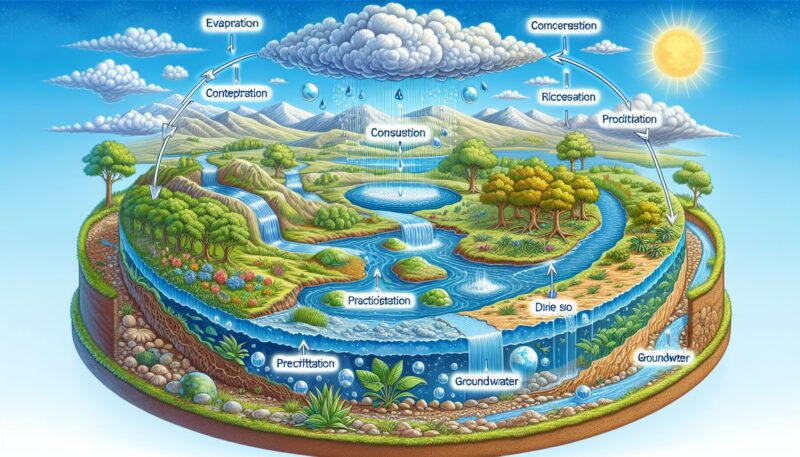
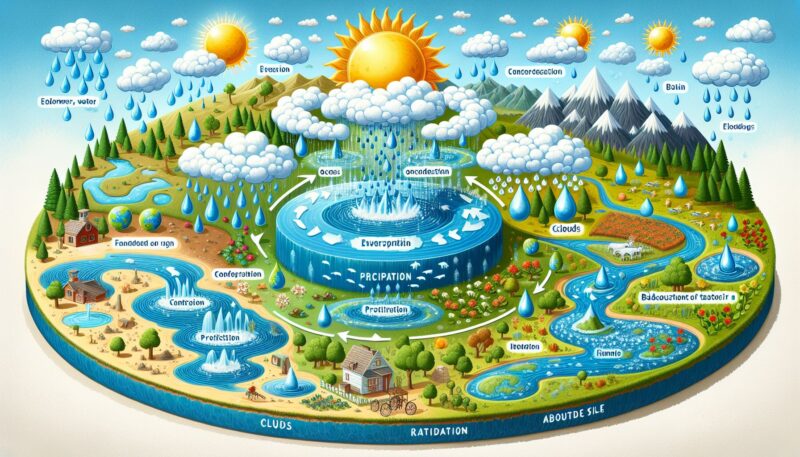
The hydrologic cycle, also known as the water cycle, is the continuous circulation of water throughout Earth’s systems. It encompasses several processes, including evaporation, transpiration, condensation, precipitation, infiltration, percolation, runoff, and subsurface flow. These processes interlink the oceans, atmosphere, and land, and are energized by solar radiation and gravitational forces.

Evaporation

Evaporation is the transformation of water from liquid to vapor form. The Sun’s heat energy causes water in rivers, lakes, and oceans to vaporize into the atmosphere, leaving behind salts and impurities.

Transpiration

Transpiration refers to the process by which plants absorb water through roots and then emit water vapor from their leaves. This aspect of the cycle is a crucial element of the planet’s water regulation as well as a key component of plant physiology.

Condensation

Condensation is the change of water vapor into liquid water as it cools in the atmosphere, forming clouds and fog. This process is essential for precipitation to occur.

Precipitation

Precipitation encompasses all forms of water, liquid or frozen, falling from clouds. It includes rain, snow, sleet, and hail. Precipitation replenishes fresh water in the land and is a primary water source for humans and ecosystems.

Infiltration and Percolation

When water reaches the ground, it infiltrates the soil, and some of it percolates down to replenish groundwater systems. These processes are central for sustaining groundwater-fed streams and rivers during dry periods.

Runoff

Runoff occurs when water flows over the land’s surface towards rivers, lakes, or the sea. It can cause erosion and transport nutrients and pollutants from the land to water bodies.

Subsurface Flow

Also known as baseflow, subsurface flow is the movement of water in the soil and underlying geologic formations. It’s a critical contributor to maintaining river flow during periods without rain.

The Crucial Role of Groundwater

Groundwater is water located beneath the Earth’s surface in soil pore spaces and in the fractures of rock formations. An aquifer is a body of saturated rock through which water can easily move. Groundwater enters an aquifer through the process of recharge and exits through discharge, either naturally at springs or artificially via wells. It plays a monumental role in providing fresh water for various needs and acts as a buffer against drought.

Watersheds and Their Significance

A watershed, also known as a catchment or drainage basin, is a land area that channels rainfall and snowmelt to creeks, streams, and rivers, and eventually to outflow points such as reservoirs, bays, and the ocean. Watersheds not only supply our drinking water and irrigation but also house complex ecosystems with diverse flora and fauna.

Impact of Human Activities

Human activities greatly influence the hydrologic cycle. Urbanization, deforestation, and agriculture modify surface runoff, potentially increasing flood risks. Water pollution, resulting from the discharge of untreated wastewater, agricultural runoff, or industrial spills, can severely affect water quality.

Eutrophication and Algal Bloom

Excessive nutrients, primarily nitrogen and phosphorus, from fertilizers and sewage, can lead to eutrophication — a process that stimulates the growth of algae in water bodies. Algal blooms can deplete dissolved oxygen in the water, causing harm to aquatic life.

Water Treatment Technologies

To ensure that water is safe for human consumption and the environment, water treatment technologies such as reverse osmosis, filtration, chlorination, ozonation, and UV irradiation are employed to remove contaminants, pathogens, and to adjust water chemistry.

Water Conservation Measures

With growing concerns about water scarcity, water conservation practices like rainwater harvesting, greywater reuse, smart irrigation, and reducing water footprints have become crucial. Additionally, international efforts in water diplomacy aim to manage shared water resources and prevent water conflicts.

The Future of Earth’s Water

Climate change poses significant challenges to the hydrologic cycle. Altered precipitation patterns, melting glaciers, rising sea levels, and extreme weather events like droughts and floods are anticipated to become more frequent and intense.

To mitigate these impacts, global collaboration and local sustainable water management practices are imperative. For instance, green infrastructure solutions that mimic natural water cycles can improve urban watershed health, and advanced leak detection technologies in distribution networks can help save copious amounts of water.

Final Thoughts

Understanding the hydrologic cycle is more than an intellectual pursuit—it’s crucial for our survival and prosperity. By comprehending how water moves through the various stages of the cycle, we can make informed decisions on managing this essential resource.

Sources

  • “Fundamentals of Hydrology” by Tim Davie (Routledge)
  • National Oceanic and Atmospheric Administration (NOAA) – Water Cycle [https://www.noaa.gov/education/resource-collections/freshwater/water-cycle]
  • U.S. Geological Survey (USGS) – The Water Cycle [https://www.usgs.gov/special-topics/water-science-school/science/water-cycle]

Unveiling the Mysteries of the Hydrologic Cycle: Earth’s Vital Water Pathway

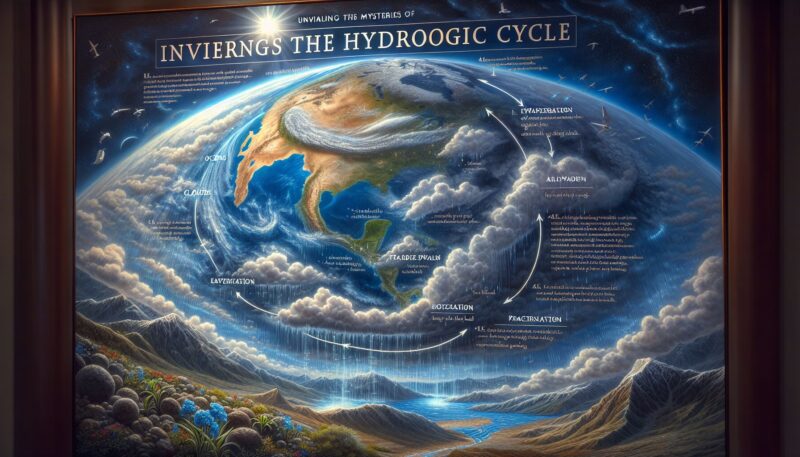
Hidden within the cycles of nature lies the hydrologic cycle, a complex and vital process that sustains life as we know it on planet Earth. This continuous system, driven by the energy of the sun, dictates the movement of water within the hydrosphere, encompassing all the waters of our planet. The hydrologic cycle exemplifies the intricate balance and interdependence of Earth’s water bodies – from the deepest aquifers to the expansive oceans. As an inconspicuous backdrop to human activity, it is both a scientific marvel and an essential resource management challenge.

What Is the Hydrologic Cycle?

The hydrologic cycle, also known as the water cycle, is a perpetual motion machine choreographed by the forces of nature. It showcases water’s journey as it circulates from the atmosphere to the Earth’s surface and back again. This cycle is pivotal for the sustenance of all ecological systems and for human survival.

The Stages of the Hydrologic Cycle

Evaporation

The saga of the hydrologic cycle begins with evaporation. Under the sun’s heat, water from the surface of rivers, lakes, and oceans turns into water vapor. Plants also contribute through transpiration, where water evaporates from leaves. Together, these processes charge the atmosphere with moisture.

Condensation

As water vapor ascends and cools in the atmosphere, it transforms into tiny droplets or ice crystals, forming clouds in a process known as condensation. This airborne water storage is a fundamental redistribution mechanism of the cycle.

Precipitation

When clouds become heavy, they release moisture in various forms of precipitation — rain, snow, sleet, or hail — depending on the atmospheric conditions. This phase completes the atmospheric leg of the journey, returning water to Earth’s surface.

Infiltration and Percolation

Upon reaching the ground, precipitation takes one of two paths: it either infiltrates the soil or becomes surface runoff. Infiltration soaks water into the ground, where it moves deeper through percolation, feeding aquifers and becoming groundwater.

Runoff and Streamflow

Alternatively, as runoff, water travels over the land, carving rivers and shaping landscapes, eventually joining lakes or the ocean. As part of streamflow, water’s movement is divided between runoff and baseflow (groundwater seeping into streams), dynamically linking land and sea.

Groundwater Flow

Invisible yet integral, groundwater traverses through soil and rock, emerging eventually to feed streams or as springs. This slow journey is a crucial part of the water cycle, often providing clean, filtered water.

Recharge and Discharge

Aquifers, nature’s underground storage systems, are replenished through recharge, as water percolates down. Discharge occurs when this water naturally flows out to springs or artificially through wells for human use.

Interconnection of Water Bodies

Water relentlessly cycles through different phases and locations — rivers, lakes, the atmosphere, glaciers, and underground reservoirs. This connectivity means changes in one area, like a polluted stream or a depleted groundwater reservoir, can have cascading effects across the entire cycle.

The Importance of the Hydrologic Cycle

The hydrologic cycle is not just a scientific curiosity; it underpins all aspects of life.

  • Climate Regulation: Water circulating in the atmosphere influences weather and climate patterns, buffering against temperature extremes.

  • Ecosystem Support: Freshwater habitats depend on the cycle for survival, maintenance, and biodiversity.

  • Resource Provision: Freshwater supply for drinking, agriculture, and industry hinges on this natural cycle.

  • Water Quality Maintenance: The filtration aspect of water through soil and recharge into aquifers naturally purifies water, making it safer for consumption.

Human Impact and Water Cycle Alteration

Human activity exerts a significant force, altering natural water paths:

  • Climate Change: As the atmosphere warms, evaporation rates and precipitation patterns shift, leading to droughts or floods and disruption of ecosystems.

  • Urbanization: Impervious surfaces create more runoff, reduce infiltration, and exacerbate flooding. Construction of dams and reservoirs also alters natural flow regimes and distribution.

  • Pollution: Contaminants from various sources disrupt water quality throughout the cycle, affecting ecosystems, human health, and water availability.

  • Overuse of Groundwater: Excessive withdrawal for agriculture, industry, and personal use depletes aquifers, reducing baseflow to streams and potentially causing subsidence and other geological consequences.

Addressing the Challenges Through Water Management

Sustainable water management practices are critical for preserving the equilibrium of the hydrologic cycle:

  • Integrated Water Resources Management (IWRM): A cross-sectoral approach ensures coordinated and sustainable management of water and land resources[^1].

  • Green Infrastructure: Strategies like green roofs and permeable pavements mimic natural processes, increase infiltration, and reduce stormwater runoff[^2].

  • Conservation and Efficiency: From innovative irrigation practices in agriculture to low-flow fixtures in residential settings, efficient water use mitigates the pressure on the water cycle[^3].

  • Water Quality Regulations: These standards safeguard against pollution, maintaining the health of the cycle and ensuring safe water for all uses.

Conclusion

Understanding and respecting the hydrologic cycle is crucial for current and future generations. Its ceaseless motion connects and nourishes all life, weaving together the fate of diverse ecosystems and human societies. Through education, conservation, and sustainable management practices, we can honor this earliest of Earth’s cycles and safeguard the liquid treasure that is water for the survival of our blue planet.

[^1]: United Nations Environment Programme (UNEP): Integrated Water Resources Management. Link
[^2]: U.S. Environmental Protection Agency (EPA): Green Infrastructure. Link
[^3]: Water Use It Wisely: 100+ Ways to Conserve Water. Link

“`markdown

The Essence of Hydrology: Understanding the Hydrologic Cycle and its Critical Role in Our World

Water is the lifeblood of our planet – a critical resource that sustains all forms of life. Hydrology, the scientific study of the movement, distribution, and quality of water on Earth, plays a vital role in understanding how this precious resource cycles through our environment. At the heart of hydrology is the hydrologic cycle, an endless loop that moves water from the land to the sky and back again. This article delves into the intricacies of the hydrologic cycle, exploring each step, its wider implications for ecosystems and human societies, and the challenges we face due to shifts in water-related processes.

What is the Hydrologic Cycle?

The hydrologic cycle, also known as the water cycle, is a continuous process by which water is circulated throughout the Earth’s environment. It’s a system that involves various phases: evaporation, transpiration, condensation, precipitation, infiltration, percolation, runoff, and storage in natural reservoirs like glaciers, aquifers, and oceans.

Evaporation

Evaporation is the process by which water changes from a liquid to a vapor. Energy from the sun heats water from oceans, rivers, lakes, and wetlands, causing it to rise into the atmosphere. This phase of the hydrologic cycle is a primary driver for weather patterns and climate.

Transpiration

Closely linked to evaporation is transpiration—the emission of water vapor from plants. As plants absorb water from the soil, they lose water to the atmosphere through their leaves, a process that also contributes significantly to the flow of the hydrologic cycle.

Condensation

Condensation occurs when water vapor cools and changes back into liquid droplets. This transformation is what creates clouds in the sky. When these droplets combine and grow heavy enough, they fall back to Earth as precipitation.

Precipitation

Precipitation includes all forms of water, liquid or frozen, that fall from the atmosphere to the ground. This includes rain, snow, sleet, and hail. Precipitation is a crucial component that replenishes fresh water in rivers, lakes, and groundwater systems.

Infiltration and Percolation

Upon reaching the ground, some water penetrates the soil through infiltration, soaking into the earth. Further movement of this water through the soil layers is termed percolation, eventually replenishing aquifers—natural underground reservoirs of fresh water.

Runoff

Not all water is absorbed by the soil. Surface runoff refers to the water that flows over land, heading towards streams, rivers, and eventually oceans or lakes. This part of the cycle is essential for transporting nutrients, but can also lead to erosion and carry pollutants.

Streamflow and Baseflow

As water moves across the surface, it contributes to streamflow—the water flowing in streams and rivers. During drier periods, the sustained flow of these water bodies is maintained by baseflow, which is the water seeping into streams from the groundwater beneath.

Groundwater

Below our feet lies a vast, often unseen world of water known as groundwater. This water fills the cracks and spaces in soil, sand, and rock and is a critical source of freshwater for agricultural, municipal, and industrial use.

Aquifers and Recharge

Aquifers are layers of porous rock that hold and transmit groundwater. When water from the surface seeps down through percolation, these aquifers are recharged, ensuring a continuous supply of freshwater.

Discharge

Groundwater doesn’t stay put—it moves and eventually resurfaces. Discharge is the process by which groundwater emerges, often contributing to springs, rivers, and wetlands.

Why is the Hydrologic Cycle Important?

The hydrologic cycle is fundamental to life on Earth. It’s responsible for the distribution and quality of water, impacting ecosystems, climate, and human livelihoods.

Ecosystems and Biodiversity

Water availability and quality dictate the health of aquatic and terrestrial ecosystems. Many species depend on the timely flow and renewability of water to thrive. Migratory patterns, reproductive cycles, and food chains are interlinked with the hydrologic cycle.

Climate Regulation

The cycle plays a critical role in climate regulation. Evaporation and transpiration contribute to humidity and cloud formation, affecting global and local temperature patterns. The vast oceans and ice caps, operating as major thermal sinks, help moderate temperature extremes.

Human Societies

Beyond ecological and climatic importance, the hydrologic cycle is central to human societies. It supports agriculture, industry, and energy production. It’s intertwined with our daily lives, providing the water we drink, the food we eat, and the landscapes we inhabit and enjoy.

Challenges and Threats to the Hydrologic Cycle

Climate change, human activities, and environmental degradation pose significant threats to the hydrologic cycle.

Water Pollution

Pollutants from industrial, agricultural, and urban sources can contaminate water, disrupting aquatic ecosystems and degrading water quality for human use. Nutrient runoff can lead to eutrophication and algal blooms, while pathogens and heavy metals pose direct health threats.

Water Scarcity and Stress

Rising demand for freshwater due to population growth and socioeconomic development, alongside climate change-induced alterations in precipitation patterns, leads to water scarcity. Some regions face severe water stress, affecting agriculture, industry, and livelihoods.

Extreme Weather Events

The hydrologic cycle is intrinsically linked to weather patterns. Climate change is intensifying extreme events such as hurricanes, floods, and droughts, impacting communities and leading to loss of life and property.

Conservation and Sustainable Management

Mitigating the challenges associated with the hydrologic cycle requires a concerted effort towards conservation and sustainable water management.

Water Conservation Strategies

Implementing water-saving technologies, improving irrigation practices, rainwater harvesting, and promoting responsible consumption can reduce water wastage.

Protection of Watersheds and Ecosystems

Preserving and restoring wetlands, forests, and natural landscapes helps maintain the integrity of the hydrologic cycle. Watersheds and ecosystems act as natural buffers, filtering pollutants and reducing the impacts of floods and droughts.

Sustainable Water Infrastructure

Developing infrastructure, such as green roofs and permeable pavements, can enhance infiltration and reduce runoff. Innovative water treatment and recycling technologies can help safeguard water quality and ensure a reliable supply.

In Conclusion

The hydrologic cycle is an intricate and dynamic system that has profound effects on our planet’s environment and our lives. Understanding its processes and impact is crucial for the sustainable management and conservation of Earth’s water resources. By acknowledging the interdependence between human actions and the natural cycle, we can work towards resilience in the face of environmental changes and strive for harmony with our planet’s most precious resource.

Sources

  1. United States Geological Survey (USGS): “The Water Cycle” – https://www.usgs.gov/special-topic/water-science-school/science/water-cycle
  2. National Oceanic and Atmospheric Administration (NOAA): “The Hydrologic Cycle” – [https://www.noaa.gov/education/resource-collections/freshwater/hydrologic-cycle](https://www.noaa.gov/education/resource-collections/freshwater/hydro

The Hydrologic Cycle: Earth’s Vital Water Engine

Water is the lifeblood of our planet, a critical component of our environment, and the primary factor shaping the world around us. The existence of our lakes, rivers, oceans, and even the water in our atmosphere, is a direct result of the intricate processes of the hydrologic cycle. Understanding this never-ending cycle is essential for comprehending how water moves through the environment, and how it affects every facet of the Earth’s ecosystem.

In this article, we will delve deep into what the hydrologic cycle is, how it operates, and why it’s crucial for sustaining life on Earth. We’ll also look at the threats to the cycle’s balance, and how our actions as stewards of the environment can help preserve this indispensable natural phenomenon.

What is the Hydrologic Cycle?

The hydrologic cycle, also known as the water cycle, is the continuous movement of water on, above, and below the surface of the Earth. This cycle is a complex system of exchanges involving evaporation, transpiration, condensation, precipitation, and runoff. The energy from the sun drives this cycle, providing the necessary heat to evaporate water and move it through the system.

The Stages of the Hydrologic Cycle

Evaporation

The transformation of water from a liquid to a gas is called evaporation. The sun’s heat energy causes water in rivers, lakes, oceans, and soil to become vapor and rise into the atmosphere.

Transpiration

Transpiration is similar to evaporation but occurs in plants. Water absorbed by roots is eventually released into the atmosphere from leaves and stems as water vapor.

Condensation

As water vapor rises, it cools and transforms into tiny droplets of liquid water, forming clouds through the process of condensation.

Precipitation

When these droplets combine and grow large enough, they fall to the ground as precipitation—rain, snow, sleet, or hail.

Infiltration

Once on the ground, some of the water seeps into the soil in a process known as infiltration, where it can replenish groundwater.

Percolation

Water moves deeper beneath the surface in a process called percolation, further filling aquifers—natural underground storage spaces for freshwater.

Runoff

Water that does not infiltrate the soil becomes runoff, flowing along the land surface and draining into streams, rivers, and eventually into the ocean.

Streamflow and Baseflow

Streamflow is the movement of water within a river or stream, which can be sustained by precipitation or supplemented by baseflow—groundwater seeping into the riverbed.

Groundwater’s Role

Groundwater, while a part of the hydrologic cycle, follows a slower path. It feeds into aquifers and can remain beneath the surface for years, centuries, or even millennia before rejoining rivers or the ocean. Groundwater is a primary source of freshwater for many communities, making its role in the hydrologic cycle especially crucial.

Recharge and Discharge

The hydrologic cycle also involves the processes of recharge and discharge. Recharge is the addition of water to an aquifer, typically from precipitation and runoff, while discharge is the removal of water, either through natural springs or human extraction.

Why is the Hydrologic Cycle Important?

The hydrologic cycle is vital for several reasons:

  1. Supports Life: It distributes freshwater across the globe, allowing life to flourish in a variety of environments.

  2. Regulates Climate: The movement of water through the hydrologic cycle plays a significant role in regulating the Earth’s temperature and climate patterns.

  3. Shapes Landscapes: The cycle’s processes, especially runoff and streamflow, are central to the erosion and deposition that shape the Earth’s terrain.

  4. Dilutes Pollutants: The cycle helps to dilute and carry away pollution in water bodies, although excessive pollution can disrupt this benefit.

  5. Agriculture and Drinking Water: It provides crucial freshwater for agriculture, industry, and drinking.

Threats to the Hydrologic Cycle

Unfortunately, the hydrologic cycle is threatened by:

  • Climate Change: Alters precipitation patterns, potentially leading to droughts in some areas and floods in others.

  • Water Pollution: Contaminants from industrial, agricultural, and residential sources threaten the quality of water within the cycle.

  • Overextraction of Groundwater: Unsustainable withdrawal can lead to declining water tables and reduced baseflow to streams and rivers.

  • Deforestation: Reduces transpiration and can disrupt local precipitation patterns.

  • Urbanization: Increases runoff and reduces infiltration, straining freshwater resources.

Preserving the Hydrologic Cycle

To safeguard this essential cycle, we can:

  • Conserve Water: Reduce our usage and waste of water through efficient fixtures, appliances, and mindful habits.

  • Protect Wetlands: Wetlands act as natural sponges, absorbing excess water during floods and releasing it during dry periods. Preserving them helps maintain the hydrologic cycle’s balance.

  • Reduce Pollution: Minimizing pollution from all sources helps ensure clean water can cycle through the environment.

  • Support Sustainable Agriculture: Practices such as rainwater harvesting and efficient irrigation help protect natural water cycles.

  • Reforestation: Planting trees can enhance transpiration and contribute to healthy precipitation patterns.

The protection of the hydrologic cycle is a collaborative effort requiring policy changes, community action, and individual responsibility. By respecting and maintaining this natural water circulation, we can secure the future of our planet’s most valuable resource—water.

Sources

  1. “The Water Cycle.” US Geological Survey. https://www.usgs.gov/special-topic/water-science-school/science/water-cycle
  2. “Hydrological Cycle.” National Oceanic and Atmospheric Administration. https://www.noaa.gov/education/resource-collections/freshwater/hydrological-cycle
  3. “Groundwater and the Water Cycle.” US Geological Survey. https://www.usgs.gov/special-topic/water-science-school/science/groundwater-and-water-cycle

Understanding and appreciating the mechanisms of the hydrologic cycle are fundamental to ensuring the health of our ecosystems and the sustainability of our water resources. Through conservation, education, and responsible management, we can all contribute to the effective stewardship of this vital cycle.