Author: Tracy Castro

Unveiling the Hydrologic Cycle: Earth’s Vital Water System

Water is the lifeblood of our planet. It shapes landscapes, determines ecosystems, and is intrinsic to all living organisms. At the heart of water’s journey through our planet’s systems is the hydrologic cycle – an endless, dynamic process that is both simple in its concept and complex in its mechanisms. In this comprehensive guide, we’ll explore the hydrologic cycle, diving into the continuous movement of water on, above, and below the surface of the Earth.

What is the Hydrologic Cycle?

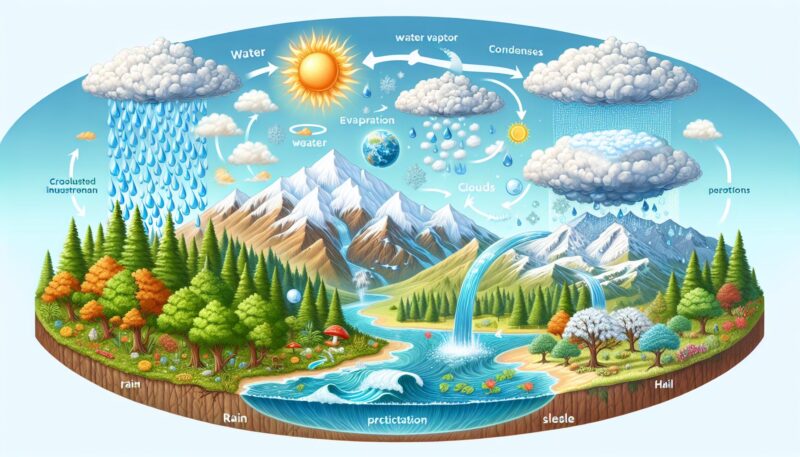
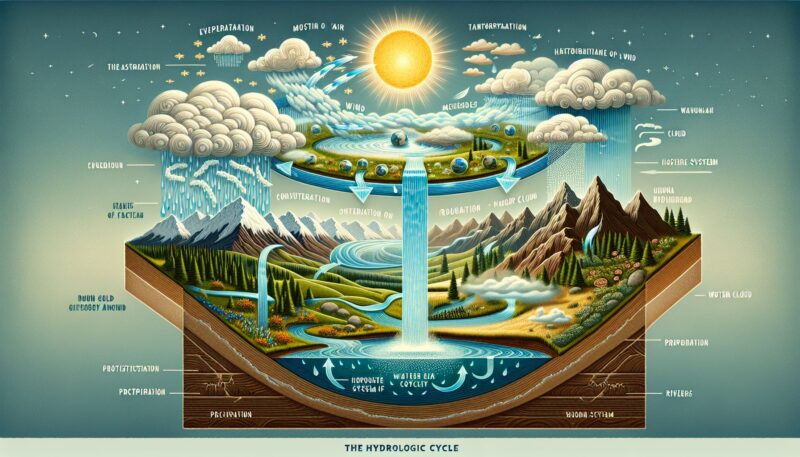
The hydrologic cycle, also known as the water cycle, is a continuous and natural process that describes the movement and exchange of water between the Earth’s oceans, atmosphere, and land. This cycle is driven by solar energy and involves several key processes: evaporation, condensation, precipitation, infiltration, percolation, runoff, and transpiration, among others.

Evaporation

Evaporation is the process by which water is converted from its liquid state to vapor. Heated by the sun’s energy, water from the oceans, rivers, lakes, and even soil moisture and wetlands evaporates into the atmosphere. This process is the primary pathway for water to move from the liquid state back into the water cycle as atmospheric vapor.

Condensation

As water vapor rises and cools in the atmosphere, it transforms back into liquid water droplets in a process known as condensation. These droplets form clouds, which can be transported by winds over vast distances, connecting different parts of the global water cycle.

Precipitation

When cloud particles grow large enough, they fall from the atmosphere to the ground as precipitation—in forms such as rain, snow, hail, or sleet. This is the primary method by which water returns from the atmosphere to the Earth’s surface.

Infiltration and Percolation

Once precipitation reaches the ground, it can take several paths. Some of the water seeps into the soil in a process called infiltration. From there, it can move downward through the soil and rock layers in a process known as percolation, eventually replenishing groundwater and aquifers.

Runoff

Not all water that hits the ground will infiltrate. Some will flow across the land surface as runoff, eventually collecting in rivers, lakes, and oceans. Runoff is a significant contributor to streamflow, which is the water flow within rivers and streams that eventually merge into larger bodies of water.

Transpiration

Plants also play a critical role in the hydrologic cycle. They absorb water from the soil through their roots and eventually release some of it back into the atmosphere as water vapor through transpiration, a process similar to evaporation.

Baseflow and Groundwater

Groundwater contributes to the flow in rivers and streams through a process called baseflow. This occurs as groundwater seeps into rivers and streams, maintaining their levels, particularly during drier periods when there may be no runoff entering the system.

The Significance of the Hydrologic Cycle

The hydrologic cycle is a vital ecological process that supports all life forms. It regulates climate, transports nutrients, purifies water, and replenishes freshwater supplies. Additionally, the cycle is crucial for a myriad of human activities, including agriculture, industry, and hydroelectric power generation.

The Role in Climate Regulation

The hydrologic cycle plays a substantial role in climate regulation by distributing heat across the globe through processes like evaporation and condensation. Water vapor is also a powerful greenhouse gas, contributing to the Earth’s temperature balance.

Nutrient Transport

Water carries with it dissolved nutrients and minerals, which are essential for plant growth and aquatic ecosystems. The movement of these substances throughout the cycle is necessary for sustaining life on both land and in water.

Water Purification

As water moves through the cycle, it is naturally filtered and purified. Processes such as infiltration and percolation help remove contaminants from water, making it safe for consumption and ecological health.

Freshwater Supply

The hydrologic cycle is responsible for the distribution and replenishment of the world’s freshwater resources. Understanding and managing this cycle is fundamental in ensuring a sustainable water supply for all users.

Human Impact on the Hydrologic Cycle

Human activities have significantly altered natural water balances and flows in many regions. Climate change, land-use changes, water abstraction, pollution, and dam construction are some of the ways humans have impacted the hydrologic cycle.

Climate Change

Climate change affects the hydrologic cycle by altering patterns of precipitation and evaporation, leading to more extreme weather events such as droughts and floods. Warming temperatures can reduce snowpacks, which in turn affect the timing and quantity of water supply for regions that rely on meltwater.

Land-Use Changes

Deforestation, urbanization, and agriculture modify the surface of the Earth, influencing infiltration, runoff, and evaporation rates. These changes can lead to increased flooding, reduced groundwater recharge, and diminished water quality.
Understanding the Hydrology and Its Critical Components

Hydrology is a science that encompasses the study of water on Earth. It involves understanding the properties, distribution, and movement of water across the planet. Water, a vital element for all living organisms, shapes Earth’s landscape and is crucial in ecological and human systems. This article provides an in-depth look at hydrology, focusing on key aspects like the hydrologic cycle, aquifers, and water treatment.

What is Hydrology?

Hydrology is the scientific study of the movement, distribution, and management of water on Earth and other planets, including the water cycle, water resources, and environmental watershed sustainability. Hydrologists study how water influences the environment and how the environment impacts water resources.

The Hydrologic Cycle

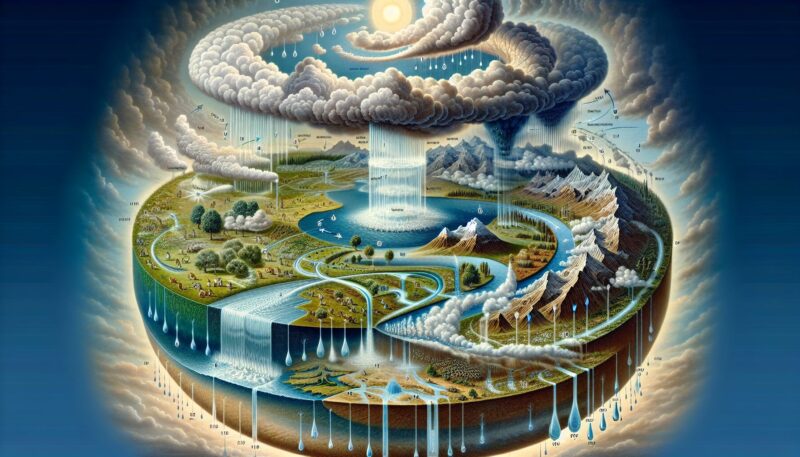
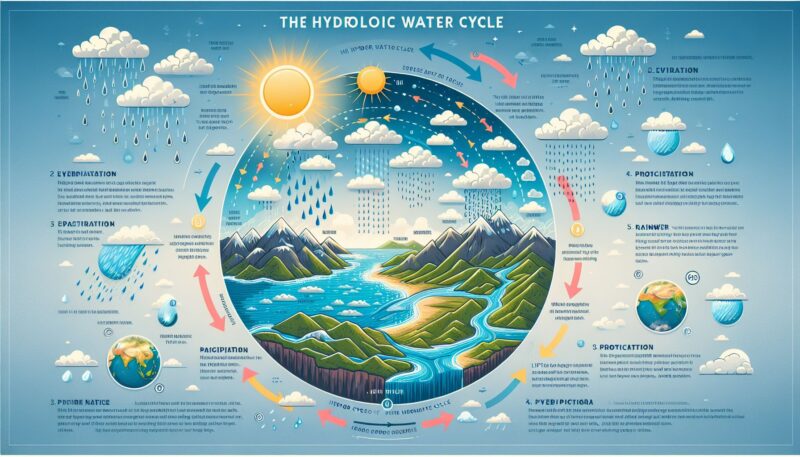
The hydrologic cycle, also known as the water cycle, is a continuous process by which water is circulated throughout the Earth’s atmosphere, land, and oceans. The cycle involves various stages: evaporation, transpiration, condensation, precipitation, infiltration, runoff, and sub-surface flow.

Evaporation

Evaporation is the process by which water is transformed from liquid to vapor and is primarily powered by the sun’s energy. This occurs over bodies of water like oceans, lakes, and rivers, as well as moist soil and wet vegetation.

Transpiration

Transpiration involves the release of water vapor from plants and soil into the air. When combined with evaporation, the total process is often referred to as evapotranspiration.

Condensation

Condensation is the process by which water vapor in the air is changed into liquid water, forming clouds and fog. This is crucial in the formation of precipitation.

Precipitation

Precipitation occurs when condensed water in the atmosphere falls to the ground in the form of rain, snow, sleet, or hail.

Infiltration

Infiltration is the process by which water on the ground surface enters the soil. The rate of infiltration can depend on soil characteristics, vegetation, and land use.

Percolation

Percolation is the downward movement of water through soil and rock layers, which can eventually replenish aquifers (underground layers of water-bearing permeable rock, rock fractures, or unconsolidated materials).

Runoff

Runoff is the flow of water that occurs when excess stormwater, meltwater, or other sources can’t infiltrate the ground and consequently flows over the Earth’s surface.

Streamflow and Baseflow

Streamflow is the flow of water in streams, rivers, and other channels, while baseflow is the portion of this flow that comes from groundwater seeping into the streambed.

Groundwater and Aquifers

Groundwater is the water held underground in the soil or in pores and crevices in rock. An aquifer is a body of permeable rock which can contain or transmit groundwater. There are two types of aquifers:

  1. Confined Aquifer: This aquifer is sandwiched between two impermeable layers of rock or clay and is under pressure.
  2. Unconfined Aquifer: An aquifer that is not overlain by an impermeable layer and where water is not under pressure.

Recharge and Discharge

Recharge is the process by which groundwater is replenished, often through processes like infiltration and percolation. Discharge is when groundwater flows out of an aquifer, typically at a spring or into the sea.

Hydrological Measurement and Analysis

Hydrologists use various tools and techniques to measure and analyze different components of the hydrologic cycle. This includes:

  • Stream gauges to measure streamflow
  • Rain gauges to quantify precipitation
  • Weather satellites and radar for remote sensing
  • Groundwater monitoring wells for aquifer levels

Watershed, Catchment, and Drainage Basin

These terms are often used interchangeably to define the land area that channels rainfall and snowmelt to creeks, streams, and rivers, and eventually to outflow points such as reservoirs, bays, and the ocean. Management of watersheds is crucial in ensuring sustainable water resources.

Water Quality and Pollution

Water quality refers to the chemical, physical, and biological characteristics of water in relation to its suitability for a particular purpose, such as drinking, swimming, or host aquatic life. Water pollution, on the other hand, is the contamination of water bodies, typically due to human activities. Key indicators of water quality include:

Dissolved Oxygen

The amount of oxygen dissolved in water, crucial for the survival of aquatic organisms.

pH

A measure of the acidity or alkalinity of water, which affects the solubility and biological availability of chemical constituents.

Turbidity

The cloudiness or haziness of water caused by large numbers of individual particles.

Nutrients

The concentration of essential elements like nitrogen and phosphorus, which in excess quantities can lead to issues like eutrophication.

Water Treatment Processes

Water treatment is essential for providing safe drinking water. It involves several processes, such as:

  • Filtration: Removing particulates by passing water through filters.
  • Disinfection: Using chlorine, ultraviolet (UV) light, or ozone to kill pathogens.
  • Coagulation and Flocculation: Chemicals are added to the water, allowing particles to form larger clumps, which can then be removed by sedimentation.

Water Conservation Techniques

Water conservation is the practice of using water efficiently to reduce unnecessary water usage. Strategies for conservation include:

  • Rainwater harvesting
  • Greywater reuse
  • High-efficiency appliances
  • Smart irrigation systems

Global Water Issues

Worldwide, water scarcity and water stress affect billions. Climate change exacerbates these problems, leading to more intense droughts and floods. Water conflicts can emerge between regions or countries that share water sources.

Conclusion

Understanding hydrology and its components is crucial for managing our most precious resource: water. With growing populations and escalating climate challenges, it’s more important than ever that we responsibly manage and protect water resources.

Sources

  1. “Principles of Hydrology” by R.C. Ward. McGraw-Hill (1989).
  2. Water Resources Research, American Geophysical Union.
  3. United Nations World Water Development Report, UN-Water.

Unraveling the Hydrologic Cycle: Earth’s Lifeline

Water is the most crucial resource on our planet, sustaining life in all its forms. The hydrologic cycle, also known as the water cycle, is a continuous movement of water within the Earth’s hydrosphere, involving processes such as evaporation, transpiration, condensation, precipitation, and runoff. These intertwined processes keep ecosystems thriving, support human civilizations, and shape the Earth’s climate. In this comprehensive article, we will delve into the hydrologic cycle, explore its significance, examine the impact of human activities on it, and discuss ways to preserve this precious resource.

What is the Hydrologic Cycle?

The hydrologic cycle describes the continuous movement of water on, above, and below the surface of the Earth. This cycle can be simplified into several key processes:

  1. Evaporation: The transformation of water from its liquid state to vapor.
  2. Transpiration: The release of water vapor from plants and soil into the atmosphere.
  3. Condensation: The process where water vapor in the air is changed into liquid water, creating clouds.
  4. Precipitation: The discharge of water, in liquid or solid state, from the atmosphere to Earth’s surface.
  5. Infiltration: The process by which water on the ground surface enters the soil.
  6. Percolation: The downward movement of water through pores and other spaces in soil due to gravity.
  7. Runoff: Water, usually from precipitation, that flows across the land surface and into streams, rivers, and eventually oceans.
  8. Streamflow: The flow of water in streams and rivers.
  9. Baseflow: The portion of streamflow that is sustained between periods of precipitation, contributed by groundwater seeping into the riverbed.
  10. Groundwater: Water that fills the cracks and spaces in underground soil and rock layers.
  11. Aquifer: Underground layers of water-bearing permeable rock or materials from which groundwater can be extracted.
  12. Recharge: The process by which groundwater is replenished, often through infiltration from rain or streams.
  13. Discharge: The natural emergence of groundwater at the Earth’s surface, as well as the withdrawal of water from aquifers.

Why is the Hydrologic Cycle Important?

The hydrologic cycle is vital for multiple reasons:

  • Supporting Life: Water is essential for all living organisms. It transports nutrients, regulates temperature, is a solvent for biochemical reactions, and is crucial for growth and reproduction.
  • Regulating Climate: The cycle influences climate patterns by distributing heat around the globe through atmospheric and oceanic circulation.
  • Shaping Landforms: Continuous water movement contributes to soil formation, erosion, and sediment transport, shaping landscapes.

Human Impact on the Hydrologic Cycle

Human activities have significantly altered the hydrologic cycle, causing disruption in natural processes:

  • Urbanization: The construction of impermeable surfaces leads to increased runoff and decreased infiltration, altering local to global water cycles.
  • Deforestation: Removing trees reduces transpiration, the water vapor released by plants, affecting precipitation patterns and climate.
  • Water Extraction: Over-extracting groundwater for agriculture and drinking lowers the water table and can lead to a decrease in surface water bodies.
  • Climate Change: Rising temperatures intensify the water cycle by increasing evaporation rates, altering precipitation patterns, and causing more extreme weather events.

Preserving the Hydrologic Cycle

Preserving the purity of this cycle is crucial for sustaining life and the planet’s health. Here are some strategies:

  • Water Conservation: Utilizing water-saving fixtures, practicing sustainable agriculture, and reducing consumption are vital.
  • Protecting Green Spaces: Preserving forests and wetlands help maintain evapotranspiration and infiltration rates, sustaining local climates.
  • Pollution Prevention: Reducing the use of pollutants and improving wastewater treatment diminishes the risk of contaminating water bodies.
  • Sustainable Management: Groundwater resources need to be managed sustainably to prevent over-extraction and maintain baseflow into rivers and lakes.

How Do These Processes Work?

Evaporation and Transpiration

Evaporation is a solar-powered process where water is converted into vapor and rises into the atmosphere. Transpiration occurs when plants absorb water through roots and release it as water vapor from their leaves. Combined, these processes are termed evapotranspiration and are the main drivers for moisture in the atmosphere.

Condensation and Precipitation

When water vapor rises, it cools and condenses into droplets or ice crystals that form clouds. Eventually, these droplets combine to become heavy enough to fall to the ground as precipitation, which can occur as rain, snow, sleet, or hail.

Infiltration, Percolation, and Groundwater

Once precipitation reaches the Earth’s surface, it can infiltrate the soil, percolate downward, and recharge aquifers with groundwater. This stored water can later be discharged into rivers or extracted for use by humans.

Runoff and Streamflow

Water that does not infiltrate becomes runoff, flowing into waterways. Runoff contributes to streamflow, the water that flows in rivers and streams, which eventually makes its way to lakes or oceans.

Understanding Aquifers and Groundwater Dynamics

Aquifers are essential components of the hydrologic cycle, serving as natural reservoirs for freshwater. They form in porous rock or sediment layers that can hold and transmit water, playing a crucial role in supplying water for ecosystems and human use.

Groundwater dynamics involve the balance between recharge and discharge, which must be maintained to ensure sustainable water availability. With overuse and insufficient recharge, aquifers can be depleted, leading to serious ecological and economic challenges.

Threats to the Hydrologic Cycle

Several threats, often human-induced, can disrupt the balance of the hydrologic cycle:

  • Water Pollution: Chemicals, heavy metals, nutrients, pathogens, and microplastics can degrade water quality, impacting ecosystems and human health.
  • Eutrophication and Algal Blooms: Excessive nutrients from agricultural runoff lead to algal blooms, which in turn deplete dissolved oxygen in water, harming aquatic life.
  • Climate Change: Changes in the climate can shift precipitation patterns and increase the frequency and severity of droughts and floods.

Addressing Water Quality Concerns

Maintaining water quality is a public health imperative. Technological solutions like water treatment plants utilize coagulation, flocculation, sedimentation, filtration, and disinfection (e.g., chlorination or UV irradiation) to ensure water safety for human consumption.

The Role of Watersheds

A watershed, also known as a catchment or drainage basin, is an area of land where all the water under it or drains off of it goes into the same place. Watersheds boundary lines are defined by topographic features and play a critical role in the hydrologic cycle, as they dictate how water is collected and distributed across landscapes.

Water Distribution and Infrastructure

Modern water distribution systems include a network of reservoirs, pipes, pumps, valves, water towers, and metering systems that deliver water efficiently to homes and businesses. Leak detection and maintenance are crucial for reducing water loss and ensuring a reliable supply.

The Global Picture: Oceans to Icebergs

The Earth’s oceans are

Understanding the Hydrologic Cycle and Its Vital Role in Earth’s Ecosystems

Water is the lifeblood of our planet. It shapes landscapes, supports biodiversity, and is critical for all living organisms, including humans. In essence, water serves as a vital component that drives ecological and geological processes, making it a paramount subject of study within the field of hydrology. In this article, we will delve into the concept of the hydrologic cycle, providing a comprehensive overview of its processes, components, and significance to earth’s ecosystems.

Introduction to the Hydrologic Cycle

The hydrologic cycle, also known as the water cycle, is the continuous movement of water on, above, and below the surface of the Earth. This cycle is a complex system that involves various processes such as evaporation, transpiration, condensation, precipitation, infiltration, percolation, runoff, and groundwater flow. It is the central concept of hydrology, playing a crucial role in maintaining the climate, weather patterns, and the health of ecosystems worldwide.

The Continuous Journey of Water Molecules

Water molecules are constantly in motion, and their journey can be described through the processes that make up the hydrologic cycle:

Evaporation

Evaporation is the process by which water changes from a liquid to a gas or vapor. This transformation occurs when heat energy from the sun or the atmosphere is absorbed by the water in oceans, rivers, lakes, and soil.

Evaporation is a crucial stage, as it is responsible for transferring water from the earth’s surface to the atmosphere, setting the stage for precipitation.

Transpiration

Transpiration is similar to evaporation, but it involves water vapor released from plants and trees. As plants absorb water from the soil through their roots, some of this water is used for growth and metabolic functions, while the rest is expelled into the atmosphere through tiny openings in leaves called stomata.

The combined effect of evaporation and transpiration is referred to as evapotranspiration and is a significant mechanism by which water enters the atmosphere.

Condensation

Condensation is the process of transforming water vapor into liquid water. In the atmosphere, as water vapor rises and cools, it condenses into tiny droplets, forming clouds. This process is crucial for the development of precipitation.

Precipitation

Precipitation occurs when the condensed water in clouds becomes too heavy to remain suspended. It then falls to the earth’s surface in various forms such as rain, snow, sleet, or hail. Precipitation is a primary mechanism for distributing fresh water across the planet’s surface.

Infiltration and Percolation

Once water reaches the ground, it either flows on the surface (runoff) or penetrates the soil (infiltration). Infiltrated water continues to move downward through the soil layers by the process known as percolation, which replenishes aquifers and adds to the groundwater supply.

Runoff and Streamflow

Runoff is the movement of water across the earth’s surface, largely driven by gravity. Surface runoff eventually converges into channels, creating streams and rivers—the visible moving water that is collectively known as streamflow.

Groundwater Flow

Groundwater is the water found beneath the earth’s surface in soil pore spaces and in the fractures of rock formations. A portion of groundwater flows into rivers and lakes, contributing to the baseflow, which maintains the flow of water during dry periods.

Discharge

Discharge is the volumetric flow rate of water that is transported through a given cross-sectional area within a stream or river. It is an essential measure in hydrology for understanding the water balance within a drainage basin.

Recharge

Recharge is the process through which groundwater aquifers are refilled. It can occur directly from precipitation or indirectly from surface water like rivers and lakes. Recharge maintains the groundwater levels and is vital for sustaining water availability.

The Significance of the Hydrologic Cycle

The hydrologic cycle is fundamental for several reasons:

  1. Regulation of Climate: Water in the form of vapor acts as a greenhouse gas, absorbing heat and helping to warm the planet. The cycle also influences weather patterns and the distribution of rainfall.

  2. Support for Biodiversity: Freshwater ecosystems rely on the hydrologic cycle for habitat and sustenance. Wetlands, rivers, and lakes all derive their water supply from the cycle and support a wide array of plant and animal life.

  3. Human Use and Agriculture: The cycle replenishes freshwater resources that are critical for drinking supplies, agriculture, industry, and energy production.

  4. Cleansing Mechanism: Water moving through the hydrologic cycle helps to dilute and transport pollutants, providing a natural method of cleansing the environment.

  5. Sculpting Landscapes: The processes involved in the hydrologic cycle contribute to the physical shaping of the earth’s surface, from the simple formation of river valleys to the complex development of deltas and canyons.

Challenges Facing the Hydrologic Cycle

Human activities, such as deforestation, urbanization, and over-extraction of water resources, are altering the delicate balance of the hydrologic cycle. These changes can lead to water scarcity, pollution, and the degradation of natural habitats. Additionally, climate change is affecting the cycle by altering precipitation patterns, increasing evaporation rates, and melting glaciers, all of which have significant impacts on water availability and distribution.

Conclusion

The hydrologic cycle is an intricate and dynamic system that sustains life on earth. Its processes are interconnected and essential for maintaining the environmental balance that all living things rely on. As stewards of the planet, it is our responsibility to understand, respect, and protect this vital cycle, ensuring that it continues to function effectively for generations to come.

References

  • U.S. Geological Survey. (n.d.). The Water Cycle. https://www.usgs.gov/special-topic/water-science-school/science/water-cycle
  • National Oceanic and Atmospheric Administration. (n.d.). The Water Cycle. https://www.noaa.gov/education/resource-collections/freshwater/water-cycle
  • World Meteorological Organization. (n.d.). Hydrology and Water Resources Programme. https://public.wmo.int/en/programmes/hydrology-and-water-resources-programme