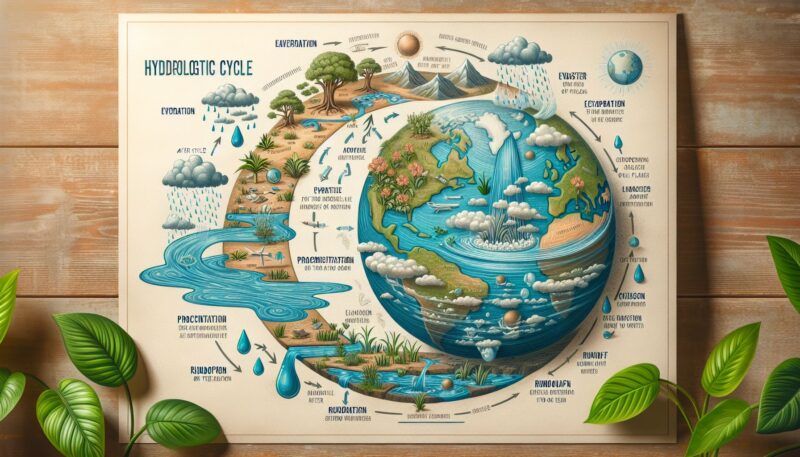
The hydrologic cycle, also known as the water cycle, is the continuous movement of water on, above, and below the surface of the Earth. This natural process recycles the Earth’s water supply and is a crucial component of our planet’s climate system. It affects every living creature, shaping ecosystems, influencing weather patterns, and sustaining life.
Understanding the hydrologic cycle is essential for a myriad of reasons: it helps us manage water resources, predict natural disasters, support agriculture, and protect the environment. In this comprehensive guide, we’ll delve into the key components of the hydrologic cycle, how it functions, and why it’s vital for maintaining a balanced and healthy Earth.
The Components of the Hydrologic Cycle
The hydrologic cycle comprises several major processes: evaporation, condensation, precipitation, infiltration, percolation, runoff, and transpiration. Let’s explore each of these in detail.
Evaporation
Evaporation is the process by which water changes from a liquid to a gas or vapor. Energy from the sun heats up surface water in rivers, lakes, and oceans, causing it to vaporize. This water vapor then rises into the atmosphere.
Condensation
Condensation occurs when water vapor in the air cools down and returns to its liquid state. This happens when warm air rises, cools, and loses its capacity to hold water vapor. As a result, clouds form, which are essentially collections of water droplets and ice crystals suspended in the atmosphere.
Precipitation
Precipitation is the process by which condensed water in the atmosphere falls to the ground. This includes rain, snow, sleet, or hail. Precipitation replenishes freshwater in rivers, lakes, and groundwater reserves. It can also lead to natural events such as floods when it is excessive.
Infiltration
Infiltration is the movement of water from the surface into the soil. This process is influenced by soil composition, vegetation cover, topography, and rainfall intensity. Infiltrated water can be used by plants, contribute to groundwater recharge, or return to the surface through springs.
Percolation
Percolation is the downward movement of water through soil and rock layers. This water can eventually reach aquifers—natural underground reservoirs—where it is stored until it is accessed through wells or contributes to springs and rivers.
Runoff
Runoff occurs when water moves across the land’s surface towards rivers, lakes, and oceans. It’s mainly due to rainfall that does not infiltrate the ground or evaporate. Factors like land slope, vegetation, and soil type affect the rate and amount of runoff.
Streamflow and Baseflow
Streamflow refers to the flow of water in streams and rivers. It is directly impacted by runoff and is variable, often depending on recent precipitation. Baseflow is the sustained flow of a river that results from seepage of groundwater into the channel, providing a continuous flow even during dry periods.
Transpiration
Transpiration is the release of water vapor from plants into the atmosphere. It is part of the process of photosynthesis and plays a significant role in the movement of water within the hydrologic cycle. Together with evaporation from non-living surfaces, transpiration constitutes the evapotranspiration process.
Groundwater Movement
Groundwater moves slowly through the subsurface geological formations of soil, sand, and rocks. This slow movement contributes to the discharge into rivers, lakes, and oceans, providing a consistent flow that is crucial during periods without rain.
Human Influence
Human activities have become an integral part of the hydrologic cycle, whether it’s through irrigation, dam construction, groundwater extraction, or the modification of natural water channels. Urban development can increase runoff by reducing infiltration, and air pollution can alter the cycle by affecting evaporation and precipitation patterns.
The Importance of the Hydrologic Cycle
The hydrologic cycle is essential for maintaining life on Earth. It distributes fresh water around the globe, supports all ecosystems, and shapes our climate.
Water Resources Management
By understanding the hydrologic cycle, researchers and policymakers can better manage water resources. Predictive models of the cycle help forecast water availability and identify potential shortages or surpluses, which is crucial for agriculture, urban planning, and conservation efforts.
Climate Regulation
The cycle plays a significant role in regulating our climate. Water vapor is a greenhouse gas, and its movement in and out of the atmosphere helps to moderate the Earth’s temperature. It also transports heat energy across the planet through weather patterns and ocean currents.
Supporting Biodiversity
Ecosystems depend on the continuous supply of fresh water provided by the hydrologic cycle. It shapes habitats, influences food webs, and contributes to the overall health and diversity of life on Earth.
Challenges and Threats
With a changing climate and increasing global demand for water, the balance of the hydrologic cycle faces significant threats.
Climate Change
Climate change is altering the hydrologic cycle, affecting precipitation patterns, increasing evaporation rates due to higher temperatures, and leading to more extreme weather events like floods and droughts.
Water Pollution
Pollution is another significant threat to the hydrologic cycle. Contaminants from agriculture, industry, and urban runoff can degrade water quality, harm aquatic life, and compromise human health.
Over-Extraction of Groundwater
Groundwater extraction for agriculture, industry, and domestic use is exceeding its natural recharge in many areas, leading to declining water levels and the loss of groundwater reserves.
Conclusion
The hydrologic cycle is a complex and dynamic system that is crucial for life on Earth. As stewards of our planet, we must understand and respect the delicate balance of this cycle to ensure a sustainable future for all species. By protecting natural waterways, reducing pollution, and carefully managing water resources, we can help preserve this vital cycle for generations to come.
Sources
- Gleick, P. H. (1996). Water Resources. In Encyclopedia of Climate and Weather (Vol. 2, pp. 817-823). New York: Oxford University Press.
- National Oceanic and Atmospheric Administration (NOAA). The Water Cycle. https://www.noaa.gov/education/resource-collections/freshwater/water-cycle
By understanding the intricacies of the hydrologic cycle, we become more capable of navigating the challenges it faces in a rapidly changing world. The knowledge we gain from studying this natural phenomenon goes beyond academic curiosity; it equips us to better shape policies, advance scientific research, and foster a greater appreciation for the one resource all life depends on—water.