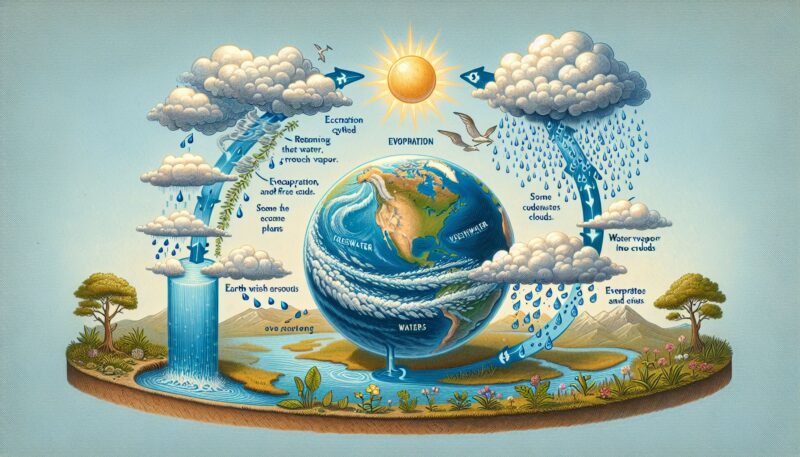
Water is the cradle of life, a critical component of our planet’s ecosystems, and a resource that is indispensable for the sustenance of all known forms of life. The journey of a water molecule through the natural world is a story of constant motion and transformation—a cycle that connects the clouds above with the deepest recesses of the Earth. Known as the hydrologic cycle, it’s a continuous process that maintains the balance of water on Earth. In this article, we are going to delve into the depths of the hydrologic cycle, uncovering its mechanisms, significance, and the impact of human activities on this vital system.
What Is the Hydrologic Cycle?
The hydrologic cycle, also known as the water cycle, describes the continuous movement of water above, on, and below the surface of the Earth. This cycle is driven by the sun’s energy and involves several key processes: evaporation, transpiration, condensation, precipitation, infiltration, percolation, runoff, and finally, storage in various natural reservoirs.
Evaporation: The Sun’s Energizing Role
At the heart of the hydrologic cycle is evaporation—the process by which water is converted from a liquid state to a gaseous state, or vapor, and ascends into the atmosphere (USGS, “The Water Cycle”). When the sun’s rays touch water bodies, like rivers, lakes, and oceans, they impart energy, allowing water molecules to break free from the liquid state and rise.
Transpiration: Plants as Water Conduits
Another contributor to water’s upward journey is transpiration. Plants absorb water through their roots and transport it to their leaves, where it evaporates into the atmosphere. These two processes combined—evaporation from water surfaces and transpiration from plants—constitute the phenomenon called evapotranspiration.
Condensation: Cloud Formation
As water vapor rises, it encounters cooler temperatures in the atmosphere. This cooling causes the vapor to change back into liquid droplets or ice crystals—a process known as condensation. This transformation is what creates clouds, those floating repositories of water, which are crucial for the next phase of the cycle.
Precipitation: Water’s Return to Earth
With the right atmospheric conditions, these condensed droplets coalesce, grow, and eventually fall to the Earth in the form of precipitation. This can occur as rain, snow, sleet, or hail (NOAA, “Precipitation”).
Infiltration and Percolation: The Journey Underground
Upon reaching the land’s surface, water participates in several vital processes. Here’s where infiltration comes into play. It’s the process by which water soaks into the soil, eventually percolating downward to replenish the aquifers—natural underground storage areas.
Runoff and Streamflow: Watersheds at Work
Water that doesn’t infiltrate becomes runoff, flowing across the land, filling streams, rivers, lakes, and eventually reaching the oceans. A watershed, or drainage basin, is an area of land where all precipitation collects and drains off into a common outlet, like a river or bay (EPA, “Surf Your Watershed”).
Groundwater: The Hidden Resource
Not all water makes it back to the surface; some becomes groundwater. It flows through aquifers and supplies springs, rivers, and wetlands, maintaining the baseflow during drier periods. It can also be a critical water source for human use and consumption.
The Importance of the Hydrologic Cycle
The hydrologic cycle is more than just an academic concept; it has real-world implications for climate, agriculture, and our freshwater supply. This cycle is essential for maintaining the balance of ecosystems, replenishing freshwater resources, and regulating Earth’s temperature.
Climate Regulation
The water cycle plays an integral role in regulating climate patterns. Changes in the cycle can result in a shift in weather, leading to phenomena such as droughts or floods. The cycle’s transference of heat, through evaporation and precipitation, influences ocean currents and climate systems around the globe.
Agriculture and Freshwater Supply
Humans depend greatly on the water cycle for agriculture, which requires reliable precipitation and replenished aquifers for irrigation. Additionally, as the population grows, the demand for freshwater intensifies. The cycle ensures the continuous provision and movement of water—essential for drinking, sanitation, and industry.
Human Impact and Challenges
Regrettably, human activities have become a major force influencing the hydrologic cycle. Climate change, induced by greenhouse gases, is affecting the intensity and distribution of precipitation. Moreover, land use changes such as urbanisation disturb natural infiltration rates, magnifying the issue of runoff and minimizing the natural recharging of aquifers.
Water Pollution: A Growing Threat
Water quality degradation is one of the most pressing issues connected to the water cycle. Pollutants from agriculture, industry, and urban wastewater introduce harmful substances like heavy metals, pathogens, and microplastics into the cycle, jeopardizing ecosystems, human health, and the integrity of freshwater sources.
Climate Change: A Damaged Cycle
The effects of climate change are causing alterations in the hydrologic cycle. Warming global temperatures are leading to higher rates of evaporation and shifting precipitation patterns, which can exacerbate drought conditions or cause extreme flooding events.
Addressing the Challenges
To protect the hydrologic cycle and ensure sustainable water supplies for future generations, adaptive management strategies and innovative technologies need to be employed. From improving water treatment systems to implementing advanced irrigation techniques, a concerted effort across all levels of society is necessary.
Water Conservation Methods
Simple solutions such as water conservation in homes and industries, rainwater harvesting, and the use of greywater reuse systems can reduce strain on freshwater resources. Additionally, protecting natural habitats like wetlands, which act as natural filters and water buffers, is critical.
Technological Innovations
Scientific advancements such as desalination, reverse osmosis water treatment, and efficient water distribution systems, including smart leak detection, are revolutionizing how we manage and utilize our water resources.
Beyond a Cycle: The Vital Connection
The hydrologic cycle is not merely a scientific phenomenon; it symbolizes the interconnectivity of life. Every drop of water carries with it the essence of this cycle, bridging the sky to the sea, the mountains to the valleys.
In conclusion, our blue planet’s survival hinges on maintaining the delicate balance of the hydrologic cycle. It is our collective responsibility to safeguard this dynamic system—earth’s lifeline—to ensure its vitality for all living creatures now and in the future. Through knowledge, awareness, and action, we can preserve the integrity of this indispensable cycle and perpetuate the gift of water that sustains us all.