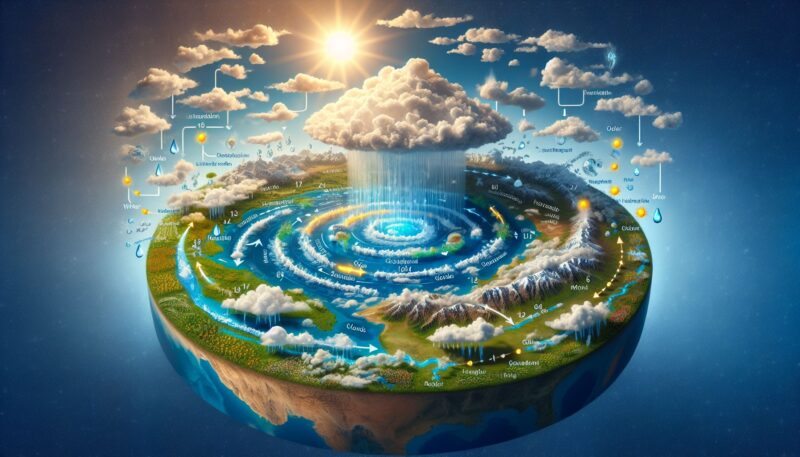
Water, the most crucial resource on Earth, covers around 71% of the planet’s surface and is central to our existence. The hydrologic cycle—also known as the water cycle—is the continuous movement of water on, above, and below the surface of the Earth. Through its various processes like precipitation, evaporation, transpiration, condensation, infiltration, and more, the cycle ensures the distribution and availability of freshwater across the globe. This article delves deep into the hydrologic cycle, exploring its mechanisms and significance, as well as the impact of human activities on water quality and conservation efforts.
What is the Hydrologic Cycle?
The hydrologic cycle is a natural sequence of processes by which water is continuously circulated throughout the Earth’s hydrosphere, involving the atmosphere, land, and oceans. It’s a system powered by the sun’s energy, and it ensures that water is always in motion, thus playing a vital role in climate regulation, shaping our natural environment, and supporting life.
Key Processes of the Hydrologic Cycle
- Evaporation: The transformation of liquid water from oceans, rivers, lakes, and soil into water vapor due to the heat of the sun.
- Transpiration: The process where plants release water vapor into the air through their leaves.
- Condensation: When water vapor in the air cools and changes back into liquid, forming clouds.
- Precipitation: The fall of water, in forms like rain, snow, sleet, or hail, from clouds to Earth’s surface.
- Infiltration: The process by which water on the ground surface enters the soil.
- Percolation: The downward movement of water through soil and rock, which can replenish aquifers.
- Runoff: When water flows over land as surface water instead of being absorbed into groundwater or evaporating.
- Streamflow / Baseflow: The water that travels in streams and rivers. Baseflow is the sustained flow contributed by groundwater seeping into the bed of the river.
- Groundwater: Water held underground in the soil or in pores and crevices of rock.
- Recharge: The process where water moves downward from surface water to groundwater.
- Discharge: The flow or pumping of water from aquifers to surface water bodies or other outputs.
The Sun: The Driver of the Cycle
The sun is the primary energy source driving the hydrologic cycle. It heats the Earth’s surface, causing evaporation and helping to lift moisture into the atmosphere where it becomes clouds. This solar-powered sequence is essential for life on Earth, redistributing freshwater from the oceans to the continents and regulating our climate by transporting heat.
The Importance of the Hydrologic Cycle
The hydrologic cycle carries countless benefits by not only providing water for all living organisms but by also shaping the physical world:
- Freshwater Availability: It naturally filters and replenishes freshwater sources that humans, plants, and animals rely upon.
- Climate Regulation: Helps in the distribution of heat around the globe through diverse weather patterns.
- Erosion and Weathering: The processes of runoff and streamflow sculpt the Earth’s surface, carving valleys and canyons, transporting nutrients, and shaping landscapes.
- Habitat Formation: Supports diverse ecosystems such as wetlands, rivers, and estuaries, which are vital for biodiversity.
Human Impact on the Hydrologic Cycle
While the hydrologic cycle is a natural phenomenon, human activities significantly alter its course:
- Urbanization: Increases surface runoff, reducing infiltration and potentially overloading drainage systems, leading to floods.
- Agriculture: Large-scale irrigation can deplete rivers and groundwater, while fertilizers and pesticides can lead to water pollution.
- Deforestation: Trees play a crucial role in transpiration and infiltration; their removal can disrupt these processes, impacting local and regional weather patterns.
- Climate Change: Alters precipitation patterns, potentially intensifying droughts or causing more extreme weather events.
Water Pollution and Treatment
The cycle is also a conveyor of pollutants, which underscores the importance of water treatment:
- Water Pollution: Industrial waste, agricultural runoff, and urban discharge can introduce harmful substances such as heavy metals, nutrients, pathogens, and microplastics into the water system.
- Eutrophication and Algal Blooms: Excessive nutrients from fertilizers can lead to eutrophication in water bodies, creating dead zones devoid of oxygen and rampant algae growth.
- Water Treatment: To ensure water quality, several treatment steps are employed, including coagulation, flocculation, sedimentation, filtration, and disinfection using chlorination, ozonation, or UV irradiation.
Water Conservation and the Human Water Footprint
In light of the finite nature of freshwater resources and the increasing demand due to population growth, conserving water is imperative:
- Rainwater Harvesting: Collecting and storing rainwater for use in landscaping, agriculture, and even for potable purposes after treatment.
- Greywater Reuse: Using relatively clean waste-water from baths, sinks, washing machines, and other appliances for non-potable uses.
- Reducing Water Footprint: Making choices that lower individual and collective use of water, including the virtual water used in the production of goods and services.
The Role of Climate in Hydrological Extremes
As climates shift, weather extremes related to water become more pronounced, manifesting in increased incidences of droughts and floods:
- Drought: Extended periods of below-average precipitation leading to water scarcity, affecting agriculture, economies, and ecosystems.
- Flood: Excessive precipitation or runoff that exceeds the capacity of soil absorption and stormwater systems, causing overflow onto dry land, leading to property damage, loss of life, and contamination of water supplies.
Global Water Stress and the Future
Water scarcity and stress are global issues that necessitate urgent action. Regions around the world are battling to balance their water use with what can be sustainably provided by the hydrologic cycle. This crisis intersects with issues of food security, health, environmental protection, and even conflict over resources.
Towards Sustainable Water Management
For a sustainable future, we need integrated water resource management strategies that address:
- The Protection of Watersheds: The areas of land where rainfall collects and drains into a common outlet, such as rivers or bays, are crucial for maintaining water cycles and quality.
- Optimized Agricultural Practices: Implementing water-efficient techniques like drip irrigation and choosing crops suited to the local environment to minimize water waste.
- Public Policy and Education: Governments and communities must work together to promote policies and practices that conserve water and protect natural water cycles.
Conclusion
The hydrologic cycle is an intricate and dynamic system that sustains life and shapes our planet. Understanding it is the first step in appreciating the interconnectedness of the Earth’s water systems and the urgent need to manage this precious resource responsibly. We all have a role to play in ensuring that the cycles of water, which have flowed for eons, continue to support life for generations to come.
Sources
- “The Water Cycle,” USGS Water Science School, https://www.usgs.gov/special-topic/water-science-school/science