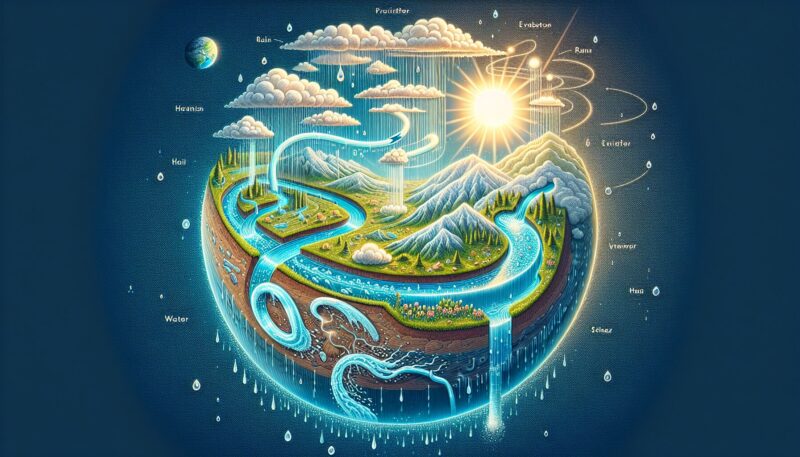
Water is the planet’s lifeblood, flowing through various channels and transforming between states, creating a dynamic system that shapes ecosystems, weather, and even geopolitics. At the heart of this system is the hydrologic cycle, a process that describes the continuous movement of water on, above, and below the Earth’s surface. This article will delve into the intricacies of the hydrologic cycle, exploring how it functions, its critical components, and the broader implications for our environment and society.
What is the Hydrologic Cycle?
The hydrologic cycle, also known as the water cycle, is the process that moves water throughout the Earth’s hydrosphere. It involves the constant circulation of water in the environment and encompasses various processes, including precipitation, evaporation, transpiration, condensation, infiltration, percolation, runoff, and more. This cycle is driven by solar energy and gravity and is responsible for the distribution of water resources across the globe.
The Processes of the Hydrologic Cycle
To fully grasp the hydrologic cycle’s complexity, we need to understand the different processes that comprise it:
Evaporation
Evaporation is the process by which water transforms from a liquid to a gas (water vapor) due to heat. The primary source of this heat is the sun. Bodies of water, such as oceans, lakes, and rivers, and wet surfaces like soil, contribute vast amounts of vapor to the air.
Transpiration
Transpiration occurs when plants absorb water from the soil and release water vapor from their leaves into the atmosphere. This, combined with evaporation, is often referred to as evapotranspiration.
Condensation
As water vapor rises and cools, it changes back into liquid form, creating clouds. This transformation is known as condensation. Condensation plays a crucial role in forming precipitation.
Precipitation
When water droplets in clouds become too heavy, they fall to the earth’s surface as precipitation—this includes rain, snow, sleet, or hail.
Infiltration
Infiltration is the process by which water on the surface enters the soil. Once inside the soil, the water can percolate into deeper layers and replenish groundwater reserves.
Percolation
Percolation is the movement of water through the soil’s pores and its downward migration towards the groundwater table.
Runoff
Not all water that falls as precipitation is absorbed by the soil. Excess water flows over the surface as runoff, eventually reaching rivers, lakes, and oceans.
Groundwater Movement
Water can remain underground as groundwater, flowing through aquifers – layers of permeable rock or sand that store and conduct water. This slow movement is a key component of the cycle.
Discharge
Groundwater often emerges as springs or seeps into rivers and lakes, a process called discharge, and this maintains baseflow in these water bodies, especially during dry periods.
Importance of the Hydrologic Cycle
The hydrologic cycle is essential for several reasons:
- Supporting life: Water is vital for all known forms of life. The cycle ensures that water is made available to organisms in various habitats.
- Regulating climate: Water’s movement between the surface and atmosphere helps regulate global temperatures through processes like evaporation and condensation.
- Shaping landscapes: Water flow in its various forms can sculpt landscapes through erosion, sediment transport, and deposition.
- Sustaining ecosystems: Aquatic and terrestrial habitats rely on the cycle for nutrient distribution and energy flow.
Implications for Water Quality and Accessibility
Human activity, climate change, and natural events can disrupt the harmonious balance of the hydrologic cycle, leading to significant challenges linked to water quality and accessibility.
Water Quality Concerns
The hydrologic cycle can spread pollutants once they enter the water system. Here’s how different processes contribute to or mitigate water quality issues:
- Precipitation: While rain can cleanse the atmosphere, it can also carry pollutants to the ground.
- Runoff: Surface water runoff often picks up pollutants from the land, including fertilizers, pesticides, and sediment, worsening water quality downstream.
- Infiltration and Percolation: These processes naturally filter water but can also introduce pollutants into the groundwater system if the overlying soil is contaminated.
- Discharge: Polluted groundwater can discharge into rivers and lakes, affecting the habitat for aquatic life.
Addressing water quality through effective water treatment infrastructure, such as using filtration, disinfection, and sedimentation techniques, is crucial for maintaining a reliable and safe water supply.
Water Accessibility and Scarcity
The hydrologic cycle underpins the global distribution of water resources, but this distribution is uneven, leading to regional disparities in water availability. Factors such as climate change and over-extraction can exacerbate water scarcity, stressing the need for sustainable water management practices, including conservation efforts and technological solutions like desalination and water recycling.
Water’s Journey Through Complex Landscapes
Landscapes strongly influence the hydrologic cycle’s progression. Topography dictates water’s flow and storage, with watersheds, catchments, and drainage basins serving as integral components:
Watershed
A watershed is an area of land that channels precipitation to creeks, streams, and rivers, and eventually to outflow points such as lakes, oceans, or other watersheds. Everything within a watershed is interconnected, and changes to land use or climate within it can have far-reaching effects.
Drainage Basin
A drainage basin refers to the area of land where all the water under it or draining off of it collects into the same place. It’s synonymous with a watershed but often used on larger scales.
Catchment
Catchment is another term similar to a watershed and is the area from which water collects into a predefined area, commonly used in the UK and Australia.
Aquifers and Groundwater Recharge
Groundwater systems and aquifers are critical repositories of freshwater. Their recharge is the process by which infiltrated water adds to the groundwater. Over-extraction and pollution can deplete these vital reserves, making recharge areas’ protection paramount.
Baseflow and Streamflow
Baseflow refers to the part of a river’s flow sustained by groundwater seeping into the bed, while streamflow is the total flow, including runoff and baseflow. Both elements are essential for river ecosystem health and for supplying water resources downstream.