Water is the lifeblood of our planet, a critical component of our environment, and the primary factor shaping the world around us. The existence of our lakes, rivers, oceans, and even the water in our atmosphere, is a direct result of the intricate processes of the hydrologic cycle. Understanding this never-ending cycle is essential for comprehending how water moves through the environment, and how it affects every facet of the Earth’s ecosystem.
In this article, we will delve deep into what the hydrologic cycle is, how it operates, and why it’s crucial for sustaining life on Earth. We’ll also look at the threats to the cycle’s balance, and how our actions as stewards of the environment can help preserve this indispensable natural phenomenon.
What is the Hydrologic Cycle?
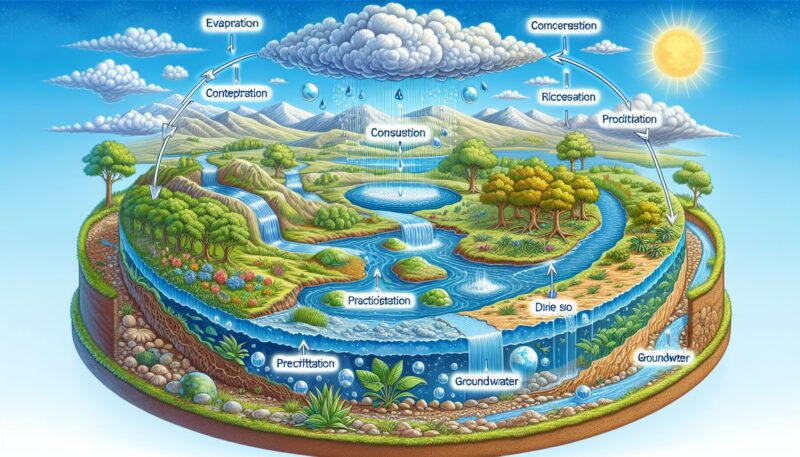
The hydrologic cycle, also known as the water cycle, is the continuous movement of water on, above, and below the surface of the Earth. This cycle is a complex system of exchanges involving evaporation, transpiration, condensation, precipitation, and runoff. The energy from the sun drives this cycle, providing the necessary heat to evaporate water and move it through the system.
The Stages of the Hydrologic Cycle
Evaporation
The transformation of water from a liquid to a gas is called evaporation. The sun’s heat energy causes water in rivers, lakes, oceans, and soil to become vapor and rise into the atmosphere.
Transpiration
Transpiration is similar to evaporation but occurs in plants. Water absorbed by roots is eventually released into the atmosphere from leaves and stems as water vapor.
Condensation
As water vapor rises, it cools and transforms into tiny droplets of liquid water, forming clouds through the process of condensation.
Precipitation
When these droplets combine and grow large enough, they fall to the ground as precipitation—rain, snow, sleet, or hail.
Infiltration
Once on the ground, some of the water seeps into the soil in a process known as infiltration, where it can replenish groundwater.
Percolation
Water moves deeper beneath the surface in a process called percolation, further filling aquifers—natural underground storage spaces for freshwater.
Runoff
Water that does not infiltrate the soil becomes runoff, flowing along the land surface and draining into streams, rivers, and eventually into the ocean.
Streamflow and Baseflow
Streamflow is the movement of water within a river or stream, which can be sustained by precipitation or supplemented by baseflow—groundwater seeping into the riverbed.
Groundwater’s Role
Groundwater, while a part of the hydrologic cycle, follows a slower path. It feeds into aquifers and can remain beneath the surface for years, centuries, or even millennia before rejoining rivers or the ocean. Groundwater is a primary source of freshwater for many communities, making its role in the hydrologic cycle especially crucial.
Recharge and Discharge
The hydrologic cycle also involves the processes of recharge and discharge. Recharge is the addition of water to an aquifer, typically from precipitation and runoff, while discharge is the removal of water, either through natural springs or human extraction.
Why is the Hydrologic Cycle Important?
The hydrologic cycle is vital for several reasons:
-
Supports Life: It distributes freshwater across the globe, allowing life to flourish in a variety of environments.
-
Regulates Climate: The movement of water through the hydrologic cycle plays a significant role in regulating the Earth’s temperature and climate patterns.
-
Shapes Landscapes: The cycle’s processes, especially runoff and streamflow, are central to the erosion and deposition that shape the Earth’s terrain.
-
Dilutes Pollutants: The cycle helps to dilute and carry away pollution in water bodies, although excessive pollution can disrupt this benefit.
-
Agriculture and Drinking Water: It provides crucial freshwater for agriculture, industry, and drinking.
Threats to the Hydrologic Cycle
Unfortunately, the hydrologic cycle is threatened by:
-
Climate Change: Alters precipitation patterns, potentially leading to droughts in some areas and floods in others.
-
Water Pollution: Contaminants from industrial, agricultural, and residential sources threaten the quality of water within the cycle.
-
Overextraction of Groundwater: Unsustainable withdrawal can lead to declining water tables and reduced baseflow to streams and rivers.
-
Deforestation: Reduces transpiration and can disrupt local precipitation patterns.
-
Urbanization: Increases runoff and reduces infiltration, straining freshwater resources.
Preserving the Hydrologic Cycle
To safeguard this essential cycle, we can:
-
Conserve Water: Reduce our usage and waste of water through efficient fixtures, appliances, and mindful habits.
-
Protect Wetlands: Wetlands act as natural sponges, absorbing excess water during floods and releasing it during dry periods. Preserving them helps maintain the hydrologic cycle’s balance.
-
Reduce Pollution: Minimizing pollution from all sources helps ensure clean water can cycle through the environment.
-
Support Sustainable Agriculture: Practices such as rainwater harvesting and efficient irrigation help protect natural water cycles.
-
Reforestation: Planting trees can enhance transpiration and contribute to healthy precipitation patterns.
The protection of the hydrologic cycle is a collaborative effort requiring policy changes, community action, and individual responsibility. By respecting and maintaining this natural water circulation, we can secure the future of our planet’s most valuable resource—water.
Sources
- “The Water Cycle.” US Geological Survey. https://www.usgs.gov/special-topic/water-science-school/science/water-cycle
- “Hydrological Cycle.” National Oceanic and Atmospheric Administration. https://www.noaa.gov/education/resource-collections/freshwater/hydrological-cycle
- “Groundwater and the Water Cycle.” US Geological Survey. https://www.usgs.gov/special-topic/water-science-school/science/groundwater-and-water-cycle
Understanding and appreciating the mechanisms of the hydrologic cycle are fundamental to ensuring the health of our ecosystems and the sustainability of our water resources. Through conservation, education, and responsible management, we can all contribute to the effective stewardship of this vital cycle.