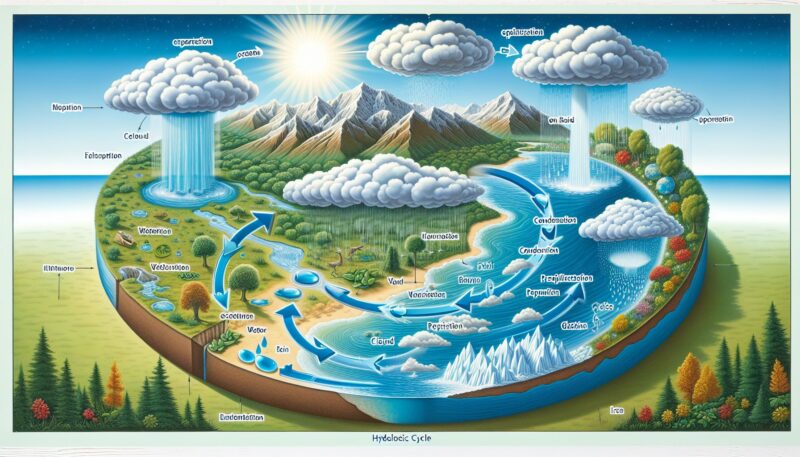
Water is the lifeblood of our planet, a vital resource that sustains all forms of life. The journey that water takes around the Earth is known as the hydrologic cycle, a complex system that is quintessential for the survival of ecosystems, the regulation of climate, and the support of human civilizations. In this article, we will delve into the intricacies of the hydrologic cycle, examining its components and the vital role they play in maintaining the balance of our hydrosphere.
Introduction
The hydrologic cycle, also known as the water cycle, describes the continuous movement of water on, above, and below the surface of the Earth. This cycle is a crucial process that distributes water across various geographical locations and climatic conditions, replenishing freshwater supplies, and supporting life in numerous ways. By understanding the hydrologic cycle, scientists, policymakers, and communities can make informed decisions about water management, conservation, and sustainability.
The Stages of the Hydrologic Cycle
Evaporation
Evaporation is the process by which water is transformed from liquid to vapor. Heated by the sun, water from oceans, lakes, rivers, and soils becomes vapor and ascends into the atmosphere. This solar-driven process is responsible for the continuous supply of water vapor that feeds clouds and eventually falls back to Earth as precipitation.
Transpiration
Closely related to evaporation is transpiration, which is the release of water vapor from plants and trees into the atmosphere. As plants absorb water from the soil through their roots, some of this water is used for growth and metabolism, while the rest is expelled through tiny openings in leaves called stomata. Transpiration, together with evaporation, is often referred to as evapotranspiration.
Condensation
As water vapor rises higher into the atmosphere, it encounters cooler temperatures and condenses to form clouds. Condensation is the transition of water vapor into liquid droplets, and it occurs when the air is saturated and cannot hold any more moisture. These droplets cluster around particles in the atmosphere, creating the clouds we see decorating the sky.
Precipitation
The next stage in the hydrologic cycle is precipitation. When cloud particles grow heavy enough, they fall to Earth as rain, snow, sleet, or hail – a process called precipitation. This critical stage returns water from the atmosphere to Earth’s surface, where it can recharge bodies of water and infiltrate the soil, replenishing groundwater supplies.
Infiltration
Following precipitation, some of the water that reaches the ground will infiltrate the soil. Infiltration is the process by which water seeps into the ground through soil and porous rock formations. The rate of infiltration can vary greatly depending on the soil type, vegetation cover, and land use.
Percolation
After infiltrating the soil, water continues its downward journey in a process known as percolation. Percolation occurs as water moves deeper through soil and porous layers of rock, eventually reaching and replenishing groundwater aquifers.
Runoff
Not all the water that falls as precipitation infiltrates the soil; some flows over the land surface towards rivers, lakes, and oceans in a process called runoff. The amount of runoff is influenced by numerous factors, including rainfall intensity, land topography, vegetation, and soil type.
Streamflow and Baseflow
Runoff contributes to streamflow, which is the flow of water in streams and rivers. During dry periods, streamflow is maintained by baseflow, which is the portion of river flow that comes from groundwater feeding into the riverbed.
Groundwater
When water percolates down through the soil, it joins the vast reserves of groundwater beneath our feet. Groundwater is stored in aquifers, which are layers of rock and sediment saturated with water. These hidden reservoirs can store large quantities of freshwater for extended periods, providing a critical resource for ecosystems and human use.
Discharge
Groundwater can resurface through springs or seep into bodies of water like rivers and lakes, a process known as discharge. This natural discharge helps maintain water levels in surface water bodies, especially during periods of low precipitation.
Recharge
Recharge is the process by which aquifers accumulate new water, primarily from precipitation and infiltration. This process is critical for the sustainability of groundwater supplies and can be influenced by human activities, such as irrigation and land-use changes.
The Importance of the Hydrologic Cycle
The hydrologic cycle is more than just a sequence of steps; it’s a complex system that affects every aspect of our planet’s health. It plays a key role in regulating climate, supports biodiversity, and provides the freshwater necessary for agriculture, industry, and human consumption.
Climate Regulation
The movement of water within the hydrologic cycle influences weather patterns and climate. Evaporation and transpiration release heat into the atmosphere, affecting temperature and humidity levels. Precipitation, through its various forms, impacts regional climates and helps redistribute heat across the globe.
Ecosystem Support
Water is essential for all forms of life, and the hydrologic cycle ensures that water reaches every corner of the planet. It supports the growth of plants, sustains wildlife, and maintains ecosystems – both terrestrial and aquatic.
Human Use
Freshwater from the hydrologic cycle is vital for human societies. It is used for drinking, sanitation, agriculture, power generation, and industry. Without the continuous movement and renewal of water through the hydrologic cycle, our supply would quickly become depleted and contaminated.
Challenges and Threats to the Hydrologic Cycle
The hydrologic cycle faces several challenges due to human activity. Climate change, deforestation, urbanization, and pollution are altering the cycle’s natural flow, which can lead to a host of environmental and societal issues.
Climate Change
Climate change is impacting the hydrologic cycle by changing precipitation patterns, increasing evaporation rates, and leading to more extreme weather events like droughts and floods. These changes can strain water resources, disrupt ecosystems, and exacerbate water-related conflicts.
Land Use and Deforestation
Deforestation and changes in land use can reduce transpiration and increase runoff, which can lead to soil erosion, decreased infiltration, and the loss of groundwater recharge. Urbanization creates impervious surfaces that prevent water from penetrating the ground, leading to increased flooding and the disruption of natural water cycles.
Pollution
Water quality is integral to the health of the hydrologic cycle. Pollution from chemicals, heavy metals, and other contaminants can degrade water quality, harm ecosystems, and pose risks to human health. Pollution can enter the cycle at any point, from precipitation to groundwater discharge, and once present, it can be difficult to remove.
Conclusion
The hydrologic cycle is a continuous and dynamic process that is essential for life on Earth. Understanding its components and their interrelationships is crucial for managing water resources effectively and ensuring the sustainability of our natural environment. As we continue to face environmental challenges, it is imperative that we protect this vital cycle through conservation, policy, and innovative water management strategies.
References
- “The Water Cycle.” U.S. Geological Survey. https://www.usgs.gov/special-topic/water-science-school/science/water-cycle-overview
- “Hydro