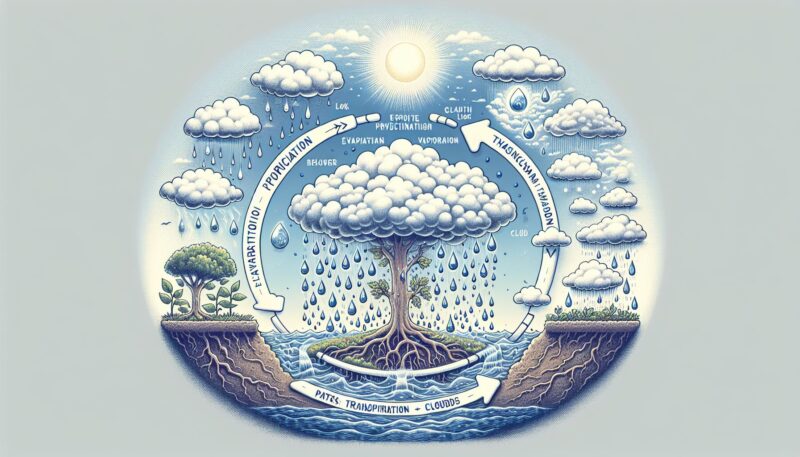
Water shapes our world — it’s the most essential substance for life as we know it, covering about 71% of the Earth’s surface and making up nearly 60% of the adult human body. Beyond its biological importance, water cycles through the environment in ways that affect every aspect of the planet’s functioning. This article dives into the heart of the hydrologic cycle, explaining its critical components, their interconnectedness, and the profound implications for life on Earth.
Understanding the Hydrologic Cycle
The hydrologic cycle, also known as the water cycle, is a continuous process by which water is circulated throughout the Earth’s atmosphere, land, and oceans. It’s a system powered by the Sun’s energy and involves several key processes: evaporation, transpiration, condensation, precipitation, infiltration, percolation, runoff, and streamflow. Each step plays a vital role in maintaining the balance and distribution of Earth’s water resources.
Evaporation and Transpiration
Water from oceans, lakes, rivers, and soil surfaces is constantly vaporized into the air through evaporation. Simultaneously, plants contribute to this airborne water via transpiration, where water absorbed by roots is eventually released into the atmosphere from their leaves.
Evaporation and transpiration, collectively termed evapotranspiration, are heavily influenced by temperature, humidity, wind, and solar radiation. Experts estimate that transpiration accounts for approximately 10% of the moisture in the Earth’s atmosphere (NASA Earth Observatory).
Condensation and Precipitation
As water vapor rises, it cools and condenses into clouds. Condensation transforms water vapor into liquid droplets or ice crystals, depending on the atmospheric conditions. When these droplets or crystals coalesce and grow heavy enough, they fall to the ground as precipitation, which includes rain, snow, sleet, or hail.
Infiltration, Percolation, and Groundwater
Upon reaching the Earth’s surface, some water seeps into the ground through infiltration. The water then moves downward through the soil by percolation, gradually replenishing groundwater stores and aquifers. This underground water plays a critical role in sustaining rivers and lakes, especially during periods of low precipitation.
Runoff and Streamflow
Not all water infiltrates the soil; much of it flows over the land as runoff, eventually joining rivers, lakes, or oceans. The movement of water within these bodies is known as streamflow. The volume and speed of runoff and streamflow are determined by factors including rainfall intensity, land slope, vegetation, and soil composition.
Baseflow is a term used to describe the portion of streamflow that is sustained by groundwater seepage into rivers and streams during dry periods. This contribution is vital for maintaining ecosystems and human water supplies (USGS).
The Role of Aquifers and the Recharge-Discharge Process
Aquifers are underground layers of water-bearing permeable rock or unconsolidated materials (gravel, sand, or silt) from which water can be extracted using a well. The process of aquifers being replenished with water is known as recharge, while discharge refers to the movement of water from the aquifer to the surface, feeding springs, rivers, and wetlands.
Watersheds, Catchments, and Drainage Basins
The area of land where precipitation collects and drains off into a common outlet, such as a river or bay, is known as a watershed, catchment, or drainage basin. These areas are fundamental in water management, as they define the spatial context in which local hydrologic processes occur and are the scale at which water resource planning is often conducted.
Impacts of the Hydrologic Cycle on Ecosystems and Humans
The hydrologic cycle is not just a system of physical processes; it has profound biological, environmental, and social implications.
Water Quality and Pollution
The quality of water in the hydrologic cycle is of paramount importance. Water quality is influenced by natural processes and human activities — including agriculture, industry, and urban development — that can lead to water pollution. Pollutants like heavy metals, nutrients, pathogens, and microplastics can have severe impacts on the ecosystem and human health.
Environmental Phenomena
The cycle is also central to environmental phenomena such as eutrophication, where excess nutrients in bodies of water lead to algal blooms and diminished dissolved oxygen levels, causing harm to aquatic life. Changes in water quality parameters such as pH, salinity, hardness, and alkalinity can impact the viability of ecosystems and the suitability of water for human use.
Climate Interactions and Extremes
Water in the atmosphere affects weather and climate. For instance, land areas covered by snow and ice reflect more sunlight, influencing local and global temperatures. Permafrost and glaciers, as part of the hydrologic cycle, are critical indicators of climate change, and their melting has widespread implications for sea-level rise and ecosystem dynamics.
The cycle is also a factor in extreme weather events like droughts and floods, which can lead to water scarcity or excess, contributing to water stress and influencing water management policies and water conflict.
Human Intervention in the Hydrologic Cycle
Human activities have significantly altered the hydrologic cycle. We’ve constructed reservoirs to store water, dams to control river flow, and wetlands and estuaries that have been drained for development. We’ve tapped into vast groundwater reserves for agriculture and drinking water, sometimes leading to over-extraction and land subsidence.
Moreover, human-induced climate change is impacting the timing and intensity of precipitation, as well as accelerating the melting of glaciers and icebergs, with profound effects on the global hydrologic cycle.
Addressing Water Challenges through Technology and Policy
With the growing demand for water and the challenges posed by climate change, it is crucial to develop sustainable water management strategies. Water treatment technologies, such as desalination, reverse osmosis, filtration, and disinfection methods like chlorination, ozonation, and UV irradiation, play a crucial role in ensuring safe drinking water.
Innovative approaches to water conservation, such as rainwater harvesting and greywater reuse, help mitigate water scarcity. Water distribution systems, including water towers, pumping stations, and pipe networks, are being optimized with advanced leak detection and monitoring technologies.
The Future of Water: From Conflict to Diplomacy
With the growing recognition of water’s central role in the health and economies of nations, water diplomacy has become an essential tool in addressing cross-border water issues and preventing water conflict. Integrated water resources management and international cooperation are fundamental to securing water for