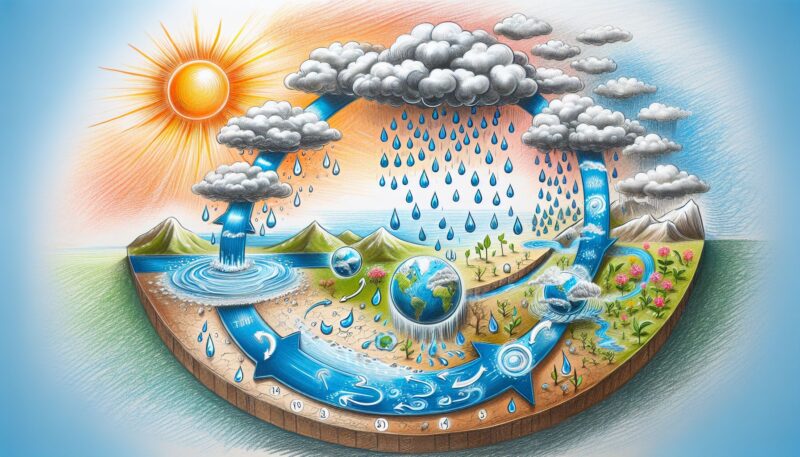
Water is the essence of life—a precious resource that shapes our planet’s landscapes, supports diverse ecosystems, and sustains human societies. Yet, the journey of water is not limited to its momentary presence in the rivers we cross, the lakes we swim in, or the rain that drums on our rooftops. It is part of a grand and continuous dance orchestrated by the forces of nature known as the Hydrologic Cycle.
The Hydrologic Cycle represents the constant movement and endless recycling of water between the Earth’s surface, the atmosphere, and the subsurface realms. This article delves into the intricacies of this cycle, which encompasses processes like precipitation, evaporation, transpiration, and much more. Understanding this cycle is not merely an academic pursuit—it is crucial for managing our water resources, predicting weather patterns, and preserving the environment for future generations.
What is the Hydrologic Cycle?
The Hydrologic Cycle, also known as the Water Cycle, is a global system through which water circulates from the land to the sky and back again. It involves various components and processes that work together to move water in different forms—liquid, vapor, and ice—across different parts of the ecosystem such as rivers, lakes, oceans, atmosphere, glaciers, and groundwater systems.
The Key Processes of the Hydrologic Cycle
Evaporation
Evaporation is the process through which water changes from liquid to vapor. This occurs when sunlight heats the bodies of water like oceans, rivers, and lakes. As water molecules absorb energy, they break free from the surface and rise into the atmosphere.
Transpiration
Transpiration refers to the release of water vapor from plants. As plants take in water from the soil, they use some of this water for photosynthesis and other metabolic functions. The excess water is expelled through tiny pores in their leaves, called stomata, into the air.
Precipitation
Precipitation occurs when water vapor in the atmosphere cools and condenses, forming droplets that combine to create clouds. When these droplets become too heavy, they fall to the earth as rain, snow, sleet, or hail.
Condensation
Condensation is the transformation of water vapor into liquid water. It is the opposite of evaporation and is responsible for the formation of dew, fog, and clouds.
Infiltration
Infiltration happens when water on the surface soaks into the soil. From here, the water can percolate deeper into the ground, becoming part of the groundwater system, or it can flow horizontally, nourishing plants’ roots along the way.
Percolation
Percolation is the downward movement of water through soil and rock layers. This filtered water replenishes the groundwater stored in aquifers, which are underground layers of water-bearing permeable rock.
Runoff
Runoff is the movement of water across the land surface, often reaching creeks, streams, and rivers. Runoff is influenced by various factors such as precipitation intensity, land slope, vegetation cover, and soil type.
Advanced Interactions in the Hydrologic Cycle
Streamflow and Baseflow
Streamflow is the flow of water in streams and rivers, primarily composed of surface runoff. Baseflow, on the other hand, is the sustained flow of a stream that is fed by groundwater seepage into the streambed.
Groundwater Flow
Groundwater flow refers to the movement of water within aquifers, driven by gravity and pressure differentials. This slow process can transport water over vast distances underground.
Recharge and Discharge
Groundwater recharge is the process by which water from precipitation or surface waters infiltrates the ground and reaches aquifers. Discharge, conversely, is the flow of groundwater emerging from springs or seeping into rivers and wetlands.
Temporary Storages in the Hydrologic Cycle
- Reservoirs: Man-made or natural lakes used to store water for various purposes like drinking water, irrigation, and hydroelectric power.
- Glaciers and Icebergs: Massive repositories of freshwater in the form of solid ice.
- Snowpack: Accumulations of snow that can act as temporary storage of water.
- Wetlands: Areas where water covers the soil or is present near the surface for varying periods.
The Hydrologic Cycle is not just a series of isolated events but a complex, interconnected web that sustains life.
The Hydrologic Cycle and Climate Change
Climate change impacts the Hydrologic Cycle by altering temperature patterns, precipitation, and evaporation rates. Rising global temperatures can intensify the water cycle, leading to more extreme weather events such as heavy rainstorms and severe droughts. Additionally, melting glaciers and ice caps contribute to rising sea levels, which can affect ocean currents and coastal ecosystems.
The Management and Conservation of Water Resources
Awareness of the Hydrologic Cycle is pivotal to water resource management. Sustainable practices like rainwater harvesting, efficient irrigation, and water conservation techniques aim to maintain the delicate balance of the cycle, ensuring availability for all forms of life.
Challenges in Water Quality
Water quality is another critical aspect of the Hydrologic Cycle. Natural processes and human activities can introduce pollutants like heavy metals, nutrients, pathogens, and microplastics into the water system. These contaminants can have detrimental effects on ecosystems and human health.
Water treatment technologies such as reverse osmosis, filtration, disinfection, and coagulation play a crucial role in maintaining clean water supplies.
Understanding through Monitoring and Education
Continuous monitoring of the Hydrologic Cycle is necessary to understand and respond to changes in our environment. Advanced technologies like remote sensing and computer models help scientists and policymakers make informed decisions about water management.
Public education is equally important, as it raises awareness about the relevance of water conservation, the impacts of pollution, and the value of protecting water sources.
The Role of International Cooperation
Water scarcity and stress are growing worldwide issues that often transcend national boundaries. Water diplomacy aims to foster cooperation between countries, especially in shared catchment areas or transboundary watersheds, to manage and allocate water resources fairly and peacefully.
In conclusion, the Hydrologic Cycle is a testament to the dynamic nature of our planet—constantly changing yet timelessly constant. By understanding and respecting this cycle, we can better protect and preserve the blue gold that is water for the prosperity of all Earth’s inhabitants.
Sources:
- United States Geological Survey (USGS) – Water Science School: The Water Cycle. https://www.usgs.gov/special-topic/water-science-school/science/water-cycle
- National Aeronautics and Space Administration (NASA) – Goddard Space Flight Center: The Water Cycle. https://earthobservatory.nasa.gov/features/Water
- Intergovernmental Panel on Climate Change (IPCC) – Climate Change and Water. https://www.ipcc.ch/report/ar5/wg2/water/