Water is the lifeblood of our planet, sustaining every form of life and shaping the world we live in. It’s easy to take for granted the water that flows from our taps or the rain that waters our crops, but have you ever stopped to wonder about the journey that water takes through our environment? This relentless voyage is known as the hydrologic cycle, a critical process that keeps our rivers flowing, our atmosphere moist, and our ecosystems thriving. Understanding the hydrologic cycle is fundamental to grasping how water moves through the earth’s systems and how it supports life on our planet.
What is the Hydrologic Cycle?
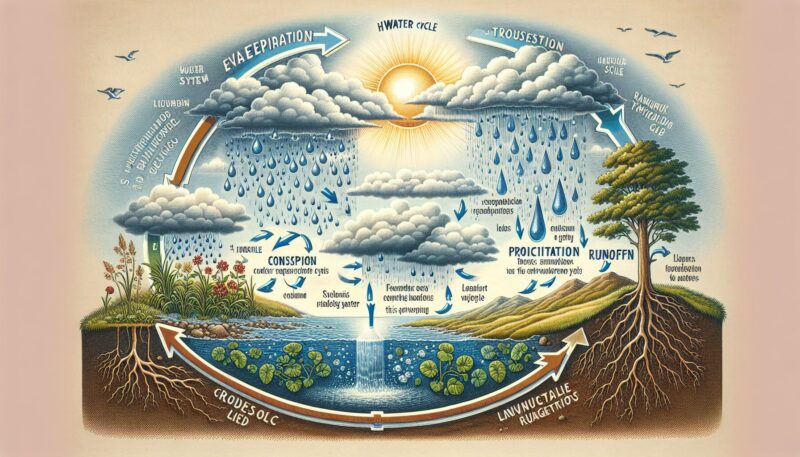
The hydrologic cycle, also referred to as the water cycle, is the continuous movement of water in the Earth’s system. It encompasses various stages—evaporation, transpiration, condensation, precipitation, infiltration, percolation, runoff, and baseflow—that work together to recycle and distribute water across different spheres of the earth, including the atmosphere, land, and water bodies. This cyclical movement ensures that water is renewed and made available for a plethora of uses to all forms of life.
Key Components of the Hydrologic Cycle
- Evaporation: Water from the oceans, rivers, and lakes turns into vapor and rises into the atmosphere.
- Transpiration: Water vapor is also released into the atmosphere from plants and trees.
- Condensation: As vapor rises, it cools and condenses into clouds.
- Precipitation: Water falls back to the earth as rain, snow, sleet, or hail.
- Infiltration: Water seeps into the soil, which recharges aquifers and provides moisture to plants.
- Percolation: Water moves downward within the soil, reaching the groundwater storage.
- Runoff: Water flows over the land surface, joining rivers, streams, and eventually, the oceans.
- Baseflow: Groundwater feeds into rivers and streams, maintaining their flow especially during dry periods.
The Importance of the Hydrologic Cycle
The hydrologic cycle is integral to climate regulation, ecosystem support, and the provision of fresh water for human use. It affects weather patterns, shapes landscapes, and enables agriculture. Without this cycle, life, as we know it, would not be possible.
Climate Regulation
Water in its various forms has a profound influence on the climate. It absorbs heat during the day and releases it at night, moderates temperatures by transporting heat around the globe, and influences weather patterns through precipitation and evaporation dynamics.
Ecosystem Support
Aquatic ecosystems depend on the regular supply of fresh water from the hydrologic cycle. Terrestrial habitats also rely on precipitation and groundwater to sustain plant and animal life. The variability and distribution of water shape biodiversity and the functioning of ecosystems.
Human Use
Humans depend on components of the hydrologic cycle for drinking water, agriculture, industry, and energy production. Understanding and managing this cycle is crucial to ensuring water availability and mitigating the risks of droughts and floods.
Threats to the Hydrologic Cycle
Human activities can disrupt the delicate balance of the hydrologic cycle, impacting availability and distribution of water resources. Climate change, deforestation, pollution, and urbanization are significant threats that can alter evaporation rates, reduce groundwater recharge, and affect river flows.
Climate Change
As the climate warms, intensified evaporation and altered precipitation patterns can lead to more extreme weather events. These changes can disrupt the balance and predictability of the water cycle, leading to water scarcity or excess in different parts of the world.
Deforestation
Removing trees and vegetation reduces transpiration, which in turn can decrease rainfall. Forests also play a key role in maintaining groundwater levels and reducing runoff.
Pollution
Contaminants from industrial, agricultural, and residential sources can pollute water sources. This not only threatens ecosystems and human health but can also change the chemical dynamics of evaporation and precipitation.
Urbanization
Impermeable surfaces in urban areas prevent infiltration, leading to increased runoff and reduced groundwater recharge. Urban heat islands can also affect local evaporation and condensation cycles.
Protecting the Hydrologic Cycle
To safeguard the future of water resources, it’s essential to protect the processes of the hydrologic cycle. There are several strategies that can be employed:
Water Conservation
Conserving water reduces the strain on the cycle and protects resources for future use. Simple actions like fixing leaks, taking shorter showers, and choosing water-efficient appliances can collectively make a significant difference.
Sustainable Development
Incorporating green spaces, permeable pavements, and rain gardens into urban planning helps maintain natural infiltration and reduces pollution.
Protected Natural Spaces
Preserving wetlands, forests, and other vital ecosystems ensures that the natural processes of the water cycle are maintained. Protected spaces also serve as buffers during extreme weather events, reducing the impact of floods and droughts.
Responsible Agriculture
Agricultural practices that minimize water use and prevent runoff can protect water quality and support sustainable water supply. Techniques like drip irrigation, cover crops, and no-till farming all contribute to preserving the hydrologic cycle.
Conclusion
The hydrologic cycle is a remarkable natural phenomenon that connects every corner of our planet, sustaining life and sculpting landscapes. Protecting this cycle is imperative for the future of our species and the countless other organisms that depend on water for survival. As we become more aware of our impact on the environment, we must act responsibly to ensure the integrity of this vital earth system. By understanding and respecting the processes of the hydrologic cycle, we can work towards a sustainable future with secure water resources for all.
Sources
- “The Water Cycle.” United States Geological Survey (USGS). https://www.usgs.gov/special-topics/water-science-school/science/water-cycle
- “Climate Change: How Do We Know?” NASA. https://climate.nasa.gov/evidence/
- “Water Conservation Tips.” Environmental Protection Agency (EPA). https://www.epa.gov/watersense/water-conservation-tips