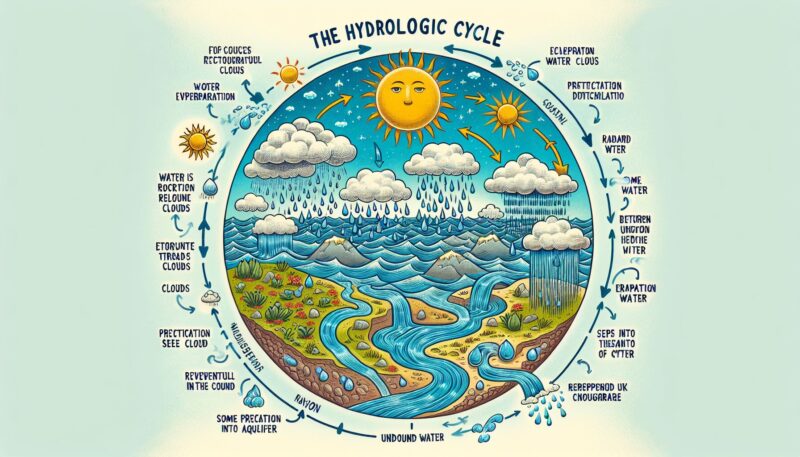
Water is the elixir of life. Without it, the intricate web of life on our planet would unravel. It is so essential that Earth’s natural system has a dedicated cycle for it—known as the hydrologic cycle, which ensures that water is continuously recycled and distributed around the globe. In this article, we will delve into the complexities and critical components of the hydrologic cycle, unravel its profound impact on the environment, and explore how human actions intersect with this vital planetary process.
What is the Hydrologic Cycle?
The hydrologic cycle, also referred to as the water cycle, is the constant movement of water above, on, and below the surface of the Earth. This cycle is crucial for maintaining the balance of water on our planet, ensuring that it supports ecosystems, shapes landscapes, and sustains human societies.
The Stages of the Hydrologic Cycle
The hydrologic cycle consists of several interrelated processes:
1. Evaporation
The sun’s heat causes water from oceans, rivers, lakes, and other bodies to transform from a liquid state into vapor. Plants also contribute to this vapor through a process known as transpiration. Together, evaporation and transpiration are often referred to as evapotranspiration.
2. Condensation
As water vapor rises and cools, it changes back into liquid form, creating clouds. This process is called condensation. At high altitudes, the cold temperatures can also lead to the formation of ice crystals.
3. Precipitation
When the droplets in clouds combine and become heavy enough, they fall to the ground as precipitation—rain, snow, hail, or sleet. Precipitation is the primary method by which water returns from the atmosphere to Earth’s surface.
4. Infiltration and Percolation
Once water reaches the ground, it can soak into the soil in a process called infiltration. The water then moves deeper into the ground, filtering through soil and rock layers in a process called percolation, eventually replenishing groundwater in aquifers.
5. Runoff and Streamflow
Part of the water that falls as precipitation runs off the land surface into streams, rivers, lakes, and oceans. This runoff can be influenced by factors like land slope, vegetation, soil type, and land use. Streamflow is the movement of water within the river channels and is a significant component of the water cycle, as it drains the landscape and transports water from land to oceans.
6. Groundwater Movement
Groundwater is the subsurface water that fills pores in soils and rock formations. It can move slowly through the ground and eventually discharge into springs, rivers, lakes, and oceans, or be drawn up by plants through their roots.
7. Baseflow
Baseflow is the portion of river or stream flow that is provided by groundwater seeping into the bed of the watercourse. It’s an important source of water for rivers during periods with no precipitation.
Human Impact on the Hydrologic Cycle
The natural balance of the hydrologic cycle can be disrupted by human activities. Urbanization, deforestation, agriculture, and industrial practices can change evaporation rates, alter precipitation patterns, and increase runoff. Climate change, largely driven by the burning of fossil fuels and the resultant greenhouse gas emissions, is also having profound effects on the water cycle, leading to more extreme weather events like droughts and floods.
Groundwater: The Hidden Resource
One of the lesser-seen but vitally important parts of the hydrologic cycle is groundwater. Groundwater is the water that is found underground in the cracks and between particles in the soil, sand, and rocks. It is stored in and moves slowly through geologic formations of soil, sand, and rocks called aquifers.
The Significance of Groundwater
- Drinking Water: Groundwater serves as a crucial source of drinking water. According to the United States Geological Survey (USGS), about 40% of the U.S. population relies on groundwater for its drinking supply.
- Agriculture: It is used extensively for irrigation and is, therefore, critical for food production.
- Industrial Use: Groundwater is also utilized in various manufacturing processes and cooling mechanisms for power plants.
- Ecological Balance: It helps maintain the level of rivers and wetlands, especially during dry times, supporting ecosystems and wildlife.
Recharge and Discharge of Groundwater
Groundwater recharge is the process by which water moves from the surface to the groundwater. It typically occurs during rainfall or when streams or rivers overflow, allowing water to infiltrate the ground. Discharge, on the other hand, is when groundwater flows into lakes, rivers, oceans, or onto the surface of the land.
Aquifers can take centuries to refill, making them a resource that must be carefully managed. Over-extraction of groundwater for agriculture or urban use can lead to a decline in water levels, called groundwater depletion, which can have severe environmental and economic consequences.
Protecting Water Quality in the Hydrologic Cycle
Water quality is an essential aspect of the hydrologic cycle as it affects ecosystems, human health, and the usability of water for various purposes. As water moves through the cycle, it can pick up pollutants from the air, land, and human activities.
Common Pollutants and Issues
- Nutrients: Fertilizer runoff can cause an excess of nutrients in water bodies, leading to eutrophication and harmful algal blooms.
- Pathogens: Bacteria and viruses from sewage or livestock can contaminate drinking water sources, posing health risks.
- Heavy Metals: Industrial discharges can lead to toxic heavy metals entering water bodies, with harmful effects on wildlife and humans.
- Microplastics: These tiny particles are increasingly being discovered in freshwater and marine environments, with uncertain but potentially significant ecological impacts.
Water Treatment and Conservation
To ensure safe drinking water, communities use various methods to treat water:
- Filtration: Removes particulates through physical barriers.
- Disinfection: Using chlorine, ozonation, or ultraviolet (UV) irradiation to kill or inactivate pathogens.
- Reverse Osmosis: Using a semipermeable membrane to remove ions, unwanted molecules, and larger particles.
Water conservation efforts are also vital in protecting the hydrologic cycle:
- Rainwater Harvesting: Capturing and storing rainwater for reuse conserves groundwater and reduces urban runoff.
- Greywater Reuse: Treated wastewater from baths, sinks, washing machines, and other kitchen appliances can be reused for irrigation or industrial processes.
- Water Conservation Techniques: Low-flow fixtures, efficient irrigation systems, and public awareness campaigns are all critical in reducing water waste.
Conclusion
The hydrologic cycle is a complex and dynamic system that is central to life on Earth. By understanding how it works and the role it plays in our environment, we can appreciate the need to protect this precious resource through sustainable management and conservation practices. Human activities and the impacts of climate change underscore the importance of being stewards of the water sources we so critically depend on.
Further Reading and Sources
To deepen your understanding of the hydrologic cycle and water management, here are some recommended sources:
- USGS Water