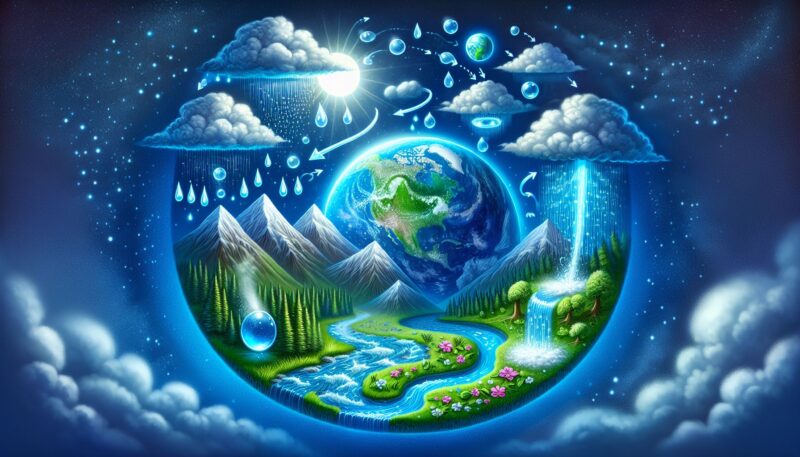
Water is the lifeblood of our planet, shaping the landscape, nurturing ecosystems, and sustaining all living organisms. It is a finite resource that continuously travels through a complex and dynamic process known as the hydrologic cycle. This article delves into the intricacies of the hydrologic cycle, emphasizing the importance of each of its components and their collective role in maintaining the delicate balance of Earth’s ecosystems.
What is the Hydrologic Cycle?
The hydrologic cycle, also known as the water cycle, is a continuous process by which water circulates throughout the Earth and its atmosphere. It encompasses various stages: evaporation, transpiration, condensation, precipitation, infiltration, percolation, runoff, streamflow, baseflow, and ultimately, the storage of groundwater. Each of these stages is critical in supporting life and shaping the planet’s surface.
Evaporation and Transpiration
Evaporation is the transformation of water from a liquid to a gaseous state, mostly occurring over the oceans and bodies of water. Transpiration, on the other hand, refers to the release of water vapor from plants and soil into the air. The combination of these two processes is known as evapotranspiration.
The Sun’s energy drives evaporation by heating water surfaces, causing water molecules to gain enough kinetic energy to escape into the atmosphere. Transpiration serves as a natural irrigation system, delivering water from the roots to the rest of the plant, and eventually releasing excess water vapor through stomata, tiny openings in the leaves.
Condensation
Once water vapor rises into the atmosphere, it cools and condenses to form cloud droplets, eventually coalescing into clouds. This process not only contributes to the Earth’s weather patterns but also leads to precipitation.
Precipitation
Precipitation is the process by which water, in the form of rain, snow, sleet, or hail, falls from the atmosphere back to the Earth’s surface. It is a primary mechanism that distributes fresh water across the planet, filling rivers, lakes, and aquifers.
Infiltration and Percolation
When precipitation reaches the Earth’s surface, it either flows overland as runoff, seeps into the ground through infiltration, or is captured by vegetation. Infiltration is the downward movement of water into the soil, which can further percolate down to replenish groundwater stores.
Runoff and Streamflow
Runoff is water that does not infiltrate the soil and instead travels along the surface to join streams and rivers. Streamflow refers to the movement of water within a river or stream channel. Together, runoff and streamflow contribute to the transportation of water across the landscape, shaping the Earth’s surface by erosion and deposition.
Baseflow and Groundwater
Groundwater is the water found in the saturated zones beneath the land surface, filling the voids and pores within rocks and sediments. Baseflow is the portion of streamflow that is sustained by groundwater seeping into riverbeds and is critical for maintaining river ecosystems during dry periods.
An aquifer is a subsurface layer of permeable rock or sediments that stores and transmits groundwater. When the rate of water replenishment, or recharge, exceeds the rate at which water is removed, or discharge, the aquifer can provide a sustainable water source.
Watersheds and the Bigger Picture
A watershed, catchment, or drainage basin is an area of land that separates waters flowing into different rivers, basins, or seas. It can be as small as a footprint in the mud or as large as the Amazon basin.
The hydrologic cycle’s balance can be disrupted by natural events such as droughts and floods or human activities like dam construction, which can dramatically alter the natural flow of water. Additionally, issues like water pollution, eutrophication, algal blooms, and water scarcity reflect the challenges in maintaining water quality and availability.
Human Impact on the Hydrologic Cycle
Human activities such as agriculture, urbanization, and industrial processes can significantly impact the hydrologic cycle. Activities that alter land surfaces can affect infiltration and runoff rates, while pollution can degrade water quality.
Water Pollution
Urban runoff and agricultural practices can introduce nutrients, pathogens, heavy metals, and microplastics into water bodies, leading to eutrophication and harm to aquatic life. Indicators like dissolved oxygen, turbidity, pH, salinity, and hardness are used to assess water quality and the ecosystem’s health.
Water Treatment and Distribution
To ensure that water is safe for consumption and use, it often must undergo treatment processes such as filtration, disinfection, and reverse osmosis. Whether it is desalination for removing salt from seawater or chlorination for eliminating pathogens, water treatment is crucial for providing clean water.
Water distribution systems, including water towers, pumping stations, and pipe networks, are engineered to deliver water efficiently. Technologies like leak detection and metering help manage these systems and conserve resources.
Water Conservation and Management
Water conservation is vital in managing the hydrologic cycle sustainably. Strategies like rainwater harvesting, greywater reuse, and improving water storage can mitigate the impacts of water stress and scarcity. Additionally, understanding concepts like water footprint and virtual water can help in making informed choices about water use.
The Role of Water in Climate and Global Interaction
Water’s role extends beyond the hydrologic cycle, influencing climate patterns, and serving as a critical component in international relations. Water diplomacy and cooperation among nations are essential for addressing water conflicts and securing a sustainable future for all.
Conclusion
The hydrologic cycle is an integral part of the Earth’s system, affecting every aspect of our environment and livelihood. As stewards of the planet, it is our responsibility to understand and protect this vital process, ensuring that clean, accessible water is available for generations to come.
Sources:
- U.S. Geological Survey. The Water Cycle. https://www.usgs.gov/special-topics/water-science-school/science/water-cycle
- National Oceanic and Atmospheric Administration. The Water Cycle. https://www.noaa.gov/education/resource-collections/freshwater/water-cycle
- World Water Assessment Programme. The United Nations World Water Development Report. http://www.unwater.org/publications/world-water-development-report-2018/