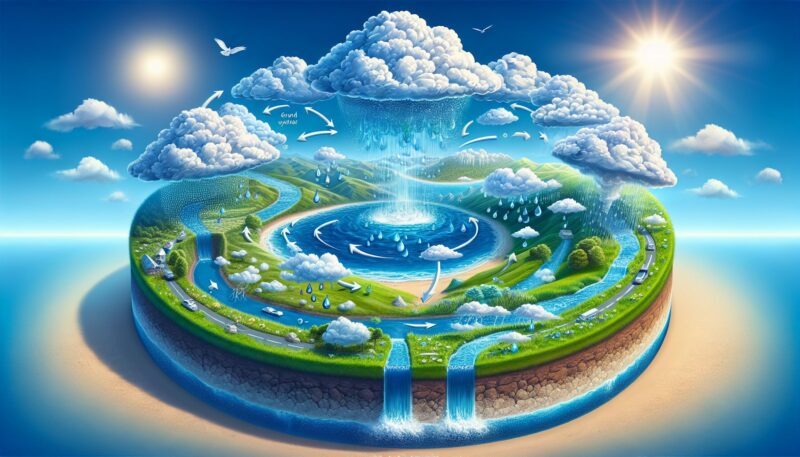
Water is the lifeline of our planet, the essence of life, and the most intrinsic resource within Earth’s intricate ecological and geological systems. The hydrologic cycle, also known as the water cycle, is the continuous process of water circulating from the Earth’s surface to the atmosphere and back again. It’s a remarkable journey—constantly in motion, it supports all forms of life and helps shape our planet’s climate.
Understanding the Hydrologic Cycle
At the core of the hydrologic cycle are several key processes: precipitation, evaporation, transpiration, condensation, infiltration, percolation, runoff, and storage. Together, these mechanisms facilitate the distribution and usage of fresh water across different ecosystems.
Precipitation
Precipitation occurs when condensation in the atmosphere—be it in the form of water droplets or ice crystals—becomes too heavy to remain suspended in clouds, falling to the Earth’s surface. This can take many forms: rain, snow, sleet, or hail. It’s the primary method by which water is delivered from the atmosphere to Earth, replenishing lakes, rivers, and aquifers.
Evaporation
Evaporation is the transformation of water from a liquid to a gaseous state, mostly from bodies of water, soil, and other surfaces. Driven by the sun’s energy, it’s a natural cooling process that also serves as the main pathway by which water enters the atmosphere.
Transpiration
Plants absorb water through their roots and then dispense it into the atmosphere as vapor via transpiration—a crucial mechanism that contributes significantly to the terrestrial component of the hydrologic cycle and accounts for approximately 10% of the moisture in the atmosphere.
Condensation
As water vapor rises and cools, it changes back into a liquid form—a process known as conditation—often occurring high in the atmosphere where it becomes visible as clouds. Eventually, this condensed moisture falls as precipitation, completing the cycle.
Infiltration and Percolation
Upon reaching the land, some of the water infiltrates the soil, moving into the ground through the physical process of infiltration. Percolation refers to the downward movement of this infiltrated water within the soil’s subsurface, making its way to groundwater reservoirs.
Runoff
Runoff is the portion of precipitation that flows over the soil surface towards rivers, lakes, and oceans due to gravity. It’s an important part of the water cycle, as it redistributes water from land to water bodies, contributing to streamflow and natural water purification processes.
Streamflow and Baseflow
Streamflow is the flow of water in streams and rivers. Baseflow is the sustained flow of a stream in the absence of direct runoff, typically fed by groundwater seeping into the streambed. Both are essential for maintaining aquatic ecosystems and for human uses of surface water.
Groundwater and Aquifers
Groundwater, found in the saturation zone below the Earth’s surface, is a critical source of drinking water and irrigation. Aquifers are geological formations that can store, transmit, and yield water to a well or spring. The rate at which aquifers are replenished through the process of recharge varies widely, depending on climatic and geological conditions.
Recharge and Discharge
Recharge is the process by which groundwater aquifers are replenished by the infiltration of surface water. Discharge, conversely, is the process by which groundwater is removed from an aquifer, such as through a spring or by being pumped out via wells. This balance between recharge and discharge is critical to maintaining groundwater levels and ensuring sustainable water usage.
Watersheds and Their Importance
A watershed, or catchment, is an area of land that separates waters flowing to different rivers, seas, or other bodies of water. It plays a vital role in the hydrologic cycle by dictating the direction of runoff and streamflow. Watersheds come in all shapes and sizes and can be as small as a footprint in the soil or as large as the Mississippi River Basin.
Protecting watersheds is crucial because they filter runoff and reduce the speed at which water flows, thereby reducing erosion and preventing water pollution. Preserving our watersheds also helps ensure clean, safe, and plentiful water supplies for communities and ecosystems downstream.
The Impact of Human Activity
While the hydrologic cycle is a natural process, human influences such as urbanization, agriculture, and climate change can profoundly affect its dynamics. For instance:
-
Pollution from industrial discharge, agricultural runoff, and improper waste disposal can degrade water quality, impacting not only human health but also aquatic wildlife and ecosystems.
-
Climate change is modifying precipitation patterns and altering evaporation rates, which can lead to changes in water availability, more extreme weather events like droughts and floods, and shifts in the timing and intensity of water cycles.
-
Over-extraction of groundwater for agricultural and municipal use, particularly in areas without adequate recharge, can lead to depletion of aquifers, land subsidence, and reduced water availability for future generations.
Solutions and Sustainable Water Practices
To mitigate the negative impacts on the hydrologic cycle and ensure water sustainability, we must adopt practices such as:
-
Water Conservation: Efficient water use and reducing wastage are crucial. Simple acts like fixing leaks, using water-saving appliances, and adopting water-efficient agricultural techniques can significantly reduce water consumption.
-
Protecting Water Sources: Preventing pollution through stricter regulations, promoting environmentally friendly agricultural practices, and restoring wetlands and streams can help maintain the health of watersheds and the quality of water sources.
-
Sustainable Water Management: Developing and implementing integrated water resource management plans that consider the needs of all users—human and ecosystem alike—can help ensure that water remains available and clean.
-
Innovative Water Treatment: Advanced treatment technologies like reverse osmosis, UV irradiation, and desalination are crucial for turning previously unusable water sources into potable water.
In conclusion, understanding the hydrologic cycle and our place within it is essential for the preservation of our most precious resource. Each of us has a role to play in conserving water and protecting the intricate system that enables life on our planet to flourish.
Sources
- United States Geological Survey (USGS) – Water Science School: The Water Cycle
- National Oceanic and Atmospheric Administration (NOAA) – Education Resources: The Water Cycle
- Environmental Protection Agency (EPA) – Watersheds: What is a Watershed?
By gaining a greater appreciation for the wonders of the hydrologic cycle and the critical roles we play in its balance, we can work together to safeguard water for all the Earth’s inhabitants, now and into the future.