Water is the lifeblood of our planet. It shapes landscapes, sustains ecosystems, and is essential for all known forms of life. The journey of water from the atmosphere to the earth and back again is known as the hydrologic cycle. This vital process is a complex series of events that nurture the planet, influencing climate patterns and the availability of water resources. In this article, we delve into the intricacies of the hydrologic cycle and its implications for life on Earth.
What is the Hydrologic Cycle?
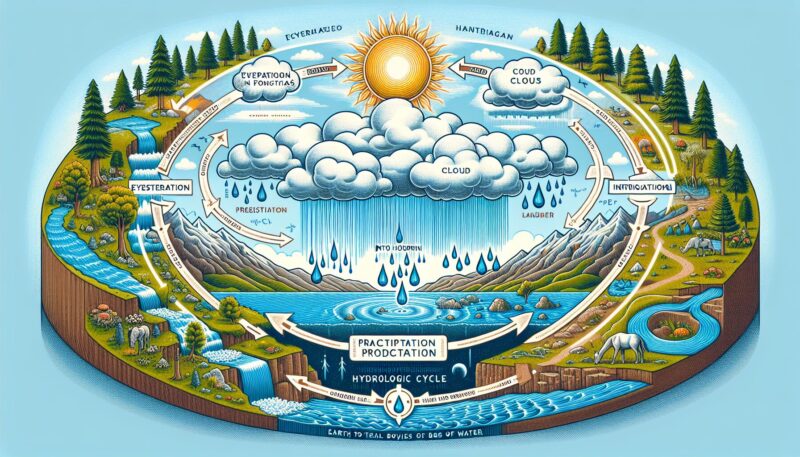
The hydrologic cycle, also known as the water cycle, is the continuous movement of water on, above, and below the surface of the Earth. This cycle is driven by the sun’s energy, which causes water to evaporate, form clouds, and precipitate back to the surface. The process is comprised of several key stages:
- Evaporation: The transformation of water from a liquid to a gaseous state, primarily due to solar radiation.
- Transpiration: The release of water vapor by plants into the atmosphere.
- Condensation: The cooling of water vapor which leads to the formation of liquid or ice cloud particles.
- Precipitation: The falling of water, in various forms such as rain, snow, sleet, or hail, from clouds to the Earth’s surface.
- Infiltration: The process by which water on the ground surface enters the soil.
- Percolation: The movement of water through soil and porous rock formations.
- Runoff: The flow of water over the land, often reaching rivers, lakes, and oceans.
- Groundwater flow: The movement of water in aquifers beneath the Earth’s surface.
- Discharge: The flow of groundwater into bodies of surface water such as rivers and oceans.
The cycle is a dynamic process that involves the exchange of water among various reservoirs, including the atmosphere, oceans, rivers, lakes, soil, groundwater systems, and living organisms.
The Role of Different Hydrologic Components
Each component of the hydrologic cycle plays a unique role in the distribution and movement of water:
- Oceans: The primary storage of Earth’s water, covering about 71% of the planet’s surface.
- Rivers and Lakes: Surface water bodies that collect precipitation and runoff, contributing to the freshwater ecosystem.
- Groundwater: Water that fills the cracks and pore spaces in underground soil and rock, a crucial source of fresh water for drinking, agriculture, and industrial use.
- Glaciers and Snowpacks: These are important freshwater reserves that release meltwater during warmer months, replenishing rivers and groundwater.
Importance of the Hydrologic Cycle
The hydrologic cycle is essential for numerous reasons:
- Climate Regulation: It plays a significant role in regulating the Earth’s climate by distributing heat through water vapor.
- Water Availability: It is the mechanism by which water is replenished, ensuring a constant supply for all organisms and ecosystems.
- Soil Rejuvenation: The cycle helps to transport nutrients and minerals, supporting plant growth and soil fertility.
- Habitat Formation: It contributes to the creation of diverse habitats such as wetlands, estuaries, and ecosystems by distributing water.
- Human Life: It provides the water necessary for domestic use, agriculture, and industry.
Human Impact on the Hydrologic Cycle
Human activities significantly impact the hydrologic cycle. Land use changes, such as deforestation and urbanization, alter evaporation, infiltration, and runoff patterns. Additionally, climate change, driven by greenhouse gas emissions, is causing shifts in precipitation and temperature regimes, further disrupting the balance of the water cycle. The extraction of water from rivers and aquifers for human consumption and industry can reduce the availability of freshwater, leading to scarcity and stress on ecosystems.
Challenges for Water Resources Management
The alteration of the hydrologic cycle presents numerous challenges:
- Water Scarcity: Overuse and pollution of water resources can lead to shortages, affecting human well-being and ecosystem health.
- Drought and Flood Events: Mismanagement of water resources and altered precipitation patterns can increase the frequency and severity of droughts and floods.
- Water Pollution: The introduction of contaminants into the water cycle affects water quality, posing risks to human health and the environment.
- Infrastructure Stress: Changes in the distribution of water resources can strain existing water storage and distribution systems.
Conservation and Sustainable Practices
To mitigate the impacts on the hydrologic cycle, conservation, and sustainable management practices are essential:
- Rainwater Harvesting: Collecting and storing rainwater for use during dry periods can help alleviate water scarcity.
- Efficient Irrigation: Using water-saving techniques in agriculture can significantly reduce water consumption and wastage.
- Wetland Restoration: Preserving and restoring wetlands can enhance water filtration and storage, improving water quality and quantity.
- Sustainable Groundwater Use: Implementing policies that regulate groundwater extraction can ensure its long-term availability.
- Pollution Prevention: Reducing the discharge of pollutants into waterways helps maintain the integrity of the hydrologic cycle.
The Future of the Hydrologic Cycle
The hydrologic cycle will continue to be a topic of significant concern as the global population grows and climate change progresses. Adaptation and resilience-building strategies will be crucial in managing water resources sustainably. Investments in technology, infrastructure, policy development, and education will play key roles in safeguarding the availability and quality of water for generations to come.
References
- “The Water Cycle,” U.S. Geological Survey (USGS). https://www.usgs.gov/special-topic/water-science-school/science/water-cycle
- “Human Alteration of the Global Water Cycle: Evidence from Streamflow Patterns,” Postel, S., Daily, G., & Ehrlich, P., Proceedings of the National Academy of Sciences, 1996. https://www.pnas.org/content/93/24/13735.abstract
- “Impacts of Climate Change on the Hydrologic Cycle,” Intergovernmental Panel on Climate Change (IPCC), Climate Change 2021: The Physical Science Basis. https://www.ipcc.ch/report/ar6/wg1/
Exploring the stages, importance, and human impacts on the hydrologic cycle reveals not only its complexity but also its centrality to life on Earth. Through understanding and responsible management, we can ensure that this critical cycle continues to sustain the planet and its inhabitants.